Never forget, goes the Jewish pledge after the Holocaust.
But I am guilty of forgetting.
The day my grandmother, “Oma” died, peacefully at home, Opa handed me a stack of papers, chewing his lips, a sign that he had something difficult to tell me. I looked closely to see mimeographs of very old letters, in his native German, though he spoke Hebrew and English just as fluently.
“My father,” he said at last, brows clenched in a V. “These are the last letters he ever sent me. Begging me to help him out of Germany. But I could not help him. I had no means. The last letters.”
He looked up at me, a man who had never grown beyond 5' 2″ due to poor nutrition, I felt giant in my five months’ pregnant state. What he didn’t say, I knew nonetheless: his parents had met their ends in Hitler’s concentration camps while he was digging gardens on a Kibbutz in Palestine (yet to become Israel). One day, letters arrived from his father begging to be saved—letters whose copies he now held in his hand. Then another day: silence.
“I want to give them to you someday,” he said. Me, the writer, family recorder, keeper of important deeds. “I can’t abandon him twice.”
I told myself I would find them, keep them—since he wouldn't relinquish them to me that day. But somewhere, in the shuffle of chaos after the birth of my son and his death a year later, the letters disappeared, and left me with a weight of complicity. I, too, had abandoned my great-grandfather.
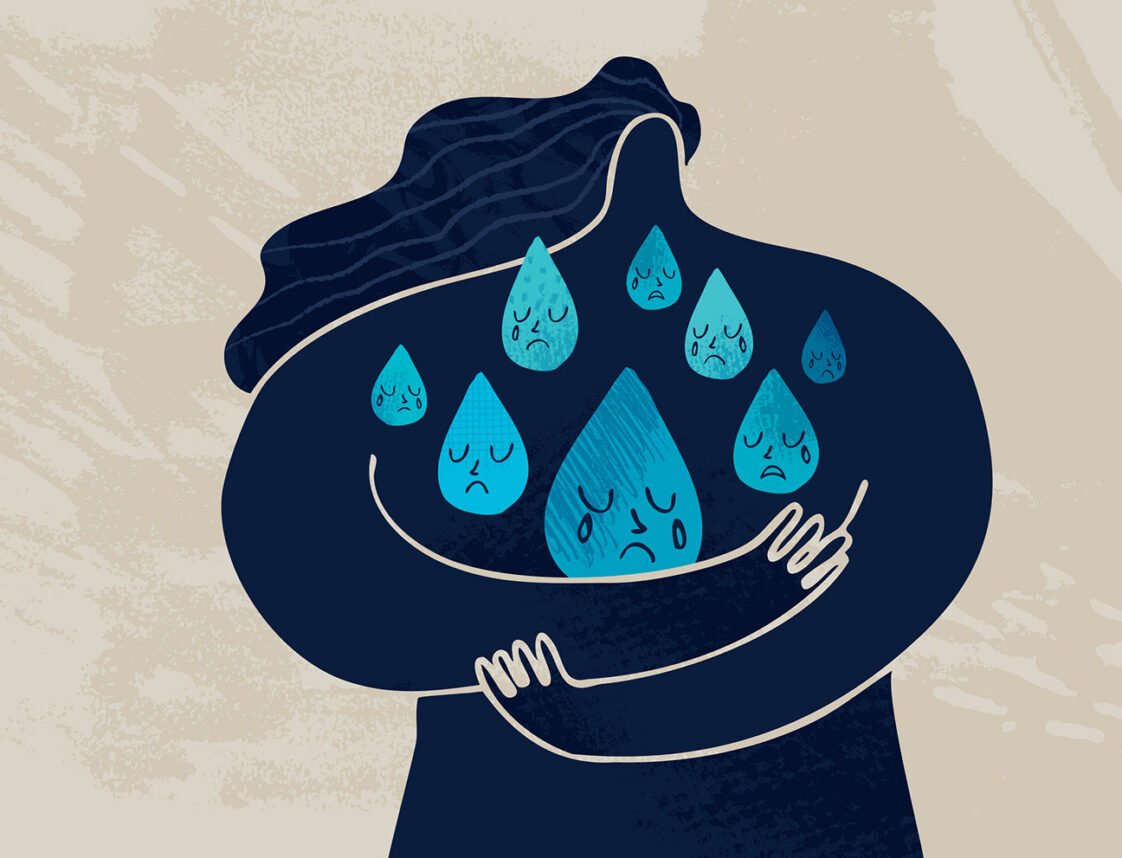
Survivor’s guilt, they call it—that you should be lucky enough to live, when others should die. Until the day my Opa showed me his father’s last letters, I hadn’t understood how powerful this guilt laced its fingers through my family. But I should have—guilt is my first language; it is the braille beneath my father’s fingers you can read with just a touch, engaged as he was for most of my childhood in selling marijuana for a living behind the smokescreen of a normal life. Me, complicit in keeping the secret that allowed our livelihood. It is the shame I still carry, as though I made him do it.
Guilt drove most of my Opa’s communications—always reminding us of our failures to write, to visit, to remember a birthday, though it was driven by a desire to keep us all close. I tried to understand him, aware that we were shaped by such vastly different influences—my life as a child of hippies in California, while not so different perhaps from those early, halcyon years on the kibbutz, carved of completely foreign pillar stones. How must Opa have felt when, after the war ended, the truth of the concentration camps trickled in to my grandparents' briefly peaceful little world.
“We didn’t know what was happening in Germany,” he told me, when I finally thought to ask. “Not the true horrors.” I both believed him, and I didn’t. Jewish merchants were already facing boycotts in 1933 when Opa left Germany with a Zionist youth group. When your father writes you letters begging you to pull him out of Germany after that, and then one day the letters simply cease, you must know the truth is grim. But you can’t allow yourself to know the real subterranean truth. Knowing means to sink into the despair that you are working diligently to stave off.
My guilt is nothing as significant as Opa’s, a kind of constant rumble beneath the edges of my being. I don’t want to burden you, trouble you with my problems. Am I talking too loud? Am I taking up too much space? Is something broken? Even if I didn’t do it, I feel bad anyway. When my grandparents were alive, sometimes I felt guilty that my life was so easy in comparison to what they had suffered.
And then, January 13, this headline in the LA Times: “Jews worry about their future in France after attack on kosher market” just a day after the horrific Charlie Hebdo tragedy. Though anti-Muslim sentiment made most news, this information struck me with the most terror.
Oh my god they're coming for you, I thought. The words surprised even me as they passed through my mind.
Several years earlier, my father, then in his early 60s had expressed a secret fear to me about how he doesn’t like to share his last name publicly, that in some way back part of his mind, he is still afraid.
“You really think the Nazis could rise again?” I asked.
He shrugged. “Not necessarily the Nazis, but someone, somehow.”
I admit, I thought him a little silly. Paranoid, perhaps at best, and traumatized, at worst, by his parents’ stories.
Though, there was a way in which I related to his fear, though mine came from a different source: just as I had worked myself into anxiety as a child, fearing the police would pound down our doors and take my father away for his illegal living, my father had grown up with a fear driven deep by his parents’ trauma, that the Nazis might return for his family and take them all away. Guilt for simply bearing a Jewish name.
Yet, since fresh gouts of anti-Semitism keeps rising in scope and violence, I feel a new guilt, that I am a failed Jew; one who couldn’t even keep track of her great-grandfather’s final words, who has broken the sacred contract to “never forget.” I, who legally erased my Jewish last name through marriage to a Scandinavian. Though I write under my maiden name, I could disappear inside my husband’s name at any time, my son cradled within its safety, too. Unlike my father with his fear of saying his last name aloud, I’d always taken a secret pleasure in being Jordan Rosenfeld, so unlike the Tiffanys and Jennifers I went to school with, a name that holds a dark history. When we were shown the horrible video in ninth grade history class, indelible images of bodies stacked in concentration camp trenches, smoke rising from oven rooms, I felt something you might call a morbid pride; my people had suffered, and this somehow made me special.
And yet, Opa had told me pointedly many years before, “What are the Jews chosen to do, except suffer?”
What is special about death?
This new wave of anti-Semitism is especially troubling to me, who does not, nor have I ever, practiced Judaism—who would have to legally convert to the religion since it is only in my father’s line. Yet, like my father, I, too, have an irrational fear. Oh my god they're coming for you,
Research has been done on second generation Holocaust survivors, suggesting that the (grown) children have a kind of secondary PTSD at worst, and at best, experience guilt or other angst over their parents' experiences. And while research does not conclusively agree if the third generation can be said to experience indirect trauma, other studies on epigenetics suggest there might, at the very least, by physiological traces.
Whether biological or psychological, I can certainly trace the layers of guilt in my own life back to my grandparents. My father admitted that his draw toward the secrecy of making money illicitly gave him an almost endorphin-like rush, guilt turned on its head, like a drug. You want me to feel guilty, he seemed to suggest, how do you like me now?
What I know is this: guilt is not a helpful state of being. My father cleared out his father’s effects, likely including my great-grandfather’s letters, because those things were too potent a reminder of their long and complex relationship. Perhaps it was never my job to be the bearer of those letters at all. But that doesn’t mean I’m content to forget. Recent events around the world prove to me that remembering is more crucial than ever.