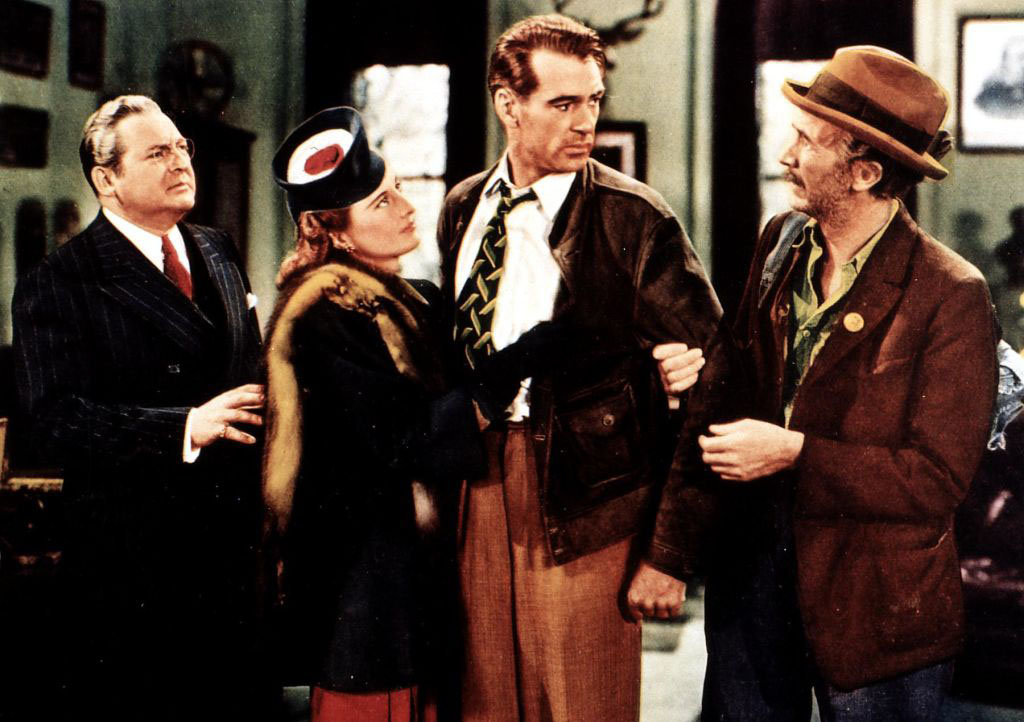
“Fake news” may be modern lingo, but in 1941, when Frank Capra’s “Meet John Doe” came out, fake news was the very plotline of his classic film about an ordinary American.
This was Depression-era America, when jobless men were the most visible men in the nation and hobos lived in cargo trains across the country. Bankruptcies were rampant, and newspapers were not immune.
The film begins with a struggling New York paper, under new ownership, firing many of its employees.
Desperate to save her position, a feisty columnist (played by Barbara Stanwyck) concocts a character named John Doe who writes her a letter railing against everything that’s wrong with his broken world, adding that he will kill himself on Christmas Eve.
Through lots of plot twists and dramatic turns, John Doe eventually becomes one of the most popular men in America, a hero to the working class and all the John Does of the country.
This is where the film made me think of the “fake news” of our day. What struck me is that the fake news in Capra’s film was totally different from the version we’re so used to seeing today.
The fake news in the film came from a columnist who was desperate to save her job and had the pulse of a nation in economic turmoil. However unethical her act, the film makes the daring point that when the stakes are so high and the suffering so severe, some ends may justify some lies.
The fake news that is prevalent in our day is rooted not in good intentions but in cynicism and a desire to crush one’s ideological opponents. It has no redeeming features. It’s a tool of battle, not a wildly imaginative way to perhaps advance the common good.
This is delicate territory. Deception is one of life’s biggest sins. Once we start making allowances, it can become a slippery slope.
That dilemma gives the film its tension. The story is driven by a Big Lie, but this big lie, through the clumsy innocence of an ordinary and honest John Doe who was uncomfortable with the very idea of his deception, becomes a source of national healing and unity.
Yes, this is Hollywood. We should expect big themes, big tensions and big endings.
In this case, a 1941 film gave to the America of 2025 a timeless and big message: when you mean well and care only for the common good, everything can be redeemable, even something as deceptive as fake news.