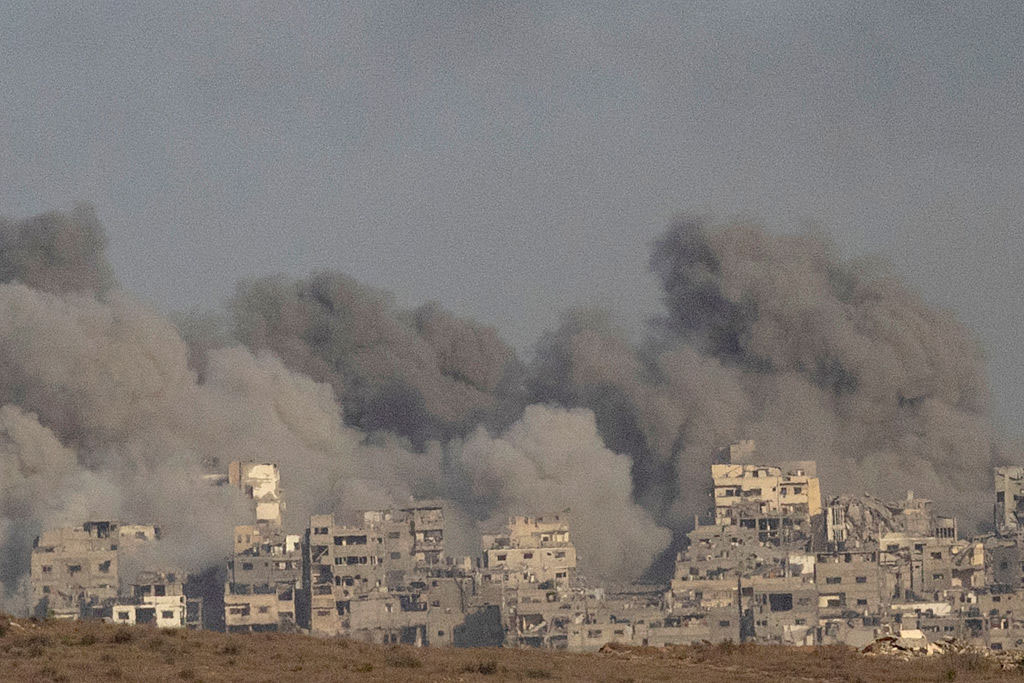
Like most Jews, I very much want the Gaza War to end. The real-world carnage has been horrific, and it will be impossible to repair the political and reputational damage that Israel has suffered until the fighting has ended.
But wanting something is much different from getting it. As much as I wish the fighting between Israel and Hamas were over, the sad fact is that it is not. And as much as many of us continue to pretend that the joyous release of most of the Israeli hostages has been accompanied by an end to the violence, that is simply not the case. Since the ceasefire was announced last month, it became quickly apparent that the most difficult disagreements had not been addressed, most notably the lack of tangible progress on the rebuilding of Gaza, the disarming of Hamas and the necessity of a multi-national force to provide security for the region in the future.
It’s understandable why the negotiators delayed action on such intractable challenges. It was a far better option to achieve the goals of the original agreement than to wait until the deeper disputes had been resolved. But rather than recognizing the release of the living hostages, the escalation of humanitarian aid and the partial reduction in violence as the first welcome steps toward a legitimate and lasting peace, too many of us have been fantasizing that the crisis has been entirely resolved. The fleeting attention span of most international observers has moved on to other matters.
But the war is not over. There is little evidence of any meaningful developments in discussions over necessary economic or logistical plans for rebuilding Gaza. There have been only the smallest and slightest of indications of any other countries being willing to contribute troops to an international peacekeeping force. It’s clear that little improvement will take place on either front until the Hamas threat has been neutralized. And there is no sign at all that the terrorist organization is willing to surrender its weapons: even their ballyhooed offer to “partial” disarmament still leaves their fighters both weaponized and in control most of the affected area.
It’s understandable why few investors would be willing to provide financial support for any significant construction projects while the Hamas threat remains. It’s even more difficult to envision any sovereign nation putting its own troops in danger, especially Arab countries who would face the likely scenario of asking their soldiers to confront armed Hamas militants. There have been token offers for security assistance from Indonesia, Azerbaijan and Pakistan. Egypt has been developing a security force of Gazans to patrol the area, but it is inconceivable that they would ever engage in combat with Hamas’ terrorists. So the broader pan-Arab economic and military presence still appears to be a longer-term aspiration at best.
That’s why it was so notable last week when an Israeli newspaper reported that both key American negotiator Jared Kushner and IDF strategists have begun developing fallback plans in case the 20-point blueprint for peace that Kushner’s father-in-law announced when Israeli Prime Minister Benjamin Netanyahu traveled to Washington several weeks ago. This tacit admission that the ambitious Trump plan is unlikely to succeed has received scant attention in the U.S. American news media is much more interested in this week’s White House visit by Saudi Arabia’s Crown Prince Mohammed Bin Salman, the possibility of a U.S. attack on Venezuela and continuing domestic political drama.
But if neither the Trump administration or the Israeli military is confident that the current peace plan is achievable, the logical question is what comes next. How do the two countries develop and implement a more realistic strategy? Or do they simply return to the “mowing the grass” era, during which tolerating Hamas-generated violence for extended periods with intermittent displays of Israeli force became the norm for the Jewish state and its residents?
I hope that the Gaza war will end soon, as we all do. So it’s reassuring but still unsettling to see that American and Israeli thinkers are now remembering that hope is a feeling, not a strategy.
Dan Schnur is the U.S. Politics Editor for the Jewish Journal. He teaches courses in politics, communications, and leadership at UC Berkeley, USC and Pepperdine. He hosts the monthly webinar “The Dan Schnur Political Report” for the Los Angeles World Affairs Council & Town Hall. Follow Dan’s work at www.danschnurpolitics.com.