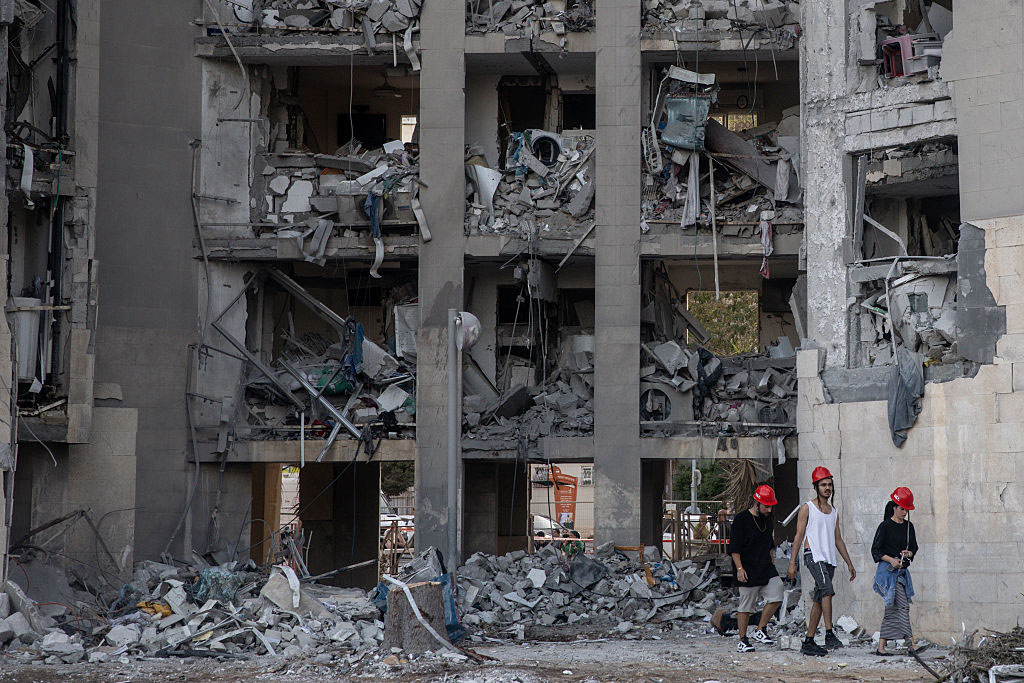
There are so, so many questions about the U.S. bombing of Iran’s nuclear facilities for which we do not yet have answers. Most importantly, we don’t know the extent of the damage that Iran’s nuclear infrastructure suffered or what Iran will do going forward, regardless of what we hear about “ceasefires.” So rather than guessing about Iran’s strategy, let’s instead focus on what we do know in the aftermath of the first direct military action against that country by a U.S. president since Jimmy Carter authorized an unsuccessful attempt to rescue American hostages 45 years ago.
For starters, even without more detailed information, we do know that Iran’s military capabilities — both conventional and nuclear — have been severely weakened. Bottom line, the new reality in the Middle East is that Iran is a paper tiger and will no longer be feared the way it has been for many decades. Not since the end of the Iran-Iraq War in the late 1980s has Iran’s lack of military strength been exposed in this way. But that realization not only affects Israel, which ruled the skies over Tehran when it wanted to, but Iran’s many other antagonists throughout the region as well.
First and foremost on this list is Saudi Arabia. Last week, I wrote in this space that the resolution of the Israel-Iran conflict would be disproportionately influenced by the Saudis, given the relationship that both of the combatants have desired with Riyadh. But that was before Iran’s weakness became so apparent (and before the U.S. entered the fray). Knowing that the Ayatollah has no clothes, Saudi Prime Minister Mohammed bin Salman has almost certainly begun to reassess the strategy that has guided his country’s diplomatic, military and economic strategy in the region for many years.
The Saudis now realize that a partnership with Israel – even an unofficial one – that they believed was an essential bulwark to help protect against Iranian aggression may no longer be necessary. While Iran still maintains a dangerous supply of missiles, militias and terrorists to threaten their enemies, the perception that they are capable of widespread military damage is now gone. Before the Oct. 7 Hamas attacks, Saudi Arabia and Israel were in deep negotiations about the possibility of normalizing their relationship. But to be clear, the primary motivation for the talks was the deep conviction that the two countries shared about the lethal threat posed by Iran and its proxies.
With that threat greatly diminished, bin Salman’s incentive to strengthen an alliance with Israel has also shrunk dramatically. Until now, Saudi leaders have been trying to find a way to balance the security benefits of such cooperation against the domestic politics of their own country. If Iran is no longer an intimidating presence, the need for that balancing act no longer exists. While there are still certain economic and technological rewards that come from collaborating with the Israelis, those conversations can now be much quieter. In other words, Saudi Arabia’s interest in joining the Abraham Accords has taken a hit.
But in the absence of a formidable Iranian menace, Israel’s leaders could lose interest just as quickly. The Saudis have always made it clear that tangible progress toward a two-state solution with the Palestinians was a prerequisite for normalization. Israel’s leaders have publicly dismissed the idea as a nonstarter, but usually found enough creative ambiguity in their refusals to keep the conversation with Riyadh alive. Now they have less reason to maintain the pretense.
The end result is that the elimination of the Iranian menace means the likely death of a possible Palestinian state. There will be fierce debates between Israel and most of the rest of the world as to whether that is a positive or negative development for the region. But in the absence of an external threat like Iran to force the Israelis and Saudis together, it’s hard to see a future for the two-state solution.
Dan Schnur is the U.S. Politics Editor for the Jewish Journal. He teaches courses in politics, communications, and leadership at UC Berkeley, USC and Pepperdine. He hosts the monthly webinar “The Dan Schnur Political Report” for the Los Angeles World Affairs Council & Town Hall. Follow Dan’s work at www.danschnurpolitics.com.