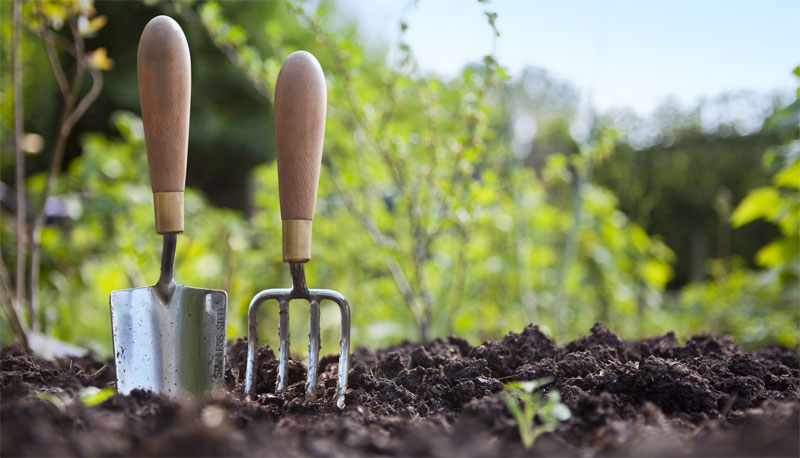
A few years ago I had the madcap idea of planting an organic garden in my backyard. I’m not sure what possessed me, because the closest thing to real farming I had ever done was pulling up potatoes on a kibbutz when I was 16. I’m still trying to get some of the dirt out of my fingernails. But all those boastful “locally sourced!” signs in the supermarket were getting to me, and after pulling up some troublesome rosemary that attracted bees, we had a skinny, empty patch of dirt on the side of the house. You can’t get more locally sourced than your own backyard. I thought, what did I have to lose?
You can’t get more locally sourced than your own backyard. I thought, what did I have to lose? The answer: about 500 bucks.
The answer: About 500 bucks. If I thought buying organic produce was expensive, it was chump change compared with hiring a professional to plant organics for you. This was no DIY job, certainly not for me. Seeds were cheap, but new soil, mulch, fencing, labor, and a drip irrigation system add up fast.
I had never been an organic purist. After all, if pesticides were so bad, why were we living so much longer? However, when I began cooking organic for a friend undergoing cancer treatment, I found that things really tasted better. And my friend — also benefitting from traditional medical treatment — was improving.
When Max the organic gardener came for weekly maintenance, I stood by wearing a pair of gardening gloves so that I could look like I mattered for something other than writing checks. It was exciting to read the little tags jutting out from the fresh soil, identifying the future home of snap beans, zucchini, lettuces, tomatoes and peppers. So far it was mostly a spectator sport for me, but I tried to channel my Jewish ancestors. In the desert we weren’t all accountants, dentists, and marriage and family therapists. We were an agricultural people! We knew how to deal with sheep! We could grow things that we could eat, without pesticides! We could find our way around the desert without Waze!
I waited for the magic to happen. Unfortunately, an organic garden creates an all-you-can-eat buffet for insects, which are maddeningly industrious and ravenous. It became a small miracle to grow an entire strawberry, cucumber, or head of lettuce that hadn’t been aggressively sampled.
For every promising new shoot, I also saw mold assaulting my zucchini plant and bugs nipping at my neo-natal peppers. I played Bruce Hornsby jazz to coax the defiant snap beans to grow, but perhaps fearing being eaten alive by insects, they yielded a miserly 16 beans.
Max explained that yields were always unpredictable. “What did you expect in such a tiny space?” he asked. I watched my garden with concern and anticipation, bent low to the ground to pull weeds, and prayed. Five weeks later, I had bright, fresh red leaf and butter lettuces, but in our drought-riven state, the amount of water I needed to thoroughly wash my organic produce was scandalous. As I washed and rinsed the leaves, I thought, I like pesticides.
I felt triumphant snipping healthy, intact kale with a sharp gardening tool and twisting off scrumptious orange and red grape tomatoes from the vines. One night, we had as many as three grape tomatoes each. Each tomato probably cost 18 bucks.
Then, seemingly overnight, the entire garden was taken over by a weed called Chinese garlic. I couldn’t pull it out fast enough and despaired. Why was it that even our weeds were made in China? I gifted my few lovely lettuces to friends and neighbors, but I threw in the trowel. Life’s too short to fight an invasion by Chinese garlic and worry about the ideal nitrogen levels required for soil to yield broccoli (a lot) versus blueberries (a little).
After this failed experiment, buying organic produce feels almost like a bargain. More importantly, though, I have a newfound appreciation for how much work, attention to detail, patience, and blessings are required to grow food, even with pesticides! Now when I make the blessing thanking God for bringing forth food that comes from the ground, I mean it like never before.
Judy Gruen is the author of “Bylines and Blessings,” “The Skeptic and the Rabbi,” and several other books. She is also a book editor and writing coach.