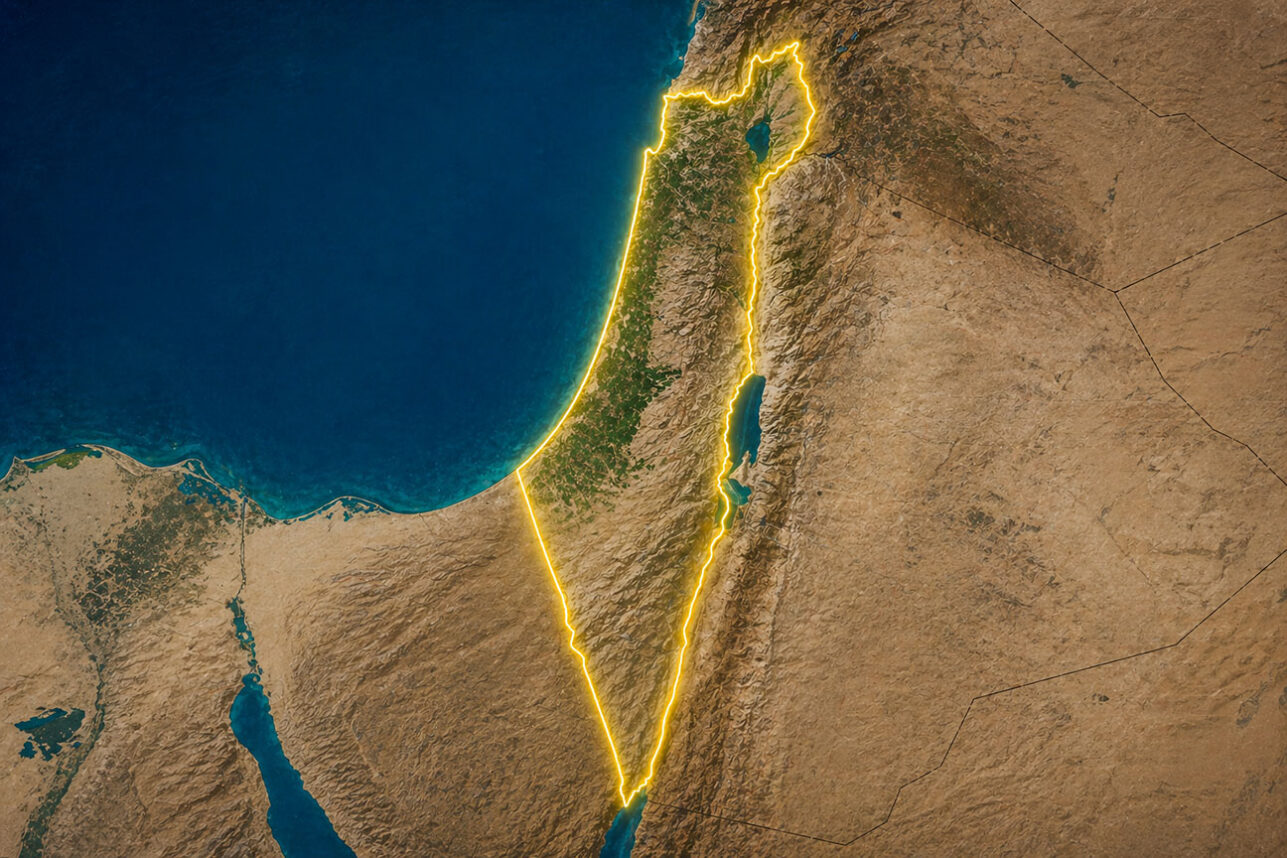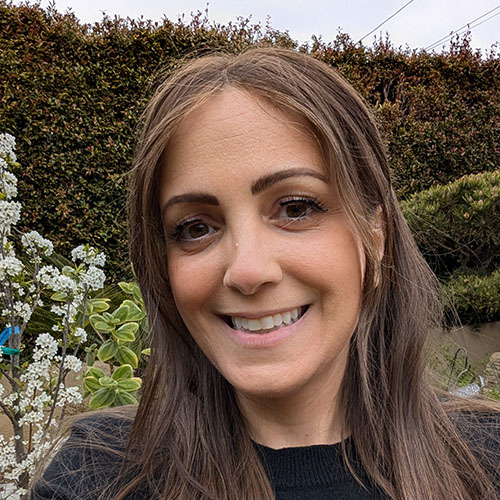

Last week, I celebrated Israel’s 75th year of independence by interviewing Israeli grandmothers. Yes, grandmothers. They’re wise, resilient and, most importantly, brutally honest. And unlike politics, the notion of grandmothers and all they’ve experienced in their lifetimes withstands the test of time. My first column featured a Russian and a Persian grandmother; for this week’s column, I was grateful to interview two extraordinary women, a sabra who is living her best life in Tel Aviv, and a Yemenite Jew who, by her own admission, bakes the best Jachnun in Israel.
“Ronit”
Based in: Tel Aviv
Age: 73
Jewish Journal: You were born in France, correct?
Ronit: Yes, I was born in France after World War II to Polish Holocaust survivors who were in transit to Israel. We arrived in Israel when I was two.
JJ: What was it like to grow up in Israel in the Fifties?
R: It was a special time. Israel was very young. The most characteristic feature was that it was multinational; many languages were spoken and new people were arriving each day.
JJ: When did you move to South Africa?
R: After high school, I went to art school in Jerusalem for a year. My brother-in-law was a volunteer from South Africa in Israel during the [1956] Sinai Campaign. I spent a summer holiday in South Africa and met a prospective husband, who was a nice Jewish-South African doctor. I spent 50 years in South Africa.
JJ: Today, do you feel more South African or Israeli?
I’m undoubtedly an Israeli-Israeli, no question. You can take an Israeli out of Israel, but you can’t take Israel out of an Israeli. I’ve had a very strong connection to Israel, regardless of the geographical connection. South Africa was always a place; Israel was always my home.
– Ronit
R: You’re asking if I’m a South African-Israeli or an Israeli-South African? I’m undoubtedly an Israeli-Israeli, no question. You can take an Israeli out of Israel, but you can’t take Israel out of an Israeli. I’ve had a very strong connection to Israel, regardless of the geographical connection. South Africa was always a place; Israel was always my home.
JJ: Please tell me about your career.
R: As Jews, one thing we take with us wherever we go is an education. I started out in the arts. It was very difficult to get into art school, but I got into the Bezalel Art School in Jerusalem. I also ran art groups with children, including my own. I worked toward a B.A. and a Master’s in Psychology while I was raising my children and did two [both clinical and education] internships, so I could practice. I’ve also been an educational psychologist in a school for exceptional (gifted) children and worked in mental hospitals. After 15 or 20 years, once my children had gotten married and moved away from home, I decided to get back into art, which was an unfinished business, and did a degree in Fine Arts in South Africa. After, I continued psychology, but painted and did exhibitions as well.
JJ: What is your style of art?
R: It’s very contemporary. I work with multi-colored Perspex [Lucite], a type of plastic, which I laser cut and put together using heat. I make body ornaments, almost like sculptures that have shrunk called “Sculpture to Wear.” I also display the jewelry in the gift shop at the Tel Aviv Museum of Art, and have also exhibited in South Africa.
JJ: Do you have a philosophy about art and politics?
J: An artist creates in his own image, so whatever I did and whatever I’m making is a social comment, but it also comes from within. It reflects not only the external environment, but also the internal environment, which is my inner self. The art I made in South Africa was mainly concerned with war, and an ingrained anxiety concerning war. The Holocaust, the ongoing Arab-Israeli conflict, the global as well sporadic violence in South Africa informed my work while I was there. My current themes in Israel reflect light, warmth and joy! I feel safe.
JJ: When did you move back to Israel?
R: Over three years ago, one month before the pandemic started. At long last, I’m back home. And Israel is the best place ever. I’m totally enamored with the place and the people. When I talk to Israelis, I feel like I’m talking to myself, because each one is like an extension of me.
JJ: What do you love most about living in Israel?
R: The most exciting thing is the connection I feel with the people around me. It feels like Israel is hugging me. It’s one big embrace. And I love the extent to which people are involved in what’s happening here. In South Africa, Jews have little voice and are not much involved. Here, everything that happens matters. In a way, I think people in Israel live more, because they’re more involved. Everything is more intense. You feel more alive being here.
JJ: What is one challenge about living in Israel?
R: Having come from South Africa, I lived a very comfortable life and had physical help 24-7. I lived in a very spacious house with a swimming pool and large garden. Here, in Tel Aviv, I live in a flat, three stories up with no elevator. I say that the main difference between South Africa and Israel is that in Israel, the clothes don’t get back to their cupboard on their own! But here, I’m in control. It’s my space. In South Africa, it’s merely existence; it’s not living. We had high walls in Johannesburg. It’s a paradox, you know? In Israel, there’s a security threat, but I’m very free. I go out at night. We’re not looking behind our backs here, like we did in South Africa. It’s amazing. Here, I’m free. I feel free.
JJ: Why did you move back to Israel after 50 years in South Africa?
R: I moved back because I wanted to get back home, to at least feel a sense of belonging. In Israel, we’re straightforward, open and spontaneous. South Africa is an ex-British colony and the social impact is still there. I’ve connected back to my Israeli school friends after 50 years. I have children and grandchildren here. In Israel, I can be a proper safta (grandmother).
JJ: Do you live by a life motto?
R: Yes, “Kol ha’olam kita alef” (“The whole world is the first grade”). We always live and learn. Every day, I learn something new. It’s stimulating to live in Israel. There’s so much culture, especially in Tel Aviv.
JJ: What are some of your favorite activities?
R: My friends and I attend lectures. This morning, I visited the Tel Aviv Museum. I go to concerts and restaurants; friends come over. There’s so much activity. Here, you’re truly alive.
“Shulamit”
Based in: Neve Sha’anan (a suburb of Tel Aviv)
Age: 82
JJ: You were part of one of the most extraordinary returns to Israel in modern history, “Operation Magic Carpet,” the 1949 airlift of 45,000 Jews from Yemen to Israel. Do you remember that experience?
S: Of course. I was eight or nine. You don’t know what we went through to come from Sana’a to Aden (the capital) when we heard about the airlift. Want to hear something funny? When I saw the airplane, I almost threw up.
JJ: Why?
S: It was frightening. I had never seen an airplane before. But I think it was one of the most beautiful sights of my life. That, and when I saw the Kotel (Western Wall) with my own eyes after 1967. I will never forget those two moments.
I didn’t know what to expect when I got inside the airplane. But it was so crammed with Jews. My mother came with me and my father and brothers stayed for a little longer. They told me to sit next to an older man. I was so scared; I put my head on his shoulder because he reminded me of my grandfather.
JJ: Tell me about the difficulty of resettlement (and life itself) once you arrived in Israel.
S: I don’t like to talk about it. Of course, when I really started school, the Israeli-born children picked on me a lot. I didn’t know what I had done wrong. Their mothers and fathers never taught them to love and respect other Jews? I was very mad at my parents, and mad at Israel. Why did I come to this country to be treated like this? But soon, I learned that you need to look out for yourself above anyone else. And if I found someone who was kind to me, like a teacher or another child, I stayed close to that person.
JJ: Did you eventually create happy memories in Israel?
S: I married a good man and had very good children. My parents saved their money for months and we had a beautiful Yemenite wedding.
JJ: Did you wear a gargush (Yemenite Jewish women’s headdress) at your wedding?
S: Yes. It was so heavy. It was the end of spring and I was so warm. I remember they put all kinds of herbs on it. I was hungry and wanted to eat some of them! I was also wearing a lot of heavy gold. I don’t know how my parents paid for the gold. They lived so modestly, but were such kind people. My husband’s family also brought me some gold jewelry. My granddaughter came to my apartment a long time ago and asked to borrow some of my gold bracelets.
JJ: When did she borrow them?
S: I can’t remember. Maybe 10 years ago.
JJ: Shulamit, I don’t think you’re getting them back! How old were you when you were married?
S: I don’t remember. Maybe 17 or 18.
JJ: Please tell me about your career.
S: I was a school teacher for many years. I loved teaching [the] children.
JJ: How touching. I imagine you treated your students with more kindness than you were offered as a child (and a new immigrant).
S: Yes, exactly. Children need kindness more than anything. Once I stopped being angry about my childhood, I was able to be more kind.
JJ: Are your children and grandchildren connected with their Yemenite roots?
S: You want to laugh? My children are less connected than my grandchildren.
JJ: Why is that?
S: For my children, things were very hard as well, even though they were born in Israel. My son told me that if he wanted to survive here, he needed to let go of being Yemenite. But my grandchildren are now telling me they want to know more about my life and their heritage. I have one grandson who visits me every Shabbat. He used to bring Jachnun (Yemenite Jewish pastry) that he bought from an old woman who made and sold them before Shabbat. I asked him, “Why did you bring me someone else’s Jachnun? Your grandmother’s Jachnun is the best in Israel!”
JJ: What makes your Jachnun so special?
S: I use a lot of oil. That’s all.
JJ: Perhaps one of the secret ingredients of your Jachnun is love?
S: I use butter. You have to eat it before you eat meat on Shabbat because it’s dairy. Maybe butter is love?
JJ: Butter is absolutely love. Can I ask you one final question?
S: You are very nice. Are you married?
JJ: Yes!
S: I don’t want to complain about my grandson’s girlfriend because you’re going to publish this story, no?
JJ: Yes, but don’t worry. I’m not printing your last name.
S: She’s a nice girl, but together, they can’t decide anything. I asked him, “Why are you dating someone for five years?”
JJ: How long did you date your husband?
But we knew our role in Israel back then. And we wanted to bring children and grandchildren to life in Israel who could really enjoy what a blessing it is to live here, even when times are so hard. – Shulamit
S: A few weeks. But we knew our role in Israel back then. And we wanted to bring children and grandchildren to life in Israel who could really enjoy what a blessing it is to live here, even when times are so hard.
Tabby Refael Refael is an award-winning writer, speaker and civic action activist, and weekly columnist for The Jewish Journal of Greater Los Angeles. Follow her on Twitter and Instagram @TabbyRefael