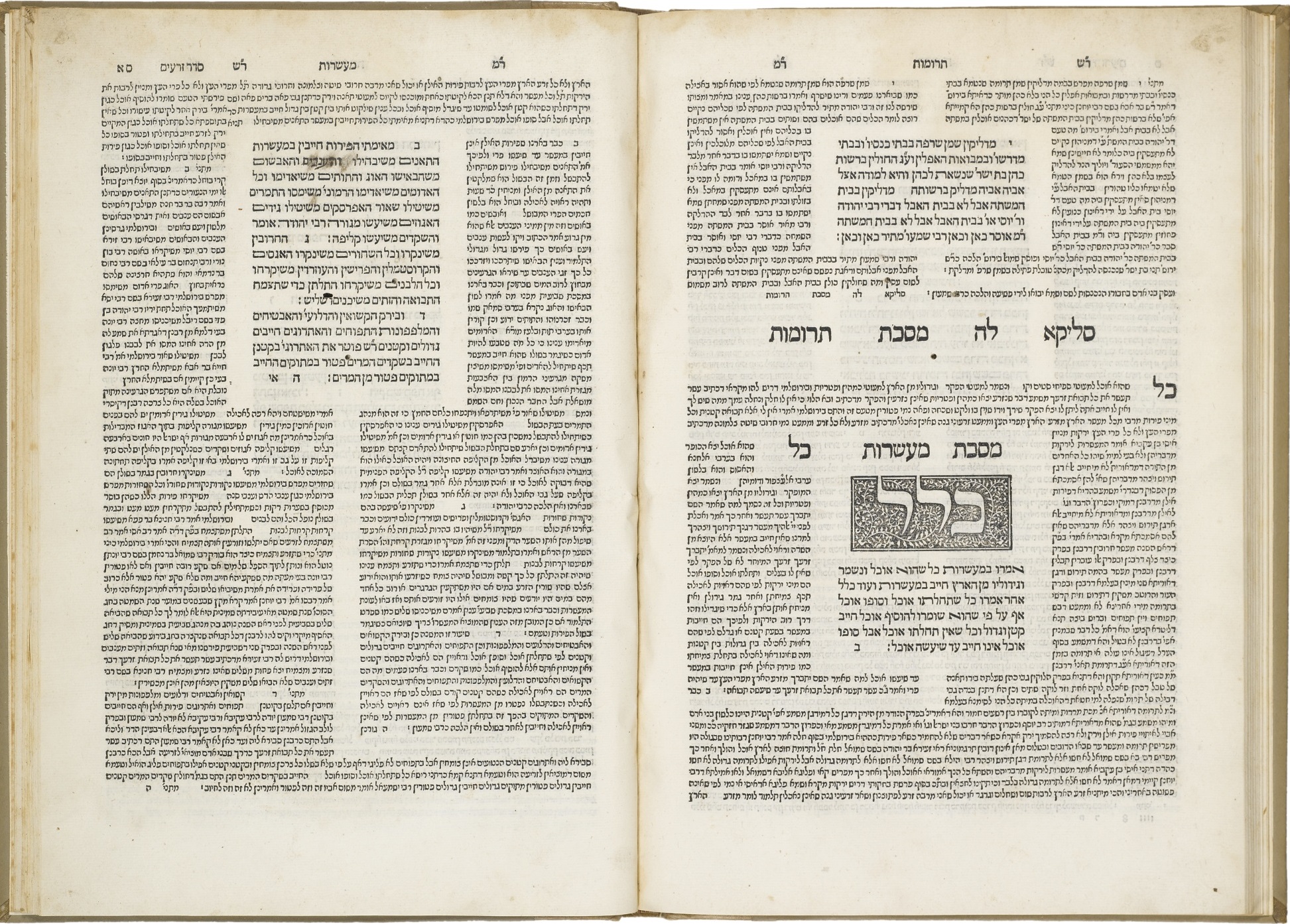
In honor of the completion of the 7 1/2-year cycle of Talmud study this month, and the publication of its new translation of the Talmud, Jerusalem-based Koren Publishers recently donated an entire set of its Talmud to Cedars-Sinai Medical Center’s chapel. To help mark the event, we unveiled the original luchot (tablets) of the Ten Commandments used in the movie of the same name. Director-producer Cecil B. DeMille had these tablets carved from stone of the Sinai desert, and in the 1956 movie, Charlton Heston, who played Moses, held them aloft. DeMille later gifted them to Mount Sinai Hospital (before it merged with Cedars of Lebanon).
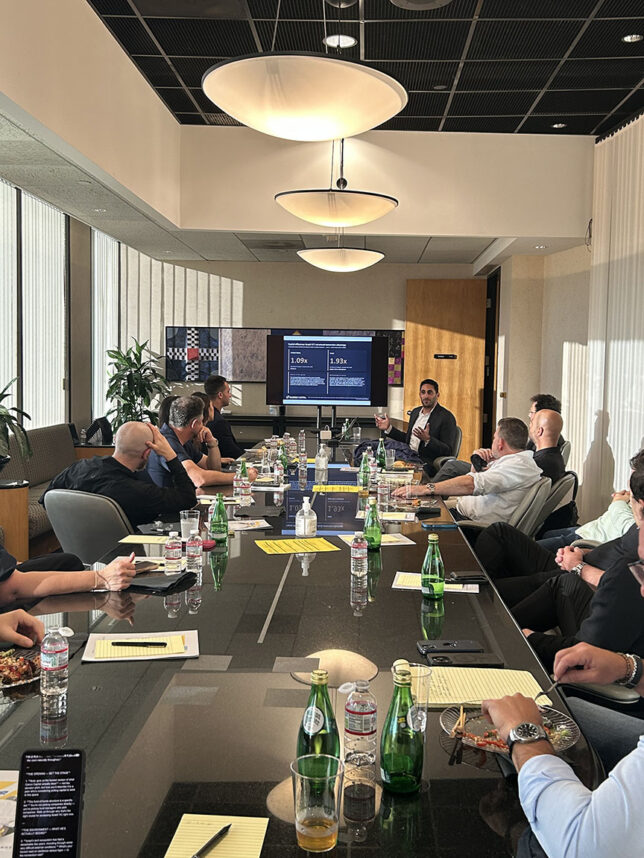
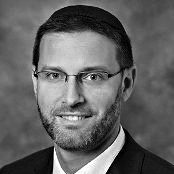
At our event, the tablets were displayed in our chapel during a keynote lecture by Rabbi Meir Soloveichik, director of the Straus Center for Torah and Western Thought at Yeshiva University and rabbi at Congregation Shearith Israel in Manhattan. Soloveichik argued that the famous Rembrandt painting of Moses “breaking the tablets of the law” is actually a depiction of him holding up the second set of tablets, reminiscent of the way the Torah is held up in synagogues after it is read.
Soloveichik maintained that these second tablets actually were holier than the first, which Moses smashed, because they embody a central idea of Jewish history — “the ability to come back after disaster, to not lose hope after all we had was shattered, to re-create anew what has been destroyed.” The second tablets affirm faith in our ability to achieve consolation and re-creation after desolation. While the first tablets were entirely a product of the Divine, the second tablets required Moses’ human effort in partnership with the Divine.
Soloveichik pointed out that although today it is customary to step on a glass at a Jewish wedding, in the past, a glass would be thrown down to the ground at the end of the wedding ceremony, symbolically shattering the tablets. Soloveichik suggested that this was intended to remind us of the rebuilding that followed the breaking of the original tablets, and that despite past tragedies, we must always rebuild and re-create Jewish homes.
Soloveichik linked this concept to our celebration of the Talmud, “the first tablets were the ethereal production of the divine, but the second helped create an oral law through extraordinary human intellectual exertion.” The Talmud represents a covenant renewed through human initiative; tablets of the law created not only by the Divine but in partnership with painstaking human intellectual effort. Re-creation after disaster is itself the foundation of the oral law.
“While the first tablets were entirely a product of the Divine, the second tablets required Moses’ human effort in partnership with the Divine.”
Indeed, after the Holocaust, Jewish refugees asked the leaders of the American armed forces to help publish a Talmud. Although its primary role isn’t publishing books, the U.S. Army saw this as a way of preserving Jewish civilization in the face of totalitarian forces of evil. And so, in 1948, the U.S. Army used a printing plant in Heidelberg, Germany, which during the war had printed Nazi propaganda, to publish 500 sets of “the U.S. Army Talmud.” Soloveichik read us the moving preface from his set of this Talmud: “This edition of the Talmud is dedicated to the United States Army. The Army played a major role in the rescue of the Jewish people from total annihilation. … This special edition of the Talmud, published in the very land where, but a short time ago, everything Jewish and of Jewish inspiration was anathema, will remain a symbol of the indestructibility of the Torah.”
Human initiative and effort created the second tablets and the Talmud, ensuring the Talmud’s transmission and interpretation throughout the generations in the face of all we have endured. In this way, argued Soloveichik, the contents of our Talmud can be seen as even more connected to Sinai than our tablets, donated by DeMille, which were literally carved from Sinai.
The story of tablets lost and tablets regained does not pertain only to Cedars-Sinai. Every one of us embodies the miracle of Jewish fortitude and survival. Continued talmudic study, after so many communities have been destroyed, remains a timeless force of our creativity and endurance.
Rabbi Jason Weiner is senior rabbi and director of spiritual care at Cedars-Sinai Medical Center.