To understand what anyone has written
there is no need to know about his life,
thought Proust, who himself was smitten
in ways that cut him deeply like a knife,
like being homosexual and a Jew,
because of both, perhaps, a serious dandy,
but I believe that with an overview
of authors’ lives their modus operandi
can be far better grasped, for we
must try to know not just where they are going,
but where they’re coming from. A scribe’s esprit
is far more likely to become mind-blowing
when you are able to identify
its sources and presume that you’ve perceived
the struggle it has had to modify
what previous writers normally believed.
That is one rationale for seeking sources
of Bible texts, a quest that spoils their flavor
behaving often like unkosher sauces
that overwhelm what faithful folk can’t savor.
Traditional rabbinic commentaries
protect Tanach’s Old Testamental taste
from what in professorial promontories
distinguished Bible critics have disgraced.
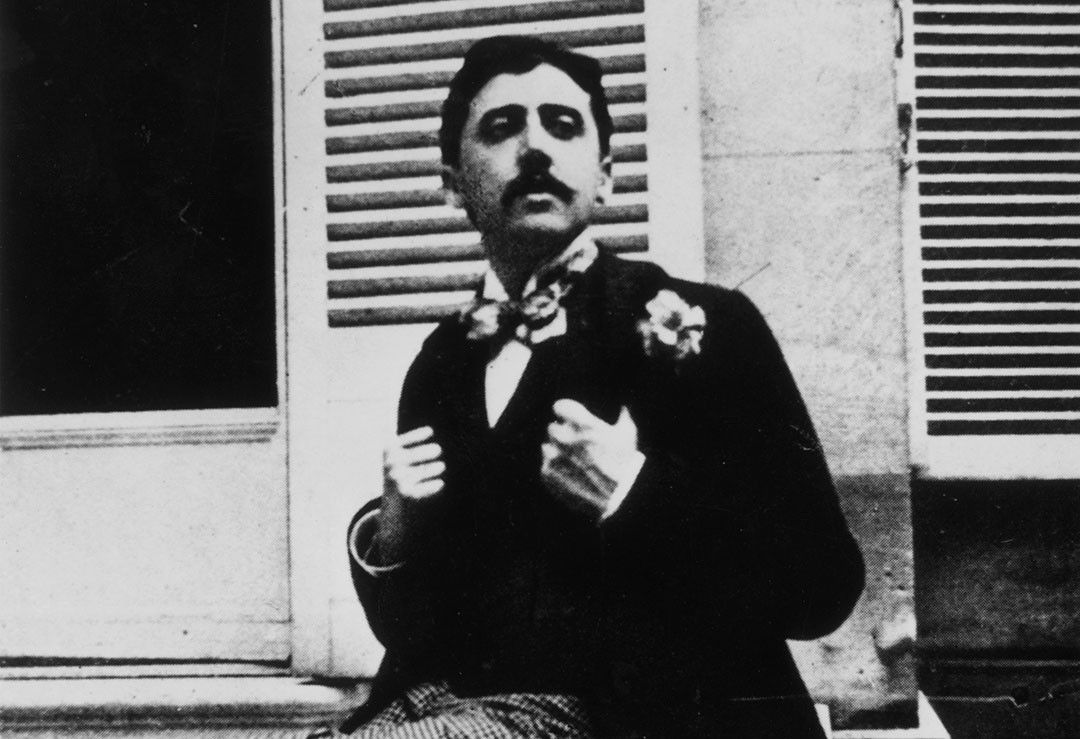
In “Proust the Passionate Reader,” NYR, 4/4/13, reviewing ‘Monsieur Proust’s Library’ by Anka Muhlstein, Edmund White, who died on 6/3/25, writes:
That the most respected novel of the twentieth century (in the last thirty years Proust has superseded Joyce) should have been generated by a debate about Charles Augustin Sainte-Beuve, who ruled French literary life until his death in 1869, is one more indication of how besotted Proust was with books. In order to attack Sainte-Beuve he caricatured his “method” as insisting that one could not read Balzac, say, without first understanding everything about Balzac’s life. Like a good New Critic, Proust thought this biographical approach was absurd; it had led Sainte-Beuve to dismiss Stendhal, whom he had known in society as M. Beyle and who didn’t impress him. As Grau suggests, perhaps Proust feared that future critics would dismiss him as a Jew, a homosexual, and a dandy. No wonder, as everyone knows, the narrator is Catholic, one of the few heterosexual characters left standing at the end of the book, and a serious man who laughs at mere aesthetes such as Bloch and ridicules him for his grotesque Jewishness and pedantry.
Gershon Hepner is a poet who has written over 25,000 poems on subjects ranging from music to literature, politics to Torah. He grew up in England and moved to Los Angeles in 1976. Using his varied interests and experiences, he has authored dozens of papers in medical and academic journals, and authored “Legal Friction: Law, Narrative, and Identity Politics in Biblical Israel.” He can be reached at gershonhepner@gmail.com.