fbpx

June 19, 2025

Echoes of Elie Wiesel: His Protégé Reflects on His Teachings Amid Rising Antisemitism

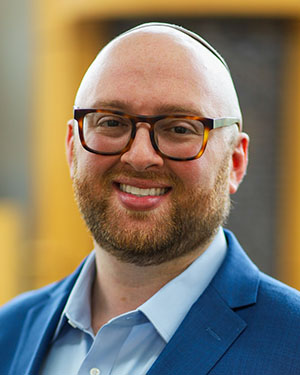
When Dr. Elana Heideman was eight years old, she began writing letters to author Elie Wiesel. It was after she read his book “Night,” which recounts the horrific time he spent as a child in Auschwitz and Buchenwald. She never imagined that one day she would become his protégé — and that she would be the one to organize his annual yahrtzeit in Jerusalem, this year on June 22.

Heideman is a Jewish rights activist, virtual lecturer and motivational speaker. She guides March of the Living trips in Poland for United Nations ambassadors and is an expert in Holocaust and Jewish studies. Born in the U.S., she made Aliyah in 2005, and now lives in Moshav Nes Harim in the Judean Hills outside Jerusalem with her three children.

People familiar with her work and her relationship with Wiesel often ask her what he might have said if he were alive today to witness the events of Oct. 7 and their aftermath.

“I’ll never deign to speak in his voice,” said Heideman. “However, what do I think he would have said? I think that a part of him would have wanted to say, ‘We’ve been shouting this from the rooftops again and again and nobody listens. He said it in 1967, 1973, again and again, that each time a rise in antisemitism happened, with every single war in Israel, it increased the propensity for antisemitism to be allowed under the banner of anti-Zionism.”

Heideman rarely speaks about her relationship with Wiesel, one of the most well-known Holocaust survivors. She’s never been one to namedrop or build her reputation on being “a friend of —,” or in her case, a student of the legendary author and political activist. It’s something she’s always avoided. But now, when asked how the two first met, she shares that it followed years of dreaming of studying with him — a dream that came true when she enrolled at Boston University, where Wiesel was teaching.

 “I went to hear him speak at a public lecture and it was the most profound experience,” she said. “I got the opportunity to ask him a question and as a result of that question, he invited me to do my Ph.D. with him. I laughed, I was like, no way, and he said, ‘Okay, you’ll come back tomorrow.’ I came back the next day, and he said it again, and I laughed. So it was very private and personal. I had known this young Eliezer from ‘Night,’ and here I was sitting with somebody who became the world’s master.”

Heideman said that she felt tremendous honor to be working with the Nobel Peace winner. What she have built since his passing, she said, was her final opportunity to really share with the world what she inherited from him.

“It was a very, very profound experience that I’m honored to carry on. I just had this opportunity to learn with a Tzaddik, to be his protégé. It was a very profound experience that I’m just honored to carry on.”

Her study of antisemitism has enabled her to recognize dangerous patterns repeating themselves — patterns the Jewish community must urgently confront. She warns that extremist movements, from the Nazis to modern-day jihadists, have successfully infiltrated mainstream spaces, especially through social media, by uniting around one idea: blaming the Jews.

“The Nazis could never have imagined this level of success,” she said.

While she acknowledged that it can feel like a lost battle on social media due to the overwhelming volume of anti-Israel content, she emphasized that Jews must remain active — building stronger collaboration between activists and researchers to amplify even the smallest voices.

“The key to effective hasbarah [public diplomacy] is community building,” she said. “Giving people a sense of connection, knowing that they have people they believe in, knowing that there’s somebody for us, a personal friend, and they’re bringing you quality information as opposed to the lies and propaganda that they’re getting. That is where we can make real change.”

Heideman disagrees with the common criticism of Israeli “hasbarah.” She explained that the issue is not with Israel’s messaging itself, but rather with how it is received — or often ignored — by the Jewish Diaspora community. “There is no army among the Jewish world ensuring that Israel’s ‘hasbarah’ is effective,” she said. “Instead of supporting Israel’s efforts, many spend more time criticizing Israel, even while Israel is fighting multiple wars to protect the Jewish people.”

She pointed out that blaming Israel without offering solutions is unproductive. “Snarky videos and humor about Hamas are not a better hasbarah,” she said.

Equally important is uniting efforts and empowering not just high-profile influencers, but also so-called micro-influencers— everyday people with small but loyal followings. In an age of disinformation, people are searching for trusted voices, she said, and it’s up to the Jewish community to become those voices.

Through her platform, Israel Forever, she aims to create a trusted space and build what she calls “virtual citizens” of Israel — connected not just to the nation, but to its destiny.

At one point in the hour-long interview, she warned, “It’s only going to get much worse.” She explained that there is no effective leadership or strategy in place to counter the deep-rooted antisemitic indoctrination already embedded in schools, workplaces, and society at large.

“Let’s say there’s a kid who’s the only Jewish kid in his class,” she said. “We have to think a little bit more realistically about what we can do to protect ourselves, because there’s very little logistical potential for stopping this wave of violence before it will get worse.”

Heideman doesn’t believe that American Jews are prepared to fight the fight that is coming. She urges the community to shift from shock to preparedness. “We have to start realizing that preparation and security are not paranoia.”

While the brutality of the Oct. 7 attacks was horrifying, what shocks her even more is the indifference that followed. “The danger is the indifference — not only from the world toward Jewish suffering, but even from Jews toward other Jews because of differing political opinions,” she said, echoing Wiesel, who often warned against the silence of bystanders.

As she prepares for the upcoming yahrzeit, Heideman reflects on the urgency of preserving Wiesel’s legacy in a world that seems to be forgetting his voice.

“The challenge is how to carry forward Elie’s legacy, how to inherit his message, and how to draw guidance from a figure whose name is increasingly forgotten. We have a responsibility to ensure that the full breadth of his 70 years of voice is not lost to time,” said his student. “It must be honored with the same passion and strength as the voices of the parents and families of hostages, and the survivors of Oct. 7.”

When asked about her most cherished memory of Wiesel, she paused thoughtfully, reflecting on the many moments they shared over the years. Then she said, “Escorting him arm-in-arm to and from class for six years every week and hearing his voice, and I just hope I can carry that on.”

The yahrzeit for Elie Wiesel will include survivors of Oct. 7 and a Holocaust survivor. The memorial service will take place in Jerusalem on June 22, with plans to include Oct. 7 survivors in the service.

To participate in the event, click here: https://israelforever.org/events/intersection-memory-pain-purpose-october-7-elie-wiesel/

Echoes of Elie Wiesel: His Protégé Reflects on His Teachings Amid Rising Antisemitism Read More »
“Are You a Zionist?”: Oakland Coffee House Sued for Refusing Service to Jewish Customers

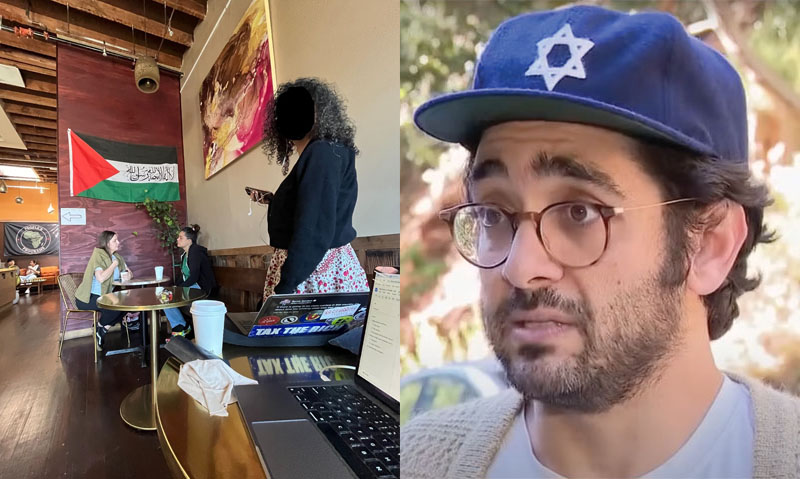
On Oct. 26, 2024, Jonathan Hirsch went to Jerusalem Coffee House in Oakland, California to get a latte for his wife. He was wearing a vintage baseball cap with a Star of David on it. Shortly after, as he and his five-year-old son were playing chess while waiting for the order, the shop’s co-owner, Abdulrahim Harara, demanded to know: “Are you a Zionist?”

It was pretty clear that if the answer had been “yes,” Hirsch would have been asked to leave. But nonetheless, when the Jewish man declined to answer, Harara declared that his hat was “violent” and asked him to leave. He then proceeded to call the police to help him kick out the unwelcome Jew from his coffee shop and didn’t forget to yell after Hirsch’s little boy, “Your dad’s a b—.”

The female police officer who was called to the scene told Hirsch that Harara had the right to refuse service based on religion or sexual orientation.

Fast forward to June 9, 2025. The Justice Department announced that it would file a lawsuit against Harara and Native Grounds LLC, the owners of the Jerusalem Coffee House. According to the lawsuit, the defendants discriminated against Jewish customers. Hirsch wasn’t the only Jew who wasn’t welcomed at the place. The female officer was wrong, of course.

“It is illegal, intolerable, and reprehensible for any American business open to the public to refuse to serve Jewish customers,” said Assistant Attorney General Harmeet K. Dhillon of the Justice Department’s Civil Rights Division. “Through our vigorous enforcement of Title II of the Civil Rights Act and other laws prohibiting race and religious discrimination, the Justice Department is committed to combatting antisemitism and discrimination and protecting the civil rights of all Americans.”

Hirsch himself heard the news like everyone else — from the news. In a phone conversation with The Journal from his home in Oakland, he said he was shocked by the lack of reaction from the Oakland community to the incident. “The reaction was like, ‘oh, this is a political disagreement,’ but I didn’t disagree with anyone. The city didn’t respond, the state didn’t respond. There were very nice quotes by (Sen.) Adam Schiff (D-Calif.) and the governor’s office, but the quotes didn’t do anything.”

Hirsch grew up in Los Angeles and moved to Oakland about four years ago. “My wife and I lived in a lot of places and chose to raise a family in Oakland because we felt it’s an accepting place,” he said. “We knew that there is a longstanding Jewish community here that has great relations with the rest of the community.”

According to Hirsch, there wasn’t much of a response from Oakland. The Jewish community was supportive, but outside of that, not much was said locally. Some wonder what the reaction would have been if it were the other way around — if a Muslim had been refused service by a Jewish store owner just for wearing a keffiyeh. There’s a good chance people wouldn’t have stood quietly and kept mum about it.

Hirsch, as it happened, wasn’t the only victim of harassment by Jerusalem Coffee House. In another incident, an employee told a Jewish customer wearing a baseball cap with a Star of David: “You’re the guy with the hat. You’re the Jew. You’re the Zionist. We don’t want you in our coffee shop. Get out.”

Needless to say, none of these Jewish customers said anything about their political views to Harara or anyone else at the coffee house.

The lawsuit also alleges that on the one-year anniversary of the Oct. 7, 2023 Hamas terrorist attacks on Israel, the Jerusalem Coffee House announced two new drinks: “Iced In Tea Fada,” an apparent reference to “intifada,” and “Sweet Sinwar,” an apparent reference to Yahya Sinwar, the former leader of Hamas who orchestrated the attacks on Israel. The lawsuit further alleges that the coffee house’s exterior side wall displays inverted red triangles, a symbol of violence against Jews that has been spray-painted on Jewish homes and synagogues in anti-Semitic attacks.

While talking with Hirsch, he sounded concerned but also relieved that the U.S. Justice Department has taken this case seriously.

“I’m the guy who was denied a cup of coffee. It’s not a slippery slope anymore. There are two steps from me to the two poor people in front of the museum,” said Hirsch, referencing the Israeli embassy employees, Yaron Lischinsky and Sarah Milgrim, who were shot to death on May 21 in Washington, D.C.

These incidents explain why many Jews believe they can’t identify as one in public without being rendered a political entity and being judged and attacked based solely on their religious affiliation. But Hirsch sees the good that came out of his experience.

“I feel so much closer with so many Jews who came up to me on the street or in the shul. It means a lot to me. The whole Jewish community has been amazing.”

“Are You a Zionist?”: Oakland Coffee House Sued for Refusing Service to Jewish Customers Read More »

From Safe Rooms to Cruise Evacuation, a Cantor Recalls Past Few Days in Israel

Last Thursday night in Tel Aviv, Josh Goldberg was partying on a rooftop bar, celebrating his friend turning 31-years-old at midnight.

But around 3 a.m. on Friday morning, the celebration came to abrupt halt.

“We got a red alert while on the rooftop,” Goldberg said.

After finding shelter in the bunker of a nearby corporate office building, Goldberg and his friends furiously scanned their phones to figure out what was happening. The headlines explained Israel had struck Iran and was expecting Iran to retaliate.

Cantor Josh Goldberg. Courtesy of Congregation Micah

The days that followed saw Goldberg, a former Angeleno and current cantor at a Reform congregation in Tennessee, hurrying in and out of safe rooms in Tel Aviv as a barrage of missiles rained down on Israel, which he was visiting as part of a Birthright Israel Volunteer program.

The experience culminated with an unexpected departure out of Israel on June 17.

In what’s being described as a “remarkable and unprecedented emergency operation,” Birthright Israel chartered a luxury Israeli cruise ship that evacuated more than 1,500 program participants, including Goldberg, from Israel to Cyprus, on Tuesday.

The ship, operated by Mano Maritime, a Haifa-based company that offers holiday cruises, departed from Israel’s Ashdod port in Israel and set sail to Larnaca, Cyprus—an approximately 13-hour voyage that was “conducted under the close protection of the Israeli Navy, which escorted the vessel across the Mediterranean to ensure the participants’ safety amid ongoing regional tensions,” according to a Birthright Israel statement.

Birthright Israel secured the cruise ship as part of a “strategic effort to begin repatriating nearly 2,800 international participants—the majority of whom are young adults from the United States—who have been stranded in Israel due to the escalating conflict with Iran,” the organization said.

Priority was given to those who were nearing the end of their 10-day Birthright trip.

Upon arrival in Cyprus, the participants were being flown to Tampa, Florida on four wide-body planes chartered by the State of Florida in an effort being led by Florida Governor Ron Desantis.

From there, the participants will continue to their respective hometowns, Birthright’s statement said.

Birthright fully covered all transportation costs, including sea and air travel.

Goldberg, a cantor at Congregation Micah in Nashville, Tennessee, was among those onboard the ship. At the time of Israel’s attack on Iran, the Jewish musician was in Israel for a Birthright Israel Volunteer program held in partnership with tour provider Israel Outdoors.

He spoke with me via email as he prepared to board the cruise ship that would begin his journey back to Nashville.

Goldberg described the several preceding days as both harrowing and unforgettable, an experience that affirmed his support for Israel in the face of neighbors that would like to see the world’s only Jewish state eradicated.

“We came to Israel to volunteer, little did we know we were volunteering to witness an historic turning point in the war,” Goldberg said. “Despite how terrifying it was to be under attack from hundreds of rockets, drones, and ballistic missiles from both Iran and Yemen during what we expected to be a routine trip, nobody in our cohort was upset or remorseful about coming—rather we are all filled with pride for our homeland having the courage to stand up to the Iranian regime.”

At the time of Israel’s attack on Iran, Goldberg was staying at a youth hostel in Tel Aviv while spending his days volunteering at sites in Israel’s south, including at an agriculture center in Netivot, an Israeli village just a short drive from Gaza. There, he and his fellow volunteers spent hours “cutting twine used to grow cucumbers,” Goldberg explains on an online blog published on his synagogue’s website, which documents his time in Israel.

Goldberg’s group also toured sites attacked by Hamas on Oct. 7, including Sderot, Kibbutz Re’im and the Nova music festival site.

Following Israel’s attack on Iran, Goldberg and his friends spent a lot of their waking hours in bomb shelters. On Friday night, after a Kabbalat Shabbat service in their Tel Aviv youth hostel, an alert from Israel’s Home Front Command sent Goldberg and the 200 other hostel guests hurrying to the hostel’s safe rooms. More missile barrages occurred throughout the night.

Saturday, he said, was a relatively quiet day.

On Sunday, Birthright moved all its trip participants to the Royal Hotel in Ein Bokek, a seaside resort on the Dead Sea. The thinking was this was a more secure location for the trip participants, Goldberg said.

“Birthright felt this would be a safer and more remote location to keep us all together,” he said. “We still had rocket alerts while we were there, but significantly less firepower was directed to the area than in Tel Aviv where many rockets sadly made contact.”

Born and raised in Dallas, Goldberg moved to Los Angeles to study music at USC before completing a Master of Sacred Music and receiving cantor ordination from Academy of Jewish Religion, CA. While in Los Angeles, he served as a cantorial intern at Temple Akiba and Stephen Wise Temple. At Congregation Micah, a Reform community in Nashville, he teaches religious school and bar and bat mitzvah students, among other duties. He’s released four full-length albums of Jewish music.

From Safe Rooms to Cruise Evacuation, a Cantor Recalls Past Few Days in Israel Read More »

Poem for the Wood Gatherer – A poem for Parsha Sh’lach

So the entire community took him outside the camp, and they pelted him to death with stones, as God had commanded Moses. God spoke to Moses, saying: “Speak to the Israelites and say to them that they must make for themselves a tassel on the corners of their garments. ~ Numbers 15:36-38

It goes quickly –

right from stoning a man to death
for gathering wood on the Sabbath to

being told to wear threads to remind
us to not gather wood on the Sabbath and

six hundred and twelve other things, lest
we get commanded to stone someone to death

for gathering wood on the Sabbath
or all those other things.

This happens in the space of four verses.
There is no mourning or funeral –

none worth mentioning in our sacred text.
There is no warning or pre-information

telling the wood gatherer what the
punishment might be.

The threads were turquoise
if that makes any difference.

It probably didn’t to the
wood gatherer.


Rick Lupert, a poet, songleader and graphic designer, is the author of 29 books including “God Wrestler: A Poem for Every Torah Portion.” Visit him at www.JewishPoetry.net

Poem for the Wood Gatherer – A poem for Parsha Sh’lach Read More »

Amy Bebchick: OneTable, Shabbat and Gazpacho On-The-Go

OneTable is the AirBNB of Shabbat. Aimed at adults 21 to 39, it provides a platform for Shabbat hosts and guests to connect with one another, while giving them resources and support they need to start or restart their Friday night Shabbat practice.

“One of our taglines at OneTable is called Find Your Friday,” Amy Bebchick, Chief Program Officer of OneTable, told the Journal. “There’s not [just] one way to bring Shabbat into your life.”

Some use this end-of-the-week gathering as an oasis with the people closest to them. Others invite their neighbors or open their home for an additional guest or two in order to build community connections. People Shabbat through OneTable in more than 700 communities all over the US and in Toronto.

“There’s a quote from Ahad Ha’am that says, ‘More than the Jews have kept Shabbat, Shabbat has kept the Jewish people,” Bebchick said. “There is something about the ritual … that really is grounding and centering.”

She added, “Now more than ever, we are all really hungry for a way to, to escape from what is going on outside and to really find that place that feels like a warm blanket on a winter day.”

About two years ago, they launched OneTable Together. This version is for adults 50 and up, who are reenvisioning and reengaging with Shabbat, whether they are empty-nesters, moving to  a new neighborhood or their kids are away at camp and they want a different kind of experience.

“We’re in the business of peer-to-peer Shabbat,” Bebchick said. “One of the things that we have learned with OneTable Together … is that more of our dinners on that platform are open [to others]. … they’re wanting to welcome new people in.”

Bebchick has regularly practiced Shabbat her entire life.

“I grew up in a family that had Shabbat dinner every single Friday … before we went to services,” she said. “When all my other friends in high school were going out on Friday night, I couldn’t go until after dinner.”

In college she hosted OneTable dinners, before OneTable even existed.

“My friends and I … were inviting people over; we were living in DC at the time.” she said. “When we were trying to figure out … relationships … and our next job and … moving and navigating money and all of those things, it was a grounding force for me and it continues to be.”

In fact, Bebchick, who previously served as the Assistant Vice President of Philanthropy at the Union for Reform Judaism and as the director of the Hillels at The George Washington University, Miami University (Ohio), and North County – and currently lives with her husband and two kids in Westchester County, New York – starts planning her Friday night menu as soon as she is done with Shabbat the Saturday before.

“I start thinking about what the weather is going to be, what do I want to be cooking, who else might be coming to the table,” she said. “[I like] the idea of really carving that space every Friday… no matter what is going on in the world, it is coming.”

For Bebchick, sometimes Shabbat is dinner around the table in the dining room, other times it’s a picnic or a hike. One of Bebchick’s favorite Shabbat to-go dishes is gazpacho soup. That recipe is below.

If you want to host Shabbat, Bebchick said to start with your comfort level. If you are used to hosting parties, you can apply that experience to your Shabbat, and then get support for the other elements through OneTable’s resources.

“Maybe you want to learn how to do some of the blessings,” Bebchick said. :[Then you need to decide]: Do you want to do them traditionally? Do you want to do them in English, in Hebrew? Do you wanna do something totally creative? We can help you do that too.”

Shabbat is all about marking the moment and making that moment sacred.

For guests who want to be helpful, OneTable added a collaboration function, so hosts can invite guests to help co-create the dinner.

“[Guests] report even higher levels of connectedness and even higher levels of joy, when they leave, when they’ve been a part of it,” Bebchick said. “So we created on the platform a way to say not only, ‘Please bring a delicious bottle of wine,’ but also ‘Do you want to come a few minutes early and help me set up, can you stay late to clean up, do you want to do a Shabbat blessing, do you want to do an icebreaker?’”

At OneTable, they talk about going online to go offline, Bebchick explained.

“We are a social dining platform: you have to go online to post your dinner,” she said. “But it’s really about IRL… how we come together in real life and build those relationships.”

Learn more at OneTable.org. Follow @OneTableShabbat on Instagram.

Read Debra’s cover story on OneTable.

For the full conversation, listen to the podcast:

Watch the interview:

Gazpacho On-the-Go

Adapted from Classic Gazpacho Recipe from “America’s Test Kitchen Complete Vegetarian Cookbook”

Ingredients

1.5 pounds of your favorite tomatoes, any variety, diced up (I generally core and remove seeds for anything that isn’t a small grape or cherry tomato variety)

2 red peppers diced

2 small cucumbers or 1 large – peeled or unpeeled, if using persian style no need to seed, if using garden cucumbers better to seed and then dice

2 shallots, minced

⅓ cup cider vinegar

2 garlic cloves, minced (or frozen)

5 cups tomato juice

1 teaspoon or more of hot sauce, optional

Handful of ice cubes

Plus: Mason jars

Instructions

Combine tomatoes, red peppers, cucumbers, shallots, cider vinegar, garlic, salt (original recipe calls for 2 teaspoons, I generally start with 1 teaspoon), and a couple grinds of black pepper in a large bowl for about 5 minutes, until vegetables start to break down a little

Stir in the tomato juice and hot sauce, if using

Add a handful of ice cubes, cover and fridge (it will be chilled in about an hour but you can certainly make it days in advance)

Pour into mason jars, so you can take it to a potluck or on a picnic.

Serve with corn chips for some added salt and crunch.

That’s really it!


Debra Eckerling is a writer for the Jewish Journal and the host of “Taste Buds with Deb.Subscribe on YouTube or your favorite podcast platform. Email Debra: tastebuds@jewishjournal.com.

Amy Bebchick: OneTable, Shabbat and Gazpacho On-The-Go Read More »

A Moment in Time: “Smile Wrinkles”

”What are those?” Eli asked, pointing to the grooves on my face.

”Smile wrinkles,” I responded.

“Stop smiling,” he instructed.

I stopped smiling.

”The wrinkles are still there, daddy.”

I laughed. I wear them with pride. They reveal experiences and journeys. They are badges of endurance and perseverance. They are reflections of my soul, and they are projections of my mission in life – that is, to help bring goodness into the world.

Yes, I admit to using anti-aging creams.

But the wrinkles are still there, carved into my very being, reminding me at every moment in time that our world needs more smiles, more laughter, more justice, and more goodness.

With love and shalom,

Rabbi Zach Shapiro

A Moment in Time: “Smile Wrinkles” Read More »

A Bisl Torah — A Moment in History

We will always remember this week and in the future, our grandchildren will ask us what we did and where we were. Receiving news about Israel saving the west through her courageous preemptive strike on the Iranian regime’s nuclear program. Texting with congregants and family members in bomb shelters all throughout Israel; people in the shelters singing, praying, crying, hoping their children will sleep a few hours through the hellish nights. So many of us wondering what this moment in history will bring.

Will we witness a free Iranian people? Will Israel and all of humanity experience a safer future because of a weakened Iranian regime and therefore, a weakening of Iran’s proxies? The wait, even thousands of miles away, is debilitating. Israelis stranded in the United States, anxious to go home. Americans stranded in Israel, anxious to go home. Israelis’ movements dependent on each siren they hear. The unknown is frightening.

Psalm 30 reminds us that hope is coming. “One may lie down weeping at nightfall; but at dawn there are shouts of joy.” For Israel, the Jewish people and the western world, nightfall may seem excruciatingly long. But as the Psalmist comforts, joy will soon replace our fear. Light will pierce the darkness. Peace will push away the evil.

May we pray for nightfall to lift, quickly. May Israel prevail and for the world to experience what we recite every day in our prayers, “That peace will fill the earth as waters fill the sea.” Amen.

Shabbat shalom


Rabbi Nicole Guzik is senior rabbi at Sinai Temple. She can be reached at her Facebook page at Rabbi Nicole Guzik or on Instagram @rabbiguzik. For more writings, visit Rabbi Guzik’s blog section from Sinai Temple’s website.

A Bisl Torah — A Moment in History Read More »

The Need to Know About a Writer’s Life

To understand what anyone has written
there is no need to know about his life,
thought Proust, who himself was smitten
in ways that cut him deeply like a knife,

like being homosexual and a Jew,
because of both, perhaps, a serious dandy,
but I believe that with an overview
of authors’ lives their modus operandi

can be far better grasped, for we
must try to know not just where they are going,
but where they’re coming from. A scribe’s esprit
is far more likely to become mind-blowing

when you are able to identify
its sources and presume that you’ve perceived
the struggle it has had to modify
what previous writers normally believed.

That is one rationale for seeking sources
of Bible texts, a quest that spoils their flavor
behaving often like unkosher sauces
that overwhelm what faithful folk can’t savor.

Traditional rabbinic commentaries
protect Tanach’s Old Testamental taste
from what in professorial promontories
distinguished Bible critics have disgraced.

In “Proust the Passionate Reader,” NYR,  4/4/13, reviewing ‘Monsieur Proust’s Library’ by Anka Muhlstein, Edmund White, who died on 6/3/25,  writes:
That the most respected novel of the twentieth century (in the last thirty years Proust has superseded Joyce) should have been generated by a debate about Charles Augustin Sainte-Beuve, who ruled French literary life until his death in 1869, is one more indication of how besotted Proust was with books. In order to attack Sainte-Beuve he caricatured his “method” as insisting that one could not read Balzac, say, without first understanding everything about Balzac’s life. Like a good New Critic, Proust thought this biographical approach was absurd; it had led Sainte-Beuve to dismiss Stendhal, whom he had known in society as M. Beyle and who didn’t impress him. As Grau suggests, perhaps Proust feared that future critics would dismiss him as a Jew, a homosexual, and a dandy. No wonder, as everyone knows, the narrator is Catholic, one of the few heterosexual characters left standing at the end of the book, and a serious man who laughs at mere aesthetes such as Bloch and ridicules him for his grotesque Jewishness and pedantry.


Gershon Hepner is a poet who has written over 25,000 poems on subjects ranging from music to literature, politics to Torah. He grew up in England and moved to Los Angeles in 1976. Using his varied interests and experiences, he has authored dozens of papers in medical and academic journals, and authored “Legal Friction: Law, Narrative, and Identity Politics in Biblical Israel.” He can be reached at gershonhepner@gmail.com.

The Need to Know About a Writer’s Life Read More »

Sephardic Torah from the Holy Land | When War is a Mitzvah

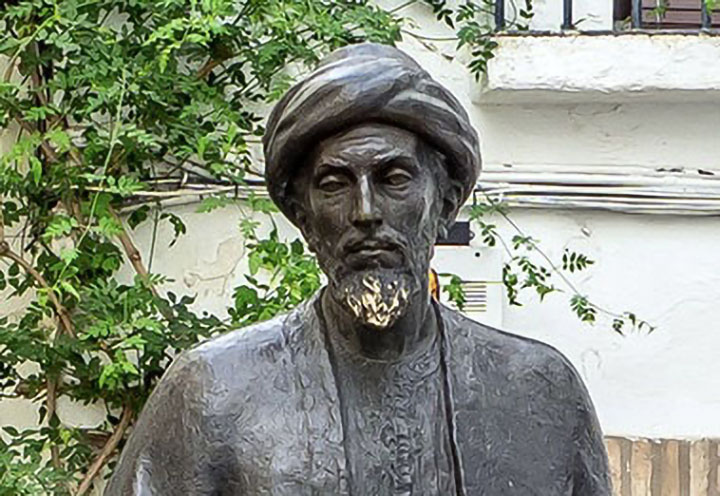
In his vision for the Messianic era, Maimonides depicts a world where the sole pursuit of the Jewish people will be to study Torah and wisdom, bringing the entire world closer to God:

“The Sages and the prophets did not yearn for the Messianic era in order to have dominion over the world, to rule over the gentiles, to be exalted by the nations, or to eat, drink, and celebrate. Rather, they desired to be free to involve themselves in Torah and wisdom. In that era, there will be neither famine or war, envy or competition, for good will flow in abundance and all the delights will be freely available as dust. The occupation of the entire world will be solely to know God.” (Mishneh Torah, Laws of Kings and Wars, 12:5).

This global society of scholars and philosophers envisioned by Maimonides is a peaceful world void of the need for Jews to engage in military campaigns of self defense and survival. The time spent on securing our borders and fighting enemies that seek to destroy us will be spent reading, writing and discussing Torah and philosophy. Sign me up for this and save me a spot.

But Maimonides also understood that until we get there, we must live and face the realities of this non-Messianic era we live in – including the grim realities of war.

In the Mishneh Torah, the same halakhic code where he describes the Messianic era, Maimonides lays out the circumstances when war is actually a commandment, a mitzvah:

“Which type of war is considered a mitzvah? A war to defend Israel from an enemy that attacks them.” (Mishneh Torah, Laws of Kings and Wars, 5:1).

Hamas’s vicious terror attacks on October 7 immediately come to mind.

So does this war with Iran.

“A war to defend Israel from an enemy that attacks them” aptly describes Iran’s regime of Ayatollahs. For the past 46 years, Iran has declared and actively pursued their intention to destroy the Jewish State.

Hezbollah is Iran, Hamas is Iran, and Iran’s sponsorship of these terrorist proxies on Israel’s borders have resulted in thousands of Israeli deaths.

Iran has launched deadly ballistic missiles on Israeli civilian populations this past year, have openly made genocidal threats against Israel, and are actively developing nuclear weapons to use against Israel. This Iranian regime of Mullahs is the ultimate “enemy that attacks them.”

Ridding the world of Iran’s terrorist regime is a mitzvah, one giant step for mankind towards Maimonides’ peaceful Messianic era of Torah and wisdom – for Jews, and for all of humanity.


Rabbi Daniel Bouskila is the international director of the Sephardic Educational Center.

Sephardic Torah from the Holy Land | When War is a Mitzvah Read More »

Print Issue: The Lion Rises | June 20, 2025

CLICK HERE FOR FULLSCREEN VERSION

Print Issue: The Lion Rises | June 20, 2025 Read More »