
In 2014, British-Israeli journalist Jonathan Spyer was on assignment for Jane’s Intelligence Review. He was on the Kurdish side of Kobane in northern Syria, where he witnessed an exchange of gunfire between the Kurdish YPG and ISIS. A few days later, he crossed back into Turkey, where he managed to coordinate an interview with two ISIS members, and had tea with them in an apartment in Kilis.
Reflecting on these two extremes, Spyer quipped, “That was quite interesting, for example,” adding that it said sums up the practice of covering wars: “The weirdness, the chaotic nature and the fluidity of front lines. If you’re going to be a correspondent there, you have to know how to traverse those lines.”
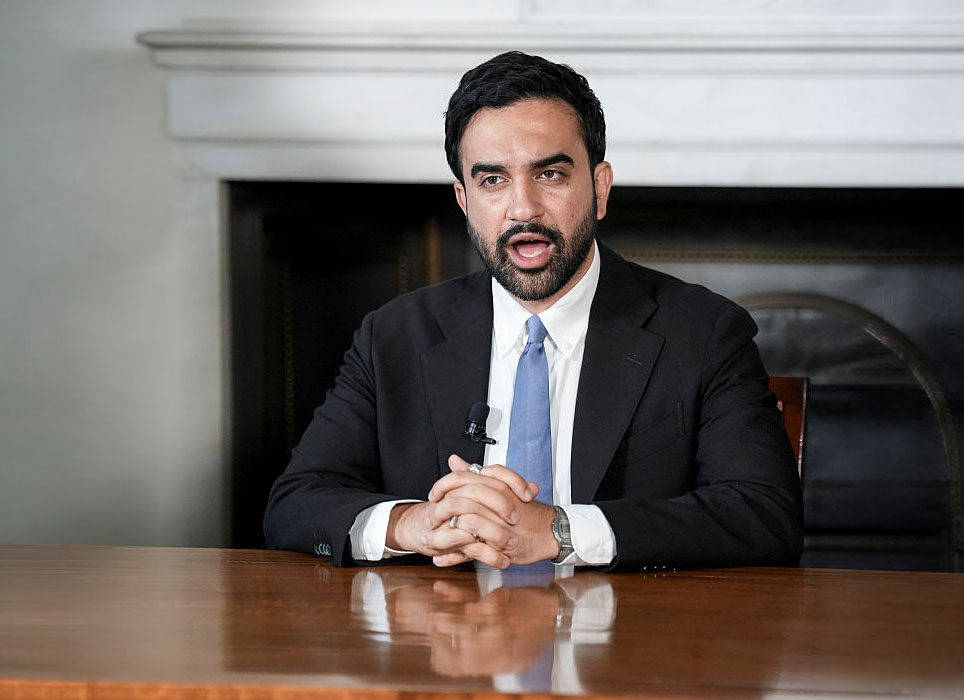
An expert on Syria, Iraq and radical Islamic groups, Spyer is a fellow at the Jerusalem Institute for Strategic Studies and the founder of the Middle East Center for Reporting and Analysis. Yet despite working in deeply Islamic regions, Spyer’s Israeli and Jewish identity hasn’t posed much of an issue, except when it comes to covering the ongoing Syrian civil war. With President Bashar Assad’s regime paranoid that Zionists are infiltrating, Spyer said, “They’re probably right.” He added that his 2017 tour of Aleppo, Homs and Damascus was the first time he felt a need to create a cover identity with a false online footprint.
However, it is actually the United States that has banned Spyer. He was slated to speak at several events in March, including the American Israel Public Affairs Committee (AIPAC) policy conference and an Army Special Forces base. After receiving word that his 10-year visa had been abruptly canceled, Spyer assumed it was simply a bureaucratic hiccup. However, when he applied for a new visa, it was denied based on “Section 212 (a) (3) (b), which prohibits issuance of a visa to a person who at any time engaged in terrorist activities or was associated with a terrorist organization.”

“There’s no reason whatsoever that I’m an enemy of the state,” Spyer said. “On the contrary, I’m a great supporter and friend of the U.S.”
While he has received no official reason behind the U.S. decision to ban him, Spyer said he believes his visa was denied because of his vocal support of the Kurdish cause, specifically, the Kurdish Workers’ Party (PKK), which has been designated a foreign terrorist organization by the United States. He also suspects that the Turkish regime, known for suppressing journalists and Kurdish sympathizers, was somehow involved in having him banned.
Although Spyer acknowledges that his plight is “not a human tragedy” and that every country has the right to deny entry to foreign nationals, he hopes the ban ultimately will be reversed.
“The U.S. has become a really important part of what I’ve been doing over the last couple of decades,” he said, “and I am really keen to continue that.”