During Passover, we celebrate the end to slavery. We are wrong.
Throughout the world, nearly 37 million men, women and children are held in bondage. Fighting slavery has not been a Jewish communal priority, but it is time we change that. We must speak up and fight for the freedom of those who are enslaved today. They are not far away; in fact, thousands of them live among us.
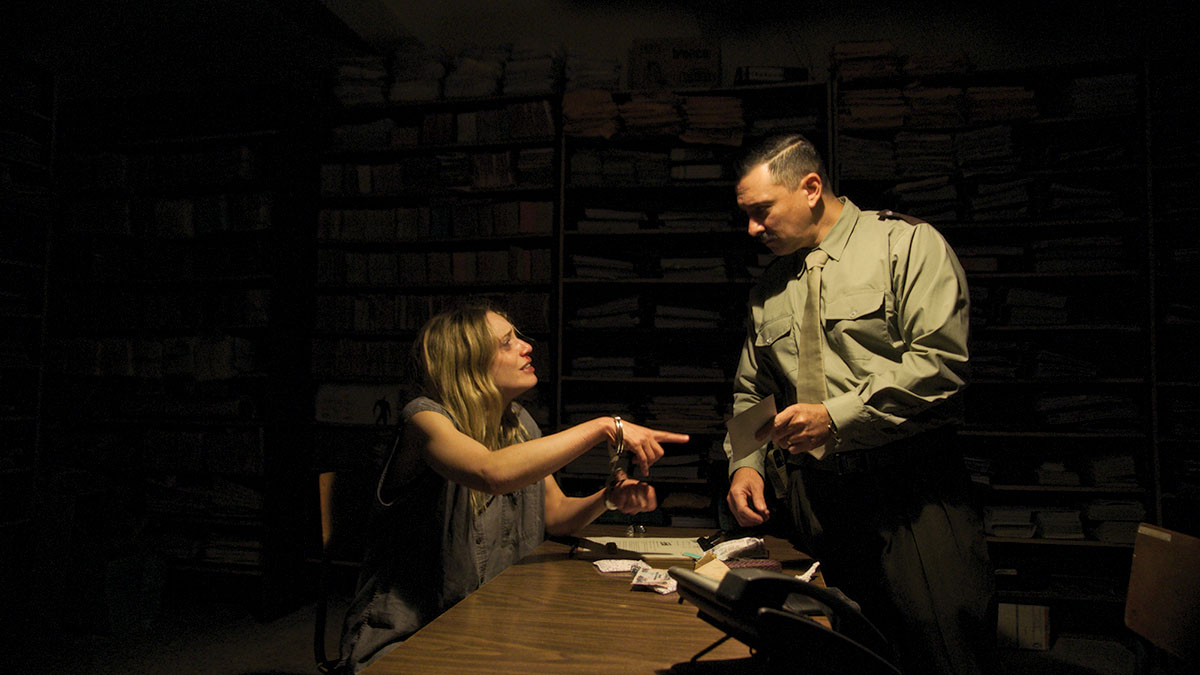
Let’s call her Anna. Anna’s father had sexually and physically abused her since she was a child, but our dysfunctional foster system only exchanged abuse for extreme neglect. Finally, she ran away. Now in the streets, unable to get work, find shelter or support herself, a young man sees that she is vulnerable and approaches her. He pretends to be her boyfriend but soon begins raping her and then forcing her to have sex for money, all of which goes to him. She is often stopped by police officers who arrest her for prostitution, solicitation, drug abuse, petty theft and loitering. She spends the next few years in and out of the juvenile justice system and is picked up by her trafficker every time she gets out.
Why not leave her trafficker? Because she still has nowhere to go and no way to support herself. And all the police do is lock her up for crimes she has been forced to commit. By the time she is 20 years old, she has had several traffickers/rapists and she has been arrested and convicted of multiple crimes.
Let’s name this. It is bondage. Anna must “choose” between being trafficked by a rapist or being locked up by the juvenile justice system. Anna herself is a composite, but she is typical. A typical modern slave.
Do our institutions help her achieve her own freedom? Far from it. Anna might get very lucky, find a trafficking hotline, call for help and get assistance from a social service agency and police trained to recognize trafficking. They understand she is a victim, not a criminal. But she will continue to be shackled by the chains of an unjust criminal record, making it virtually impossible to rent an apartment or get a job. It is bad enough to be brutalized by traffickers; it is outrageous to be silenced and further mistreated by our institutions of justice.
Our legal system treats brutalized victims of human trafficking — both sex and labor trafficking — as criminals. Traffickers force, defraud and coerce victims into crime, and law enforcement and the courts then convict and imprison them without even considering the facts of their enslavement. California must change this unjust and unfair treatment of human trafficking survivors — now.
The Jewish community can help by advocating for three critical policies that would ensure that victims of trafficking are no longer treated as criminals: safe harbor for child victims, which would ensure that children who are committing crimes due to trafficking are treated as victims; an affirmative defense for victims charged with a crime so that they can use the fact that they were victims of human trafficking to have charges against them dismissed; and vacating convictions, a policy that would allow survivors of trafficking to retroactively have their criminal records vacated for crimes they were forced to commit.
Now, the good news: We don’t have to start from scratch. Assemblymembers Miguel Santiago, Shirley Weber and Nora Campos have introduced Assembly Bills 1760, 1761 and 1762, which are bills that take steps toward the aforementioned policies in California. We have a unique political opening for reform. These are anti-trafficking bills. They are anti-slavery bills. They are also Jewish bills. Supporting them is not simply a good thing to do; it is the obligation of our heritage.
The Torah commands us to protect the stranger in our midst 36 times — according to the Talmud, more often than the laws of the Sabbath or keeping kosher. Passover only begins this commitment; for the next seven weeks, we prepare for Shavuot, the festival of justice. During this time, think about the very tangible ways you can help stop the cycle of slavery in Los Angeles and California. Will the Jewish community step up to make a difference? Or will we stand idly by? The choice is yours.
Maya Paley is the director of Legislative and Community Engagement at the National Council of Jewish Women/Los Angeles and Jonathan Zasloff is a professor of law at UCLA.