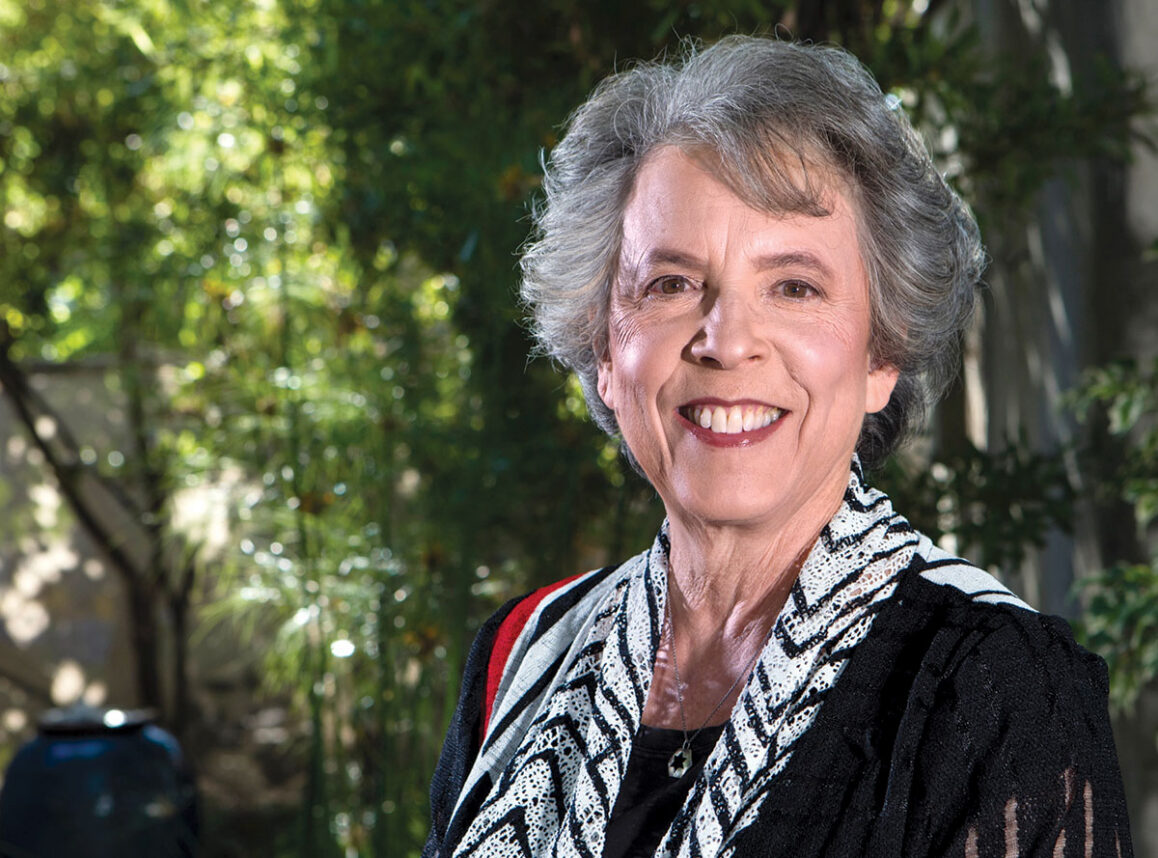
Barbara Azrialy spent much of her childhood in Cincinnati pretending to be an only child. In fact, she had two brothers, one five years older and the other three years younger. Both brothers were mentally retarded.
“Nobody talked about it back then,” said Azrialy, 62, now a special education teacher with the Los Angeles Unified School District. “The worst kind of disability was something to do with the brain. If it was an obvious one like being blind or deaf it would have been more acceptable.”
While attitudes have changed in the intervening years, “It’s still difficult for a sibling to go unscathed,” she said.
HaMercaz hopes to change this. A collaborative project of The Jewish Federation of Greater Los Angeles, Jewish Family Service and seven other Jewish community agencies, HaMercaz (which means “the center”) assists families with children up to age 21 who have developmental and learning disabilities such as autism, ADHD (attention deficit hyperactivity disorder) or mental retardation.
The two-year-old program serves as a “one-stop-shop” for families, providing guidance, support, education and referrals. Programs include a toll-free warmline; support groups for mothers, fathers and grandparents; and referrals to agencies that can provide assistance, such as interest-free loans or parent respite.
This year, HaMercaz is focusing on the needs of siblings, said Sally Weber, JFS’ director of Jewish community programs and a co-founder of the program.
“The sibling relationship is the longest lifetime relationship,” she said. “It can have significant implications as siblings grow older.”
In October, HaMercaz held a workshop for parents on the special needs of siblings, presented by marriage and family therapist Diane Simon Smith.
“Children may be confused about their sibling’s condition or have misconceptions about the cause of the problem,” she said. “They may resent the disruption of plans, frequent medical and therapy appointments or attention required by the special-needs sibling. They may feel isolated, embarrassed or an undue pressure to achieve.”
For Azrialy, who wrote a book about this topic, the overwhelming issue was guilt.
“I felt guilty for being healthy … for not being a good enough sister, for things coming so easily to me,” she said. “I didn’t do anything to deserve my good health, and [my brothers] didn’t do anything to deserve what they got.”
Parents can help mitigate such sentiments, Simon Smith said.
“It’s important for parents to provide a safe place for siblings to talk about the range of their feelings, whether with them or another safe adult,” she said. “Also, providing siblings the opportunity to meet peers in similar life circumstances helps them realize that they are not alone and that the kinds of feelings they experience are shared by others.”
Smith said that along with presenting challenges, having a special-needs sibling bestows certain gifts.
“These children tend to have greater maturity,” she said. “They have a different outlook, and a sense that other kids can be consumed with trivial things. They learn compassion, tolerance and understanding of others’ differences.”
This seems to be the case for Rachel Wolf. A 16-year-old student in the Humanities Program at Hamilton High School, Wolf has a 12-year-old brother, Danny, with cerebral palsy. He uses a walker or chair to get around, and communicates with non-family members using a touch-screen computer.
“I’ve never known life any other way,” she said. “He’s still my brother.”
Wolf has benefited from parents who speak openly with her about Danny’s condition (her mother, Michelle, is the other co-founder of HaMercaz), a supportive community and participation in programs for special-needs families. She and Danny especially enjoy taking part in the Miracle Project (not affiliated with HaMercaz), a drama program for special need kids and their “typically developing” siblings and peers.
“Everyone has quirks and ‘special needs,'” Wolf said. “Sometimes it just doesn’t show.”
Based on the growing incidence of autism spectrum disorders alone, demand for programs like HaMercaz is likely to increase. A neurological condition, autism affects a person’s ability to communicate, form relationships and respond appropriately to the environment. Whether due to changes in how children are diagnosed or an actual increase in prevalence, autism is growing at the rate of 10 percent to 17 percent a year, according to the Autism Society of America. In California, reported cases increased by 273 percent from 1987 to 1998.
HaMercaz will hold more sibling-related programs in the coming months. In December, the group will host a Chanukah celebration at the Skirball Cultural Center and will hold a family day at the Zimmer Children’s Museum in February. Other programs slated for next year include a three-part workshop on the Individualized Education Program (IEP) as well as programs on safety, vocational needs, and dealing with difficult behavior. Families are also encouraged to contact partner agency Jewish Big Brothers Big Sisters of Los Angeles to match siblings with Big Brothers and Sisters.
For more information, call 1-866-287-8030 or go to www.HaMercaz.org.