I have worn a hat every day of my life since I was five or six years old. I wore a hat to school, I wore a hat when I came home from work, and I wore a hat on lazy Sundays. I have had all the classics; the first year Marlins cap, the Los Angeles Raiders hip hop hats, and basically any White Sox symbol ever made. I even wore a hat to Homecoming in High School (classy). At first this became my thing that made me different, even though my grandmother warned that it would make me go bald (luckily that was a bubba meisa). As I evolved Jewishly, the hat was much easier to explain to people than a kippah. So it stuck with me.
Recently, I was back in New York for a conference and realized that I left my kippah on the entire time in NYC and not once put my (currently Blackhawks) hat on my head. I had readopted the religious “norm” of New York City of Jews wearing kippot. In Minnesota I wear a kippah every day as well, but place a hat on my head when I am out or going into restaurants. In Minnesota I do not, yet, have the luxury of having kosher restaurants and therefore in order to respect my Orthodox colleagues and some Conservative colleagues, I choose not to make others assume that the establishment I am eating in is kosher. In NYC I only ate at kosher restaurants so I did not have this problem.
In Minnesota with the kippah comes questions and notoriety because I am different. My favorite story was on my way into Starbucks, the typical Minnesotian decked out in purple on gameday chewing on his morning cigar, looks at my “Da Bears” kippah and says “That is the best yalmulka I have ever seen. Da Bears!” This has happened more than once, including times while not wearing that specific kippah. The fact is being a rabbi in town is more noticeable and the occasional anonymity I would desire, especially while meeting with congregants, flies out the window because of my head covering.
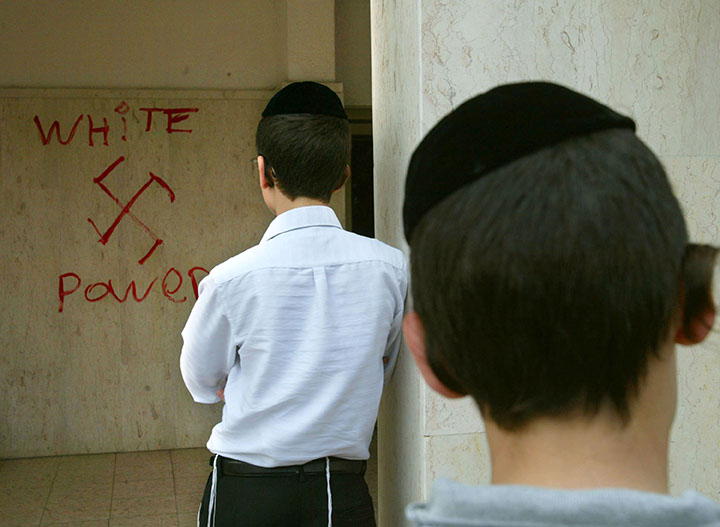
Each year I teach Modern Jewish Law to my 9th grade class. While most, if not all, do not regularly wear a kippah we study the topic from a social level. They struggle to keep it on their heads, even in class, but when shown stories and sources of being forced to take head covering off, they get upset and passionate about the topic. It is because of them that I know that I need to keep my kippah on and that the hat, which I have always worn, needs to take a back seat. Wearing a kippah in a kippahless land has the potential to have an incredible impact on others. To see the rabbi at a bar or sporting event wearing religion and not hiding it, sets an example for Jews and non-Jews of the seriousness we, as rabbis, take our jobs. And makes me question why I would ever step foot in a place in which I was not comfortable wearing it in the first place. The fact is that the kippah, in today’s world, functions differently in each community. When one decides to wear it, we need to remember that it not only means something to the individual and his/her connection with God but also to the public and to our fellow Jews.