
The physician who came to see me happened to be a Persian Jew. After listening to my story and examining me, he diagnosed a rare, genetic, progressively debilitating neuromuscular disease found among Persian Jews called Hereditary Inclusion Body Myopathy (HIBM). This is a muscle-wasting disease that manifests in the prime of one’s life and can lead to severe incapacitation within 10 to 15 years from diagnosis. He then informed me that there was no known treatment or cure.
That was 11 years ago.
At that moment, everything I thought I knew about who I was and where my life was headed collapsed. Among a flood of racing thoughts, my mind kept returning to one: I guess I am not as lucky as I thought I was.
I will never believe this disease was “meant to be,” but I do believe I can find meaning in it. I have learned that if you don’t grieve for your losses, you won’t have gratitude for what you do have.
Life had always been comfortable for me. I actually used to wonder if maybe my family was immune to tragedy. How did I get so lucky? I even got to fall in love with my now husband during medical school. Everything was going according to plan. But this news? This diagnosis? This moment? This was not part of the plan. This was not the way my life was supposed to go.
It was during the intern year of my psychiatry residency when people started asking me why I was limping. I didn’t know to what they were referring. I was 29 years old and a model of good health. I’d been working out for as long as I could remember, climbed mountains from the Grand Tetons to Mount Kenya, ran the Jerusalem half-marathon and even cycled from San Francisco to Los Angeles for the AIDS Ride. I shrugged them off.
But over time, I noticed something was off. I started tripping more often. I chalked it up to clumsiness. After all, I was always rushing around, multitasking. Or maybe it was the exhaustion from 30-hour hospital shifts. Regardless, I didn’t make much of it. A year into it, however, I started having trouble running. And then trouble jogging. And eventually, I couldn’t do either.
It wasn’t until my third year of residency that I decided to investigate. My husband and I wanted to have a child. By then, even walking required effort. I bounced from sports medicine doctor to podiatrist to physical therapist to neurologist to, finally, the Persian specialist who told me I had HIBM (now known as GNE Myopathy).
Today, though I am not dying — the disease is not fatal — my muscles slowly are. Over the past 11 years, I have gone from walking with a slight limp, to wearing leg braces, to holding a cane, to using an electric scooter for long distances. I have gone from experiencing only lower-body weakness to losing a significant portion of my upper-body strength. I have had to tolerate physical and emotional discomfort in ways I never believed I could.
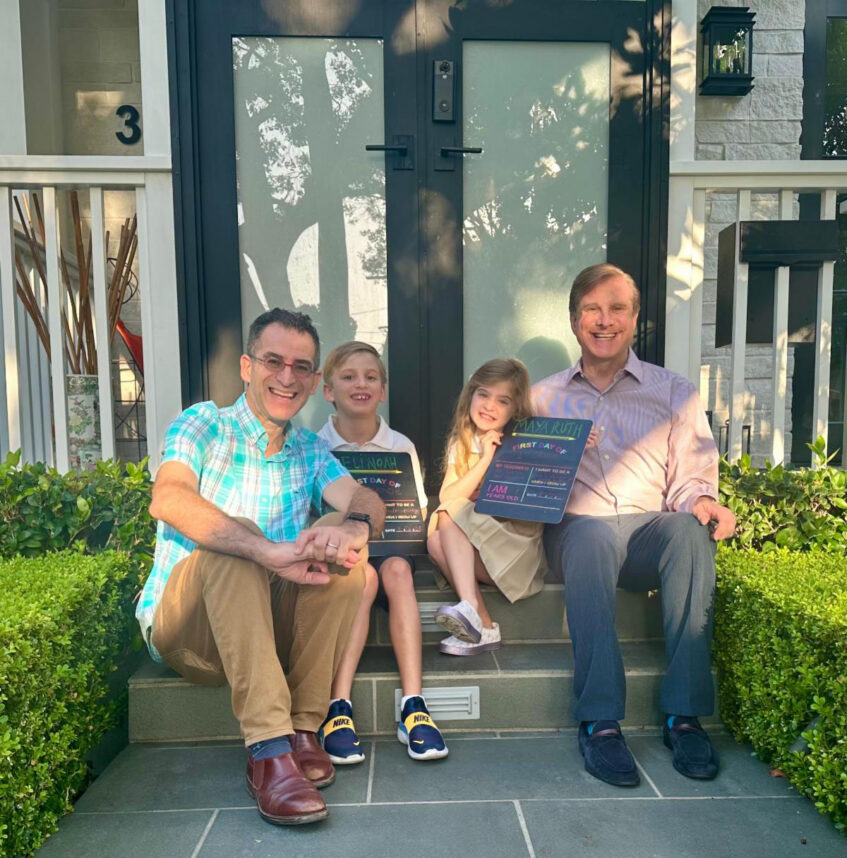
And yet, right alongside this journey, I also have had two kids, maintained a successful private practice and become a patient advocate — educating others about HIBM and raising awareness around what it’s like to live with a disability.
“Resilient” is not how I would have ever described myself pre-disease. I was the opposite — sentimental, sensitive, always in touch with my emotions and never good at compartmentalizing. After my diagnosis, I cried all the time. I was raw and vulnerable.
Then I realized that my perceived weakness was actually my greatest strength. I understood that strength was not about being able to “look on the bright side” or push past the pain. True strength is having a non-distorted perception of how bad it is and accepting it; locking eyes with the beast of loss and pain without turning away. Strength is being able to let in the sadness, fully and wholly, and still keep moving.
I will never believe this disease was “meant to be,” but I do believe I can find meaning in it. I have learned that if you don’t grieve for your losses, you won’t have gratitude for what you do have. If you can’t have compassion for yourself and make room for all of your feelings, you won’t be able to show up and make room for anyone else’s.
If you don’t make room to feel the depths of your pain, you won’t have room to experience the height of your joy.
Dr. Jennifer Yashari is a board-certified psychiatrist in private practice in Los Angeles.