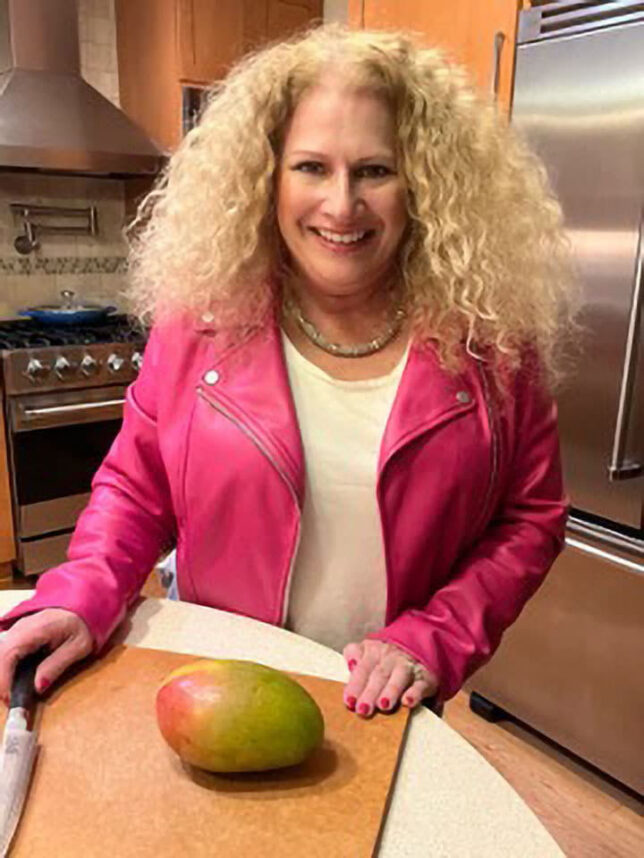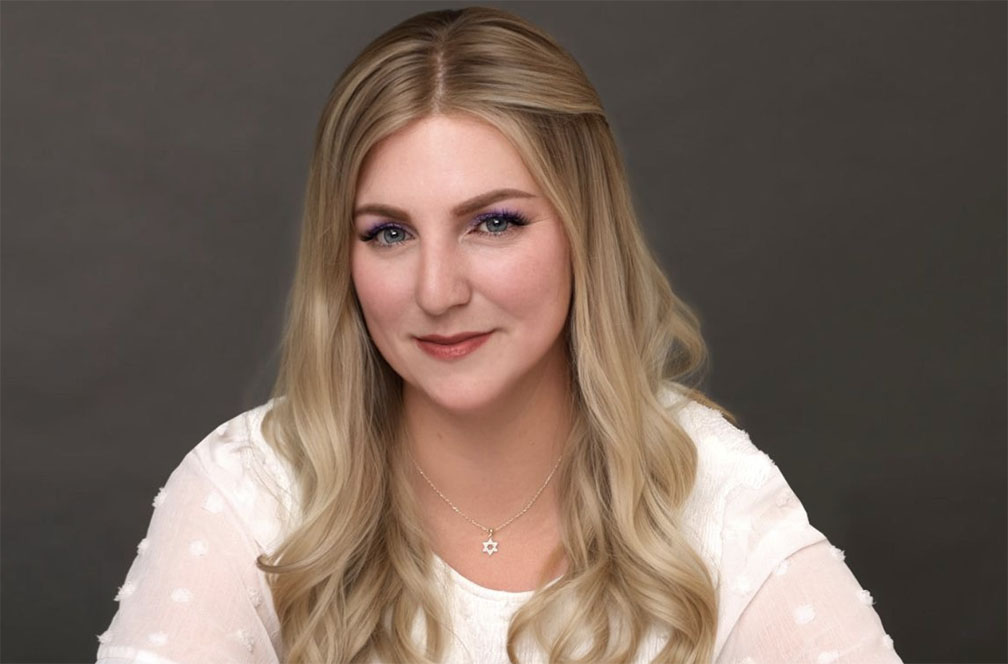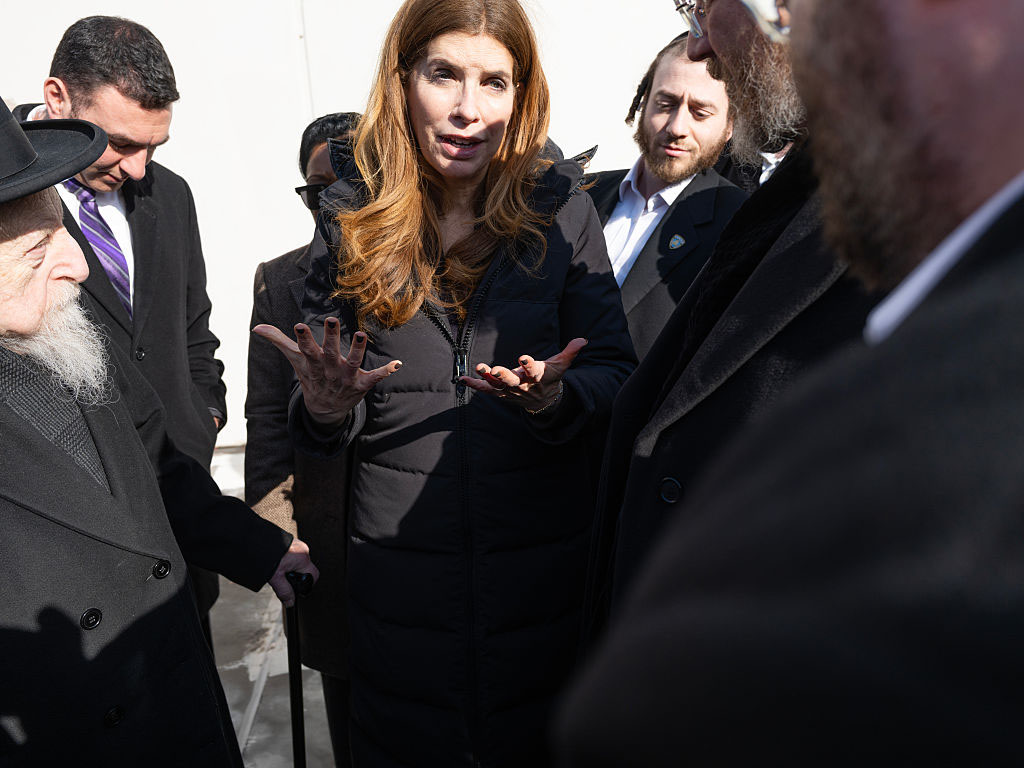
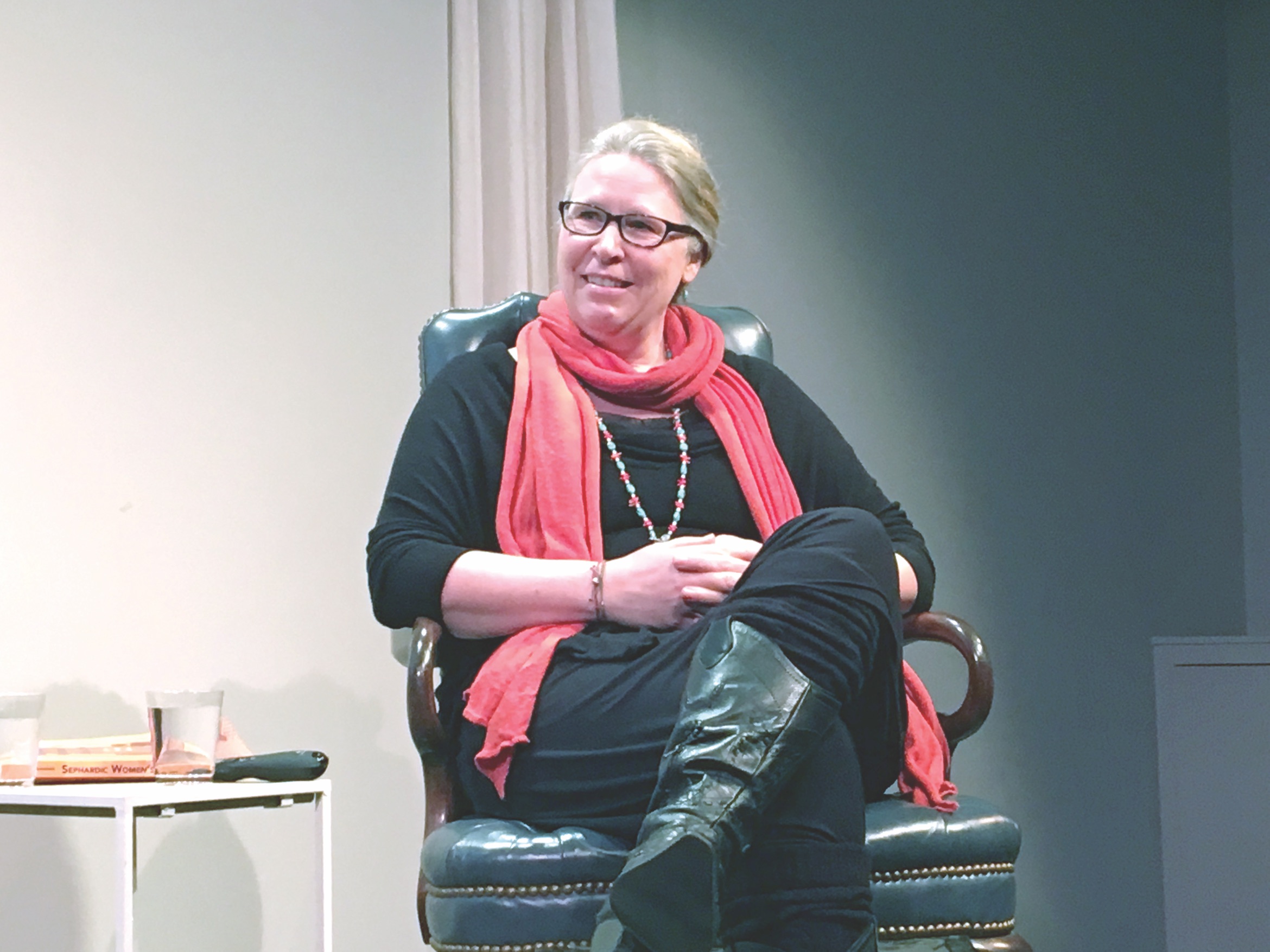
Author Nina Lichtenstein’s blond hair is pulled back into a bun and she’s dressed head to toe in black, which makes her already fair skin appear even paler. She’s standing on the small stage at The Braid Theatre in Santa Monica, speaking to a small but rapt audience about her latest book, “Sephardic Women’s Voices: Out of North Africa.”
“I get this question a lot,” she confessed. “People look at me and ask, ‘What does this Ashkenazi name, and you, with your blond hair and fair skin — how does it all come together?’ ”
Lichtenstein then explained how she was born and raised in Oslo, Norway, and how her maiden name was Christensen. “You should have seen the faces of the three rabbis at the beit din when I presented myself for conversion with the name Christensen,” she quipped.
But, she said, that was before she was married with three children, and this was not what she had come to talk about. Rather, Lichtenstein, who now lives in Maine, was invited on Jan. 9 to talk about her book, sponsored by the Jewish Women’s Theatre and Jews Indigenous to the Middle East and North Africa.
Lichtenstein acknowledged that, of course, there were Sephardic Jews throughout the Middle East, but her book is focused on the Maghreb women — those who came from Algeria, Tunisia and Morocco.
“We were learning the literature of the French colonies and there was a lot about Arab women writing from under the veil.” — Nina Lichtenstein
The book has been praised as a “timely and necessary work.” Author Ruth Knaffo Setton wrote: “Nina Lichtenstein illuminates the shrouded histories and complicated religious, political, and cultural identities of seven 20th century Sephardic women writers born in Algeria, Morocco, and Tunisia. By placing them in the context of the little-known Jewish world of the Maghreb, Lichtenstein offers valuable perspectives on the Jewish experience of Diaspora, memory, identity, and the search for home.”
Lichtenstein said her interest in the subject was piqued when she was an undergraduate studying French, while simultaneously learning with a rabbi for her conversion. He encouraged her to take some Jewish studies classes, which quickly turned into 10 courses, then a minor, and a major, and ultimately graduate courses in Jewish studies.
Searching for a topic for her doctoral thesis, Lichtenstein said, “We were learning the literature of the French colonies and there was a lot about Arab women writing from under the veil.” But she couldn’t find any Jewish voices from that part of the world, except for a couple of male voices.
After much digging, Lichtenstein said, “I found stories that resonated in some ways with the experience I had of leaving my own homeland, and feeling on one hand deeply immersed and assimilated, but on the other hand having a feeling that you’re not really quite there and you can’t really go home — or if you can go home you feel like a stranger.”
Lichtenstein has delineated her book into two parts: The first contextualizes the history of the authors, while the second looks at excerpts from their novels and memoirs and how being forced to flee their homeland affected their lives. While many of those fleeing made their way to South America or Israel, the majority went to France because they were French citizens.
“I write about what that feeling was like, when they had to up and go, which was often traumatic, what it was like to be the last generation of Jews from North Africa and how arriving in France impacted their lives,” she said.
Lichtenstein uses a quote in her book that she feels best sums up these women’s experiences. It comes from Algerian-born writer and activist Helene Siksou who noted their lives were like “leaves on a tree menaced by the wind.”
Said Lichtenstein, “It’s the notion that every time Jews are in a country, even though you may have a passport, the leaves are always there, but if there’s a wind, you feel completely vulnerable.”