fbpx

Eyewitness to History: Nov. 29, 1947, in Jerusalem

[additional-authors]
November 29, 2017
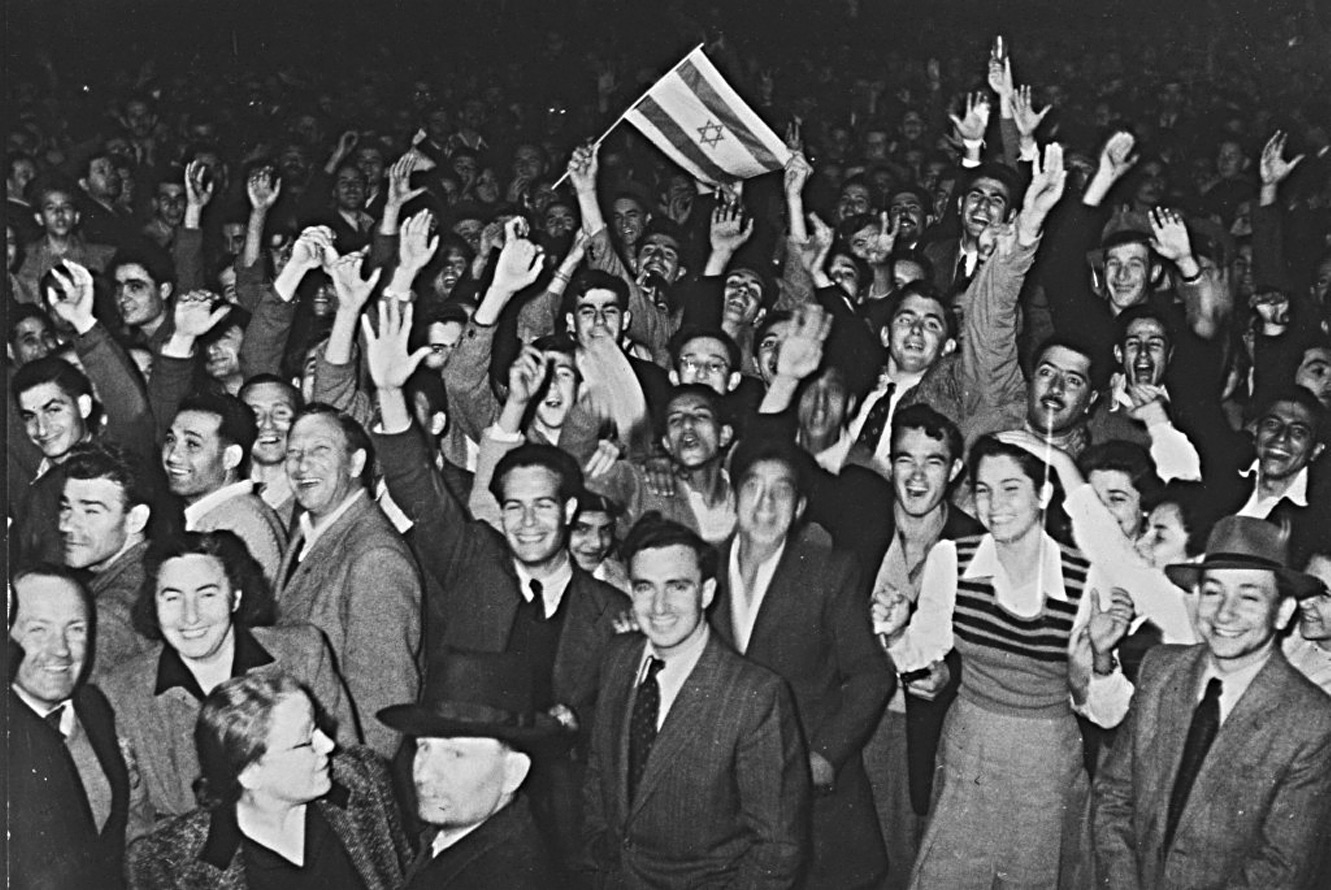
Crowds in Tel Aviv celebrate the U.N.’s vote for partition in 1947. Photo courtesy of the Government Press Office, Jerusalem. Photo by Hans Pinn

When the news broke in Jerusalem of the United Nations’ vote to partition Palestine, it was a Saturday night after sunset. I was 25 and a student at Hebrew University, taking a year off from my rabbinical program at the Jewish Theological Seminary. I was living with my grandfather, Rabbi Tzvi Pesach Frank, the chief rabbi of Jerusalem, in Kerem Avraham, a highly religious neighborhood.

That night, all of Jerusalem erupted into joy. People ran into the streets, shouting, singing and dancing in a frenzy. Grocery stores opened to hand out free bottles of wine to the celebrators. Cars and trucks roamed the streets, offering rides to anyone who wanted to whoop it up.

The growing crowds all headed toward the Jewish Agency building on King George Street, the unofficial headquarters of the underground Jewish government. Hundreds of people danced the horah and sang Hebrew songs with wild enthusiasm.

Suddenly, Golda Meir stepped onto the balcony overlooking the crowd and asked for silence. She expressed our feeling of joy for the fulfillment of our 2,000-year-old dream of re-creating a Jewish state in Israel. But she warned us that dreams came at a price. The United Nations was not handing us a state. We would have to earn it with our lives. We would have to defend it from our enemies, and many Jewish lives would be lost before the state would be born.

Everyone became very somber as the realization of her message took hold. One could sense a powerful resolve settling in.

And then the singing and dancing resumed.


Joshua Stampfer is rabbi emeritus at Congregation Neveh Shalom in Portland, Ore.

Did you enjoy this article?
You'll love our roundtable.

Editor's Picks

Latest Articles

‘Spiritual, but Not Religious’

Those who seek spirituality will ultimately find it, in part, among other people. The more circles of connection that emanate into the world, the more wholeness we will share, together.

A Tale of Two American Mordecais

With the biblical tale read on the holiday of Purim twice – once in the evening, once the next morning – it’s occasion to remember a pair of heroic American Mordecais, one by that first name and one with that last.

On Fighting Antisemitism and the American Dream

We should challenge ourselves to be more identifiable as Jews, more confident and more positive, to dedicate ourselves with greater passion to our heritage and ancient mission: to be a holy nation that respects all human beings.

Preserving Jewish Tradition in the Digital Age

While AI offers many benefits, its implementation in Jewish tradition raises important questions. How can we ensure that digital representations of sacred texts retain their authenticity?

The Fiddler’s Algorithm

In a culture saturated with choices, swipes and infinite optionality, they’re craving something more human. Fewer options, more intention. Less performance, more presence.

Mamdani Meets His Match

His election has unexpectedly thrust Menin, who sought her office on a platform of affordable housing, healthcare costs and small business support, into the position of America’s largest city’s Zionist-in-Chief.

Never Again Means Now

Democracies falter not only when leaders overreach but when citizens assume that overreach is temporary, justified or someone else’s problem.

Does AI Future Belong to Curiosity?

I’ve had a lifelong love affair with curiosity. In its quiet, humble way, curiosity can lead to the most wonderful human relationships.

PEN, Penn and Poo

The marketplace of ideas has ceased to be fully stocked because all ideas are no longer welcome. So much for Jews controlling Hollywood, mass media and book publishing.

More news and opinions than at a Shabbat dinner, right in your inbox.