Recently, I was invited to a dinner party at a friend’s home along with many guests. I sat down beside a woman I’d never met. I introduced myself, and she asked, “So what do you do?”
I wasn’t quite sure how to answer. I could have provided a number of responses that were completely true, but none told the whole story. I could have said: ‘I’m a stay-at-home mom’ (or a ‘full-time mom’). Or ‘I teach’ (since I teach one course in the fall at the American Jewish University. Or ‘I’m a writer’ (but my book hadn’t been accepted for publication). Or ‘I’m a rabbi’ (but I wasn’t working in a congregational capacity). Or ‘I’m a student’ – since I’m working on a Ph.D. (albeit slowly, when the kids are in school)…
How should I choose between these possible responses? Should I pick the one that sounded most respectable? Or should I pick the one that was closest to my heart?
Before having my second child, the answer to this question would have been automatic. “I’m a rabbi of a congregation.” I could answer without a moment’s pause, and the response was well-respected. But now, I wondered: why was answering such a simple question so hard?
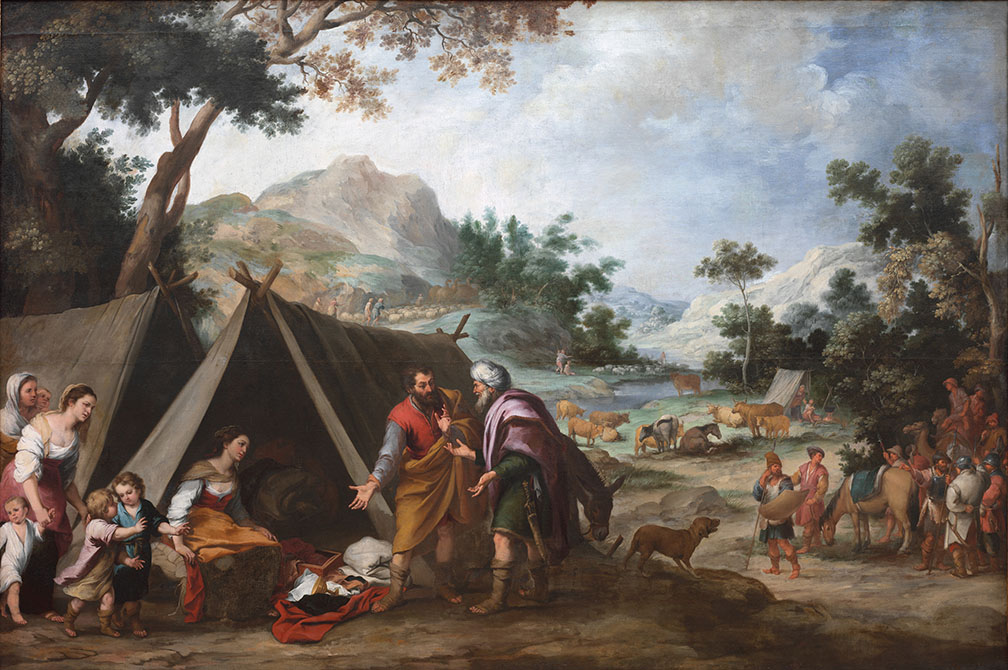
In this week’s Torah portion, Jacob’s sons faced a similar dilemma. Their occupation was straightforward: they were shepherds in Canaan. But then they came to Egypt during a famine and were reunited with their brother Joseph, who was a vizier in Egypt. When Joseph prepared to introduce his family to the Pharaoh, he warned them that shepherds were held in low esteem in Egypt. He told his brothers: When Pharaoh asks you what you do, tell him that you’re “breeders of livestock,” which was held in higher regard.
Nevertheless, when the brothers were introduced to Pharaoh, and as expected, Pharaoh asked: “What do you do?” the brothers responded, ‘We your servants have always been shepherds, from our youth until now, as were also our fathers.” The brothers answered honestly without hesitation. They were proud of their profession, regardless of what others (even those in power) might think.
A few days after the dinner party, my daughter provided me the real answer to the woman’s question. One day in the back seat of the car, Hannah said: “I’m a mitzvah-girl.” When I inquired further, I discovered that this concept was one she was taught in preschool. In Jewish tradition, a mitzvah is a commandment. When a child in the class did something good (such as helping a friend) the teachers encouraged them by singing a song, which said that the child “is a mitzvah-girl” or “mitzvah-boy.”
Reflecting on Hannah’s statement, I realized that all the activities I do have one thing in common. Teaching and studying Torah, raising a family, and helping others are all mitzvoth (commandments). I’m a mitzvah-girl. That’s what I’ve always been and what I’ll always be.
The brothers’ simple answer to Pharaoh bespeaks a deeper truth. Whatever our job titles may be, our job description is the same. We are all shepherds of each others’ souls.