There is no greater condescension than
the one we show to those whom we do not absolve
of any errors that we learn they made before death turned them into history.
The problems that they faced are ones that we with the simplicity of hindsight blithely solve
as easily as murders that we read about in every murder mystery.
For us to read about them without hindsight is far harder than it was for them
to act without the hindsight that made possible all their behavior we condemn.
Posterity makes all its judgments, as is indicated by the word, a posteriori,
but those who’re pre-posterity should never condescend till they’ve heard the whole story.
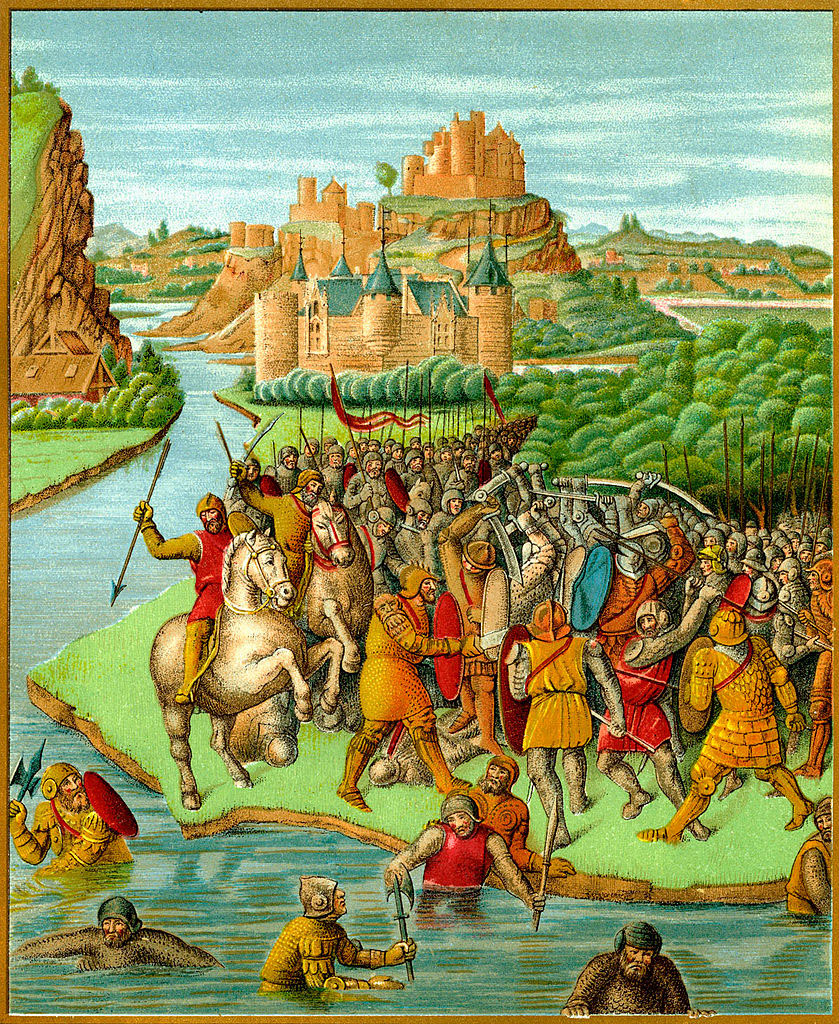
With lights of candelabras lit on Hanukkah, most Hebrew people celebrate with happy hindsight
the historical defeat by Hasmonean Jews of anti-Jewish foes, in contrast to the way we’re now expected
to criticize our miraculous recovery from defeat by ambivalent supporters who with bland blindsight
blame us for military responses to which far too many people have unrealistically objected.
On Hanukkah we praise God not just for the miracles that happened once on Hanukkah,
but for the ones that still, like all those in the war we hope Jews have just won, occur.
In “Josephus Rejected the Rebellion Against Rome, Why Did He Celebrate Chanukah?” thetorah.com, Steve Mason writes:
The way to tell whom God favors, Josephus says, is by testing. It is a law of nature, from God, that the stronger will prevail and the weaker must comply. At the risk of oversimplifying a theological position, Josephus opposed fighting against the reigning power unless it was clear that God was on the Judeans’ side. But how can one know God’s will? To some extent, one needs hindsight.
The Hasmoneans defeated the Seleucid army time and again, thus it is clear that God was on their side. This same family, however, was conquered by the Romans, and thus it should be clear that Roman rule was God’s will. Josephus spells this out in his speech to the rebels during the Roman siege—i.e., Josephus is reporting (or imagining) what he said in the past—citing the rump Hasmoneans’ inability to resist Rome:
Jud. War 5.365–368 Yes, it was noble to fight for freedom—at the beginning. But after once submitting and then yielding for a long time, to try then to shake off the yoke is to court death, not to be a freedom-lover.… The same inevitable law holds among wild animals as among humans: ‘Yield to those who are more powerful,’ and ‘Control belongs to those who are at the top in weapons.’
This is why your forefathers [the last Hasmoneans]—who were your betters in souls and bodies and every other respect—yielded to the Romans, something they could never have tolerated if they had not realized that God was with them [the Romans].
Josephus does not admire Judean valor only in the abstract. He sees death-defying courage as the hallmark of the Judean national character. He is a huge admirer of the brave Hasmoneans, not only for having restored the Temple service but also for exercising military power.
At the same time, Josephus rejects any notion that the Hasmonean legacy implies a reflexive resistance to all foreign rule. To provoke Rome’s immense power, which God has established, and which experience has shown to be vastly more powerful than Judea’s, is not for him the meaning of Chanukah.
Gershon Hepner is a poet who has written over 25,000 poems on subjects ranging from music to literature, politics to Torah. He grew up in England and moved to Los Angeles in 1976. Using his varied interests and experiences, he has authored dozens of papers in medical and academic journals, and authored “Legal Friction: Law, Narrative, and Identity Politics in Biblical Israel.” He can be reached at gershonhepner@gmail.com.