fbpx

December 17, 2025

Celebrating Hanukkah with Hindsight Generated by the Hasmoneans

There is no greater condescension than
the one we show to those whom we do not absolve
of any errors that we learn they made before death turned them into history.
The problems that they faced are ones that we with the simplicity of hindsight blithely solve
as easily as murders that we read about in every murder mystery.

For us to read about them without hindsight is far harder than it was for them
to act without the hindsight that made possible all their behavior we condemn.
Posterity makes all its judgments, as is indicated by the word, a posteriori,
but those who’re pre-posterity should never condescend till they’ve heard the whole story.

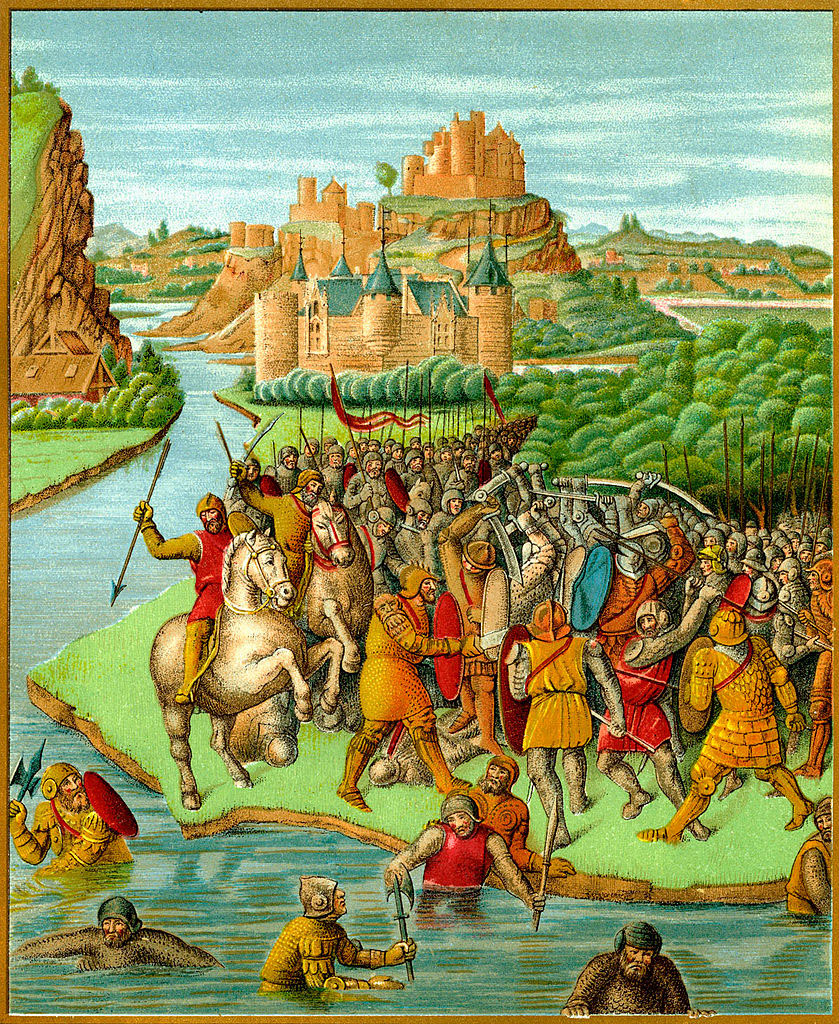
With lights of candelabras lit on Hanukkah, most Hebrew people celebrate with happy hindsight
the historical defeat by Hasmonean Jews of anti-Jewish foes, in contrast to the way we’re now expected
to criticize our miraculous recovery from defeat by ambivalent supporters who with bland blindsight
blame us for military responses to which far too many people have unrealistically objected.

On Hanukkah we praise God not just for the  miracles that happened once on Hanukkah,
but for the ones that still, like all those in the war we hope Jews have just won, occur.

In “Josephus Rejected the Rebellion Against Rome, Why Did He Celebrate Chanukah?”  thetorah.com, Steve Mason writes:

The way to tell whom God favors, Josephus says, is by testing. It is a law of nature, from God, that the stronger will prevail and the weaker must comply. At the risk of oversimplifying a theological position, Josephus opposed fighting against the reigning power unless it was clear that God was on the Judeans’ side. But how can one know God’s will? To some extent, one needs hindsight.

The Hasmoneans defeated the Seleucid army time and again, thus it is clear that God was on their side. This same family, however, was conquered by the Romans, and thus it should be clear that Roman rule was God’s will. Josephus spells this out in his speech to the rebels during the Roman siege—i.e., Josephus is reporting (or imagining) what he said in the past—citing the rump Hasmoneans’ inability to resist Rome:

Jud. War 5.365–368 Yes, it was noble to fight for freedom—at the beginning. But after once submitting and then yielding for a long time, to try then to shake off the yoke is to court death, not to be a freedom-lover.… The same inevitable law holds among wild animals as among humans: ‘Yield to those who are more powerful,’ and ‘Control belongs to those who are at the top in weapons.’

This is why your forefathers [the last Hasmoneans]—who were your betters in souls and bodies and every other respect—yielded to the Romans, something they could never have tolerated if they had not realized that God was with them [the Romans].

Josephus does not admire Judean valor only in the abstract. He sees death-defying courage as the hallmark of the Judean national character. He is a huge admirer of the brave Hasmoneans, not only for having restored the Temple service but also for exercising military power.

At the same time, Josephus rejects any notion that the Hasmonean legacy implies a reflexive resistance to all foreign rule. To provoke Rome’s immense power, which God has established, and which experience has shown to be vastly more powerful than Judea’s, is not for him the meaning of Chanukah.


Gershon Hepner is a poet who has written over 25,000 poems on subjects ranging from music to literature, politics to Torah. He grew up in England and moved to Los Angeles in 1976. Using his varied interests and experiences, he has authored dozens of papers in medical and academic journals, and authored “Legal Friction: Law, Narrative, and Identity Politics in Biblical Israel.” He can be reached at gershonhepner@gmail.com.

Celebrating Hanukkah with Hindsight Generated by the Hasmoneans Read More »

Rabbis of LA | How Rabbinic Marriage Is Alike… and Differs

He works in Culver City, she in Beverly Hills,   and their home is midway between the two communities. That’s balance – and love. Nearly everything seems intricately, purposely equally weighted in the four-year-old marriage between Rabbi Daniel Freedman and Rabbi Liora Alban.

Periodically one of them will mention a distinction between them but it’s usually insignificant as saying one puts on his left shoe first and the other dons her right shoe first.

During a recent visit to their apartment home, Rabbi Alban, an assistant at Temple Emanuel of Beverly Hills, casually remarked that “Daniel and I are very different. We think differently. We approach things differently.”

To which Rabbi Freedman, an assistant at Temple Akiba of Culver City, replied:

“Sometimes Liora will see me struggling with something because I am being so intellectual about it. She will use her mind of creativity and aesthetics to say, ‘Why don’t you step away from how you are looking at something?’”

Being married to a fellow rabbi, he said, “means there’s a place that you have an eternal partner who is supporting you, not just emotionally, but in all the ways you would want to be supported – in a way the person can go a level deeper and genuinely understand what you are going through.”

When was the last time you heard a husband or wife refer to an “eternal partner”?

“That is something that has made me into the rabbi I am,” Rabbi Freedman said. “I would not be the same rabbi if I had not been with Liora because she has seen things within me that I have struggled with. She has pushed me to see things differently in a way that a lay partner would not have been able to do.”

Okay, so there are distinctions. “We have different interests in the rabbinate,” Rabbi Alban said. “Our rabbinic theses were so different. I wrote mine on the use of visual art in building Jewish communities. Daniel wrote his on Jewish law, something very intellectual. Mine was much more creative, spirited and big-picture thinking. That’s a sign of distinction between us.”

Her husband, she said, is “very detail-oriented. I am much more big-picture thinking. Both strengths are important. That’s how we balance out each other. In lesson-planning, for example, we spend a lot of our time writing lessons for all ages. He is much better at finding the exact perfect text, like whittling down the lesson to the exact second whereas I am much more, like, ‘What do I want people to come away with? What’s the overarching goal?’  In those ways, we balance each other out. We make each other stronger for it.

“It’s like the Jewish chevruta (collaborative learning): You strengthen the other person. Here we are so different, and we strengthen the other person.”

Displaying the youthfulness and almost unrestrained vigor of a young couple in love, neither has any intention of diverting from his or her present path. “Maybe when I retire,” Rabbi Alban said, she will shift her focus. “Maybe I will become a docent at an art museum. Or teach art classes to children.”

Rabbi Freedman was equally emphatic. “I certainly do not see myself becoming an architect. I am still really interested in how space affects Jewish experience. It’s something I think about with education – in the way that our buildings are set up. They are not always conducive to the type of experience we want our learners to have.”

He would want space that is more flexible. “Many synagogues where I have worked have spaces that are not flexible, a sanctuary or a classroom with seating that is very fixed. I’d like to create spaces that are much more adaptable. I think about it all the time.”

Is there a way for the congregations of Temple Akiba or Temple Emanuel to understand you are married to a fellow rabbi?  “Yes,” Rabbi Freedman responded swiftly, “because basically, when I do anything, I have another rabbi’s general perspective or experience in my mind. It’s hard to say that doesn’t impact the way I do or say things because I am married to another rabbi. Liora’s philosophy, her experience in another synagogue always are in my mind. I don’t exactly know how it comes out every day, but I do think it impacts my thinking.

“For example, Liora started teaching a weekly class. She has done that in two synagogues, and I have seen the way it creates a really nice bond to have that weekly learning. It made me want to try that experience for myself to see how it would impact my experience forming bonds with learners.   

“I started to teach a Tuesday class (Torah Tuesdays) this year to see what it would be like to have a weekly learning experience rather than a short-term or monthly experience. It has been very nice. I have been able to teach (and reach) my adult students on a much deeper level.” That, Rabbi Freedman said, illustrates what he has learned from his wife.

Many couples come out of Hebrew Union College. Some endure. Most don’t.  At Temple Emanuel, Rabbi Alban works with an intern who is part of a rabbinic couple. But don’t come to her with a life-changing question. “I would not advise one way or the other,” she said.  “Is it serving you?  Is it a healthy relationship? Does it feel good?  Those are questions to ask – and answer.”

Her husband said if he were consulted, and someone wanted to know the full scope of such a relationship, he would be candid. “It is important,” said Rabbi Freedman, “to share ways it has been challenging for us. One is finding jobs that are enriching for each of us in the same place. A very big challenge.”

Rabbi Alban nodded agreement. “The biggest challenge is finding the right job(s) at the right time for both people,” she said. “We have had a winding journey. Our first jobs were four hours apart. I was up north and he was in Santa Barbara. We’ve never gotten our dream jobs at the same time. We always have had to make it work.”

How do you land dream jobs at the same time? “I feel extremely grateful,” she said, “because we are both in wonderful congregations, really close to each other. We are in a place where we really wanted to live. That is one in a million.”

Rabbis of LA | How Rabbinic Marriage Is Alike… and Differs Read More »

Distant Cousins Releases Hanukkah Song, ‘8 Lights’

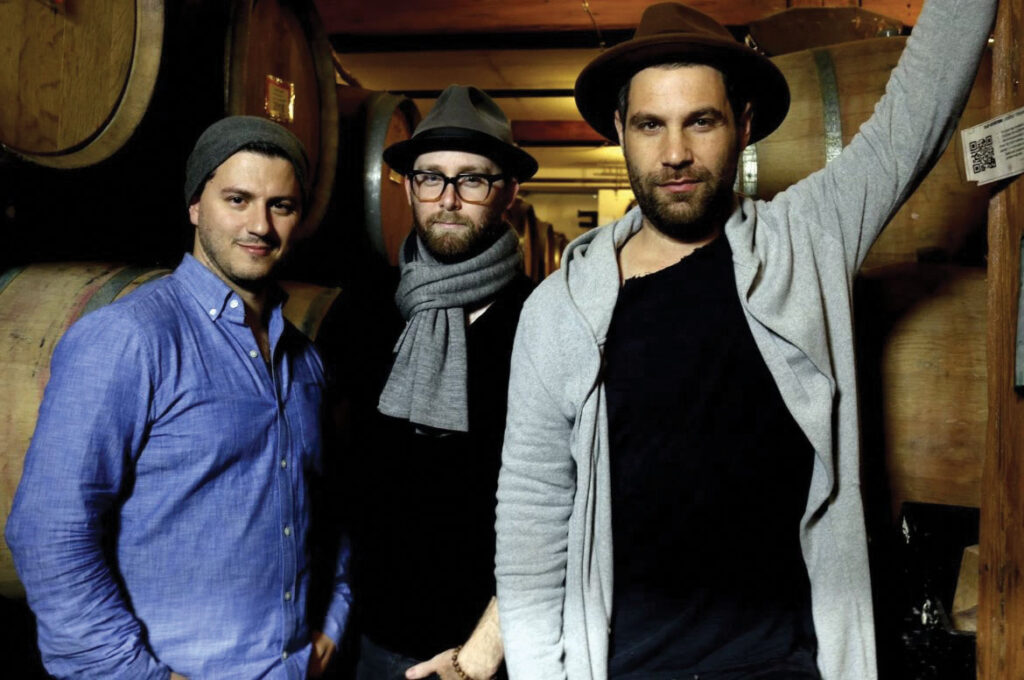
About a year ago, while on tour with Matisyahu, the group Distant Cousins had an idea for a new Hanukkah song 

“We started writing it on the road and were inspired by his energy,” said guitarist, frontman and composer Duvid Swirsky, a Los Angeles resident first known for the band Moshav. “We had a part of it with almost a reggae style and wanted to make sure we released it for this Hanukkah.”

Ami Kozak wears different hats. Known first as a musician, he’s become known on the Jewish comedic scene as both a stand-up and online. There are different algorithms for comedy and music, he said, but there is some overlap. The trio said it is unlikely they would get political in a song, though a possible comedic one is not entirely out of the question. “You spend too much time online over the last two years and you get a warped sense of what the world looks like,” Kozak said. “When you get on the road with Matisyahu, who brings out Jew-loving audiences, it can fill your soul with what it’s really like out there. I’ve always loved performing and now, it’s a pleasure to show Jewish pride with no caveats and no debate.”

The band is known for soulful harmonies and infectiously catchy, pop-folk songs.  Their music was featured in Netflix’s series “Dew Drop Diaries” and a number of movies, including “How to Train Your Dragon.”

Rosenblatt said the recording of “8 Nights” was especially meaningful to him because they recorded it at New Monkey Studio in Van Nuys, the studio built by the late Elliott Smith. “He was definitely a big influence on me as a singer and songwriter and I was a big fan of his,” Rosenblatt said. “It was humbling to have the opportunity to record a song in the studio he built.”

“8 Lights” features a duduk, a double-reed woodwind instrument from Armenia. The group decided to use when they met a musician who played it. The sound of it evokes a desert feel.

While they used to all live in Los Angeles, Kozak now lives in New Jersey, while Rosenblatt is in Tennessee. They said that since they spent years together, they built chemistry on stage and know each other’s tendencies. “I wouldn’t recommend it for bands just starting out,” Swirsky said. “We make it work because we love it.”

Speaking to The Journal before the recent terrorist attack on Bondi Beach in Australia, Swirsky said “8 Lights” is meant to evoke strength and light as Jewish history includes many examples of horrific persecution. It also includes a section that Rosenblatt said is a kind of homage to the song “One Is Hashem” or “Echad Mi Yodeya” from the Passover Seder. 

Rosenblatt said music has been one of his great passions and he is excited to bring the new song to the world.  Kozak said the group has always loved Hanukkah and performing on the holiday. No matter what happens, he said, it is important to bring positivity into the world.  “There is a great satisfaction of simply celebrating being Jewish,” Kozak said. 

Have they trained their children to want one big present or eight small ones for the holiday? “Whatever our wives decide,” Swirsky said.

Distant Cousins Releases Hanukkah Song, ‘8 Lights’ Read More »

‘I Was Terrified to Speak’: How Maskit Mati Found Her Voice Amid Rising Antisemitism in Australia

A week before the terror attack on the Jewish community in Bondi Beach, Australia, You Tube star Maskit Mati, 22, spoke with The Journal about the rise in antisemitism in her home country. The young Australian student had moved to New York following a job offer from Kii NYC — a Jewish organization founded to connect young Jews through events in the city. 

The invitation came just in time. Mati, who is from Melbourne, was studying film and television. She recalled walking to class one day when she was stopped by a man who handed her a poster and asked if she wanted to “Free Palestine.” 

“I said, ‘No, thank you. I love Israel.’ And then I went to class,” said Mati. “When I got there, everyone had a ‘Free Palestine’ poster on their desk. I was like, ‘Oh my God — where am I now?’ I felt like an outsider.” Luckily for her, it was her last year at the university, but it was very uncomfortable being at a place where everyone knew she is Jewish and everyone was taking a stand for Palestine. 

The deadly attack on Jews during a Hanukkah-by-the-sea celebration on Sunday hosted by Chabad left many in shock — but not surprised. Since  Oct. 7, 2023, Australia has experienced a sharp increase in attacks against Jewish communities and individuals. In August 2024, the Australian Security Intelligence Organization (ASIO) raised the national terrorism threat level from “possible” to “probable,” citing the risk of community tensions and political violence related to the Gaza war as one of the reasons.

“The way the Australian government was handling it — or rather, the lack of handling it — is appalling,” said Mati. “There was always an issue of weak consequences, and they leave it all to chance. We know words lead to action, and still nobody has done anything. To see this is very shocking.”

The attack by two gunmen killed 15 people and injured 40 others, including a 12-year-old girl and a rabbi.

Mati added that the Australian government needs to do more to protect the Jewish community. Speaking with her family and friends back in Australia, she said they are all living in fear and distress. Other Hanukkah celebrations were canceled, and the Jewish community — which has long alerted authorities to the problem — now sees its fears realized.

Mati was born in Australia to Israeli parents. She said that she started feeling the rise in antisemitism in recent years. It became much more noticeable after Oct. 7, 2023. Mati has been a YouTuber for the past 10 years and now has over 177k followers. Before the war, she had been posting light and fun content: traveling, vacations, life at the university and such. After the war though and posting about the war in Israel, however, everything changed. 

“I got messages from people who were watching my videos for four to five years and they said, ‘Do you support what Israel is doing? Let us know so we can choose whether to further follow you or not. I believe that everything happens for a reason because that moment, everything shifted.”

Mati decided not to back down. If she were to lose followers, so be it. She was determined to take a stand.

“Beforehand, I was terrified to speak about my roots,” she admitted. “But without that, there was no backbone to what I was doing. I decided to go all in on Israel and just live and breathe who I am — in my life and online too. I started posting what really mattered to me: community, Jewish values and Jewish concepts. I also shared my story of taking on Shabbat values. People really connected to it, and I felt like I finally unlocked a voice in me.”

And speaking of a voice, Mati has a beautiful one. She often posts videos on Instagram of herself singing Jewish and Israeli songs to her 60,000 followers. Most recently, she shared a video of herself singing in the middle of Times Square: “I Don’t Want a Lot for Hanukkah.” Her version of the popular Mariah Carey song received tens of thousands of likes.


View this post on Instagram


A post shared by Maskit Mati (@maskitmati)

“I remember the first Israeli song I uploaded — ‘I promise you, little girl, that this is going to be the last war.’ It’s one of the songs I grew up with, and I made a remake of it,” she said. “People reacted by saying, ‘Wow, this takes me back years.’ It became a comfort zone — not just for that sweet young girl, but for all of us. We’re all dealing with vulnerability online, and I think it gave people pride and courage.”

Encouraged, Mati continued sharing her life and Jewish values online. Then, one day, she received an email inviting her to New York for a job.

“At first, I thought it was a scam, so I ignored it,” she recalled. “Two months later, a friend called me and told me to check my email. I realized it was the same message. I got on a call with them, and the next thing I knew, I was moving to New York to work for this Jewish organization.”

Working with Kii NYC, Mati oversees the organization’s media and marketing and helps host events for young Jewish professionals in New York who haven’t previously felt connected to Judaism.

“We don’t push Judaism on anyone — that’s the last goal,” she said. “Our real aim is to bring people closer with light, love and events that are cool. We host fashion events, women’s rooftop yoga that I run, Shabbat dinners every week — we make it fun and meaningful.”

She added, “Two years ago, I had no idea where I was headed. I’m living in New York for the past 10 months, connecting with other young Jewish professionals and surrounded by love. I couldn’t have asked for more — it’s better than I ever imagined.”

‘I Was Terrified to Speak’: How Maskit Mati Found Her Voice Amid Rising Antisemitism in Australia Read More »

Salty Tears and Crispy Potato Kubbah

The best Sundays of my youth were spent at Bondi Beach—its unique natural beauty, beach vibes and cosmopolitan vibrancy spoiled me for life.

On one side of Campbell Parade is a bustling boardwalk lined with hip cafes, casual pubs, hotels and little shops. On the other side is a grassy reserve dotted with tall fir trees (Norfolk Island Pines), picnic tables and benches, a hardscape promenade and the historic Bondi Pavilion, that houses a theatre and exhibition space.

Then there is the iconic beach — an expansive crescent of golden white sand and rolling blue surf, framed by rocky sandstone bluffs rising on each end.

My last visit to Sydney was in February 2020. My first stop was breakfast with my Aussie aunt and cousins at the kosher cafe in Rose Bay (owned by my cousin Rachel’s husband). After settling in and quickly unpacking, I changed into a bathing suit and headed straight for a swim in Bondi’s legendary surf. After my refreshing swim, I indulged my nostalgia for old fashioned fish and chips, wrapped in the traditional white butcher paper. My companions (voracious, vexatious seagulls) and I ate at a picnic table with the most magnificent view of the Pacific Ocean.

Many of my memories of Bondi Beach include my grandmother Nana Aziza. On weekdays, after she had finished her cooking and cleaning, we would hop on the bus for a day at the beach, where she would always indulge us with ice cream and other treats.

While my aunt Rebecca loved to invite all of us to the Cosmopolitan and 21 cafes on the ritzy streets of Double Bay, my grandmother much preferred the landmark Gelato Bar on Campbell Parade in Bondi Beach, a cultural institution opened in 1958, by Hungarian Jewish immigrant George Berger. His menu featured old world European delicacies, like flaky apple strudel, Sacher torte and poppyseed cake. My grandmother loved their cappuccino. It was also where I developed my lifelong obsession with hazelnut gelato.

Late Saturday night, I was scrolling Instagram and I saw the breaking news about the terrorist shootings. With my heart in my throat, I sent a WhatsApp to my cousin Rachel.

“We are all FREAKING out! I left five minutes before. It was just luck,” she answered. “But my cousins and my friends saw dead bodies and blood all around them. My son’s friend was shot and my niece Zahara’s best friend was shot. Thankfully, they are okay. But they are just kids!”

She had been talking to Rabbi Eli Schlanger, organizer of the event and best friend of her younger brother Yacov, just fifteen minutes before he was murdered.

Much ink has been spilled in analyzing this horrific attack. I am not a political analyst, I can only say that tears flowed as I thought about the pain and the suffering. Truly a loss of innocence for my beloved hometown Jewish community. A small community, comprised of many descendants of Holocaust survivors, some Israelis, as well as a small number of Iraqi Jews from Singapore, Burma and India, who contribute greatly in business, the arts and architecture and philanthropy.

While my family in Sydney will be attending funerals and shiva for those lost in the senseless attack, we will have to celebrate Hanukkah and try to bring more light into this world.

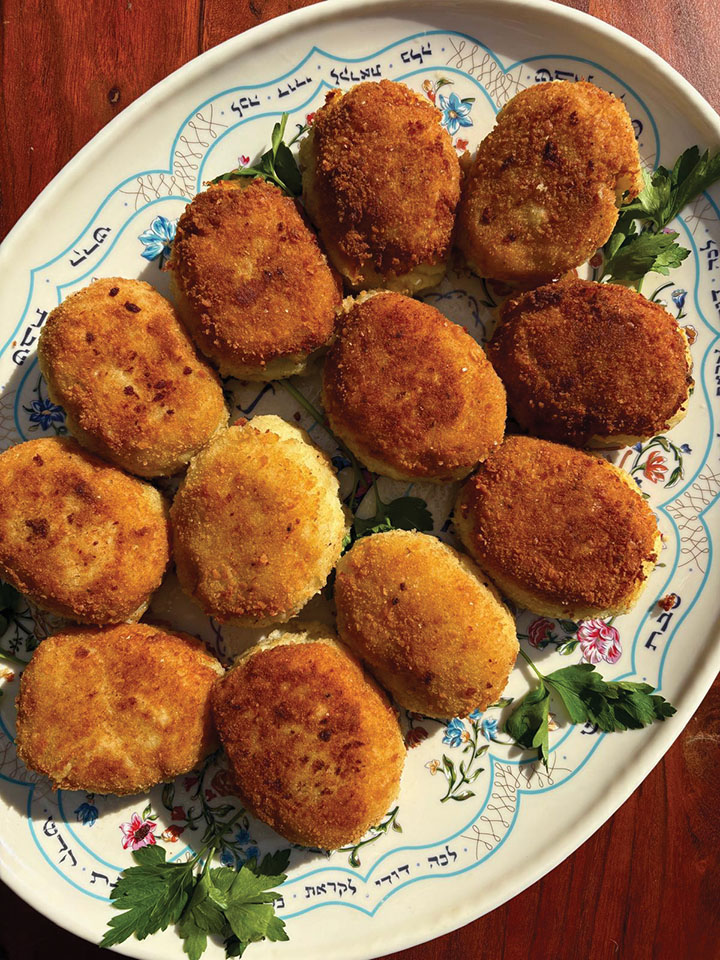
This week, Rachel and I are sharing my grandmothers recipe for fried potato kubbah (another treasured memory of my youth).

What could be more comforting than a meat and potatoes croquette? The meat filling includes sautéed onion, finely chopped Italian parsley and pinenuts and is perfectly seasoned with baharat, which features warm spices like cinnamon, cardamom, cumin, paprika and allspice. The shell is made of mashed russet potatoes that are coated in breadcrumbs, then deep fried. The contrast of the crispy exterior, creamy interior and savory filling is intensely delicious.

Like so many recipes of the old school genre, making potato kubbah requires time and patience. But the reward is great — completely yummy and totally comforting.

—Sharon

Fried Potato Kubbah Recipe

The Shell

2 lbs russet potatoes, washed and scrubbed

1 Tbsp extra virgin olive oil

Salt and pepper, to taste

1 cup breadcrumbs

1 egg, beaten with a little water

1/2 cup oil, for frying

Carrot sticks, for frying

The Filling

1 Tbsp extra virgin olive oil

1 medium onion, finely chopped

1 tsp paprika

1 tsp cinnamon

1 tsp allspice

1/2 tsp cumin

1/2 tsp cardamom

1 pound ground beef

Salt and pepper, to taste

1/4 cup Italian parsley, finely chopped

1/4 cup pine nuts

In a saucepan filled with cold water, boil the potatoes over medium heat until fork tender. When potatoes are cool enough to handle, remove the peel. Place in a medium bowl and add the olive oil, salt and pepper, then mash the potatoes until the mixture is a stiff consistency.

In a large frying pan, warm the oil over medium heat. Add the onions, and sauté until golden brown. Sprinkle in the paprika, cinnamon, allspice, cumin and cardamom.

Lower heat and add the meat, salt and pepper. Use a wooden spoon to break the meat into small pieces and sauté until cooked. Remove from heat and place in a bowl. Mix in the parsley and pine nuts, then set aside.

Prepare a baking sheet with parchment paper. With wet hands, take a tennis ball-sized portion of the mashed potato and roll it into a ball. Flatten the ball into the palm of the hand.

Place a tablespoon of meat filling in the center, then bring the sides up over the stuffing and seal.

Roll into an oval shape and dip in the egg wash. Coat the kubbah with the breadcrumbs and lightly flatten.

Arrange all the kubbah on the baking sheet. Cover with plastic wrap and place in the refrigerator for at least 30 minutes.

Pour a little oil into a large frying pan and warm over medium high heat, then add the carrots. When the oil begins to sizzle, add a few kubbah and fry until golden on both sides.

Place on plate lined with butcher paper or paper towel.

Serve hot.

Note:

Store kubbah in an airtight container in the refrigerator, for up to 5 days.

– Sharon


Sharon Gomperts and Rachel Emquies Sheff have been friends since high school. The Sephardic Spice Girls project has grown from their collaboration on events for the Sephardic Educational Center in Jerusalem. Follow them
on Instagram @sephardicspicegirls and on Facebook at Sephardic Spice SEC Food. Website sephardicspicegirls.com/full-recipes.

Salty Tears and Crispy Potato Kubbah Read More »

Cookies for Hanukkah

Hanukkah is filled with light, joy, fried foods … and cookies. As the holiday winds down, here are some cookies to keep in the celebration rotation!

Aaron Hamburger’s Hanukkah gelt chocolate sables were inspired by a trip to France. “I first tasted these cookies while on vacation at a French chateau in the Loire valley,” Hamburger, a baker, recipe developer and author of “Hotel Cuba,” among others, told The Journal. “They were so chocolatey and delicious, I begged the server to ask the chef for the recipe. 

“The server came out from the kitchen with a yellow sticky note containing a list of ingredients in French, but no measurements; the chef wouldn’t divulge those!” 

After looking up various chocolate sable recipes, Hamburger made several modifications and landed on the recipe below. 

“The key is to use turbinado sugar in the dough as well as for decoration, which gives them a sweet earthy crunch,” Hamburger said. “Plus, they look like chocolate gelt — perfect for Hanukkah!”

Hanukkah Gelt Chocolate Sables

Adapted from Smitten Kitchen

Yield: about 40 cookies

1 cup all-purpose flour

1/3 cup cocoa powder, Dutch process preferred

1/2 tsp kosher salt

1/2 cup unsalted butter, at room temperature

2/3 cup turbinado sugar + extra to sprinkle on top

1 large egg 

1 tsp vanilla extract

1 cup mini chocolate chips (semisweet or bittersweet)


In a medium bowl, sift together flour, cocoa and salt to combine. With an electric mixer, beat the butter and sugar for about 3 minutes, until light and fluffy. Then add egg and vanilla to combine. Add flour-cocoa mixture to combine, followed by chocolate chips.

On a piece of parchment or wax paper, roll the dough into a log about 2 inches in diameter. (You can divide the dough into two logs for greater ease of handling.) Sprinkle the log in turbinado sugar. Then, grasping the sides of the paper, roll the log back and forth to coat the outside completely in sugar, adding more to fill in any gaps. Chill in the refrigerator until firm, at least an hour. (Note: cut open an empty cardboard paper towel roll and slide the log inside to keep its round shape while chilling.)

Preheat the oven to 350°F. Line two baking sheets with parchment. Remove the dough log from the refrigerator and slice into ¼ to ½ inch coins, rotating the log to preserve its roundness. If the coins have gaps or fall apart, just push them together and pat into a circular shape. You can sprinkle the cookie coins with a bit of turbinado sugar for an extra gold touch.

Bake for about 10 minutes, until edges seem set and tops look slightly cracked. Let cool on baking sheets on racks for at least 5 minutes or slightly longer before removing from sheets to cool completely on racks. The cookies may fall apart if you remove them too soon. Enjoy!


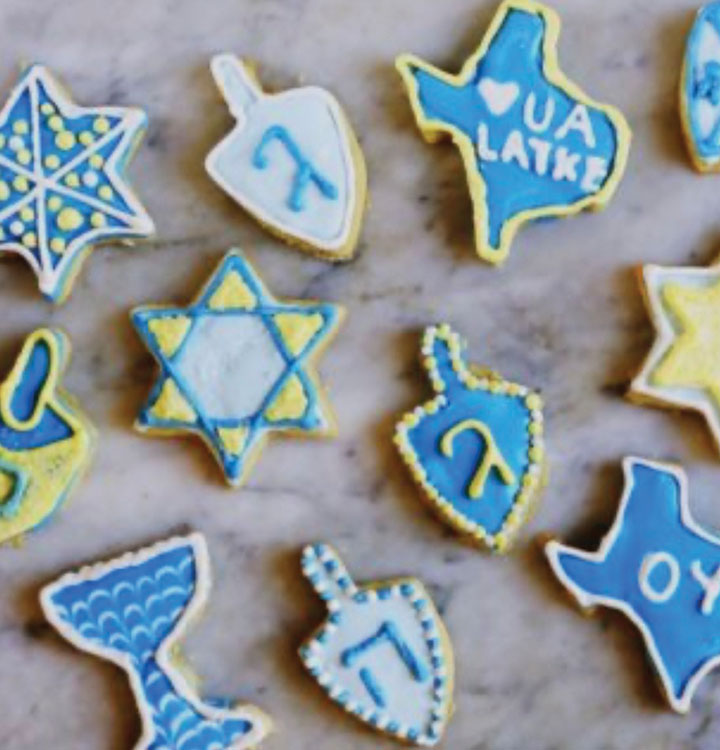
One of the great things about butter cookies is you can adapt them for a particular holiday or celebration. You just need delicious cookie dough, cookie cutters and – for Hannukah – plenty of blue and white icing.

“What better and delicious way to enjoy bonding with loved ones during Hanukkah with the moist and flavorful Dreidel Butter Cookies,” Adaeze and Lenny Rosenberg, NYBD & Bakery in Santa Monica, told The Journal.

Butter Cookies 

Yield: 12 cookies

1 1/2 cups granulated sugar

2 1/2 cups butter

Pinch of table salt

1/2 tsp vanilla extract

2 1/4 cups pastry flour

2 whole large eggs

Optional: Icing

Combine sugar, butter, salt and vanilla in a mixing bowl.

Mix at slow speed (or by hand) for 5 minutes till the dough is all combined.

Roll dough out with a sprinkle of any flour on the table, so the dough does not stick. 

Cut out your favorite shaped cookies.

Bake at 350°F for 12 minutes.

Decorate with your favorite icing. 


Want something a little different? Stefani Pollack suggests Egg Kichel; her grandmother’s favorite.

“Instead of chasing something new this Hanukkah, use the time in the kitchen to connect with generations past,” Pollack, founder of Cupcake Project and The Bake Fest, told The Journal. “Egg kichel, or egg cookies (“eier kichelach” in Yiddish), are practically weightless cookies so they’re sometimes called, ‘nothings.’”

Egg kichel are a cross between croissants, flaky pie crusts and sugar cookies. 

“When you look at the ingredients, they don’t sound like anything special: eggs, sugar, salt, oil – a must have for a Hanukkah dessert, flour and baking powder,” she said. “They also aren’t the prettiest things. However, when they came out of the oven, my grandmother said they were the best thing that I have ever made for her.”

Egg Kichel

3 large eggs

3 Tbsp sugar

1/8 tsp salt

1/2 cup canola oil or other vegetable oil

1 1/2 cups all-purpose flour

1/2 tsp baking powder

coarse decorating sugar

Preheat the oven to 400°F.

Process the eggs and the sugar in the food processor for one minute. Add the salt and oil and process until combined.

In a small bowl, mix the flour and baking powder.

Add the flour and baking powder to the food processor in three additions, processing after each addition until fully combined. After the last addition, process until the dough is thick and very sticky.

Take balls of the super sticky dough and roll them in coarse sugar. (I used tablespoon-sized balls of dough for my cookies. This produced really large cookies. If you prefer smaller ones, use just a teaspoon of dough. The cookies rise quite a bit.) Once rolled in sugar, the dough will no longer be sticky and you can form it into a bow-tie by flattening it and giving it one twist in the middle.

Place bow-ties onto a parchment- or Silpat-lined cookie sheet. Leave a little space between cookies for them to grow.

Bake for 8 minutes.

Reduce heat to 300°F and bake for another 12 minutes.

Reduce heat to 170°F and bake for another 20 minutes.

Turn off heat and leave in the warm oven for another 10 minutes.

Remove from the oven and try to not eat them all before you let anyone else try them.

Cookies for Hanukkah Read More »

Table for Five: Miketz

One verse, five voices. Edited by Nina Litvak and Salvador Litvak, the Accidental Talmudist

“They said to one another, ‘Surely we are being punished because of our brother; we saw his suffering when he pleaded with us, but we would not listen.’”

– Gen. 42:21


Rabbi Dr. Janet Madden 

Malibu Jewish Center and Synagogue

The tripartite literary structure of this parsha is a painful counterpoint to the three-fold structure of the Birkat Kohanim. As hatred of Joseph once united his brothers, so they now unite in articulating their understanding of the truth about themselves. They understand that they have arrived in this narrow place because of their own narrowness, and they express that understanding through their al chet. Their envy of their father’s favorite son and the pain of his obvious favoritism so hardened their hearts that they conspired to remove their brother from the family. And although this event took place 20 years before this moment, its festering repercussions have lived on beyond their actions. Each man speaks to his brother, articulating their unanimous conclusion – they are being punished for their collective refusal to see their brother’s humanity, for collectively eschewing mercy when they witnessed his fear and distress and for their collective refusal to hear, or listen to, his pleas. This moment of realization suggests the possibility of transformation. It also conveys more than the brothers’ sense of guilt and punishment in relation to the sins that they have held secret among themselves for decades. Their experience encapsulates a cautionary tale of timeless relevance of the high cost of parental favoritism or of sibling rivalry turned toxic. More broadly, the brothers’ confession alerts us to how easily psychospiritual pain turns to cruelty, leading to our turning away from seeing the distress or hearing the pleas for mercy from our vulnerable siblings.


Mitchell Keiter

Certified Appellate Specialist, www.California.AppellateAttorney.com

In West Side Story’s “Gee, Officer Krupke,” the juvenile delinquents recall adults’ excuses for the teens’ misbehavior. Judges, social workers and therapists blame the boys’ troubled background, concluding they’re “depraved on account of being deprived.” Joseph’s brothers here assert the converse: they’re being “deprived on account of being depraved.” 

Superficially, we might prefer the first causal theory. We are not to blame if our troubles have an external cause, whether the government, our imperfect backgrounds, cruel fate, our horoscope  .… anything but our own bad choices. If the fault lies not in ourselves but in our stars, we’re off the hook. But these deflections concede our powerlessness; we can’t change our stars. 

Judaism teaches the contrary. Neutral historians might conclude we lost the Temple because the Romans had a stronger army. But the rabbis taught that the Romans were basically irrelevant; it was “our“ fault, “our“ groundlessly hating our neighbors that cost us. This, preceded by 1,900 years John Wooden’s maxim that you are “not a failure unless you start blaming others for your mistakes.” We may not have complete control over our lives, but we should see the glass as half-full, not half-empty. Research shows that those who believe in their own agency exhibit more happiness — and achievement — than those who see themselves as passive objects in a random and indifferent universe. 

If we blew it, then we can fix it. And so the brothers do. 


Rabbi Michael Barclay

Temple Ner Simcha, www.NerSimcha.org

From the time of childhood, we are taught that the Shema is the “watchword of the Jewish faith.” This prayer is a commandment to not just hear, but to truly “listen.” Joseph’s brothers admit that they saw his suffering and heard his pleas, but they did not listen. 

Sadly, this is a challenge for all too many people. We hear with our ears and see with our eyes, but do we really listen with our hearts? Parents hear the requests of their children, but do they really listen to what the child’s soul is asking? We see a homeless person wandering the streets, but do we hear their soul begging to be seen as a human being and not as an object? A waiter is not a servant, but a Divine soul with its own needs, challenges and joys. It is imperative for our own souls that we listen deeply to the souls of other people. That we listen with our hearts rather than just hear with our ears. 

And that includes listening to God. Not just seeing the beauty of life, but allowing it to touch our souls and increase our gratitude to the Holy One. The Sufi mystic Rumi taught that “the eye goes blind when it only wants to see why”; we need to listen with our hearts and souls, or we become oblivious. Oblivious to God, and blind to the souls of others. 

May we all choose to truly listen: to the souls of others, to our own hearts, and to God. And may we then act upon that listening … now and always.


Rabbi Ilana Grinblat

Ahavat Torah

In this moment of transformation, the brothers finally admitted their guilt for selling Joseph into slavery, and Joseph heard this and burst into tears. 

In his book, “When Everything You’ve Wanted Isn’t Enough,” Rabbi Harold Kushner noted that Joseph had dreamed of revenge on his brothers for years. But when he finally got the chance to harm his brothers, “he couldn’t enjoy it. He didn’t like the person he was becoming. He who hated his brothers for being cruel and hard-hearted could not stand seeing himself become cruel and hardhearted … Joseph discovered that the human soul was not made for jealousy and revenge. Acting against his true nature, he became increasingly uncomfortable until finally he broke down and cried and told his brothers who he really was.” 

According to Rabbi Kushner, this story teaches us that “selfishness, cynicism, mistrust of other people are not only immoral, but offensive to God. They may be unhealthy and destructive to us as well.” He explained, “God is the answer to the question: Why should I be a good and honest person when I see people around me getting away with murder? God is the answer not because God will intervene to reward the righteous and punish the wicked, but because God has made the human soul in such a way that only a life of goodness and honesty leave us feeling spiritually healthy and human.”

Like Joseph and his brothers, may we find the courage to face painful truths and embrace our true, soulful nature.  


Rabbi Pinchas Winston

Thirtysix.org

Aha! So Joseph did scream and plead for his life! In last week’s parsha, we weren’t shown this because the Torah, for some reason, left it out. It was only many years and one parsha later that we are finally given a more emotional look into what actually happened during the sale of Joseph when the brothers say in this week’s parsha, “Surely we are being punished because of our brother; we saw his suffering when he pleaded with us, but we would not listen.” The fact that they had been so oblivious to Joseph’s cries for mercy shows us how confident the brothers had been in their assessment of Joseph and their plan to do away with him. The fact that they had no remorse for what they did until this week’s parsha shows us how much a person can allow themselves to get away with as long as no one challenges them. They had believed that God agreed with their actions, which made them less susceptible to feel any guilt they could have and should have felt while selling Joseph into slavery. But once everything started to go south, the brothers started to question God’s support of their deception and ended up assuming that they had in fact erred. They felt remorse for what they had done, and all of a sudden, Joseph’s cries for mercy echoed through time into their ears and into their hearts. It’s a lesson for the ages, as they say.

Table for Five: Miketz Read More »

We Won — and Thank You

I know these have been difficult years: Jews and lovers of Western civilization have paid an unfathomable price since Oct. 7. Illusions about life have been buried, along with over 900 civilians and at least 913 soldiers killed since that day. Understandings with our neighbors have been shattered, from the college campus celebrations as the slaughter continued to the inevitable, all-too-predictable, Bondi Beach massacre. Two-hundred-fifty-one innocent hostages suffered so much, with 90 of them murdered – including those six loving souls recorded lighting Hanukkah candles in the tunnels two years ago. And we must not forget the 20,000 injured, the hundreds of thousands of soldiers and reservists and the millions whose lives have changed since the Hamas massacre. Still, enough with this Judaism of anguish and apologetics! Let’s keep saying, proudly, defiantly — well-aware of the many traumas haunting us and the work still facing us — We Won!!!

We won by surviving, because Hamas terrorists didn’t pursue a two-state solution but their deadly, dastardly, no-Jewish-state, delusion. We won by degrading Hamas, crushing Hezbollah and humiliating Iran, so dousing its deadly ring of fire that Syria’s Assad dictatorship collapsed. And every time we laughed and prayed, danced and sang, whenever we honored the dead and married and started a wartime baby boom – not waiting for postwar! – and whenever we enjoyed a normal day and watched street cleaners clean streets and teachers teach class and parents parent, we won – and keep winning.

True, I grew up singing, in the Young Judaea youth movement, “Shir LaShalom,” a song for peace – wallowing in ambivalence, spurning “the joy of victory and the songs of thanksgiving.” Yet since winning in 1973 but justifiably mourning the 2,688 killed, we’ve so avoided victory celebrations, we risk underestimating our triumphs – and sapping our strength. Even when Israel finally stopped what Palestinians celebrate as “The Second Intifada,” but was Arafat’s War of Palestinian Terror against the Oslo Peace Process, I got into trouble by demanding a victory parade. 

I hate war. I want our kids delighting, not fighting. And I acknowledge the crazy cost we pay – along with the truly innocent on the other side. But, as an historian, I know the power of shaping narratives based on truth, just as I know the importance of maintaining moral clarity, distinguishing Palestinians who resisted peace overtures, started the war, and celebrated the massacre, from Israelis forced to fight aggressively to defend themselves against evil.

And I toast our victory, now, even at the risk of it being premature. It’s my way of thanking all who suffered – especially on Oct. 7. Each person who absorbed the evil blows helped save Israel by slowing the invaders – who ultimately preferred raping and torturing and abusing young and old alike to conquering Israel. Toasting thanks our brave soldiers, self-sacrificing reservists and their resilient families. It thanks Israel’s remarkable homefront supporting those on the battlefront. And it thanks those Jews and non-Jews who cried with us, marched with us, donated to us, visited us, debunked the liars with us and guaranteed that America, under two very different presidents, kept supporting us. And it echoes another youth movement classic – David Broza’s “Yihiyeh Tov” – it will be okay!

So, if you don’t want to cheer Israel’s many triumphs and blessings – don’t invite me to speak. And if you don’t want to celebrate our progress-in-process, stop reading. But since this Simchat Torah, when Hamas finally freed the last 20 living hostages, I keep inviting audiences, as a finale, to rise.

I recall that my grandfather, Leon Gerson, was one of 2 million Eastern European “boat people,” that heroic generation of Jews who escaped the oppressive, impoverished “old country” for the Goldene Medina, America. Living the American dream, while improving America too, they created the miracle of American Jewry. Waking up daily so grateful to be free, Grandpa seized every opportunity to say “shehechiyanu,” blessing God for sustaining us and bringing us to this miraculous moment.

I explain that since Oct. 7, I can’t drink to the 1,200 who died, and the 600-plus soldiers since – it’s overwhelming to think about so many beautiful souls at once. Instead, I honor one person at a time. It could be Ben Mizrachi, the Vancouver-born boy who didn’t run away from the Nova festival, but ran toward the danger to save others. It could be Yosef Guedalia, married shortly before Oct. 7, killed in the battle of Kfar Azza, after saving others too. Or it could be Yosef’s Duvdevan commando comrade, Yona Brief. They and other heroes prove that on Oct. 7, the government failed, the IDF failed, but Zionism succeeded. It raised a generation of patriotic Israelis who saved their country that day.

Injured in May, 2023, Yona fought his way back into good health and full service by September. On Oct. 7, he reached Kfar Azza, fighting fiercely for four hours, only to be ambushed while trying to save his commander. Thirteen bullets ripped into his head, back, liver, legs – he lost both legs.

Nevertheless, for 417 days, Brif fought for life as indomitably as he fought to save his country. Ultimately, tragically, he succumbed to infection. 

While mourning their beloved, youngest, 23-year-old son, his parents, Hazel and David, American olim – immigrants – inspired the nation as much as their son had.

When a reporter asked an admittedly “awful” question, “you had a nightmarish year, do you wish you could have avoided it,” they said “no,” just the opposite. “We kept saying how lucky we were,” David explained. “We knew where he was day after day – with us.” He wasn’t kidnapped – or slaughtered immediately. 

These loving parents had an extra 417 days with their amazing son – and 417 days of love and goodbyes, again and again, unlike those who lost 1,200 others Oct. 7.

I raise a glass of wine, hidden on the side. We bless the wine. We thank God “for keeping us alive and sustaining us.” And we shout “L’chaim,” to life, as I repeat: “We won” and “thank you.”

Why not perform that timely ritual at home, in your synagogue, the next time you gather with Jews and non-Jews alike?


Gil Troy is an American presidential historian and a Senior Fellow at the JPPI, the Global Thinktank of the Jewish People. Last year he published, “To Resist the Academic Intifada: Letters to My Students on Defending the Zionist Dream” and “The Essential Guide to October 7th and its Aftermath.” His latest E-book, “The Essential Guide to Zionism, Anti-Zionism, Antisemitism and Jew-hatred” was just published and can be downloaded on the JPPI – Jewish People Policy Institute – Website.

We Won — and Thank You Read More »

Zionism Is Great for the World

No one in the Jewish community will disagree that antisemitism and antizionism have reached alarming levels. The massacre last Sunday at a Hanukkah event in Sydney was the latest example of how it has become open season on the Jews.

We all agree we should do something, but what? Should we fight back and defend Zionism?  Should we correct the lies and the libels? What will have make the most impact?

Our first line of defense has always been condemnation and outrage, especially when the Jew-hatred rises to the violence we saw at Bondi Beach. Hundreds of statements were released by various Jewish organizations condemning the horror and expressing the “urgent need to better protect Jews.”

On the activist front, there are efforts to brand antizionism to make it unacceptable, calling it a hate movement or even a racist movement. There’s plenty of evidence, historical and otherwise, to support these claims. 

Also on the activist front is the tactic of punishing the culprits, usually through the legal system. A mainstay of pro-Israel activism has been to call out the injustice of singling out Jews and Israel, either on college campuses or in international venues like the United Nations, which condemns the Jewish state more than all other nations combined.

Finally, there are powerful statements of defiance—we will not be cowed, we will remain proud, we will double down on our Judaism, and so on.

The point is this: all of these approaches are worthy but they point in the same direction—reacting to our enemies by defending ourselves.

There’s nothing inherently wrong with defending ourselves. If we get attacked with lies, shouldn’t we defend ourselves with the truth?

Yes, we should. The question is: Which truth?

So far, we have used the truth to debunk lies like genocide, apartheid, colonialism and so on.

This is fine, but again, we’re still fighting on the enemy’s turf, we’re still defending Zionism.

I read an interesting take recently on the limitations of defending Zionism in 2025. For better or for worse, much of the world sees the current Israeli government as the “spokesperson” of Zionism — as the most accurate and up-to-date expression of Zionism. We may loathe that, but it does speak to the difficulty of defending what many see today as a pariah state.

This doesn’t mean we should stop defending ourselves. What it does mean is that we are in desperate need of a radically new approach that will push forward something positive about Zionism rather than push back against something negative.

That something positive is staring us in the face. The country that is most maligned on the planet — the Zionist state — turns out to be one of the top contributors to that same planet.

Projecting a positive view of Zionism should be a juicy idea, but it’s not. It bores us. We’re tired of hearing about “Start-Up Nation,” about drip irrigation, the pill cam and the endless innovations that Israel has brought to the world.

Focusing on positives doesn’t make us feel like we’re in a fight. It feels good to be in a fight. It feels good to express outrage, to make noise, to correct lies.

So, given that, what possible value could there be in a campaign that would express the immense value of the Zionist state to the world?

For starters, it will change the playing field. Instead of fighting over whether Israel is a genocidal, racist monster, a new question will be introduced where we have plenty of great answers: How is the Zionist state so helpful to the world?

In other words, we will begin to change the conversation in Israel’s favor.

Just as there is plenty of truth to challenge the libelous accusations against Israel, there is plenty of truth to support the claim of Israel’s value to the world.

The second thing it will do is send shock waves through enemy territory. Just when Zionism is at its lowest point, we brand it at the highest possible level. Outrageous. Crazy. Stunning.  

“Zionism is great for the world” would enrage the antizionism movement, and for good reason. So far, they’ve had the playing field to themselves. They attack, we defend, we look weak, rinse and repeat.

That’s the other thing we must acknowledge about a defensive strategy — it makes us look weak. We’re always alarmed, always concerned, always looking for safety. That may be justified, but it’s not a strong look.

It’s also not who we are.

Jews are more than an alarmed people who demand more security.

To be Jewish and to be a Zionist is to think big. By putting us on the defensive, our enemies have made us look small.

How do we break out of that trap?

By returning to who we are. Zionism is about building, about creating, about prevailing against all odds, about having faith in our strength and our destiny.

As my friend Gil Troy says, “Zionism is one of the most successful forms of liberal democracy ever invented — a kind of nationalism that has created a productive society and a happy people — rooted in the past, thriving in the present and helping to invent a better future.”

Our enemies want the world to never hear any of that, and right now, they’re succeeding. All people hear about Zionism is poison on top of poison.

That is a crime not just against Zionism but against the truth.

One of these truths is that the world, and especially the West, has a lot to learn from the Zionist state.

Take the Hanukkah massacre at Bondi Beach. In my column this week, I mention the reports that four police officers just “froze” during the 20-minute rampage.

It’s hard to imagine, I wrote, four Israeli policemen “freezing” while two terrorists are shooting at civilians. That’s because Israel can’t afford to be in denial about the threats it is facing.

If Australia is serious about upgrading its security to better protect its Jews, I argued, the first call it must make is to Israel. No nation has more experience on that front. 

I also refer to the slow erosion of the West, especially Europe, and how Zionism provides a model against that erosion.

I quote Douglas Murray’s 2018 book, “The Strange Death of Europe: Immigration, Identity, Islam”: “More than any other continent or culture in the world today, Europe is now deeply weighed down with guilt for its past … it has lost faith in its beliefs, traditions and legitimacy,” Murray wrote.

Zionism feels no guilt for its past — on the contrary, the miracle of returning to our biblical homeland after 1,900 years is a source of unlimited pride. The West could use some of that pride.

This pride of accomplishment has created an odd duality — on the one hand, Israel must fiercely defend itself against enemies sworn to its destruction, but on the other, there is a fierce love of life that is demonstrated in multiple ways.

One of those ways is innovation.

The liquid of the last century was oil. The liquid of this century is water. Droughts are plaguing much of the Middle East, and it will only get worse. No country is better suited to solve that problem than the world’s number one expert in water technology.

Yes, the Zionist state.

Go down the list of the world’s biggest problems — health care, cybersecurity, food insecurity, climate change, harnessing solar and wind power, fighting diseases, helping people with special needs, dealing with mental trauma, among so many others — and you will find Israelis who are delivering at the highest levels.

 In a place where there’s a war every two years and barely any natural resources, the Zionist state has the highest number of billion-dollar start-ups per capita in the world, start-ups that are benefitting hundreds of millions of people throughout the world.

Contributions to culture and the arts are no less. Just ask those Hollywood producers who regularly trek to Tel Aviv in search of new shows.

Speaking of culture, there is no nation in the Middle East that can match the multicultural nature of the Zionist state. It’s also the country where Arabs and Muslims can enjoy rights and opportunities they won’t find anywhere else in the region.   

It turns out the much-maligned Zionist state is an ideal model for the failed nations of the region to emulate.

That message has been hidden.

It’s been hidden because we have been too busy fighting. We’ve been too busy being alarmed. We’ve been too busy correcting the lies of our enemies.

That has made our enemies very happy. 

As long as the positive force of Zionism is silenced, as long as they can keep Jews on the defensive, our enemies know they will keep winning.

The radical message that “Zionism is great for the world” will be a spear through the dark hearts of Jew-haters.

You may have noticed that I’ve stayed away from listing Israel’s sins, but that’s only because the world media already has a field day bashing Israel. They don’t need me to pile on.

There will never be a shortage of messages that demonize Jews and Zionism. As we saw at Bondi Beach and many have pointed out, this is what “globalize the Intifada” looks like. If the world can wake up and crack down on the hateful rhetoric that fuels Jew-hatred, including the hateful rhetoric that fuels radical Islam, it will be a good thing.

But we can’t count on that. The first step is to stop looking weak and start looking like Jews. They want to globalize the Intifada? Well, we want to globalize Zionism.

Yes, it’s difficult to push a positive message about Zionism when we’re under attack. But if you ask me, that’s when we need it even more.

I was inspired by this post by Liel Leibovitz after the Sydney massacre, which I quote in my column: “The victims may have been Jews, but we will recover, rebuild, and grow stronger. But the nations that gave in to an insidious, murderous ideology never will. Nearly a century after the Holocaust, Jews are strong and the Jewish state is thriving, but Europe is holding on for dear life, awash in violence and un-freedom, a shadow of its former self.

“And in a decade or two, Jews will be ever stronger and the suicidal West will have been devoured by the benighted jihadis it so cheerfully let in.”

This is not triumphalism. This is not a denial of the danger we are in. It’s a recognition that Jews are strong, that we have been strong for millennia, that we have much to offer the world, and that it’s time to reclaim our place as a light unto the nations.

At the very least, it will drive our enemies crazy.

Zionism Is Great for the World Read More »

From Scarcity to Abundance: The Miracle of Hanukkah and the Modern Miracle of the State of Israel

Hanukkah, the Festival of Lights, commemorates a miracle that has inspired generations: the small band of Maccabees who, against overwhelming odds, reclaimed the Holy Temple in Jerusalem and kindled a menorah that burned for eight days on a single day’s supply of oil. This story of resilience, hope, and faith is central to Jewish identity and collective memory. Throughout history, the Jewish people have mastered the art of transforming scarcity into brilliance—taking what little they had and, through ingenuity and perseverance, turning it into a miracle. Today, the miracle of Hanukkah offers a powerful lens through which to view the achievements of the modern State of Israel—a nation that has emerged as a global leader in technology, energy, human rights, and medicine, after beginning as a barren desert in 1948.

More than two thousand years ago, the Jewish people faced existential threats—military, cultural, and spiritual. The miracle of Hanukkah is not only about the oil that lasted but about the unwavering determination of a people to survive and flourish against adversity. It is a story of turning meager resources into opportunity, transforming limitation into abundance—a theme that has echoed through Jewish history. When the State of Israel was established in 1948, it inherited little more than a barren, arid landscape and a people yearning to build anew. Against tremendous odds, Israelis channeled the spirit of Hanukkah—taking the land’s sparse resources and weaving miracles from them. 

Through vision, hard work, and innovation, Israel blossomed from desert into a beacon of light for the world. Israel is often dubbed the “Start-Up Nation,” a testament to its thriving tech ecosystem. With more startups per capita than any other country and groundbreaking innovations in cybersecurity, artificial intelligence, and agriculture, Israel demonstrates the same resourcefulness and creativity that characterized the Maccabees. Technologies developed in Israel, from the USB flash drive to cutting-edge desalination techniques, have reshaped industries and improved lives around the globe—proof that even in the absence of abundant resources, ingenuity can create boundless opportunity. 

Israel is a pioneer in digital health, utilizing big data and artificial intelligence to personalize medical care and streamline healthcare delivery. EarlySense, for example, offers a contact-free sensor placed beneath a patient’s mattress to monitor heart rate, respiratory rate, and movement continuously, alerting medical professionals to potential complications before they become critical. Moreover, Zebra Medical Vision leverages artificial intelligence to analyze medical imaging, assisting radiologists in identifying diseases such as cancer, cardiovascular conditions, and liver disease with increased accuracy and efficiency. The TytoCare system allows patients to conduct medical examinations at home—including assessments of the heart, lungs, and throat—which are subsequently reviewed by clinicians remotely, making telemedicine more accessible and effective. 

Just as the oil lasted beyond expectations in the Hanukkah story, Israel has turned its energy challenges into opportunities. Advances in solar energy, water conservation, and natural gas extraction have made Israel a world leader in sustainable energy solutions. The development of drip irrigation—an Israeli invention—has revolutionized farming worldwide, conserving water and boosting yields in arid regions. From the dry soil of its beginnings, Israel has cultivated a rich harvest for itself and for countless others. Israel’s commitment to democracy and human rights stands out in a region often marked by turmoil. The country fosters a vibrant civil society, upholds freedom of speech and religion, and continually works toward greater inclusion, from empowering women and minorities to providing humanitarian aid worldwide. This dedication echoes the moral courage at the heart of the Hanukkah story—a fight not only for survival but for the ability to live with dignity and justice, taking even a little freedom and growing it into a flourishing society. Israeli medical innovations have touched millions of lives. From the development of life-saving drugs and advanced medical devices, such as the PillCam and ReWalk exoskeleton, to pioneering research in cancer and genetics, Israel’s contributions to medicine are a modern-day miracle. Israeli hospitals regularly treat patients from neighboring countries, regardless of politics, reflecting a commitment to healing that transcends boundaries. Out of modest beginnings, Israel has become a source of health and hope for the world.

Hanukkah is a celebration of light triumphing over darkness, of miracles born from faith and courage. The Jewish tradition of transforming scarcity into abundance, and Israel’s journey from a barren desert to a beacon of global achievement, are miracles forged by vision, perseverance, and an enduring belief in possibility. The influence of Israeli medical innovations extends beyond commercial achievement, encompassing notable humanitarian contributions. Organizations from Israel provide medical assistance, deploy mobile clinics, and disseminate technologies in regions affected by disasters and within underserved communities, thereby ensuring that transformative advancements reach those most in need. As we kindle the menorah each year, we remember not only the ancient miracle but also the ongoing miracles that continue to illuminate our world.


Lisa Ansell is the Associate Director of the USC Casden Institute and Lecturer of Hebrew Language at Hebrew Union College-Jewish Institute of Religion Los Angeles.

From Scarcity to Abundance: The Miracle of Hanukkah and the Modern Miracle of the State of Israel Read More »