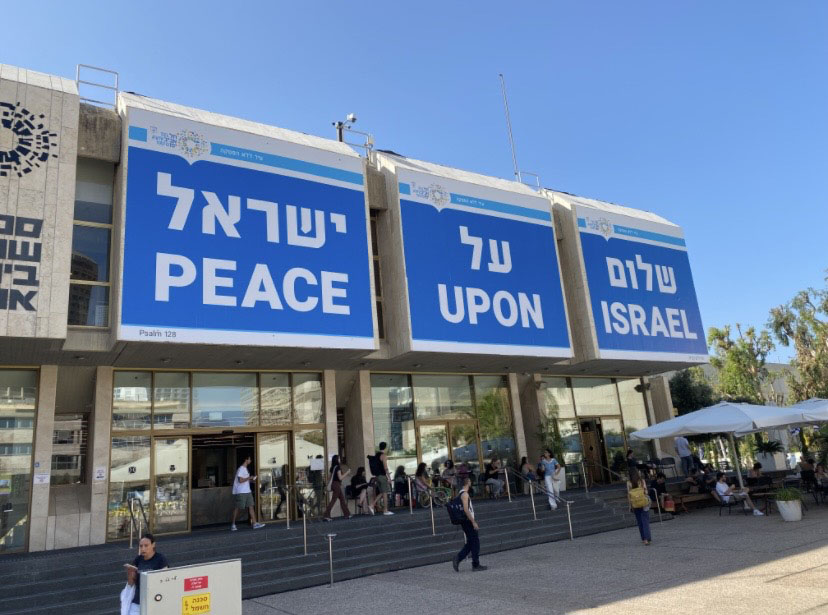
As the State of Israel recovers from two years of war, a biblical book about some restorative heroes of old (sorry, Maccabees, not you guys) might well serve as a surprisingly timely guide. Such is the implicit argument of Yael Leibowitz’s “Ezra-Nehemiah: Retrograde Revolution.”
Leibowitz, an American educator who made aliyah with her family and now teaches at Matan Women’s Institute for Torah Learning and Midreshet Lindenbaum College for Women, walks readers through the often-overlooked ancient tale (in her reading, the two books, Ezra and Nehemia, are meant to be read as one) and sees the narrative of the efforts to repair a broken polity following the tragedy and destruction of foreign intrusion as a roadmap for the current moment.
The biblical text covers a series of three different episodes. In the first, after the decree of the Persian king Cyrus that allows the Jews back into their land, Sheshbazzar, Zerubbabel and Jeshua the high priest (ca. 538-515 BCE) rebuild the Jerusalem Temple complex and restore the operations of its holy rituals. In the second part, religious law and Torah learning in the community is reinstituted under the leadership of Ezra, the scholarly scribe (ca. 458-457 BCE). And during the third, Nehemiah, who had served in the Persian royal court, reconstructs the city walls around Jerusalem and helps repopulate the city itself (ca. 446-433 BCE).
“While in our modern, progress-obsessed culture,” the word retrograde “may conjure negative connotations and decline, what we … come to understand through studying the book of Ezra-Nehemiah is that true, lasting change manifests only when we are able, as a community, to move both backward and forward simultaneously,” Leibowitz writes. Then, as now, we rebuild by taking stock of our guiding principles, rededicating ourselves to our traditions, and repairing our sense of national unity despite internal fissures.
Thus, Nehemiah’s effort to rebuild the physical walls of Jerusalem are a metaphor for how communities, and nations, make and remake meaning. “The initial step toward communal renewal for the Judean community entails distinguishing itself from what it is not,” Leibowitz argues. “But to truly reestablish itself, a community also needs to know what it is, what its values are, and what makes it unique. Fighting to keep outsiders out is meaningful only if those inside know what they stand for; building walls is worthwhile only if what they enclose is worth protecting.”
Furthermore, Leibowitz argues, Ezra-Nehemiah is unique in the canon in that while it follows the eponymous heroes, these Jewish characters are not monarchs nor miracle workers. They are regular folk who, through cajoling, courage, humility and conviction, seek to repair a society that has been sundered by war and factionalism. “A society is only as strong as the people who comprise it,” she argues. “It is the entirety of the Jewish people and their cooperative, grassroots efforts that will shape their fortunes.”
“True progress,” according to the models of Ezra and Nehemia, Leibowitz elaborates, “requires faith in two things: in God’s mercy, evidenced by the fact of our momentous return [to Israel], and in our community’s ability to acknowledge its shortcomings while using every tool at its disposal to rectify them. If negotiated properly, Ezra-Nehemiah suggests, the challenges of restoration can, rather than inhibiting evolution, serve as its point of departure.”
As with the current moment, in which elevating victories seem to be followed quickly by political or societal stumbles, progress is not always linear. “Through its records of Israel’s recurrent ups and downs,” she writes, the Bible “concedes that Israel will never be perfect. Humanity was created with the ability to choose between good and evil, and while that ability enables human creativity and productivity, it is also what makes them fallible. God gave the Israelite people laws to curtail their imperfect nature and equip them with the tools and ideals to build an optimal society.”
Leibowitz concludes her analysis by noting that while the ancient story centers upon the Jewish community in the Holy Land, the support of those Jewish communities not within Israel’s borders was crucial, a key element of today’s crucial conversations as well:
“Ezra-Nehemiah also acknowledges the reality of a Diaspora and the ensuing truth that there must be unity between the Jews of the Diaspora and those in Israel. That unity may prove challenging at times, as interests may clash, values may not perfectly align, and each community may feel a sense of superiority to its counterpart for a myriad of conditioned reasons.”
Nonetheless,the ultimate lesson of the book, and of our moment, is that “Jewish solidarity is vital. As such, we must wield language carefully and compose our national narrative in such a way that all factions know that they are an integral part. The Jewish story is not perfect but, like the land, it is ours, all of ours.”
Rabbi Dr. Stuart Halpern is Senior Adviser to the Provost of Yeshiva University and Deputy Director of Y.U.’s Straus Center for Torah and Western Thought. His books include the newly released “Jewish Roots of American Liberty,” “The Promise of Liberty: A Passover Haggada,” “Esther in America,” “Gleanings: Reflections on Ruth” and “Proclaim Liberty Throughout the Land: The Hebrew Bible in the United States.”
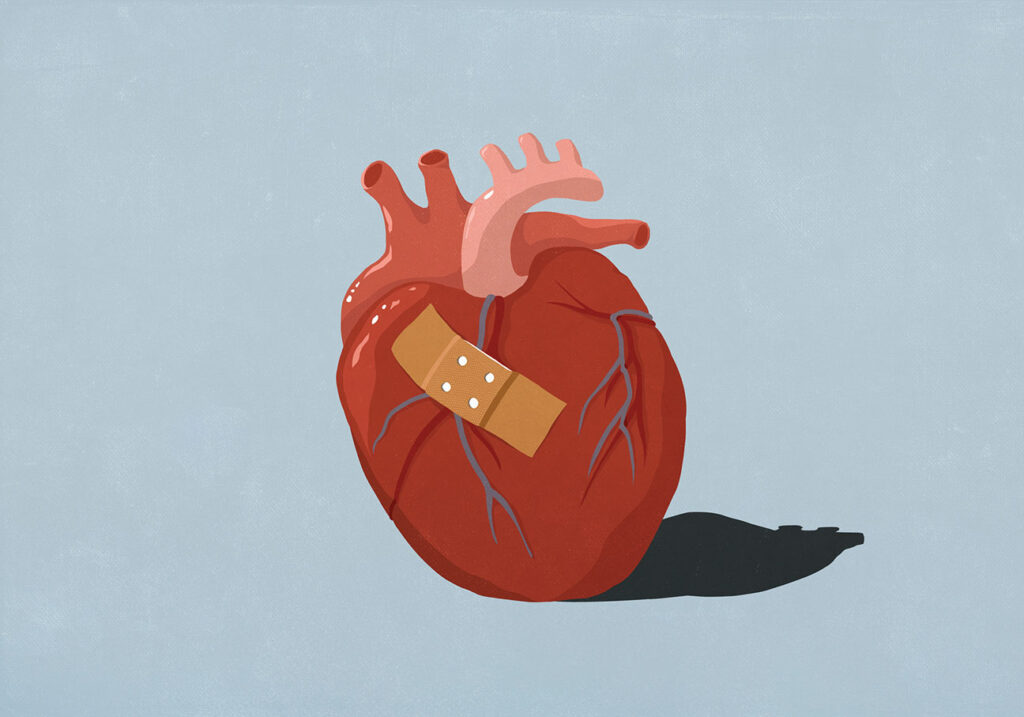
This is a story about the most challenging ordeal that I have ever had to endure. Last spring I had bypass surgery to replace blocked arteries in my heart. The operation was complicated and according to the post-surgery report, my heart went into v-fib arrest and I had to be shocked back to life.
To my own generation, I write this story as a shared experience. After a long recovery, my chest pains and shortness of breath went away. I can go for long walks and hikes without getting tired. To those who are younger, please consider this piece a cautionary tale, a lesson on how to live a healthier lifestyle, consume less and exercise more.
PART I – BAD HABITS
I should have known better … When I was 10 years old, my parents went on vacation and left me with my grandparents. My grandmother enlisted my help in making varenikis, a dumpling consisting of mashed potatoes with fried onions enclosed in a thick shell of soft dough. The potato mixture had a magical ingredient known as schmaltz, rendered chicken fat used in almost all my grandmother’s recipes. My grandmother would roll out the dough and use a glass to make a perfect circle. My job was to scoop the right amount of potatoes into the center of the dough. My grandmother would close the circle around the potatoes and gently drop the dumpling into a pot of boiling water. My grandmother would use a flat ladle with holes, to scoop up each delicious vareniki. Varenikis could be served in different ways, either as a side-dish to a meat meal, or on their own with dollops of high fat sour cream. Oh how I loved those varenikis! I could never get enough. With each vareniki consumed, my cholesterol score worsened and my weight increased. It was the beginning of incredibly bad eating and lifestyle habits that have resulted in my obesity, arteriosclerosis and depression.
I should have known better … On Saturday mornings, my dad would take me with him to his workplace. Before going to the office, we would stop for breakfast at Le Roi du Smoked Meat (The King of Smoked Meat), a diner-style restaurant that still exists to this day. A lard-coated griddle was the birth place for almost every breakfast platter; eggs served with bacon, ham or smoked meat. A toasted bagel completed the order, and while my father enjoyed his coffee, I preferred a glass of cold chocolate milk. My father had his first heart attack at the age of 53 and was plagued with angina until his untimely death at age 66 from cancer.
I should have known better … Growing up in Montréal with its incredible selection of wonderful restaurants was both a blessing and a curse to this stout little man with a Gold American Express Card. At the Yangtze almost every Sunday night, they served up crispy eggrolls, won ton soup and incredible spare ribs. For classier Chinese fare along with the best roast beef in town, Ruby Foo’s was the place. In the mood for Italian, a short trip to Piazzo Tomasso for your choice of pasta or Veal Parmigiana.For the best barbecued chicken, you could choose between Chalet Bar-B-Q and the more upscale Laurier Bar-B-Q. Are you in the mood for dessert? You could enjoy a piece of Moka cake at the Pam-Pam or a South American Ice Cream Sundae at Pumpernick’s.
And the delicatessens … cornucopias of Jewish-style cuisine with the focus on fat, juicy smoked meat sandwiches on rye bread. These heart-stopping delights along with sides of pickles, coleslaw and the greasiest French fries were available on almost every corner. All the while, the calories, the sodium, the fat and the nitrates were enjoying their own little party in my gut.
I should have known better … By the 1970s, discos were the “in” spot. The music was loud, the bars were crowded and smoky and the only way to get a girls attention was to buy her a drink. And so I took to drinking; Bloody Marys, Black Russians, or just straight up scotch. The bartenders were my “friends” making sure that my glass was always full.
Lucky for me, my addictions only involved food and drink. Smoking always seemed like a disgusting habit, but the fact that I never smoked is probably inconsequential. From the 1950s to the 1990s the whole world was a giant ashtray. Everyone smoked including my parents, my sister, my girlfriends, the bank tellers, the grocery store cashiers and the waitress at the deli. You couldn’t escape the haze of second-hand smoke that was certainly a factor in heart health.
My food and drink addictions continued until my wedding day. My wife moved in and threw out my salamis, my boxes of Kraft macaroni dinner, the Bar-B-Q chips and my Whippet cookies. It was time to start living a healthy lifestyle. My partner was very strict concerning the food inventory. There were always a lot of fruits and vegetables, low fat yogurt and whole grain cereals. For snacks, we had dry fruit and my mother-in-law’s homemade galettes.
But … I should have known better. Even though my wife prepared delicious, healthy dinners, I still spent many lunch hours at the deli or the Chinese restaurants. The worst part was that I cheated on my wife. Most days on the way home from work, I would stop at the store and pickup my mistress – a large bag of Miss Vickie’s potato chips. Miss Vickie would sit in the passenger seat, while I munched on her incredible chips during my drive home. It was the only time that I wished for heavier traffic so that I could consume more chips.
I had secret stashes, in the garage, office and kitchen cupboards. Inevitably my wife would discover these treasures and they would end up in the trash. I went to doctors, dieticians, psychiatrists, weight loss support groups and hypnotists. They offered excellent solutions to control my intake, modify my food choices and exercise more. The counselling and coaching worked well in the short term, but I would always revert back to my old bad habits.
PART II – RETIREMENT AT LAST
I retired at age 66. I was fed up with the stress that came with my job. The constant fear of computer viruses, ransomware attacks and software bugs was always on my mind, even while on vacation. Now I was finally free. That first Monday morning that I was able to take my coffee on my back deck and listen to the chirping birds was one of the happiest days of my life. I started going for long walks and joined the “Y.” One day last spring while I was on a walk, I started to get chest pains. The pains were intense and I had to sit down for a few minutes until they passed. I consulted my family physician who sent me to see a cardiologist. The doctor put me through a battery of tests; electrocardiogram, ultrasound, treadmill and blood tests. All the results came back negative. I was given pills to lower my cholesterol and control my high blood pressure.
Bad dietary habits and a passive lifestyle were only part of the problem. Many cardiac conditions, including those that can lead to heart attacks, are inherited. This means that if you have a close family member with heart disease, your risk of developing it is higher. Genetic variations are passed from parents to children.
My grandfather came home from work at his shoe repair shop one day. He greeted his wife and children, then keeled over and died of a heart attack at the age of 36. My other grandfather had a near fatal heart attack in his 60s. My own father had his at 53 years old and my mother died of heart failure at 83 years old after two bypass surgeries. With genes like that, my risk of having heart failure was higher than normal.
PART III – THE DIAGNOSIS
The chest pains persisted and I was walking less, so I went back to the cardiologist. He couldn’t figure it out. Previous test results were good and I was dutifully taking my meds, so why were the chest pains continuing? Time for an angiogram – a radioactive dye is injected into your veins and x-ray photography is used to trace the path of the chemical as it circulates through the heart. The results weren’t good. In fact the cardiologist was so surprised to see the outcome that he called me the very same evening to come to his office the next day. He screened the angiogram on his computer and showed me, with great detail, the blocked arteries. There were seven blockages that were clearly visible and the doctor highlighted the areas that were most heavily constricted. There were few options available, too many blockages for angioplasty; the only viable choice was open heart surgery to bypass the obstructions.
The cardiologist would advise the surgical team and I would be called in for a consult. The doctor advised me to avoid stress, stay away from fatty foods and not to travel. A few weeks later, I had my appointment with the surgeon. The doctor explained all the steps that must be followed to ensure a successful outcome before and after the surgery. A week in the hospital for recovery was the norm, three days in the Intensive Care Unit (ICU) followed by four days in the Cardiac Care Unit. Physiotherapy would be required after the operation as well as participation in a cardio rehabilitation program.
PART IV – THE SURGERY
To prepare for the day, I ordered a new pair of pajamas and slippers on Amazon. I added a couple of novels to my e-book reader. I visited my children and grandchildren. I showed up early in the morning at the designated department. My chest, legs, and groin area were shaved and I was given the standard hospital gown. Forget anything about dignity. The gown barely covers your privates and you are pretty much “out there.”
The operating room had been rebuilt only a few years ago and it featured state-of-the-art lighting, monitoring equipment and ventilation. As the team started their preparations, I was again briefed on the procedure. A few more questions to confirm my identity and then I was off to dreamland. I was told to count backwards but I didn’t get very far. Before I knew it, total blackness overtook me and when I woke up I was connected to an array of monitors and hoses. During the seven-hour surgery, five clogged arteries in my heart were “bypassed” using veins that were harvested from my leg. My memory was a little fuzzy when I came to. I was groggy, disoriented and quite uncomfortable but I could feel no pain. A lovely “angel” hovered over my bed checking the various wires, tubes and sensors connected almost everywhere on my body. All I wanted to do was return to that blissful sleep, but the effects of the antiesthetic slowly started to wear off and I realized that I was in for a challenging recovery period.
PART V – RECOVERY
At first, I had major problems sleeping. There was a digital clock on the wall in front of my bed with bright red numbers. I kept thinking of those medical TV shows where the doctor calls out “Time of death – 3:47.” There seemed to be something wrong with the clock. The numbers changed way too slowly. When I finally managed to fall asleep, I was plagued by nightmares. The walls turned to stone, like an ancient castle, with living gargoyles sitting at the top. It seemed that the walls were closing in on me while the gargoyles swooped down the sides laughing wickedly and the big red clock flew around the room. I had no appetite and I longed for just a few hours of uninterrupted sleep. It got to a point in my recovery process that I begged for a psychiatry consult.
I was visited by the psychiatry team. We talked about my lack of sleep and my loss of appetite. New medication was temporarily added to my nightly cocktail of drugs, and the nightmares went away. I was also visited by a hospital dietician. She agreed that the default meals could be a little hard to swallow and together we came up with a better plan.
Bodily functions were another challenge. Urinating was easy. I was given a pitcher that I could hang from a bedrail. Bowel movements were another matter. A chair called a “commode” was positioned next to the bed. When you start to get the feeling that something is about to transact, you must move quickly from the bed to the commode, all the while making sure that every wire and tube stays connected and doesn’t get tangled. Several very embarrassing accidents occurred and I have only admiration and gratitude for the brave orderlies who had to clean up the mess.
After a few days, I was moved to a beautiful room in the CCU and most of the monitors were disconnected. I was advised to walk the halls as much as possible. I was visited by a physiotherapist who tested my breathing and my ability to walk.
PART VI – HOME AT LAST
On Saturday, March 29, 10 days after the surgery, I was sent home. After the surgeon signed off on all the paperwork, my wife and sons helped me into the seat of the car and although I felt every bump and pothole, I was overjoyed to be going to my house and taking my first shower in over two weeks. Stairs were still a challenge. For the first days at home I had to do everything in “slow motion.” The weather was still inclement and I had to do most of my walking around the house.
Soon after coming home, I started the cardiac rehab program. It included access to a gym with a kinesiologist for 12 weeks, meetings with a support group that involved discussions with other patients who had experienced cardio surgery and sessions with a social worker, a dietician and a physiotherapist. I was given an initial appointment for a stress test and blood tests. This would determine a baseline that would be used to compare my condition at the end of the program.
The cardio rehab program was an excellent experience. The knowledgeable and caring staff went beyond their responsibilities to ensure a positive outcome for the participants. The gym is well equipped with modern exercise machinery and weights and other accessories. The opportunity to discuss issues concerning rehabilitation, recovery and lifestyle topics with the professionals as well as with other heart patients was a tremendous asset in making a full recovery.
It has been almost eight months since the surgery. I go for long walks and I experience zero chest pains. I am back to my volunteer work; I wash the car, vacuum and do the laundry. I take medication to control my blood pressure and cholesterol. I have been on a strict diet, trying very hard to lose weight, although I still enjoy the occasional bagel, smoked meat sandwich and ice cream.
Heart surgery is still risky and in some cases, fatal. The best plan is prevention. I have learned to be more selective in the foods I eat, exercise more and try to avoid stressful situations. It took me over 72 years, but I finally know better.
Paul J. Starr is a recently retired systems analyst who has lived his entire life in Montréal, Canada. On Sunday mornings he is “living the dream,” hosting a two-hour Internet radio show featuring music from the 50s and 60s called “Judy’s Diner.”
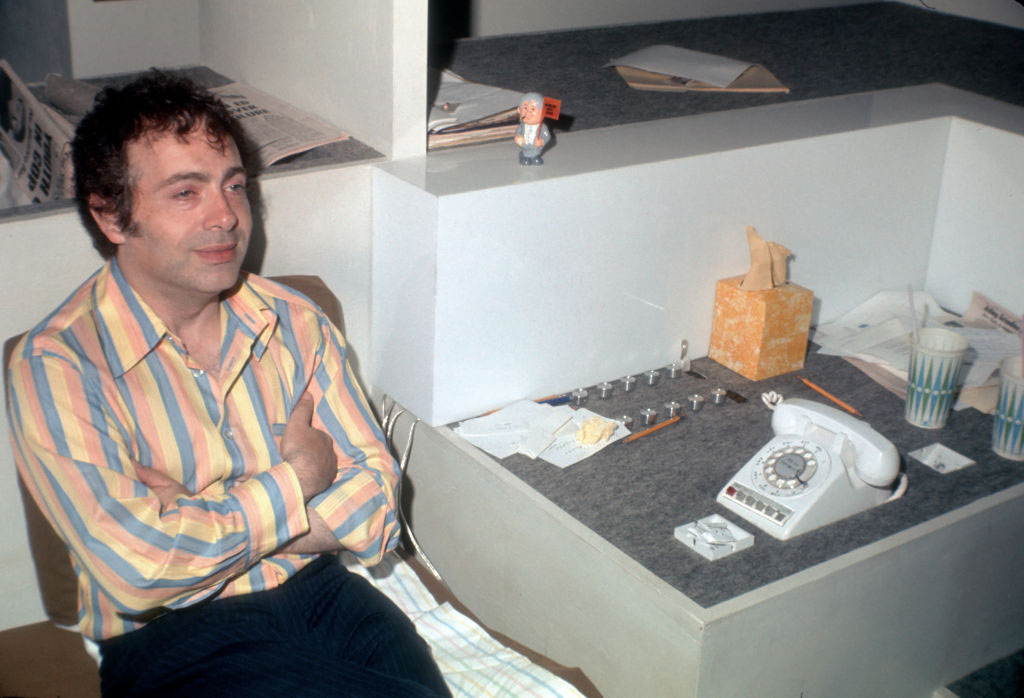
I went on vacation to Miami, and that’s where I met Jackie Mason. It was July 5, 1971, on Collins Avenue in Miami Beach across from the Fontainebleau. The Florida sun beat down on the bustling streets that particularly warm day. I was vacationing from New York with my friend Izzy Lefkowitz, who had suggested Miami for its beautiful beaches and vibrant atmosphere. I noticed a camera crew with lights, cameramen and Jackie Mason. I pulled my car over and asked what was happening. They explained they were conducting a screen test so the director and producers could see how actors looked with makeup, wardrobe and hair on film. Intrigued, I stayed and watched for about two hours until they finished filming.
When shooting wrapped, I introduced myself to Jackie Mason. “Hello, my name is Aaron Biston. I’m a very big fan of yours.” He replied, “Hi, it’s nice to meet you. I’m Jackie Mason.” “It’s nice to meet you too,” I said. “However, wherever I go, I have a problem. People say I sound like Jackie Mason. When in fact, I don’t think I sound like you at all. I think you sound like me.” He responded, “You don’t sound anything like me. Kid, I want to keep you around in case I get amnesia and I don’t know who I am. I could listen to you talking, then I can go back to being me, Jackie Mason.” I persisted, “But Jackie, when I’m being myself, people still say I sound like Jackie Mason.” Jackie quipped, “That’s not the time to worry. The time to worry is when I, Jackie Mason, go on stage to perform and people say I sound like Aaron Biston. That’s the time to worry.” Jackie invited me and Izzy to lunch at a fancy restaurant in the Balmoral Hotel.
After an hour or two, he said, “Kids, I got to go catch a flight to Puerto Rico to do a show.” I offered, “I’ll take you to the airport.” Jackie asked, “What qualifies you to drive such a big celebrity like me to the airport?” “I used to be a taxi driver in New York,” I replied. On the way to the airport, Jackie offered me $50, which was a substantial amount in 1971. I declined, “No thank you. You took me to lunch, so I want to reciprocate by taking you to the airport. However, if you want to help me, I’m out of a job. Can I get a job in your movie as an assistant producer?” That was my assertive side speaking. Jackie agreed without even asking for my qualifications. Then my naïve side emerged as I asked, “What does an assistant producer do?” He replied, “I don’t even know what a producer does, but when I find out, I’ll tell you.”
I remained in Miami from July to September, taking odd jobs to cover my hotel expenses despite the incredibly hot summer. I was determined to wait for the opportunity Jackie had promised. In September, I went to the Doral Hotel and asked if Jackie Mason was a guest. When they confirmed, I asked them to tell him Aaron Biston was waiting in the lobby. He came down and said, “You’re the kid.” I asked if I still had the job, and Jackie confirmed I did. The movie began shooting in early September. The director was John Avildsen, who would later become famous for directing “Rocky” and other notable films. During filming, on my birthday, Oct.12, the entire cast and crew, including Jackie and the director, signed a birthday card for me. After two months of shooting in Miami, I drove back to New York. The long drive gave me time to reflect on this incredible experience. My friendship with Jackie Mason continued for the next 40 years, filled with many more memorable moments and conversations that I will always cherish.
In 1971, Aaron Biston served as an assistant producer and driver for Jackie Mason. In 1972, he established Fantastic Photo Electronics in Boro Park, Brooklyn, an enterprise he managed until 1979. He relocated to Los Angeles, and in 1980, commenced remodeling and constructing houses and apartment buildings. Whenever Jackie Mason performed in Los Angeles, he served as his driver.
Before this recent trip to Israel in November 2025, the last time I was there was 2018, when I did two shows at Menora Mivtachim Arena with Jerry Seinfeld for 34,000 people.
Since then, a lot has happened to the people in Israel and to Jews around the globe. Most of it is not fun. I was in Boston with Seinfeld when evil struck on Oct. 7, 2023. Of course, we did our shows, but they were done with broken hearts.
But it wasn’t until Nov. 17, 2025, that my wife and I returned to the Holy Land. Except for a Shabbat in Ra’anana with our dear friends Alan and Rachel Jacoby, we made Jerusalem our home base for 13 days with our travel buddies, June and Rabbi Yosy Schames. Though trips like this one are expensive, I felt that every dollar we spent in Israel was a huge mitzvah.
On this trip to Israel, I realized there are only two countries I love. One is America, and the other is Israel. While there, we toured the Nova site, picked persimmons for an 80-year-old farmer, packed green lentils at the Pantry Packer, sponsored a BBQ for 100 IDF soldiers, and I did a show in Tel Aviv (with Michael Rapaport, Benji Lovitt, Yossi Tarablus).
But the highlight while there was the wedding of an IDF soldier on a kibbutz in Herzliya.He was a Lone Soldier (and has finished his service), and during the war, he was stationed in Gaza for 220 days.Fifty-seven of those were in a row. He is one of the lucky ones to have made it back home to his family, friends and fiancée.
During the war, his parents ran back and forth to Israel, as if they were driving down the block to Trader Joe’s, each time bringing supplies the soldiers needed. His father had to sit shiva for his mother, and our Lone Soldier did not learn of his grandmother’s death or that his father was sitting shiva in Israel until his father was back in the States.
Months earlier, while their son was still in Gaza, always thinking about others, his parents brought me back a pair of green tzitzits, the color worn by the IDF, that I will always wear proudly.
The wedding ceremony was so moving. I noticed Rabbi Yosy and me, and many others, crying. It wasn’t only family and friends who attended; many of his IDF brothers and sisters were there, too. It was a combination of unbelievable joy and extreme sadness, because some of his soldier buddies never made it back home to dance for the happiness of the Chatan and Kallah. The dancing that night was as much for the living as it was for those taken so soon.
In the wedding program, there was a photo of our Lone Soldier surrounded by seven of his soldier brothers, four of whom were killed in the war. Under the chuppah, he took a few minutes to pay a beautiful tribute to his brothers who never made it back, plus two others, offering us a glimpse of what each one meant to him. We got the feeling they were as much alive in his heart as any of us in our seats.
At the Sheva Bracha (Seven Blessings) the next night, his Israel history high school teacher was called to speak. He was also the teacher of seven other boys in attendance that night. The teacher brought down the house with laughter when he returned eight of the boys’ high school test results from seven years earlier about their knowledge of Israel. When one boy was asked how many members the Knesset had, he wrote 10,000. Another said, “I know, but I can’t remember.” More importantly, what they did know was to show up in Israel to support their Lone Soldier friend.
They say that when a couple marries under the chuppah, God stands with them. I knew for sure that if there was ever a wedding that God attended, this surely was it.
Of course, as a Jew, I need to mention something else of utmost importance: the food at the wedding and Sheva Bracha was out of this world.
God bless this young, beautiful couple.
Mark Schiff is a comedian, actor and writer, and hosts, along with Danny Lobell, the “We Think It’s Funny” podcast. His new book is “Why Not? Lessons on Comedy, Courage and Chutzpah.”
This week on Schmuckboys, Marla and Libby bring on author and content creator, Carrie Berk. She starts off sharing about her own relationship journey and the inspiration behind her book “My Real-Life Rom-Com,” which chronicles her dating life during the pandemic. Carrie shares some of her dating disaster stories and how she has now fear about sharing all the details in her books, she just changes names for privacy.
The girls then discuss Carrie’s newest book “Mindfire” which combines personal experiences about anxiety and OCD, aiming to help others feel understood and less alone. Carrie highlights the need for relatable content in mental health literature and the importance of vulnerability in sharing personal struggles. The girls talk about the different ways people deal with anxiety and touch upon dating while dealing with OCD, suggesting that people lead with education rather than expecting immediate understanding from others. Carrie discusses her Jewish background and how it influences her storytelling, emphasizing the importance of prayer and faith during difficult times. Carrie also addressed the challenge of balancing sharing her Jewish identity online with appealing to a broader audience, advocating for authenticity and self-confidence. The girls then talk more about Carrie’s writing journey, revealing she has written approximately 22 books, including children’s books with her mother and solo works. She shared that her writing process is organic, often writing in spontaneous moments, and her proudest career moment was the successful launch of her solo book Rom-Com. They play a quick game of cute or cringe and end off with Carrie defining a “schmuckboy.”
You can find Schmuckboys on instagram @schmuckboysofficial, Carrie Berk @CarrieBerkk and her books “My Real Life Rom Com” and “Mindfire” are available on Amazon, Barnes and Noble and more!
When thousands of men in the prime of their lives began dying of AIDS in the early 1980s, our government recklessly and cruelly ignored their pleas for help. That’s because, at the time, almost all of the victims were gay. And when these young men came to the crushing realization that they were in this fight alone, they took to the streets in “Silence = Death” t-shirts and engaged in risky civil disobedience. They had to. Their lives depended on it.
While Jews around the world are facing a different kind of deadly threat, we do share one thing in common with those brave young men. We must advocate for ourselves because no one is coming to save us. Six million of our ancestors learned that lesson the hard way 85 years ago when Nazis and their collaborators throughout Europe loaded them into cattle cars and shipped them to death camps. We learned it again after the October 7 massacre, when much of the free world rallied in support of our killers.
We must advocate for ourselves because no one is coming to save us.
In the eight decades after the Holocaust, survivors throughout the diaspora said to anyone who would listen, “Never Again.” They were delivering a warning, but some of us processed their words as closure. We were naive, believing that humans were incapable of repeating these atrocities. That we had fundamentally changed.
In the eight decades after the Holocaust, survivors throughout the diaspora said to anyone who would listen, “Never Again.” They were delivering a warning, but some of us processed their words as closure. We were naive, believing that humans were incapable of repeating these atrocities. That we had fundamentally changed.
Starting on October 7, the antisemitism that percolated at society’s fringes began to make its way into the mainstream. Instead of embracing us after the devastating attack, the people with whom we marched for BLM, reproductive rights, gay rights, animal rights and the climate turned their backs on us. Friends, colleagues and social media acquaintances who once treated us kindly called us baby killers, white colonizers and supporters of apartheid and genocide. Once again, Jewish people became the root of the world’s problems. And a fair target.
This new paradigm gave cultural and educational institutions, NGOs and social justice movements license to push Jews out of civic life. Celebrities, social media influencers and elected officials contributed to the purge by supporting calls for intifada, even as violence against Jews escalated. On college campuses, participating in “anti-Zionist” activism became a form of social currency. In recent months, Jew-hatred has been so normalized that some Democratic candidates are now running for public office on an “anti-genocide” platform.
Empowered by public support and the silence of our frightened allies, mobs of masked “Free Palestine” activists have descended upon Jewish neighborhoods, calling for intifada, protesting at temples, vandalizing restaurants, disrupting events, harassing families and, at times, becoming physically violent. To add insult to injury, the perpetrators and their supporters accuse Jews who dare to speak out against the attacks of “weaponizing antisemitism.”
Through their words and actions, these so-called activists have demonstrated that they’re motivated not by a desire for peace in the Middle East, but by a thirst for violence in their own backyard. Their faces might be hidden by keffiyehs, but the hatred in their eyes is unmistakable.
These so-called activists have demonstrated that they’re motivated not by a desire for peace in the Middle East, but by a thirst for violence in their own backyard. Their faces might be hidden by keffiyehs, but the hatred in their eyes is unmistakable.
While some Jews are speaking out against the tidal wave of antisemitism, far too many of us are removing our Stars of David and remaining silent – hoping that it will blow over or that someone else will protect us. But history tells us that we take the path of least resistance at our own peril.
In order to help extinguish this five-alarm fire before it engulfs us, each of us must speak out against antisemitism whenever and wherever we encounter it, even if that means taking personal risks. We must denounce the propaganda and set the record straight. And we must become more visible and vocal than ever before.
We know that our advocacy can make an impact. In November, when lawmakers in Dublin announced their intention to “de-name” a park named after an Irish World War II hero who was Jewish, Jews around the world successfully pushed back. And we did it again in December, when several European countries demanded, unsuccessfully, that Eurovision expel Israel from the singing contest in 2026.
But, given the fast pace at which antisemitism continues to spread into the mainstream, we simply aren’t doing enough to guarantee our safety and to protect the most vulnerable among us. Like the bold and courageous AIDS activists in the 1980s who stepped out of their comfort zones to survive, Jews must do the same. And we must Never Forget that Silence = Death.
Something important happened at the American Zionist Movement’s Biennial last week—not because it was a major political moment or because it revealed something we did not already know, but because Rabbi Elliot Cosgrove finally said aloud what too many communal leaders have been afraid to confront. His remarks crystallized a generational rift that has been growing for years, one that has quietly reshaped the way younger Jews talk—and increasingly refuse to talk—about Israel.
I’ve seen versions of this in my research, in my classrooms, and in my own Jewish life. The distance is real. The discomfort is real. And the sense among younger Jews that they cannot express their anguish, frustration, or moral unease without being judged or dismissed is not an invention of social media. It is a reflection of how our community has come to police discourse around Israel with a rigidity that often substitutes for confidence.
Cosgrove captured this dynamic with unusual clarity. Engagement with Israel, he argued, has taken on the “weight of religious transgression,” becoming an informal orthodoxy that treats criticism not as engagement but as disloyalty. For a people who have always placed argument at the center of spiritual and civic life, this discomfort with dissent is not a minor cultural quirk; it is a sign of communal insecurity.
The reaction to his remarks—genuine applause from some, walkouts and unease from others—made the divide visible. No formal generational breakdown was recorded, yet anyone watching could see that different parts of the room were absorbing fundamentally different messages. Younger Jews heard recognition of something they have long experienced but rarely seen acknowledged. Older leaders heard a challenge to longstanding communal instincts. The fact that both instincts exist is precisely why this moment matters.
Cosgrove pointed to the recent New York election, where roughly 33 percent of Jewish voters cast ballots for mayoral candidate Zohran Mamdani. He did not scold those voters; he explained them. When liberal Zionists feel unheard or morally unacknowledged, anti-Zionism can begin to appear—wrongly, but powerfully—like the only vocabulary available for their discomfort. As I have seen in national polling, this drift is not speculative. According to JPPI’s 2025 Annual Assessment, 43 percent of American Jewish millennials say Israel is not important to their Jewish identity—nearly triple the 16 percent found among American Jews overall in Pew’s 2020 survey. This gap has only widened since Oct. 7, with non-Orthodox Jews under 30 reporting the sharpest declines in attachment to Israel. That is not a matter of taste. It is a matter of generational formation.
And here is where Cosgrove’s diagnosis intersects with a truth that must be stated plainly. Mamdani is not a harmless critic of Israeli policy. His rhetoric rejects the core legitimacy of Israel as a Jewish state. He has declined to say he believes Israel has the right to exist as a Jewish state, saying the country should provide equal rights to all residents. He is not debating governance; he is opposing the very idea of Jewish sovereignty. That any Jewish voter felt his stance was the closest available expression of their moral commitments is not a failing of theirs; it is a failing of a communal conversation that left them nowhere else to stand.
Criticism of Israel, even fierce criticism, is not only legitimate but also deeply Jewish. Walk into any café in Tel Aviv and you will hear arguments more heated and more honest than anything voiced at most American Jewish conferences. Israelis argue because they care about their society, their democracy, and their future. But that tradition of argument is categorically different from the claim that Israel should not exist at all. Anti-Zionism is not critique. It is the erasure of Jewish collective rights and the denial of Jewish peoplehood. Whatever one’s views of particular governments, this distinction must remain foundational.
So what would a healthier Zionist pluralism look like? It would begin by restoring legitimacy to the full emotional spectrum—grief, frustration, uncertainty—without treating any of it as betrayal. It would teach that commitment and critique are not opposites but partners. It would create room for younger Jews to articulate moral discomfort without feeling they must choose between silence and abandonment. And it would do all this while drawing a bright, unapologetic boundary around movements that reject the very idea of Jewish sovereignty. That is what a serious, grown-up Zionism requires.
Cosgrove called for a communal “self-audit” (heshbon hanefesh), urging leaders to examine not just how we police criticism but how we articulate our own commitments. He was right. A community frightened of honest questions is a community that cannot inspire loyalty. And a community unable to distinguish between internal critique and external eradication will end up confusing its own children about the meaning of Jewish peoplehood.
A community frightened of honest questions is a community that cannot inspire loyalty.
If we meet Cosgrove’s challenge with honesty, humility and moral clarity, we can still build a Zionism strong enough to hold the next generation’s questions and durable enough to earn their allegiance. If we do not, the drift he described will harden into rupture, and the consequences will be ours to bear.
Jewish survival has always depended on our willingness to argue, and our refusal to abandon one another while doing so. The future of Zionism will not be secured by rigidity or fear, but by a community courageous enough to confront its fractures and committed enough to repair them. The moment demands nothing less.
Samuel J. Abrams is a professor of politics at Sarah Lawrence College, a senior fellow at the American Enterprise Institute, and a scholar with the Sutherland Institute.
Words have meaning and power. They shape us and our society. They stir thoughts, emotions and actions. Woe to those who underestimate the power of words.
I spent 37 years teaching literature at the university level and demonstrated to students how writers like Mark Twain, Charles Dickens and Emile Zola held up a mirror to society and were agents of social change. Their words revealed truths that some did not want to see. Twain vividly portrayed the ugliness and injustice of racism; Dickens and Zola exposed the desperate poverty of the peasants and the working class.
Words communicate, influence and convince. That great power has created empires and defeated them, moved people to aspire to great deeds and brought unspeakable horrors. They are not just words. They are shapers of history.
Today words are used in a propaganda war, not to reveal, but to conceal, not to summon truth but to distort it. Mark Twain wrote: “A lie can travel half way around the world while the truth is putting on his shoes.” Somehow, people are more likely to believe a juicy lie than a hard truth. If it confirms a bias, then it is most definitely accepted as proof positive.
Sometimes, words are used to deceive. If you say, “I’m not an antisemite. I’m an antizionist,” the true meaning is that Israel, a sliver of land, the ancestral homeland of the Jewish people, has no right to exist. It is like saying: “I’m not anti-American. I just think that America has no right to exist.” There is no other country in the world whose right to exist is in question.
If you say that mobs are exercising free speech when they gather in front of synagogues, Jewish schools, on campuses or public places and intimidate, use hate speech and trespass, then you are abusing language and encouraging lawlessness.
If you say that mobs are exercising free speech when they gather in front of synagogues, Jewish schools, on campuses or public places and intimidate, use hate speech and trespass, then you are abusing language and encouraging lawlessness.
If the media use the word “militant” instead of “terrorist” in an effort to be non-judgmental, then they are corrupting language and are negligent in their mission to call out the difference between truth and lies.
“Genocide” means the deliberate attempt to eliminate an entire people. People who say that Israel is committing genocide in Gaza, when the population increased after Israel evacuated the strip in 2005, and civilian casualties during the war were fewer than any war waged by Western democracies, then you are using a word for purposes of creating animosity and fueling hatred.
Israel is condemned as an apartheid state. The fact is that there are Arab citizens of Israel who are doctors, lawyers, judges and members of the Knesset. Half of Israel’s population are Jews who were forced out of Arab lands, who speak Arabic and come from Arab cultures. There are churches and mosques all over Israel. How many Muslim countries have a single church or synagogue? This is yet another example of distortion and the deliberate corruption of language for the purpose of defamation and delegitimization.
The word “narrative” is used in order to avoid using the word “history.” Narrative is a word taken from the world of fiction. The purveyors of lies and distortion do not want to talk about the facts of history because they would have to face the fact that Zionism is the national liberation movement of the Jewish people. Jews had kingdoms in Israel before the birth of Christianity and Islam. Israel isn’t taking anyone’s land. They are returning to their ancestral homeland after two thousand years of persecution in the diaspora. So the Jew-haters talk about “my narrative” and “your narrative” as if lies are equal to historical facts.
I imagine Samuel Johnson, editor of the original Oxford English Dictionary and Daniel Webster, founder of the American Dictionary, resurrected and standing before the corrupters of language for propaganda purposes, shouting “Shame! Shame! You are destroying the very foundation of language itself.” Or George Orwell, shocked to see his prophesies on corruption of language coming true beyond his wildest imagination. They painstakingly labored to make words clear, precise and grounded in reality. The deliberate misuse of language for political or theological purposes is an unspeakable and unforgiveable assault on everything decent and good.
I imagine Samuel Johnson, editor of the original Oxford English Dictionary and Daniel Webster, founder of the American Dictionary, resurrected and standing before the corrupters of language for propaganda purposes, shouting “Shame! Shame! You are destroying the very foundation of language itself.”
In Genesis (1:3), God says, “Let there be light, and there was light.” All of Creation was the result of the uttering of words. There is no greater example of the power of words. God created the world with words and humans have the power to destroy the world with words. Humans are the only creatures on Earth with the gift of language, a precious and unique gift. The misuse of language, especially for malignant purposes, undermines the heart and soul of humanity itself. We all lose in that tragic betrayal.
Facts are stubborn things. Truth eventually prevails. The cost is always very high until the inevitable restoration of truth. The rainbow after the Flood in the Bible (Genesis 6:9-17) is God’s promise never to destroy the world again for its evil. It is up to us whether we preserve it or destroy it.
In memory of the murdered Jews in Australia who tried to bring light to a dark world, let us commit ourselves, each in his or her own way, to confront deception with history and facts.
Dr. Paul Socken is Distinguished Professor Emeritus and founder of the Jewish Studies program at the University of Waterloo.
Norman Podhoretz, the journalist and public intellectual who charted a path from Jewish liberal to pro-Israel neoconservative, has died at 95.
Podhoretz was the influential editor of Commentary magazine for 35 years, after being appointed to run the American Jewish Committee’s thought journal in 1960 at age 30.
He initially continued in the magazine’s liberal tradition. But over the course of the 1960s, he became disillusioned by the left, lamenting the radicalism that had become prevalent in campus antiwar activism. He also objected to a mounting critique within the New Left of Israel and its occupation of conquered lands following the 1967 Six-Day War.
By the decade’s end, Podhoretz had openly refashioned himself as what would become known as a neoconservative — someone his friend and intellectual ally Irving Kristol would describe as “a liberal who has been mugged by reality.” It would become a well-worn path.
Many of the most prominent neocon intellectuals were Jewish and, like Podhoretz, from New York City. Commentary became a central platform for their outlook on civil rights, the threat of communism and especially foreign policy, about which Podhoretz was sees as a particular expert. He argued strenuously against the Soviet Union and expressed steep concern about the U.S. detente with Russia as communism collapsed. He also advocated an interventionist U.S. foreign policy in support of promoting democracy abroad, causing him to support foreign wars that many liberals opposed.
Israel was a focus for Podhoretz, an observant Jew who was a longtime member of Manhattan’s Congregation Or Zarua. He believed that Israel was essential for both Jewish safety and U.S. interests and argued in support of its military pursuits. He soured early on the prospects for a peaceful resolution of the Israeli-Palestinian conflict. He also warned early — and seemingly presciently — that Jews could not rely on left-wing values to keep them or their homeland safe.
Podhoretz made waves in 2016 for endorsing Donald Trump in his first run for president, at a time when many traditional Republicans could not countenance him. He argued that Hillary Clinton would continue Barack Obama’s policies, including the Iran nuclear deal that Obama struck, which Podhoretz called “one of the most catastrophic actions that any American president has ever taken.”
By the time he retired as Commentary’s editor in 1995, Podhoretz had embraced mainstream conservative views on a range of social issues too, opposing abortion and gay rights. He also rejected his own early liberal views on immigration, saying in 2019 that contemporary immigrants did not want to assimilate the way his parents’ generation had sought to.
“I was always pro-immigration because I’m the child of immigrants,” he told the Claremont Review, a leading journal of contemporary conservatism. “And I thought it was unseemly of me to oppose what not only had saved my life, but had given me the best life I think I could possibly have had.”
Born in 1930 in Brooklyn to parents who immigrated from Galicia, now Poland, Podhoretz attended public schools but also got a rich Jewish education at the urging of his father, a Yiddish-speaking immigrant who worked as a milkman. In addition to learning Hebrew, Podhoretz worked at Camp Ramah and took classes at the Jewish Theological Seminary while attending Columbia University, from which he graduated in 1950.
The final of his dozens of books, published in 2009, attempted to explain why most U.S. Jews are liberals — and why they should not be.
“He was a man of great wit and a man of deep wisdom and he lived an astonishing and uniquely American life,” his son John Podhoretz, who succeeded him as Commentary’s editor, wrote in a remembrance for the magazine announcing his father’s death. “And he bound himself fast to his people, his heritage, and his history. His knowledge extended beyond literature to Jewish history, Jewish thinking, Jewish faith, and the Hebrew Bible, with all of which he was intimately familiar and ever fascinated.”
Norman Podhoretz is survived by four children, 13 grandchildren and 16 great-grandchildren, according to the remembrance. His wife, the social commentator and critic of feminism Midge Decter Podhoretz, died in 2022.
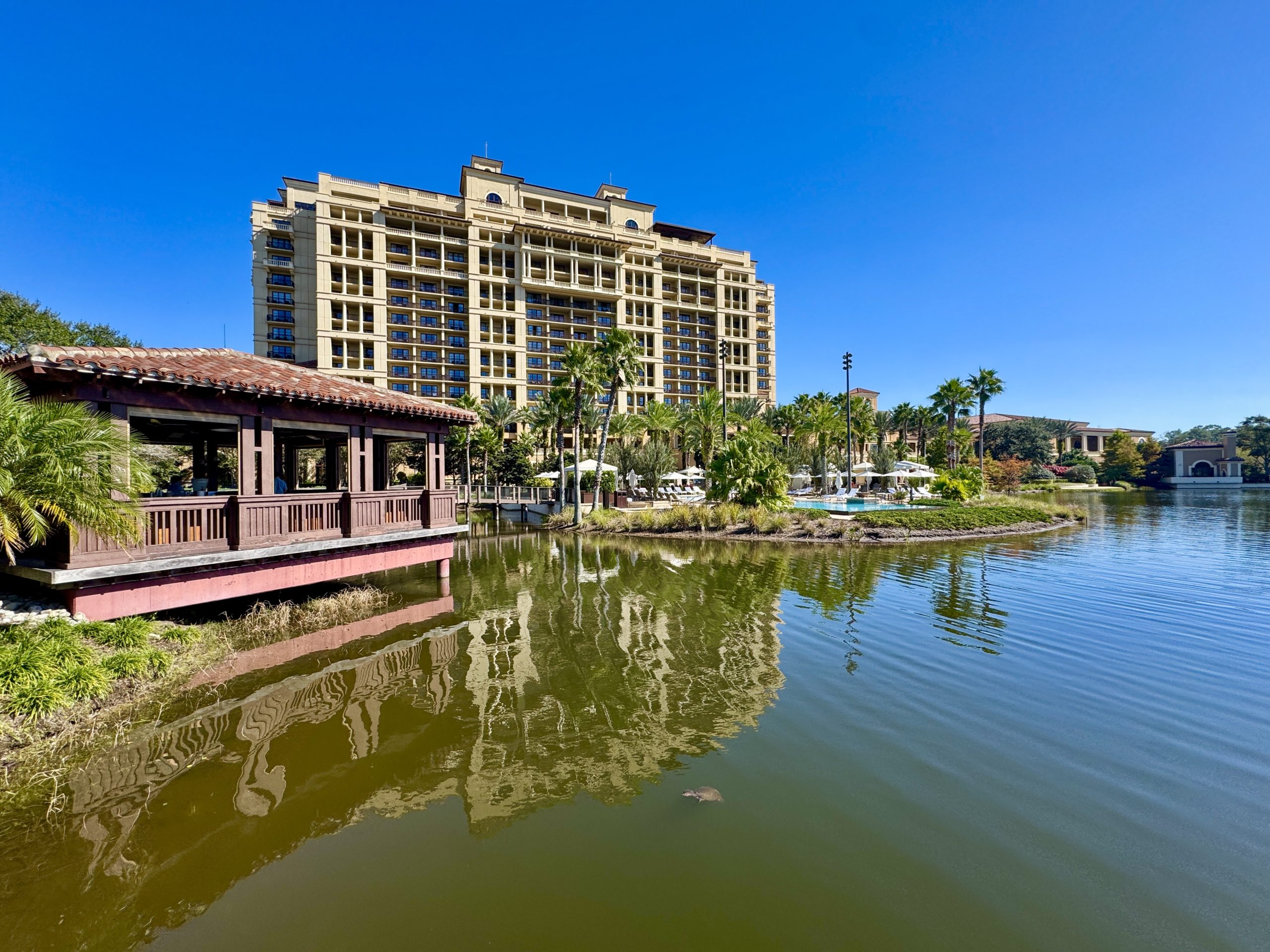
Some places feel special the moment you arrive. Four Seasons Resort Orlando at Walt Disney World® Resort is one of them — a shimmering 26-acre retreat where elegance meets enchantment, and every moment feels like a celebration of Florida sunshine, culinary brilliance, and pure joy.
Set along palm-lined Dream Tree Boulevard, the resort is a destination entirely its own. With manicured gardens, shimmering pools, serene lakes, and warm, intuitive service, it blends Five-Star sophistication with the carefree delight of a world-class vacation.
A Suite With a View — The Park View Suite
My home for the stay was the Park View Suite — 825 square feet of bright, thoughtful luxury. With a king bedroom, a spacious living room, a dining table, a second full bathroom, and a marble master bath with a soaking tub and double sinks, it feels like a chic residence floating above the resort.
But the real magic begins outside.
The extra-wide double terrace balcony overlooks the lush woodlands, shimmering pools, and golf greens of the Four Seasons Golf and Sports Club Orlando. By night, the sky erupts in the Walt Disney World® fireworks — a private show for anyone lucky enough to be standing barefoot on this balcony with a glass of prosecco.
The bedding is cloud-soft, the closets are huge, and the quiet is the kind that tucks you into deep, restorative rest. I slept like royalty — and genuinely did not want to leave.
Sunshine, Swimming, and Explorer Island Fun
My days started with early laps at the adults-only Oasis Pool, a serene escape edged with cabanas and swaying palms. Then I’d wander over to Explorer Island — five acres of pure joy. The lazy river winds under waterfalls, slides twist overhead, and families splash from one zone to the next. It’s beautifully landscaped, full of laughter, and somehow both relaxing and energizing at once.
Whether you want serenity or high-energy fun, you’ll find it here — and I found myself wanting both.
Spa Bliss in a Sanctuary of Calm
The Spa at Four Seasons Orlando is its own universe of restoration. My Healing Honey treatment, performed by the incredibly talented Efrain, was warm, therapeutic, and deeply soothing on one of their extra-wide massage tables designed for ultimate comfort.
Post-massage, I floated into the solarium, nestled into an anti-gravity bed with a weighted blanket, sipping prosecco. I texted a friend: “I live here now. Don’t forward my mail.”
With treatments ranging from Tibetan singing bowl therapy to IV infusions and bespoke facials, the spa honors the global Four Seasons tradition of blending healing with luxury.
Even kids have their own magical menu — princess transformations complete with dresses, tiaras, and fairy dust, plus special grooming experiences for young guests. It’s whimsical, warm, and quintessentially Four Seasons.
Shopping With Style: Wardrobe & Fable
Still glowing from the spa, I wandered into Wardrobe, the resort’s chic boutique where elevated resortwear mingles with subtle Walt Disney storytelling. Guided by Valerie and Donna, I tried on elegant dresses (still sipping prosecco), surrounded by curated brands and playful sophistication.
Across the way, Fable delights children with charming clothing, accessories, and Disney-inspired touches. Shopping here feels like stepping into a beautifully designed chapter of a storybook.
The Character Breakfast at Ravello: Pure Morning Magic
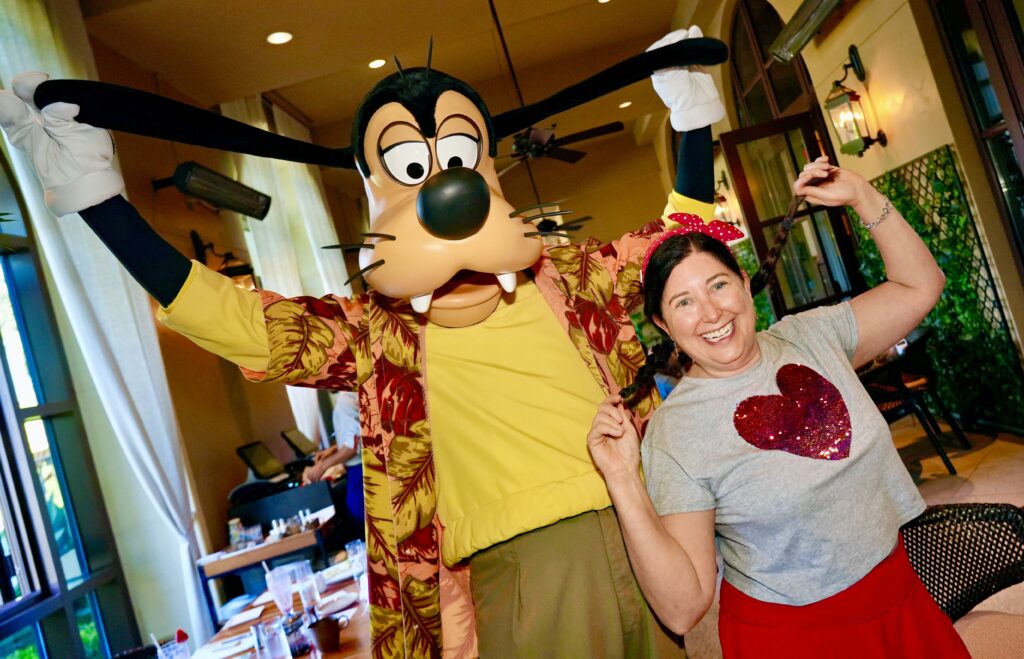
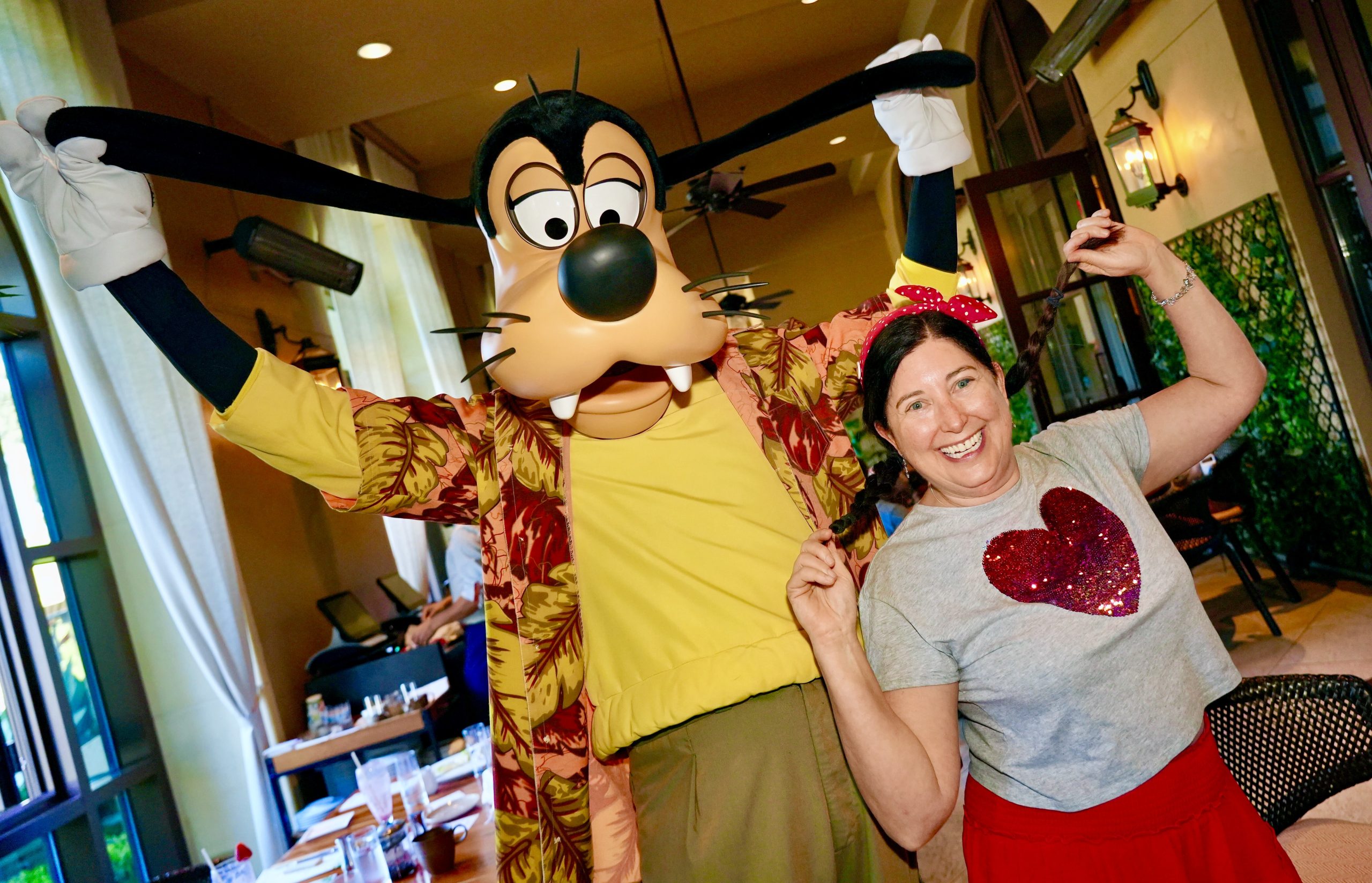
One of the most joyful experiences at the resort is the Good Morning Breakfast with Goofy & His Pals at Ravello — and it deserves its own spotlight.
Imagine a gourmet Four Seasons breakfast — fresh pastries, eggs made to order, carved meats, fruit, cereals, Mickey waffles, specialty dishes — but with Disney characters visiting your table like old friends.
No lines. No chaos. No rushing. Just warm, relaxed, magical moments.
Goofy arrives in his finest breakfast attire, Minnie twirls in her floral dress, and whichever pals join that day bring smiles big enough to last until dinner. Every guest gets personal time, photos, laughter, and a memory worth framing.
It’s the perfect way to start the day before heading to the parks or returning to the serenity of Explorer Island.
Dining That Dazzles — From Brunch to Michelin Star
Plancha
After a determined morning swim at the Oasis Pool, I walked over to Plancha at the golf course — where the cinnamon roll pancakes are so decadent they deserve their own billboard. Warm, buttery spirals of cinnamon layered into pancake perfection. Add in lakeside views and warm hospitality, and it becomes a must-do meal.
Ravello
Ravello serves fantastic Italian-inspired cuisine — its wood-fired oven was brought directly from Italy — and its pastas, pizzas, and house-made specialties are perfect for cozy dinners or relaxed mornings.
Capa — A Star From the Start
Perched on the 17th floor, the rooftop masterpiece Capa has held its Michelin Star since the beginning of Florida’s guide. It’s a Spanish-influenced steakhouse with an open kitchen, wood-fired grill, and a romantic patio overlooking the nightly fireworks.
Steaks with perfect char. Fresh local seafood. Tapas bursting with flavor. And yes — the churros deserve applause.
I shared an unforgettable evening there with new friends, cared for by Jared and Luis, who made the night feel warm, personal, and celebratory. Between the wine list (recognized among the Best 100 Wine Restaurants in the U.S.) and the panoramic views, it’s a dining experience that stays with you.
Where Every Day Ends With a Wink of Magic
Evenings glow with sunset colors that seem painted just for you. After dinner, you might wander to the lobby bar… or follow a quiet hint to a tucked-away speakeasy with a literary twist.
Pull the right card. Follow the right clue. And a perfect night finds its epilogue.
The Best of Both Worlds
Four Seasons Orlando offers true luxury with effortless access to the magic of Disney. Whether you’re using Minnie Van transportation to reach the parks or simply watching fireworks from your balcony, you’re in the center of enchantment with the comfort of a world-class resort.
It’s sunshine. It’s serenity. It’s Michelin-star dining and spa bliss. It’s lazy rivers and princess makeovers. It’s fireworks from your balcony. It’s moments that feel like stories you’ll want to tell again and again.
And it’s the kind of place where, for a few days, life feels beautifully, luxuriously easy.
Checking In: Four Seasons Orlando Hello from the breathtaking Four Seasons Resort Orlando at Walt Disney World® Resort — a serene, sophisticated escape spread across 26 acres of beautifully manicured grounds. Opened in 2014, the resort blends Five-Star luxury with Disney magic in a way that feels both elevated and wonderfully relaxed. I began my stay with a sunlit lunch at Lakehouse with Dana, where the views are as good as the food — glistening water, lush greenery, and that signature Four Seasons calm that makes you instantly exhale. It was the perfect welcome to the property’s understated elegance. At the heart of the resort is Explorer Island, the crown jewel of Orlando water parks. This vast aquatic playground features: A winding lazy river, Splash zones and water play areas, Water slides, Multiple pools for every mood Plus the serene, adults-only Oasis Pool, ideal for an afternoon of quiet sun and stillness. And at night? You can watch both EPCOT and Magic Kingdom fireworks right from the resort — a bit of Disney wonder floating above this peaceful retreat. I can’t wait to float through the lazy river, relax at the Spa, indulge in the incredible dining, and explore the beauty of this resort from sunrise to fireworks.
My Perfect Day at Four Seasons Orlando: Sunshine, Swim, Spa, Solarium, Sip, Shop I started my morning exactly the way a Four Seasons day should begin — soaking up the sunshine and taking a peaceful swim in the adults-only Oasis Pool. It’s quiet, elegant, and wrapped in palm trees, the kind of setting where your shoulders instantly drop and the rest of the world fades out. From there, I drifted into the Spa at Four Seasons Orlando, a sanctuary rooted in the brand’s long-standing history of nurturing care and heartfelt hospitality. Four Seasons spas around the world are known for weaving global healing traditions with modern wellness innovation, and this one carries that legacy beautifully. My Signature Honey Nourishing Massage by the talented Efrain was warm, soothing, and deeply restorative — performed on an extra-wide table for ultimate comfort. The Spa offers a wealth of treatments, from Tibetan Singing Bowls and IV therapies to magical warm honey massages — all designed to balance, restore, and indulge. Even the hair dryers are Dyson, because yes, they thought of everything. Afterward, I surrendered completely to the Solarium’s soft light and quiet calm. Reclining on an anti-gravity bed with a weighted blanket — prosecco in hand — I texted my friend: “I live here now forever. Come visit me here” Still glowing from spa bliss, I wandered to Wardrobe, the resort’s chic boutique where elevated resortwear meets subtle Walt Disney storytelling. I tried on elegant dresses (yes… still sipping prosecco) surrounded by curated brands and playful, sophisticated Disney-inspired touches. It’s stylish, whimsical, and unmistakably Four Seasons. Valerie and Donna helped me find all the right things, and just across the way is the incredible children’s shop, Fable, full of magical pieces for little ones. And the magic isn’t just for grown-ups. The Spa creates unforgettable moments for little guests too — from the Royal Treatment (princess dress, tiara, wand, makeup, nails, fairy dust, bracelet, certificate) to Belle of the Ball, complete with shimmering hairstyle, wand, nails, fairy dust, and that perfect princess sparkle. Sunshine → Swim → Spa → Solarium → Sip → ShopThe perfect Four Seasons flow — and the dreamiest way to spend a day in Orlando.
Four Seasons Orlando: Sunset, Supper & a Secret Ending! Tonight’s sunset at the Four Seasons Orlando felt like its own masterpiece — the sky brushed with shades of rose, coral, and gold until the last light slipped behind the palms. When evening settled in, I headed to Ravello, where dinner feels like a passport stamp straight to Italy. Their wood-fired oven truly came from Italy, the flour is from Italy… and the pizza? Let’s just say it’s worthy of a standing ovation. Warm, blistered, heavenly — everything you want after a day in the Florida sun. After dinner, I wandered into the Lobby Bar, ready to wrap up the day the way you close a beautiful book — with an epilogue. At the Four Seasons, that word means something a little… special.A little hidden.A little whispered. Let’s just say: if you know, you know — and if you don’t, you’ll want to keep your eyes open and your curiosity switched on. The perfect ending to a perfect day.
Waking up in my Park View Suite at Four Seasons Orlando is pure magic. One king bed, marble bathroom with separate tub and shower, double sinks, huge closets, and a spacious living area — 825 square feet of luxury where every detail whispers “rest and indulge.” The bed? Soft, sumptuous, and so inviting I felt like I was sleeping like royalty. Step out onto the double terrace balcony and sip your prosecco while overlooking the lush greenery, shimmering pools, and the Four Seasons Golf and Sports Club. By night, the Walt Disney World® fireworks light up the sky right in front of you — no crowds, no lines, just sparkling magic. The resort itself is a world of wonder: multiple pools including the serene adults-only Oasis Pool, Explorer Island water park with lazy river, slides, and splash zones, plus full-service spa and so many dining options — from lakeside bites at Lakehouse to Italian perfection at Ravello. And getting around? Easy with the convenient Minnie Van service whisking you to Disney parks. Adventure, relaxation, sun, and ultra-luxury all in one place.
A spectacular night at the Four Seasons Orlando, where I’m spending the weekend in my dreamy Park View Suite. Started with drinks with my new friends at the Lake House, then floated up to Capa — the Michelin-starred, Spanish-inspired rooftop steakhouse on the 17th floor. Dinner included expertly grilled steaks, or you can choose fresh Florida seafood, there are also incredible small plates/tapas and churros for dessert. Thank you to Jared and Luis who made my night unforgettable — taking care of every detail while guiding me through the menu and wine list (which was recognized by Wine Enthusiast as one of the Best 100 Wine Restaurants in the U.S). The open kitchen and wood-burning grill let you get up close to the culinary action, while the outdoor patio offers sweeping views of Walt Disney World fireworks — a perfect backdrop to a truly unforgettable evening. Whether you’re staying at the resort or visiting for a special night out, Capa is a rooftop gem not to miss.
Good Morning Magic at Ravello I absolutely loved the Good Morning Breakfast with Goofy & Friends at Ravello inside the Four Seasons Orlando — hands down one of the most joyful (and most underrated) ways to start a Disney day. This isn’t a chaotic character breakfast — it’s Disney magic with Four Seasons polish. Set in Ravello’s light-filled dining room, you enjoy a beautifully executed full buffet plus made-to-order dishes, all served with warmth and ease. Huge thanks to Donovan and Kristen for the wonderful service, and to Kareem at the omelette station — perfection. The spread is seriously impressive: fluffy pancakes with a full topping bar, French toast, waffles, fresh fruit, a honey station, pastries, oatmeal, cereals, breakfast meats, juices, smoothies, tea, and coffee — with omelettes made exactly how you like them. So many choices, and every bite felt thoughtful and fresh. Meanwhile, Mickey, Minnie, and Goofy stop right by your table for laughs, hugs, and unforgettable moments. I even had a dance with Goofy — and Minnie’s energy was completely infectious as she danced her way between the tables, spreading smiles everywhere. Pure joy. And a big bonus: the professional photography team captures it all seamlessly, with photos instantly available in the Walt Disney World app. No juggling phones. No stress. Just be present. Available Thursdays and Saturdays (and select Tuesdays), this experience perfectly captures what makes Four Seasons Orlando special — elevated hospitality paired with pure Disney magic. I left smiling like a kid… and already planning my return.