
Since I have hardly anything in common with
myself, why should the world expect
me to resemble any of my kin or kith
or friends or any other sect?
Kafka, thrilled when seeing Yiddish theater from Lviv,
as it’s now called—it was Lvov
for goyim, Lemberg for the Jews—felt Jews could live
not feeling like him quite castoff,
as the great stand-up Jewish comic, Volodymyr
Zelensky, I hope does not feel,
attempting to make Putin’s army disappear
in an unfunny shooting spiel.
There’s lots that with Franz Kafka he has got
in common, and like him with their
great Jewish nation, heroes of a drama’s plot
in which somewhere becomes nowhere.
Kafka once wrote in his diary: “What have I in common with other Jews? I have hardly anything in common even with myself and should stand very quietly in the corner, content that I can breathe” (“Yesterday with the Jews,” by Matthew Goodman, Pakn Treger, 31: 16-19, 1999). Goodman points out that when Kafka encountered Yiddish theater from Lemberg he found a folk tradition that was thrillingly alive, a tradition that he was able to embrace rather than fear and reject. He extolled the Yiddish actors as “people who are Jews in an especially pure form because they live only in the religion, but live it without effort, understanding or distress”. He claimed that Yiddish could be understood intuitively by Jews once it takes hold of them. “Yiddish is everything, the words, the Hasidic melody and the essential character of this Eastern Jewish actor himself…Then you will come to feel the true unity of Yiddish, and so strongly that it will frighten you — yet it will no longer be fear of Yiddish but of yourselves.”
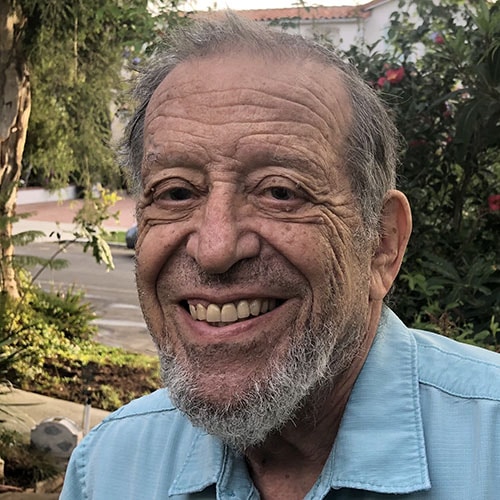
Gershon Hepner is a poet who has written over 25,000 poems on subjects ranging from music to literature, politics to Torah. He grew up in England and moved to Los Angeles in 1976. Using his varied interests and experiences, he has authored dozens of papers in medical and academic journals, and authored “Legal Friction: Law, Narrative, and Identity Politics in Biblical Israel.” He can be reached at gershonhepner@gmail.com.