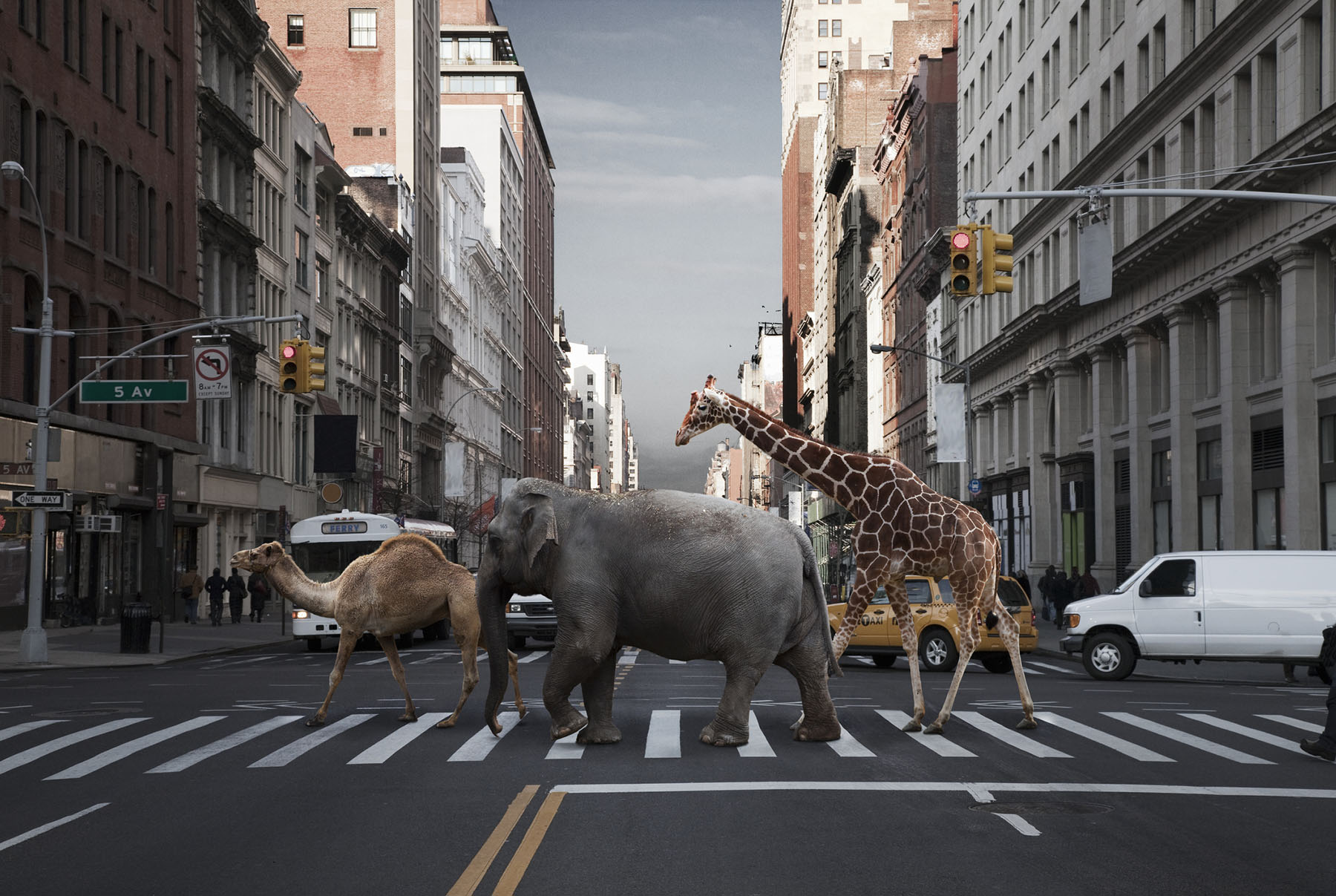
On streets of San Francisco you could see coyotes,
and jackals would be seen in parks of Tel Aviv,
and if in Welsh towns you observed unusual goatees
they’d be on mountain goats, for that is where they’d choose to live
last spring, when the coronavirus epidemic started.
It then began what’s called by Christian Rutz the anthropause.
Normality’s reversal does not make me feel downhearted,
because I don’t think that it ever had inscribed its laws
in stone. I treat those as the Israelites once did the golden calf,
with skepticism tingeing reasonably reserved respect.
They cause me, as the golden calf caused Israelites, to laugh,
wondering whether all these laws are as correct
as we had thought – before affected by coronavirus.
Once we won’t need to stay at home in order to debug
the universe, we will no longer need to give admirers
or receive, after the epidemic, any hug,
nor will we need to see our doctors face to face. We’ll zoom!
If only Stanley would have had this option, he’d have said,
in darkest Africa, “Dr. Livingstone, I presume,”
wifidelis, zooming the good doctor’s missionary head.
Gershon Hepner
3/3/2021
‘Anthropause’ seems to have been coined by Christian Rutz and colleagues in ‘Nature Ecology & Evolution’ on June 22, 2020. Rutz is a biologist at the University of St. Andrews.
Gershon Hepner is a poet who has written over 25,000 poems on subjects ranging from music to literature, politics to Torah. He grew up in England and moved to Los Angeles in 1976. Using his varied interests and experiences, he has authored dozens of papers in medical and academic journals, and authored “Legal Friction: Law, Narrative, and Identity Politics in Biblical Israel.” He can be reached at gershonhepner@gmail.com.