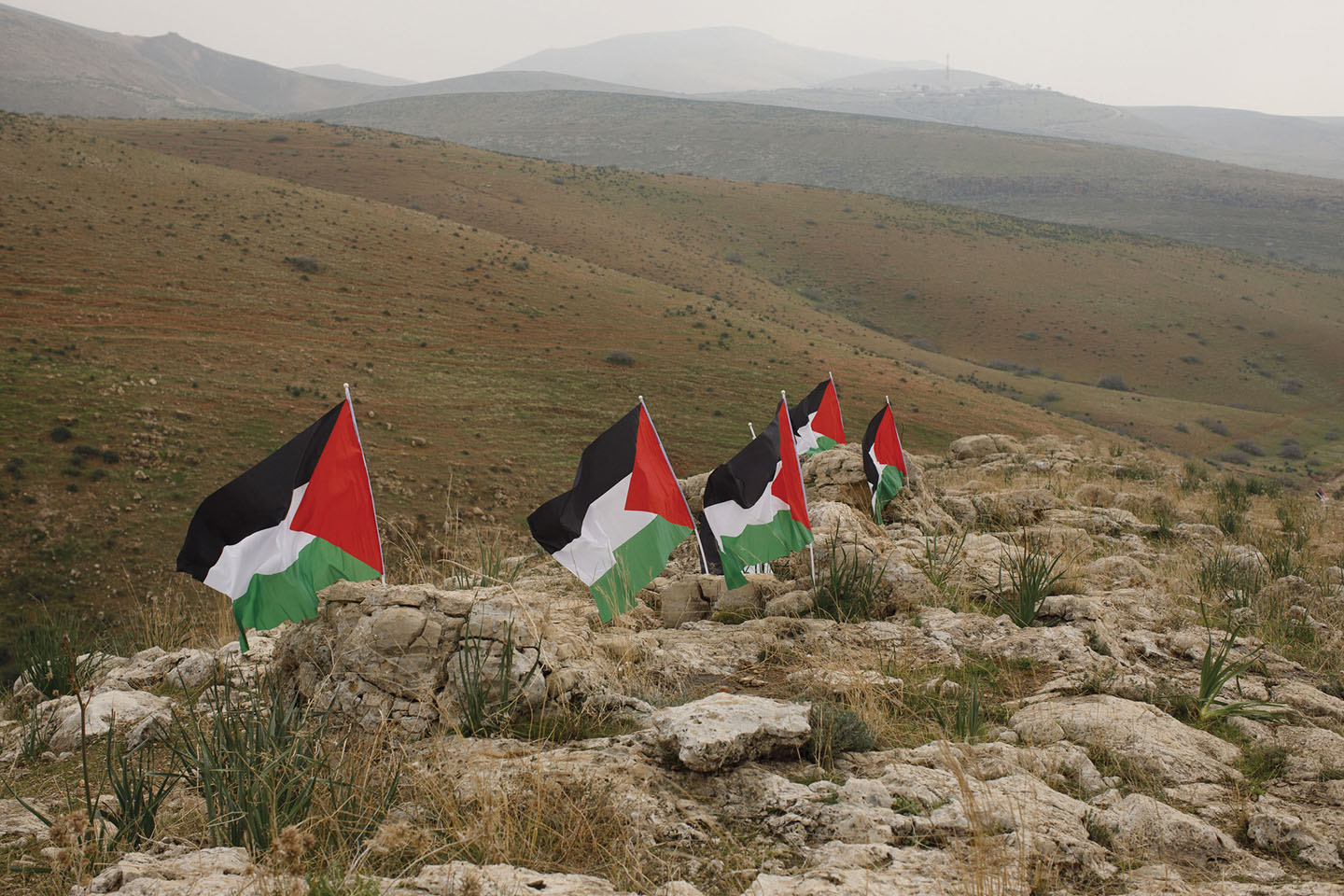
Canada recognized a Palestinian State. The U.K. did. And France. And Australia. What are they trying to do? Assuming they aren’t all dumb, or hateful, assuming there’s a rationale we fail to grasp – what could it be?
Maybe it’s punishment. Israel doesn’t listen to their advice, doesn’t follow their recommendations, doesn’t respect their sensitivities. They punish Israel by recognizing a nonexistent state. It is retribution because Israel had been annoying. If that’s the case, they don’t even have to truly believe in a Palestinian state as an implementable objective. They use the Palestinians as a tool to hammer Israel – or Prime Minister Netanyahu and his government. The Palestinians are pawns in a diplomatic game they play. They could similarly become the pawns when Israel decides on its measures of retribution. There’s very little the Palestinians can gain from this international move. There’s a lot they can lose. Of course, Israel can also lose. A battle with half the world – even when one has the backing of the U.S. – is not a recipe for success.
There’s very little the Palestinians can gain from this international move. There’s a lot they can lose. Of course, Israel can also lose. A battle with half the world – even when one has the backing of the U.S. – is not a recipe for success.
What else can the trend of recognition be? It could be an internal political ploy. Leaders use both Israel and the Palestinians as pawns to gain popularity in their own countries. Does it help Israelis? Does it help Palestinians? Macron and Starmer don’t necessarily care. We – Israelis – berate them for doing a foolish thing. But it is not necessarily foolish from their perspective if the goal is political gain. We could say they are cynical, we could say they are hypocrites, we could say they are immoral – but foolish? Only if the polls in their own countries prove their moves to be politically harmful.
Now let’s consider the most gracious option. Let’s consider the possibility that they truly want a Palestinian state to emerge from this process of symbolic gestures. If that’s the case, two follow-up questions must be asked. One: do such symbolic gestures increase (or decrease) the likelihood of a Palestinian state. Two: why would Australia and the U.K. take steps that (they believe) make a Palestinian state more likely?
Let’s begin by tackling the first question. It begins with the following assumption: Israel doesn’t let a Palestinian state emerge and putting pressure on Israel to allow it to emerge is the vital step towards Palestinian statehood. Is it true? Well, that depends on the answers to more questions. For example: Would Israel accept a heavily militarized Palestinian state on its border? The answer is “of course not.” Surely, not before such an entity is guaranteed to be a peaceful neighbor. So yes – if a Palestinian state means a Palestinian military on Israel’s border, Israel is indeed an obstacle.
Do Australia and Canada call for such a state? That’s a question for which we have no answer. They recognize a state but have no plan for a state. They act as if a “state” is a clearly defined goal, or entity – when it is not. In fact, more than a disagreement about the headline “state,” the Israeli-Palestinian conflict is about the details of whatever you call what comes next. It is a disagreement about borders, security, refugees, incitement, settlements, holy places, recognition and so on. Does France have a plan for resolving these issues beyond a recognition of a “state”? If they do have a plan, I’ve yet to see it. The Brits, Australians, Canadians and the rest are no better. In a similar vein they can recognize a “world peace,” or a “global cooling,” or a “cure to cancer.” Details to follow.
Then, there’s the nagging other question. Why a Palestinian state? One assumes that in recognizing such a state, the leaders of these great Western countries strive to achieve something. They did not recognize a Kurd state, or a Druze state, or the state of the Basques (in Spain), or a state of the Québécois (in Canada) or an independent Tibet. That’s because countries do not recognize other states unless they believe there’s more good than harm in doing so. If they assume that a recognition of a “state” – say, Taiwan – is likely to bring about more dificulty, more bloodshed, you’d expect them to take the cautious route. But in this case they don’t. They aim to achieve a goal without having the ability to guarantee that achieving it is going to be beneficial to anyone.
You think the lives of Palestinians are going to be better than today within a Palestinian state? Look at Gaza, look at Syria, look at Yemen and think again. Maybe – maybe not. You think the lives of Israelis are going to be better than today if there’s a Palestinian state? Well, the obvious answer is “that’s unlikely.” Maybe the lives of Brits, Canadians, Australians, French are going to be better than today if there’s a Palestinian state? If that’s the case, show me how.
Something I wrote in Hebrew
Israel’s PM “super-Sparta” speech was highly controversial. But some things the PM said are becoming a consensus:
Netanyahu was right to argue that the war taught Israel an important lesson when it comes to munitions production, stockpiles and management. During prolonged periods of war, stockpile considerations dictated military and political moves. It was sometimes impossible to attack in one place, because that would leave a munitions’ shortage somewhere else. It was impossible to act against the will of the Americans, because that would also have created a munitions shortage. So yes, Israel will have to strengthen autarkic elements when it comes to its ability to arm itself.
A week’s numbers
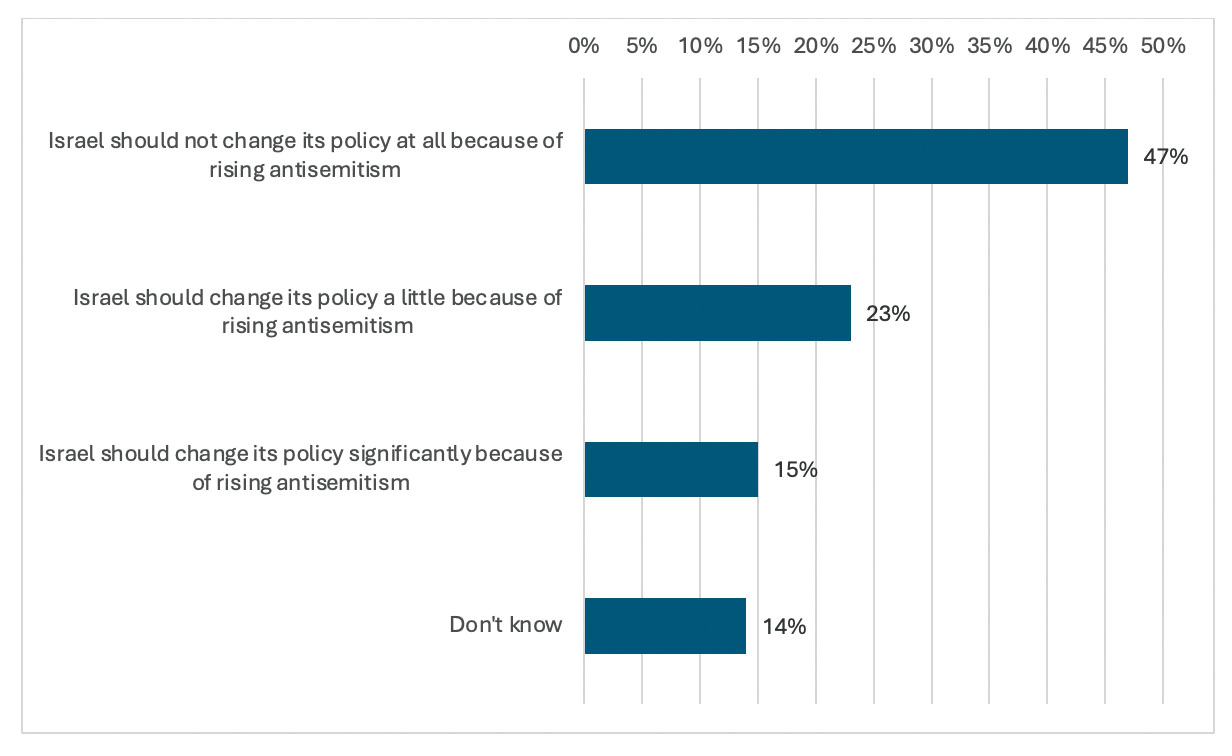
We asked: When you think about the rise of antisemitism in the world, which of the following options is closest to your position? Israelis had an answer (JPPI September 2025).
A reader’s response
Adam Frank asks: “Did you read the Economist report on Israel’s dwindling support in the U.S.?” My response: I did. The follow-up question is this: Can Israel do something to improve its standing without dangerously compromising on its security? I think it can – but it’s not as simple as people might think.
Shmuel Rosner is senior political editor. For more analysis of Israeli and international politics, visit Rosner’s Domain at jewishjournal.com/rosnersdomain.