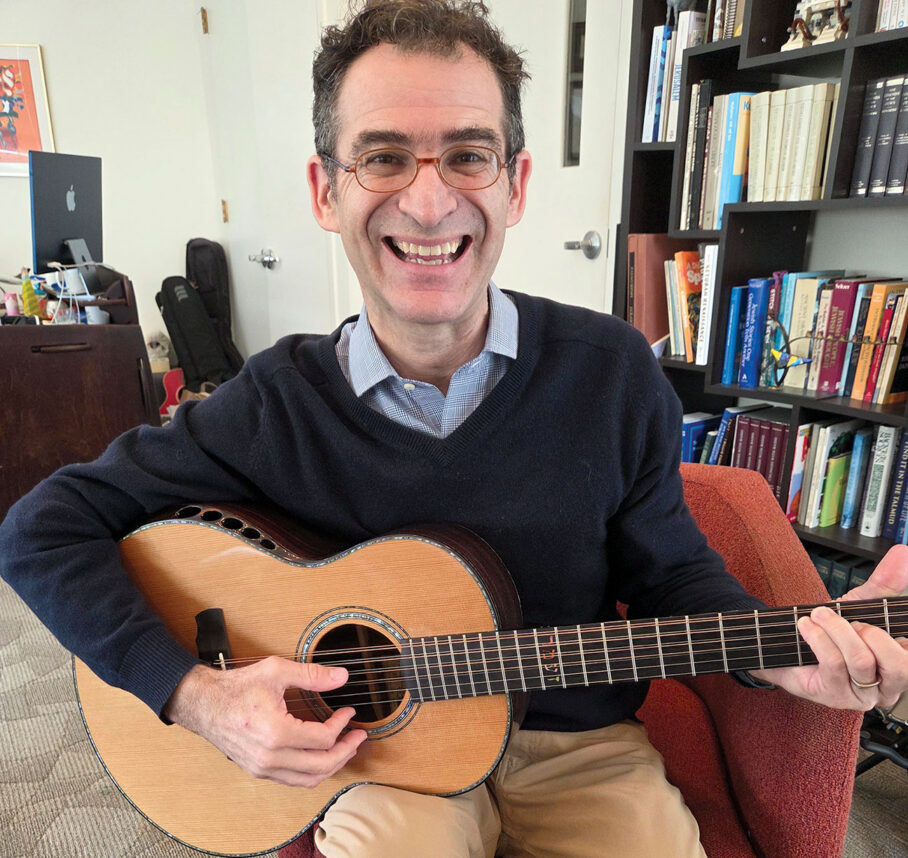
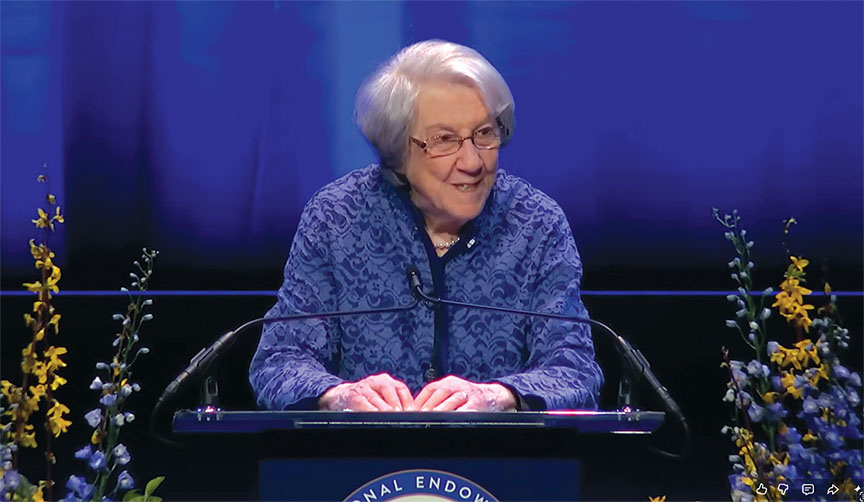
Top, a scene from “Countess Maritza;” Above, YvonneSylva Maritza Josephine Kálmán as a child, with herfather Emmerich Kálmán.
Yvonne Sylva Maritza Josephine Kálmán, sixtyish,blond and glamorous, is named for all her father’s favorite operettaheroines. So perhaps not surprisingly, she has dedicated much of herlife to seeing that her father’s operettas have been performed allover the world.
She has many memories of him, but, mostly, she remembers thestories of how the Nazi came calling at the family villa on theAvenue Foch in Paris. It was 1939, not long after EmmerichKálmán had fled Vienna for France, and he wasashen-faced as he received the general. But the general’s message wascordial: “The Führer loves your music, and he misses yourpresence in Austria. He would very much like you to return,” he toldthe composer. Hitler would make Kálmán an “honoraryAryan,” and no one would know he was Jewish.
The musician shakily declined. By March 1940, he was forced toescape with his family to Los Angeles. His music was bannedthroughout the Reich, and most of his extended family perished in theconcentration camps. Kálmán never recovered from theshock and died, brokenhearted, in 1953.
Yvonne, his youngest child, was only 16 when he died. Over theyears, she has tenaciously telephoned and written to opera directorsall over the world, prompting revivals of her father’s works.
Beginning on Saturday, Nov. 22, and running through Dec. 7, theLos Angeles Opera will present Kálmán’s “CountessMaritza,” in perhaps the most lavish production of an operetta seenanywhere. Last week, Yvonne Kálmán could hardly containher excitement as she spoke of the production, jumping upintermittently to play excerpts from the operetta on the stereo.
Emmerich Kálmán was born in 1882 to a musical familyin the Hungarian resort town of Siofok. He attended Budapest’s RoyalAcademy of Music with Béla Bartók, and, by the 1920s,he had become renowned all over Europe. His fiery works, such as “TheGipsy Princess” and “Sari,” combined Hungarian folk themes withstrains of the Viennese waltz.
In Vienna, Kálmán first eyed Yvonne’s mother, VeraMakinska, at the famed Cafe Sacher; she was a lovely Russian dancer,30 years his junior, who asked if she could have a part in his nextshow. George Gershwin later visited the couple at their elegant villaand serenaded them with his “Rhapsody in Blue.”
But when the Nazis forced Kálmán to flee to LosAngeles, the once-prominent composer suddenly found himself obscure,a stranger in a strange land. MGM’s Louis B. Mayer had bought themovie rights to his operettas, but they never made it to the screen.Austrian and Hungarian plots were taboo, impossible with the outbreakof war, Yvonne explains.
It was only when the family relocated to Park Avenue in New Yorkthat Kálmán found a real home amid the expatriatecommunity. He reunited with his old Viennese librettist, AlfredGruenwald, and Yvonne remembers how they shouted together in hiscluttered study while smoking myriad cigars and strewing sheet musiceverywhere. The daughter loved to sit under the Steinway as herfather played or scribbled musical notes on his shirt cuffs. At theage of 3, she first heard Kálmán conduct his work withthe NBC Radio Orchestra, and “thought it was the most beautiful musicI had ever heard.”
Vera Makinska, meanwhile, held court at her legendary Manhattansoirees, where the passing celebrity parade included Greta Garbo andpianist Artur Rubinstein. Salvador Dali, who could always be countedupon to behave outrageously, fascinated young Yvonne with his long,twisted mustache. Shy, sensitive Kálmán usually sat outthe parties in the kitchen with pals Marlene Dietrich and authorErich Maria Remarque.
The composer’s newfound happiness was short-lived, however. Uponlearning of the death of his family in the Holocaust, he suffered amassive heart attack. Three years later, he was virtually immobilizedby a stroke. To cheer him up, 12-year-old Yvonne once brought home asurprise guest she had met at a party. When her father groggilyemerged in his bathrobe, he discovered his film idol, Buster Keaton.
Yvonne remembers the long train ride with her father’s coffin toVienna, where he was buried on a gray, stormy day in an honorarygrave near the composer Johann Strauss. She was devastated by theloss of her father, but heartened by the revivals of his operettasall over Europe. Once, after a production in Leningrad, theperformers called Yvonne onstage and presented her with dozens ofwhite roses, to thunderous applause.
By the 1980s, promoting her father’s work had become a full-timejob for Yvonne, who persuaded the Vienna Volksoper to perform “TheGipsy Princess” at Lincoln Center in 1984. After the sold-out run,she prompted shows in Santa Fe, N.M., and Orange County.
But the upcoming Los Angeles production, she says, is perhaps themost meaningful of all. “My father lived in anonymity in this city,”says Yvonne, who maintains residences in the Southland high desert,Munich and Mexico. “If he could have seen the people lining up hereto buy tickets, it would have been one of the happiest moments of hislife.”
For information about “Countess Maritza,” call (213) 972-8001. Tobuy tickets, call (213) 365-3500.