
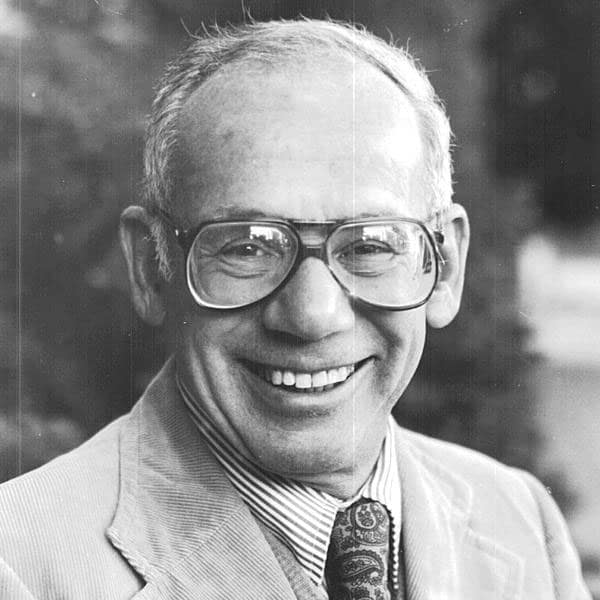
Ronald Steven Lauder has a dream.
At some point in the future, Israel’s Negev desert, now “basically Arizona without people,” will be a lush garden spot, made fruitful by a string of desalination plants purifying seawater.
Trains will run from Tel Aviv to Beersheba to Eilat, carrying high-tech wizards to Israel’s Silicon Valley and tourists to “a city like Las Vegas.”
As for the finances, says Lauder, he will go to the World Bank and ask for $3 billion for a water network encompassing Israel, the Palestinian area and Jordan. It’s important, he says, to include the latter two as part of the peace process and to make sure the water distribution system isn’t poisoned or blown up by terrorists.
For starters, Lauder says, “I need $45 million-$100 million to get the desalination project off the ground and I’m looking for a hundred people who will each put in $100,000 a year.”
About 12 men, most of considerable means and business acumen, met last week for wine and cheese at a Bel Air estate, complete with its own vineyards, to listen, fascinated, as Lauder outlined his grandiose plans. No one laughed or snickered.
For Lauder, heir to the Estée Lauder cosmetic fortune and chairman of RSL Communications, is more than your run-of-the-mill American Jewish multimillionaire.
He is arguably one of the most influential Jews in America, and therefore the world. He knows how to work the organizational levers of power and he puts his money where his mouth is.
For the Bel Air meeting, Lauder was wearing his hat as president of the Jewish National Fund, which he sees as a catalyst for the regional Middle East desalination project.
But he is also chairman of the Conference of Presidents of Major American Jewish Organizations, making him the chief spokesman for organized American Jewry. He plays key roles in the World Jewish Restitution Organization and the World Jewish Congress and a listing of his involvements in other American Jewish, Israeli and general causes takes up another half page.
Then there is the eponymous Ronald S. Lauder Foundation. In a dozen years, it has established a string of 40 Jewish schools, summer camps, youth centers, museums and student exchange programs across 13 central and eastern European countries, once considered the burial sites of dying Jewish communities.
Only in politics has Lauder fallen short of his goals. Although his old friend Binyamin Netanyahu became prime minister, he was defeated for re-election this year.
In his own run for public office, Lauder spent $14 million of his fortune 10 years ago to vie in the Republican primary for mayor of New York City. The results were dismal.
Nevertheless, his services as a major Republican fundraiser, and his abilities, were recognized by President Reagan, who in 1986 appointed Lauder as U.S. ambassador to Austria, the birthplace of his grandparents.
It was curiously this appointment that turned Lauder from a thoroughly assimilated American Jew into a champion of his people.
The 55-year old Lauder, an engaging speaker with a sense of humor, traced this transformation for his Bel Air guests. His move into the embassy in Vienna coincided with revelations on the Nazi past of Kurt Waldheim, just as the former United Nations secretary general was inaugurated as the president of Austria.
The Viennese press thought it knew who was behind the anti-Waldheim “slurs” and fulminated against the Jewish lobby, and particularly the new Jewish ambassador from the United States.
“It was the first time in my life that I experienced real anti-Semitism,” Lauder recalled.
To make matters more difficult, the aged, sickly head of the Austrian Jewish community, Dr. Ivan Hacker, paid Lauder a visit and pleaded with him to become the community’s president after his own death.
Lauder protested. “I told Hacker that I knew as much about Judaism as the Marine guard downstairs,” Lauder said.
Six months later, Hacker died and his widow phoned Lauder to remind him of his “promise.” Lauder demurred but agreed to attend a meeting of the Jewish community board. Before he knew it, he was unanimously elected as the new president.
“I had some difficulty explaining this to the State Department,” said Lauder, but the delighted local press redoubled its attacks on the combined ambassador and community president.
Among Lauder’s projects has been a campaign to identify an estimated 70,000 Polish Jews who, as children at the beginning of the war, were hidden by Catholic families.
Many of the children were killed and others rejoined the Jewish community after the war, but Lauder believes that some 25,000 of the former hidden children are still in the closet or unaware of their Jewish roots.
The Catholic Church has refused to help in the search, but by sending rabbis to Polish towns and through ads in newspapers, Lauder said some 3,500 of the 25,000 former hidden children have been identified.
Some years ago, Lauder flew in kosher food and gave a dinner in Warsaw for 100 of the children, now middle-aged to elderly men and women. As the evening progressed, it became apparent that the guests remained uneasy, with few speaking to each other.
At 9:30 p.m., Lauder called over a rabbi and proposed that together they sing the old Yiddish lullaby “Raisins and Almonds” and then asked anyone who could remember the words to join in.
As Lauder recalled: “By the end, 80 of the 100 people were singing along, and then the dam burst. Everyone started talking and we stayed there until 1:30 a.m.”
It was “another critical moment” for Lauder, which gave him the push for his campaign to revive Jewish life in the Holocaust-devastated countries of central and eastern Europe.
He is proud of his work. “We may have communities with only 7,000 Jews, but they are more active than the 700,000 Jews in Southern California,” he said. “This work is more satisfying than selling cosmetics.”
As the Bel Air meeting adjourned, Lauder responded to a couple of crucial questions.
Given his own leadership role, and the equally high profile of fellow multimillionaire Edgar Bronfman Sr., president of the World Jewish Congress, does it take a pile of money to become a Jewish community leader?
“It’s not only a matter of wealth,” Lauder responded. “It requires a lot of energy and effort, day in and day out, though it helps to have some means to reach out to other people.”
Finally, what about reports that Lauder was joining five other men of wealth to buy the New York Jets football team for more than $500 million?
“Sorry,” Lauder said affably, “but I can’t comment on that.”

































