

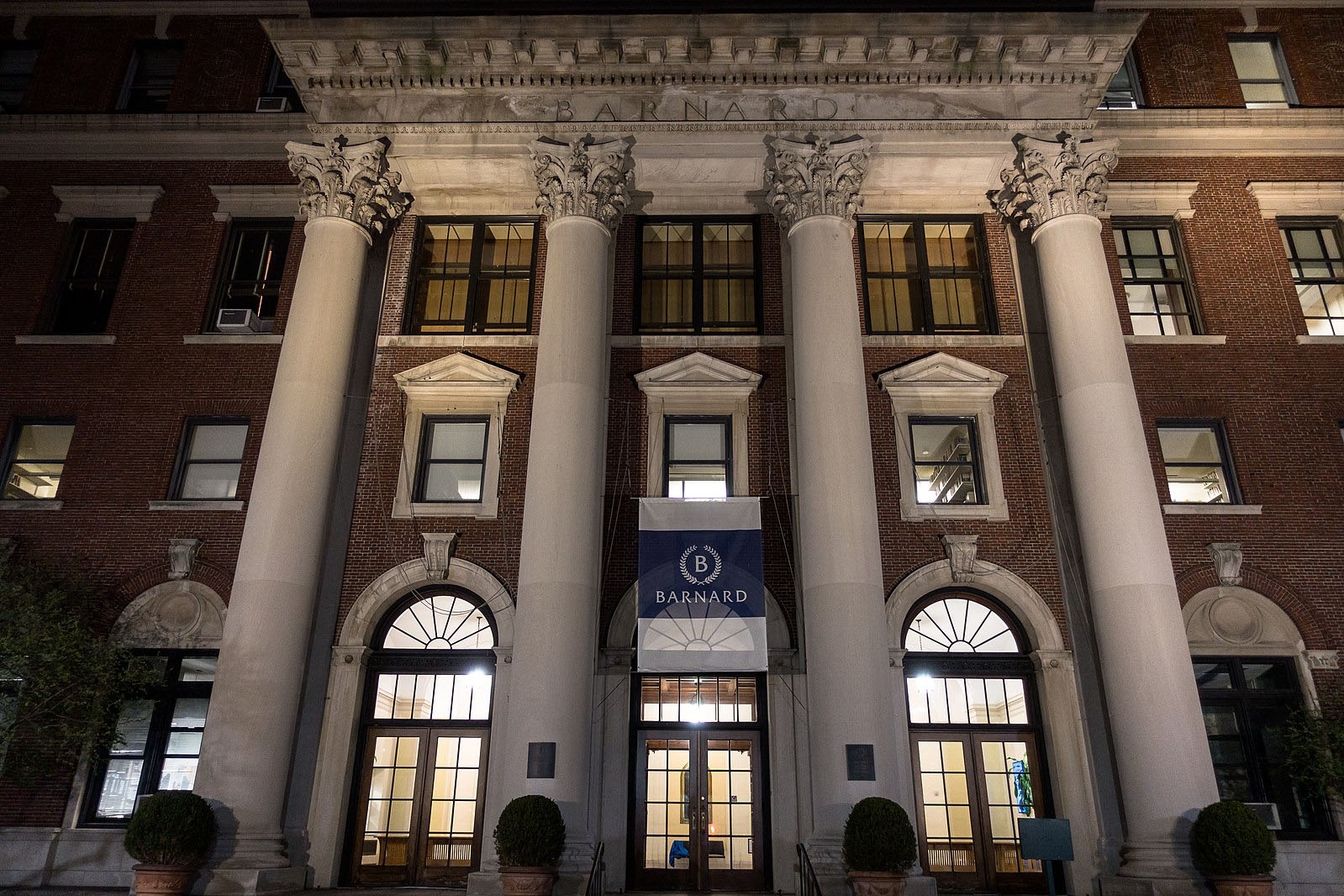
Barnard College’s Pandemic Response Team issued an apology for asking religious Jewish student to use technology during Rosh Hashanah to report any COVID-19 symptoms.
In a September 6 email obtained by the Journal, Cynthia Yang, who heads the Response Team and is the Deputy Chief of Staff to Barnard President Seilan Beilock, wrote to students that they are getting the email because they “have identified [yourselves] as a Sabbath-observer to Barnard’s Residential Life & Housing. As a Barnard student, there are policies and procedures that you must follow relating to the College’s pandemic response … you will need to utilize technology to report new symptoms, respond quickly to a test result, and actively participate in contact tracing.”
Yang added: “We recognize that how you have practiced religious traditions in the past may not align with the use of technology during the high holy days or the Sabbath, but this year it is paramount for the community’s health and safety (as well as your own) that you abide by the Barnard pledge and follow the College’s policies and procedures. The campus communities that intersect at Barnard and Columbia cannot wait until Wednesday night for students to report symptoms or respond to a notification of a positive test. The chain of transmission can only be shortened when individuals act responsively and quickly.”
About an hour and a half later, Yang sent a subsequent email apologizing for the earlier email. “It was written in haste with the goal to keep everyone as safe as possible during the high holy days and it, regrettably, was not considerate in the way it should have been of each students’ ability to practice and observe their religion how they choose.”
“I want to make clear that Barnard is here to support students however they choose to worship the high holy days or Sabbath,” she wrote. “If you develop symptoms consistent with COVID-19 during an observant period, we encourage you to utilize technology as you feel comfortable. If this is not consistent with your religious practice, please let me clarify that we are not asking you to violate any religious belief.”
Yang went onto say that the Response Team worked with Columbia-Barnard Hillel to implement a system where religious Jewish students could put a sticker on their door if they started experiencing COVID-19 symptoms to avoid violating their religious beliefs.
“We are in uncharted territory dealing with a continuing COVID-19 pandemic during a new academic year,” she wrote. “We appreciate your understanding as we work to integrate the health and safety of our community with the right of students to worship and observe their religious traditions in a way that they see fit.”
StandWithUs CEO and Co-Founder Roz Rothstein said in a statement to the Journal, “We thank Barnard for recognizing its error and immediately taking appropriate action. It is regretful however, that this came as an afterthought. This is an example to universities to recognize the importance of consulting all groups on campus, including Jews, when evaluating [and] developing new policies that will significantly impact them, especially if it violates their religious beliefs.”
Jewish on Campus similarly tweeted, “The official plan of Barnard’s pandemic response team for observant Jews was to force to them break their observance. No amount of ‘haste’ makes a complete lack of respect for Jewish religious practices acceptable.”
They added in a subsequent tweet: “It’s also important to note that this entire incident could have been avoided if Barnard had actually included and listened to any Jewish students while creating a policy specifically for Jewish students.”
The official plan of Barnard’s pandemic response team for observant Jews was to force to them break their observance. No amount of “haste” makes a complete lack of respect for Jewish religious practices acceptable.
— Jewish on Campus (@JewishonCampus_) September 15, 2021
It’s also important to note that this entire incident could have been avoided if Barnard had actually included and listened to any Jewish students while creating a policy specifically for Jewish students.
— Jewish on Campus (@JewishonCampus_) September 15, 2021
A spokesperson for Barnard said in a statement to the Journal, “Barnard College deeply respects the religious traditions of our diverse community. We have and will continue to make every effort to minimize exposure to, and the spread of, COVID-19. Upon learning that a member of our community had tested positive for the virus, we sent an email suggesting immediate steps to safeguard everyone’s health by referring students to our standard health and safety protocols, which require the use of a cell phone. We have since worked closely with Columbia/Barnard Hillel to make alternative arrangements (not involving electronic devices) for any student who cannot use technology based on their religious traditions.”
Brian Cohen, Lavine Family Executive Director at Columbia-Barnard Hillel, confirmed that the Hillel had worked with Barnard on the matter and that the “new policy is now in place.”

































