









The University of California Board of Regents met on November 17-18 at UCSF Mission Bay.

The Donna and Spencer Gilbert Foundation’s gift, inspired by Sheryl Sandberg’s scholarship in memory of Dave Goldberg, will support campers every summer.

There’s always another version of something –

Inside: Your own Jewish Journal Thanksgiving Haggadah

Noahides, or “b’nei Noah” as they are called in Hebrew, are those who accept the first covenant God made with humanity, through the Noah family.

The deepest expression of gratitude isn’t simply saying thank you for what we’ve received. It’s allowing what we’ve received to shape who we are, who we become, and how we treat others throughout our lives.

Like a good spy novel, “Notes of Deception” will have you racing ahead, wanting to find out more. But it is also the heart-wrenching story of dignity under the worst conditions.

Set in Holon, Israel, in 1987, against the backdrop of the AIDS epidemic, the film follows 12-year-old Boaz (Yair Mazor), the youngest child in a family with two older sisters.

For Gur Arye, making the documentary was a race against time. Some of the people interviewed, including Topol’s wife, were over 90, but still able to recall events in remarkable detail.

Speaking personally, spending three days in an environment filled with optimism, youth and family truly hit the spot.

In an age when so much of children’s lives revolves around screens, the camp gives them an opportunity to unplug, explore and discover new strengths.

The idea is to say thank you for everything you are experiencing because it is all from God.

The first holiday my family celebrated in Los Angeles was Thanksgiving. Although it was many decades ago, I can picture that day like it was yesterday and my heart bursts with gratitude for how meaningful and special that day was.

Jacob’s Holy Pillow

The Gimbel family had benefitted greatly from America, and for that they were grateful. A Jewish family, thankful for the freedom to pursue the American Dream, gifted the country, among its many contributions, its quintessential Thanksgiving public celebration.

To live Jewishly is to discover that life is not somewhere else. It is here, in this moment.

Today, 46% of world Jewry lives in Israel. In 2070, according to the forecast, 62% will live there. The U.S. share of world Jewry will drop from 39% to 26%, which numerically means 1.2 million fewer people.

Patriotic gratitude generates the grace and graciousness we should bestow on our neighbors, even if they dare disagree with us politically.
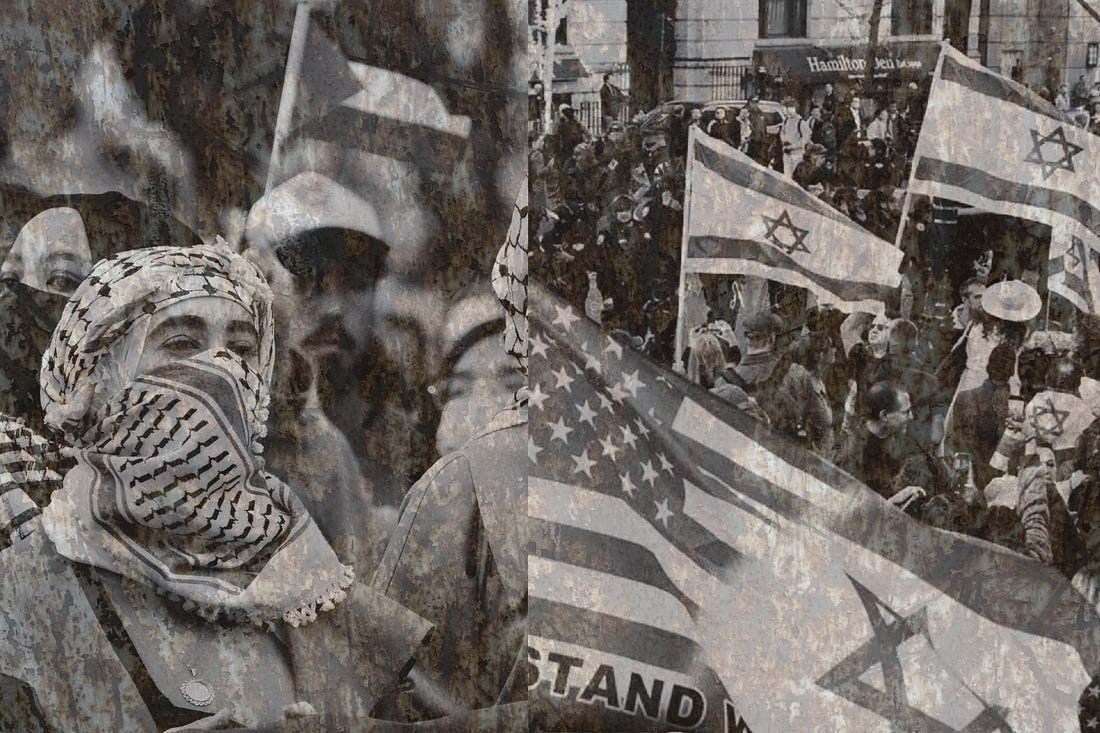
How do you proceed when there are no workable solutions, only a host of unworkable ideas?

Below are some of the things for which I am grateful.





