It is commonly believed that halakhically-based women’s prayer groups originated in contemporary circles of the progressive wing of Modern Orthodoxy. Think again.
In his book Nahalat Avot, Rabbi Yosef Messas reveals that in certain ancient communities in Spain, there were pious religious women who conducted their own early morning prayer services.
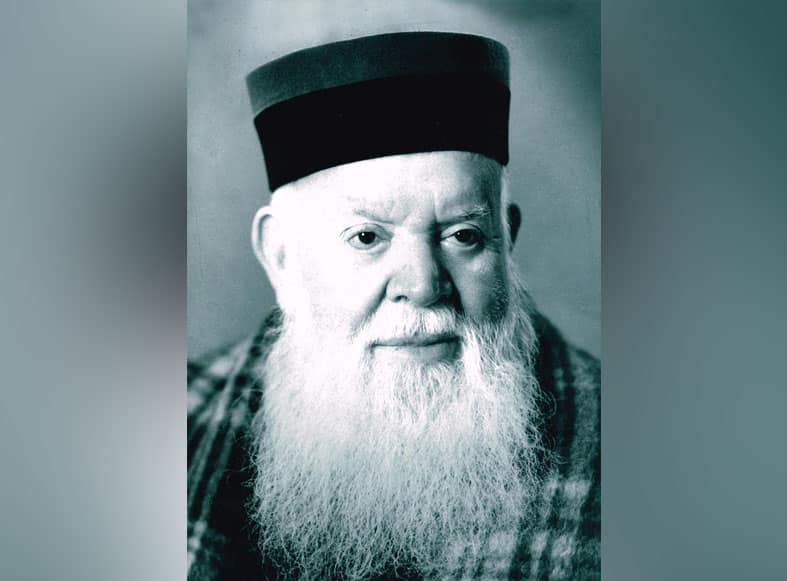
Born in Meknes, Morocco, Rabbi Messas was one of the 20th century’s outstanding halakhic authorities. He served as the Chief Rabbi of Tlemcen, Algeria and the Chief Rabbinic Judge (Dayan) in Meknes. A prolific author of 48 rabbinic books, he was also a talented liturgical poet and artist whose drawings graced many pages of his books. In 1964 he made Aliyah, and in 1968 became the Chief Sephardic Rabbi of Haifa, a position he held until his passing in 1974.
Nahalat Avot is an eight volume collection of Rabbi Messas’ sermons from his years in Meknes, Morocco, starting in 1943. Published in stages between 1971 and 1987, Nahalat Avot is a treasury of Torah wisdom.
Discussing the dictum that one should wake up early in the morning for prayers “with the strength of a lion,” Rabbi Messas quotes a poetic verse from the Torah that describes the Jewish nation: “Lo, a people that rises like a lioness and leaps up like a lion” (Numbers 23:24).
“Rashi teaches that this verse is a metaphor for the Jewish people rising early to put on Tallit and Tefillin, read the Shema and pray,” says Rabbi Messas. “If so, why did the verse mention the female lioness before the male lion?”
Rabbi Messas’ answer to his thought-provoking question reveals a beautiful piece of Sephardic history:
“I saw written in a book, that in certain communities in Spain, the learned and pure women would wake up very early in the morning and go to their own designated synagogues, where they would conduct a prayer service. One of the women would lead as shliha d’tsibbur (designated prayer leader), and on the days of Torah reading, they would read from a Torah scroll. Some of the women wore Tefillin, and all of them were wrapped in a Tallit. They conducted such services on weekdays, Shabbat and holidays. Women are exempt from time-bound commandments, so these women voluntarily took upon these obligations. After services they went home to wake up their husbands and sons to go and pray. This is ‘the lioness waking up before the lion’.”
The women in Spain – and Rabbi Yosef Messas – were years ahead of their time. Something for both Ashkenazim and Sephardim to think about.
Shabbat Shalom
Rabbi Daniel Bouskila is the director of the Sephardic Educational Center and the rabbi of the Westwood Village Synagogue.