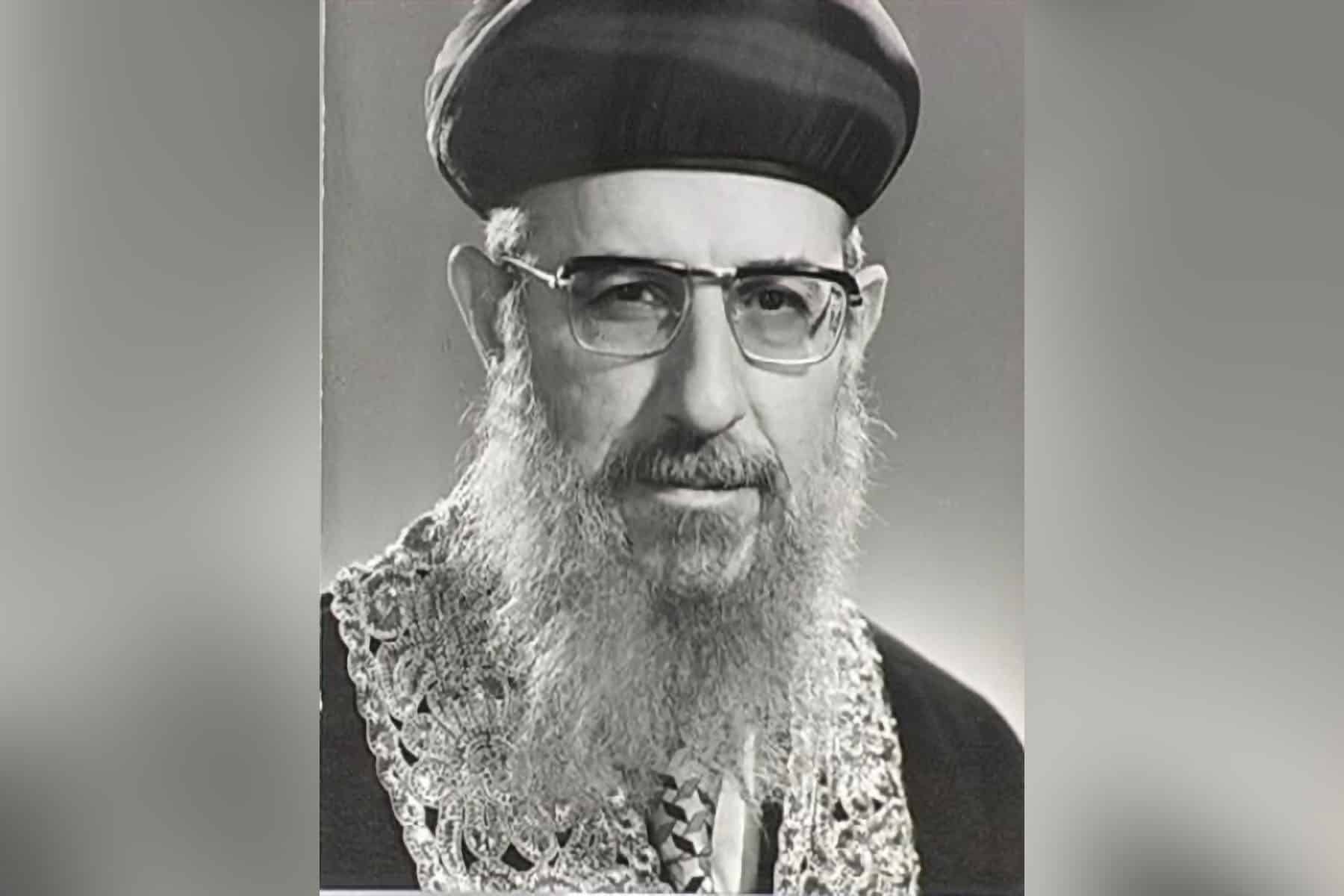
“In a democratic country like Israel, there is no room for any discrimination on religious grounds.” Thus declared Rabbi Haim David Halevy – the late Chief Sephardic Rabbi of Tel Aviv – at a 1987 conference on Israel’s relationship with the larger world.
Born in 1924 in the Ladino-speaking Ohel Moshe neighborhood of Jerusalem near the Mahane Yehuda marketplace, “Haimiko” (his Ladino nickname as a child) was raised in a family and community whose way of life blended Sephardic-religious traditions, pride in the emerging Zionist-Jewish state, and a peaceful outlook towards the larger world.
Rabbi Halevy grew up to become a prominent legal authority, thinker and leader in Israel. The author of over thirty halakhic books – a literary output for which he was awarded the prestigious “Israel Prize” in 1997 – Rabbi Halevy especially took interest in contemporary issues of religion and state. He strongly believed that the establishment of the State of Israel as a sovereign and democratic Jewish State called for a re-evaluation of many halakhic issues.
This included the halakhic status of Israel’s non-Jewish citizens. It was this topic he was addressing at the conference in 1987.
“In our current reality as a sovereign Jewish state, with a minority of non-Jewish citizens under our rule, how are we to now understand Judaism’s legal principle that fostering positive relations with gentiles is done ‘Mipnei Darkhei Shalom’ – only out of a desire to maintain peaceful relations and prevent strife and controversy with them,” asked Rabbi Halevy.
This sensitive legal principle held true in the diaspora, as well as in the Land of Israel under foreign rulers. “Does our Jewish sovereignty now call for a different approach towards our gentile citizens of Israel?” Indeed it does, said Rabbi Halevy:
“The halakhic ruling of caring for the sustenance of non-Jews merely to maintain peace and prevent strife with them is no longer an applicable principle. As a sovereign state, our care for the sustenance and well-being of our non-Jewish citizens is now born out of humanitarian and ethical obligations.”
There was also the matter of the democratic character of Israel: “Our Declaration of Independence guarantees ‘the full social and political equality of all citizens, without discrimination of race, creed or gender.’ Furthermore, we are a part of the family of democracies of the western world, whose societies are rooted in the principle of equal rights for all citizens”, said Rabbi Halevy.
Just imagine: a harmonious blend of democracy, halakha and humanitarian values. What a beautiful vision for Israel.
Shabbat Shalom
Rabbi Daniel Bouskila is the director of the Sephardic Educational Center and the rabbi of the Westwood Village Synagogue.