fbpx

August 17, 2023

JNF-USA Golf Classic, Silver Lake Festival, FIDF Camp

More than 120 philanthropists, corporate executives and golf aficionados spent a day on the greens at the Riviera Country Club to raise money for charity at Jewish National Fund-USA’s (JNF-USA) annual David Frank Memorial Golf Classic, Presented by Advanced Nutrients.The July 31 event was hosted in memory of the late David Frank, a local philanthropic legend and the tournament’s namesake.

Brett Bossuk and Joe Rosen co-chaired the tournament, which raised funds to support the organization’s bold and visionary initiatives that are strengthening communities and improving the quality of life for residents living in Israel’s Negev and Galilee regions. 

One such initiative that will benefit from the charitable investments is JNF-USA’s Special in Uniform, the only program of its kind in the world that integrates teenagers with disabilities into various sectors of the Israeli military, where they serve according to their unique talents and abilities.

Additional supporters of the event included entrepreneur and philanthropist Michael Straumietis of Advanced Nutrients.

“I am a huge advocate of inclusion, and I’ve always been driven to help others achieve what may seem at first like an impossible feat,” Straumietis said. “Jewish National Fund-USA’s mission is extremely close to my heart. I know first-hand the type of people and projects our philanthropic dollars will support, so it’s an honor to sponsor this annual golf classic and play a part in the future successes of these young adults.”


Performers at the Silver Lake Jewish Festival included Erez Safar (far left), comedian Tehran (third from left), and rapper Kosha Dillz (fourth from left).
Photo by Stanley Photography
Young professionals turn out to enjoy live music, tasty kosher food and community at the Silver Lake Jewish Festival. Photo by Stanley Photography

The Silver Lake neighborhood celebrated its diversity with a new music and cultural event, the Silver Lake Jewish Festival. The Aug. 6 festival offered a unique recognition of the music, traditions and foods that Jewish people celebrate and enjoy.

Organized by Chabad of Greater Los Feliz, the family-friendly event featured live music, food vendors and cultural crafts as well as a kids’ zone and adult zone. People of all ages came out to enjoy a day in the sun while around arts-loving members of the community.


The 20 bereaved Israeli children and their counselors during the FIDF Legacy Summer Camp program.
Courtesy of Friends of the IDF

Twenty bereaved Israeli teens, who enjoyed a meaningful and action-packed ten-day stay as part of the Friends of the IDF (FIDF) Legacy Summer Camp, returned home with amazing memories and lifelong friendships.

A signature FIDF program run in partnership with Yad Bonim and the IDF, FIDF Legacy Camp provides a chance for bereaved children to spend time with other campers and counselors who have lost family members while in service, and to simply feel joy again. 

This year’s program was hosted by FIDF’s Washington, D.C., Maryland, and Philadelphia/South Jersey chapters, from July 11-25. Programming included a pool party at an FIDF supporter’s home in Philadelphia; a visit to Washington, D.C., where the campers toured the capital and enjoyed Shabbat with the D.C. community; sightseeing in New York City; and a meet and greet with former NBA star Michael Sweetney.

“The D.C. chapter has championed FIDF Legacy Camp as a locally adopted program for nearly 10 years. We are proud to open our homes and hearts and provide these deserving children with a joyful experience along with the opportunity to experience life with the Diaspora Jewish community,” Jennifer Scher, vice president of the FIDF’s Mid-Atlantic Region, said. “We honor their trauma through our supportive environment while also giving them the time and space to just enjoy the play and fun of childhood.”

JNF-USA Golf Classic, Silver Lake Festival, FIDF Camp Read More »

Assessing the Future of Hollywood Temple Beth El

For more than 25 years, there have been reports — unreliable reports — that Hollywood Temple Beth El would soon vanish. Often called “The Temple of the Stars,” the Conservative shul, has counted among its members the Warner Brothers, Louis B. Mayer, Carl Laemmle, Samuel Goldwyn (né Goldfish) and Edward G. Robinson (Emanuel Goldenberg) would be displaced by an apartment building.

“The news of the demise of the temple is greatly exaggerated — as Mark Twain said about news of his dying,” M. Elie Alyeshmerni, president of the Iranian American Jewish Federation (IAJF) — the building’s current owners — said. “We just repaired the whole roof fully. We are about to renovate Sapper Hall. We have been doing everything we can to increase income, decrease expenses and keep the building in good shape.”

There’s been a near-constant death watch since the IAJF purchased the property from Hollywood Temple Beth El in 1998. None of the unconfirmed reports panned out. It’s happening again:

“The fate of Temple Beth El is uncertain after the West Hollywood Planning Commission approved the site for demolition,” the weekly Beverly Hills Press reported last month.

According to the Press, in February 2020, the Iranian American Jewish Federation “submitted a request to develop the property. On Nov. 17, West Hollywood’s planning commission approved a permit that would allow the site to be redeveloped with a new 90-unit, five-story residential building.”

Rabbi Norbert Weinberg led Beth El in the ‘90s and returned to the bima 10 years ago.

For much of that time he’s had to fend off, sometimes vigorously, against reports of its impending demise.

“Understandably,” he told the Journal, “our members are upset, but we are working with the Iranian American Jewish Center to keep the building.”

Our members are upset, but we are working with the Iranian American Jewish Center to keep the building.”- Rabbi Norbert Weinberg

He noted that when the Iranian American Jewish Federation purchased the property from Temple Beth El in 1998, a condition was attached that has been called “confusing.”

For 15 years — until 2013 — when the IAJF completed its purchase — there would be a joint directorate, under theauspices of the IAJF,.

“At that point,” Rabbi Weinberg said, “we officially became tenants on a lease basis.”

The proposal to tear it down, he said, “only came to our attention last year.” The IAJC denied the report, according to the Beverly Hills Press.

The Press reported that a 2016 Commercial Historic Resources Survey did not find the structure, built between 1952 and 1968, to be eligible for landmark preservation.

West Hollywood Preservation Alliance board president Victor Omelczenko said the city should reconsider this decision.

“Temple Beth El warrants having a specific historic resource assessment conducted before any decisions are made about its demolition.”

Alyeshmerni told the Press that the fate of the property is far from sealed.

Geoffrey Buck, a member of Temple Beth El’s board of directors, said that when Temple Beth El sold the complex to the IAJC, it was done with the understanding that the temple would be preserved.

“When you destroy a building,” he said, “you’re destroying history. You’re just wiping it out.”

“We are not going to throw anyone out of the building,” Iranian Federation representative Shahla Javdan said. “We’re here to help.”

After living through years of rumors about Temple Beth El’s future, several longtime members told the Journal that its future could accurately be measured in years.

Perhaps they are reflecting the optimism of their rabbi, who is known for his sunny approach to life.

Hollywood Temple Beth El in West Hollywood, Rabbi Weinberg said, was “the first synagogue in Hollywood, founded by leaders in the film industry, has provided religious and social services to the Jewish and general community for the past century.

It has managed to keep up activities, adding live-streaming to a broader audience for the 21st century.” Echoing the IAJC’s Alyeshmerni, he said “the news of our demise is premature. We have been operating under the aegis of the Iranian American Jewish Center for some time.” There have been, he admitted, discussions “on the future of this historic building.

While we believe this historic structure must be and can be preserved, we will continue to work with the Center to serve the needs of the Jewish and the general community.”

Hollywood Temple Beth El, he assured his congregation, will continue to be open for services on Shabbat, and the Center will continue its active programming and events. “Our doors will be open for you on these High Holy Days, beginning Sept. 15.”

Assessing the Future of Hollywood Temple Beth El Read More »

We All Make Mistakes – A poem for Parsha Shoftim

As when a man goes with his fellow into the forest to chop wood, and his hand swings the ax to cut down the tree, and the iron flies off the handle, and it reaches his fellow, and he dies he shall flee to one of these cities, and live.
          Deuteronomy 19:5

We all make mistakes.
We’ve stepped out off of the curb
without having looked both ways
and almost got our leg driven off.

We’ve clicked Send on an email before
properly vetting all the red-underlined
words sending a mishmash of English
to an unsuspecting email reader.

I’m pretty sure I’ve brought home
a cantaloupe when a honeydew
was what was asked for. (Though
to be fair, the list just said melon.)
My wife has no memory of this
but we both know I’ve come home
with the wrong thing, even if it
wasn’t melon.

I don’t think I’ve chopped wood
since Boy Scouts Camp in the
Adirondack Mountains in the
middle of the eighties, so I
personally have never had an
axe handle fly off and unintentionally
kill someone else. (Though I did
leave the fishing pole by the lake
instead of putting it away which
my scoutmaster was disappointed with
and then suggested they should take
my fishing merit badge away.)

We all miss the mark. This is half the reason
Australia was invented…a separate place
for mistake-makers to go to think about
what they’ve done. A kindness, almost,
compared to the harshest consequences.

Almost every transgression, back in
the days of Moses, led to a smiting.
It’s nice they built in our very own Australia
for the accidental murderers to go.

This is when we set all this up.
This is when all the laws
were written down.


Rick Lupert, a poet, songleader and graphic designer, is the author of 27 books including “God Wrestler: A Poem for Every Torah Portion.”

We All Make Mistakes – A poem for Parsha Shoftim Read More »

A Bisl Torah – Getting Up

This week, I had the honor of joining a beloved congregant as she finished her week of shiva. We have a Jewish custom of “getting up.” Physically rising from one’s seat and intentionally taking a walk around the block to signify a return to life, a return to one’s routine and what is familiar.

However, the return home is altered. The familiar still looks unfamiliar. There is a walking back into the world in which our loved one is no longer physically present. The getting up is a stark and necessary reminder that even when home feels irreparably changed, we must continue forward. Forward with a cushion of memories. Forward with our community embracing each step. Forward with a willingness to experience the world anew.

Is this not the definition of teshuvah? Teshuvah means “return.”  We walk into the Jewish New Year, yearning for a return home. A return to self. A return to a more righteous and moral path. During the Hebrew month of Elul, we engage in a process in which we recognize both the changes within us and the changes we hope to see. But like the walk around the block after shiva, the return home is met with surprise and perhaps, unforeseen astonishment. While this year certainly doesn’t look the same as last, our tradition still encourages us to engage in a rigorous inward journey. Jewish soul-searching is not stagnant process.

May the beginning of Elul be a reminder to get up. Let us walk into Rosh Hashana and Yom Kippur with a sense of return. The path may look a bit different.

But it is a path we walk on together.

Shabbat Shalom


Rabbi Nicole Guzik is senior rabbi at Sinai Temple. She can be reached at her Facebook page at Rabbi Nicole Guzik or on Instagram @rabbiguzik. For more writings, visit Rabbi Guzik’s blog section from Sinai Temple’s website.

A Bisl Torah – Getting Up Read More »

Launching a Modest High Fashion Clothing Marketplace

When Liza Sakhaie was in college and working at Bloomingdale’s, she decided to start dressing modestly. However, she quickly became fed up with shopping for clothing. 

“I was working on an experiential retail marketing team at Bloomingdale’s, conceiving new ways to capture customers,” she said. “Yet, in my own modest shopping experience, I noticed no one was doing much to try and capture me.”

When Sakhaie was shopping, she had to constantly sacrifice quality, style or budget. She spent hours searching for clothes that met her modest standards, only to receive a dress with a surprise slit and open back.

The modest clothing space — and consumers’ perspectives on it — wasn’t much better.

“Having grown up in an Iranian Jewish household, the stereotypes around modest dress greatly impacted my view on clothing, and as I started to change the way I dressed, I noticed how many other women felt that a modest dress code was outdated, ugly, frumpy and restrictive,” Sakhaie, who lives in New York, said. 

Sakhaie wanted to disrupt the fashion industry by bringing modesty up to trendy standards and giving women more options. That’s why, this summer, she started The Reflective, a modest fashion retailer. The online shop features more than 1,000 of the latest modest fashion items, sourced from prominent brands, boutiques and designers like Sachin & Babi and Baruni. Women can shop for everything from dresses to tops, sweaters, skirts and accessories like belts, jewelry, shoes and bags. 
“We launched The Reflective in order to change the way women feel about modesty by empowering them to see fashion as an external expression of individual values,” she said. “Our mission is to provide an elevated and attainable product curation while empowering our community through engaging and educational content, events and evolving experiences for the modern modest woman.”

The site is for women of all backgrounds, but Sakhaie said her main customers are observant Jewish, Christian and Muslim. 

“We’re honored to serve such a diverse community and begin to show women worldwide that we are not all that different,” she said. “We also serve a large population of ‘modest by choice’ individuals. These are women who choose to dress modestly for many reasons, including professionalism, safety, aging and even sun exposure.”

Sakhaie hopes to help women feel good about the modest clothing they’re wearing. Though she had a hard time adjusting to dressing modestly at first, today, she feels empowered.

“Initially, dressing modestly felt unnatural and uncomfortable,” she said. “I immediately noticed that when I swapped out my skinny jeans for a midi skirt, I became quieter and lacked my usual confidence.”

“My modest wardrobe allows me to express myself through my interests, my relationships, my spirituality and, of course, my clothes.” 

She continued, “Needless to say, five years later, I’m still here. My modest wardrobe allows me to express myself through my interests, my relationships, my spirituality and, of course, my clothes. Although it is still an immense challenge and commitment, I no longer feel shy. Rather, I feel a sense of elegance, femininity and humility.”

With The Reflective, Sakhaie’s goal is to make the modest clothing shopping experience easier and provide women with a wardrobe that helps them feel beautiful – inside and out. 

“We clearly value beauty and aesthetics,” she said. “We ultimately believe that your externality is just a vehicle for expressing your internal self.”

Launching a Modest High Fashion Clothing Marketplace Read More »

“Golda” Is a Tense Snapshot of the 1973 Yom Kippur War

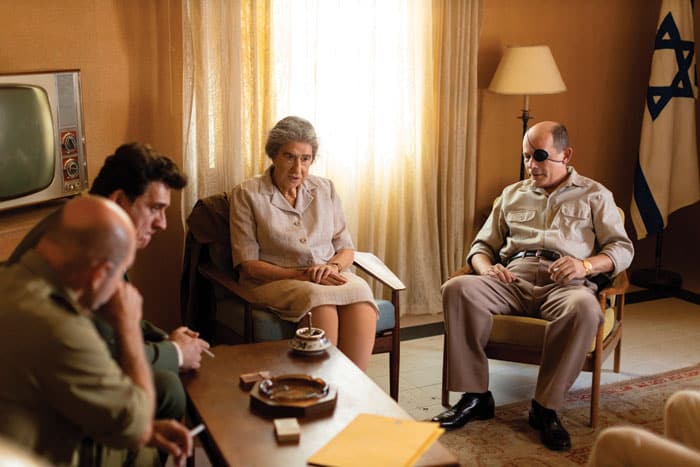
There has been plenty of commentary this year about the film “Golda” starring Helen Mirren as the titular character. Much of that commentary so far has been on whether Mirren, as a non-Jew, should have been cast in the first place. That all goes out the window at the moment when Mirren first speaks as Meir in the new film.

“In my day, they stood for the Prime Minister,” an irritated Meir says in the opening minutes of the film as she enters a room full of Army men. Later, we see her sitting in 1974 in front of the Agranat Commission, which is investigating her role in the failures of the Israeli government to anticipate the surprise attacks by Egypt and Syria on Yom Kippur in 1973.

The gravity of the Yom Kippur War is apparent on Mirren’s face throughout the film, knowing that one way or another, human lives will end with her next decision. 

The hearings bookend “Golda” —  the bulk of the film is a tense snapshot of the 19 turbulent days of the Yom Kippur War as experienced by Israel’s fourth Prime Minister,  taking you into the war rooms where strategy is concocted. There’s a deepening crisis in the war room, and Meir is left to make many of the ultimate decisions. The gravity of the Yom Kippur War is apparent on Mirren’s face throughout the film, knowing that one way or another, human lives will end with her next decision. 

While the Arganat Commission took on the job of analyzing the of the war, viewers of “Golda” are left with little time to catalog any mistakes Meir and her advisors might be making. The pacing of the film is quick, but the lingering close-ups of Mirren as the worried, often smoke-wreathed Meir magnify the pressures she was under. Although the film does not delve into Meir’s early life, Mirren took it upon herself to do so. And it shows. Mirren read books and watched a lot of videos of Meir in preparation for the role.  “I always find playing these characters, I like to look at their life up to the age of 20. It’s really how they were as children,” she explained in a video from “Golda’s” premiere at the Berlin Film Festival, before the SAG-AFTRA strike. “It’s those experiences that form you.”

Among the highlights of the 100-minute film is Liev Schreiber as U.S. Secretary of State and National Security Advisor Henry Kissinger. The middle-of-the-night phone conversation with Meir early on in the war is one of the best-performed scenes of the film. Meir explains that Israel had already lost 500 tanks, a third of the Air Force and 30 Phantom fighter jets, and that she could have launched a preemptive strike but didn’t. Kissinger responds, “Watergate is sweeping through Washington like a firestorm, Golda. Nixon is a lame duck.” Meir fires back, “If the Arabs defeat us with Soviet weapons, what message does that send to the free world, Henry?”

The Journal spoke with “Golda” director Guy Nattiv about his suspenseful drama. He spoke about the stark contrast between reactions to the film by the Israeli press and foreign press. 

“I think that some people from the press that are not Jewish and non-Israeli, I don’t think that they understand the nuances that we as Jews understand, so it’s kind of like different points of view in a way, but you can feel that it aggravates a lot of attention, which is cool,” Nattiv told the Journal.  

Taking on real-life subjects and making films that create a lot of conflicting and aggravating attention is part of Nattiv’s aim. One of Nattiv’s favorite film directors of all time, Oliver Stone, is well-known for diving head first into controversial real-life subjects, with his acclaimed films “Platoon,” “Born on the Fourth of July” and “JFK.”

Nattiv said that “Golda” wasn’t made with a specific target audience in mind. Being filmed entirely in English certainly opens the film to a wider audience. 

In addition to Meir, audiences will come away from the film with a curiosity about Meir’s longtime confidante and executive assistant Lou Kaddar (played by French actress Camille Cottin). Their history isn’t explicitly discussed on screen, but the chemistry between Mirren and Cottin says much about the real-life relationship between the two. 

One of the most harrowing scenes in the entire film involves Israeli Minister of Defense Moshe Dayan. Without revealing any spoilers, when watching the film, viewers should remember that the actor portraying Dayan, Israeli actor Rami Heuberger, is not a native English speaker. Heuberger nails the spectrum of emotions that Dayan must have felt while enmeshed in the war.  Nattiv said it took about 70 takes over the course of two filming days to get a certain scene just right. Looking back, Nattiv said it was “the most emotionally-challenging scene” to shoot. 

Nattiv said that Meir’s life lends itself well to a miniseries treatment. In 2021, it was announced that Barbra Streisand is producing a miniseries based on the book “Lioness: Golda Meir and the Nation of Israel” by Francine Klagsbrun. Although there have not been any major updates about that miniseries’ current status, “Unorthodox” actress Shira Haas is reported to play Meir. 

Don’t watch Nattiv’s “Golda” with the expectation that you’ll see Meir’s early life fleeing pogroms and her pre-Israel upbringing and education in Milwaukee, Wisconsin. That history is figuratively on screen, as all of Meir’s personality and leadership style are derived from those childhood experiences. Nattiv was barely six months old when the main action of the film took place. Even while growing up in Israel, many of the details of the War remained top secret for decades. 

“Golda” feels real and looks authentic. The song over the end credits (again, no spoilers), is a perfect coda. The film will have viewers reflecting on the value of preemptive military strikes and feeling the weight of war’s gray areas. A fitting word that is used in the film and by Nattiv in the interview is hubris.

“There were many f—ups [during the Yom Kippur War] and Golda is not the only one who is to blame for that,” Nattiv said. “That’s the main thing that I wanted to do in the movie: transfer the knowledge that Golda was just on the top. She just ran the government, but she relied on her commanders. And she was led by disillusioned and hubris commanders. That’s not only her fault, but she did take responsibility and she resigned later on, which we don’t see anyone doing today.”

“Golda” opens in theaters on August 25.

“Golda” Is a Tense Snapshot of the 1973 Yom Kippur War Read More »

A Moment in Time: “Make it Nice”

Dear all,

Ron and I were invited to tour the kitchen after dining at a great restaurant last week. On the wall was a sign that said, “Make it nice.”

I thought about the many layers of this message:

When you interact with colleagues, make it nice.

When you face customers, make it nice.

When you present a product, make it nice.

When you question a parent, make it nice.

When you tuck your children in, make it nice.

When you make your bed, make it nice.

When you pray, make it nice.

It might take a lot of preparation to get to the point of presentation. But it only takes a moment in time to make it nice. And that moment makes all the difference.
With love and shalom.

Rabbi Zach Shapiro

A Moment in Time: “Make it Nice” Read More »

We Should Be Thanking Bradley Cooper and Helen Mirren for Playing Legendary Jews

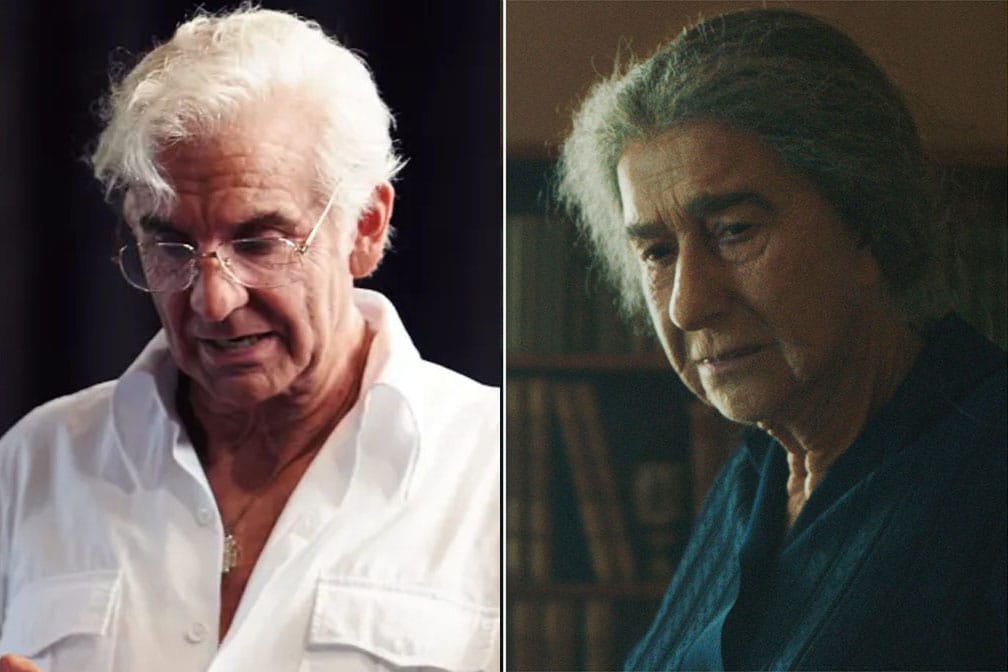
Right on cue, the Jewish Whiner Brigade has jumped on Bradley Cooper for his use of a prosthetic nose in his depiction of legendary composer and conductor Leonard Bernstein in the upcoming movie, “Maestro.”

Curiously, these serial kvetchers have hardly uttered a word about another non-Jew, Helen Mirren, who also had her nose accentuated in her depiction of Golda Meir in “Golda.” Maybe they saw or heard about Mirren’s extraordinary performance and decided it would be petty or shameful to attack her for playing a Jewish legend with such brio.

In any case, the whiners attacking Bradley are not waiting for the film to come out. They’ve seen his face and that’s enough.

“Hollywood cast Bradley Cooper — a non Jew — to play Jewish legend Leonard Bernstein and stuck a disgusting exaggerated ‘Jew nose’ on him,” the activist group StopAntisemitism said on X, in one of many examples of Jews lashing out at Cooper on social media.

Writing for The Independent, Noah Berlatsky criticized Cooper’s decision and said that using prosthetics “effectively turns Jewish people into their physical characteristics. It makes us caricatures.”

Some critics couldn’t even accept the endorsement of Cooper from Bernstein’s three children, who issued this statement on Instagram: “It happens to be true that Leonard Bernstein had a nice, big nose. Bradley chose to use makeup to amplify his resemblance, and we’re perfectly fine with that.”

“They may be ‘fine’ with that—but that’s part of the problem,” Malina Saval shot back in Newsweek. “Whatever their reasons for being ‘fine’ with it—internalized shame, self-hatred—their support of prosthetic noses sends a dangerous signal that spinning Jewish characters into caricatures is socially acceptable.”

Notwithstanding her unseemly speculation about the children’s motives, even if we grant some truth to that “dangerous signal,” Saval and other chronic critics have once again overlooked that spinning American Jews into a paranoid, thin-skinned, insecure bunch of scolds brings its own dangers.
For one thing, it reinforces the dangerous antisemitic stereotype of powerful Jews who love to throw their weight around any time something upsets them.

For another, it turns Jews from winners with a sense of humor into whiners with a self-righteous trigger. One of the best parts of the Jewish story in America has been our ability to give back so much to a country that invited us to partake in the American Dream. America turned us into winners, not whiners. Leonard Bernstein was one of hundreds of prominent Jews who contributed to American society across all fields, from science, art and literature to music, medicine, comedy and the fight for social justice.

So, when a famous non-Jew and Hollywood superstar like Bradley Cooper decides to tell the story of one of our prominent Jews, the least we could do is show him some gratitude and respect for his art.

We should never ignore the threat of antisemitism, but that doesn’t mean we should allow it to define us. I know from reliable sources that Bradley Cooper does not have an antisemitic bone in his body. It’s shameful to get on his case for playing the part of a great Jewish artist the best way he can.

One of the fallouts of the pervasive and ubiquitous “fight against antisemitism” is that it has come to dominate the Jewish brand in America. Our contributions to this amazing country go way, way beyond this fight. We’re grateful creators who want to help this country a lot more than indignant fighters who just want to help our own. Indeed, the Jewish value of gratitude itself should be one of our major contributions.

The Jewish value of gratitude itself should be one of our major contributions.

So, Mr. Cooper, if you read this, know that there are plenty of Jews out there who are grateful for your dedication to tell Leonard Bernstein’s American story, and we can’t wait to see the film.

We Should Be Thanking Bradley Cooper and Helen Mirren for Playing Legendary Jews Read More »

Feminine Language Only Seeming to be Weak

We do not learn our language by transcribing every word like monks

into our manuscripted brain,

we learn it in the collocations that are lexically learned chunks.

That’s why we do not say “strong rain,”


but “heavy rain,” and on the other hand will only say “strong tea” —

tea’s never “powerful.” We learn

to speak in chunky phrases that we use while we’re poetically

inclined, when talking of an urn,


to think of “Grecian urns” and Keats, and when we talk of mom and dad

think, Larking, that they “f’d us up.”

Since speech is chunky we become mere walking platitudes. How sad!

Speech runneth over like a cup,


overflowing sometimes in a style some linguists label “feminine,”

the language that weak people speak

condoning with conditions typically used by women in

a style that has been labeled “weak.”


The Torah’s Israelites use language that is weak on two occasions,

addressing as if they weren’t masc-

uline both God and Moses, asking to be treated with the sort of patience

that’s typically a woman’s task.


Echoing J. L. Austin, the gender of two “utterances” in the Bible influences their performance

to make them “utterances of weakness,” grammatically behaving just like female hormones.


In “Women Know Exactly What They’re Doing When They Use ‘Weak Language,’” NYT, 7/31/23, Adam Grant, an organizational psychologist at the University of Pennsylvania’s Wharton School, writes:

It turns out that women who use weak language when they ask for raises are more likely to get them…. In 29 studies, women in a variety of situations had a tendency to use more “tentative language” than men. But that language doesn’t reflect a lack of assertiveness or conviction. Rather, it’s a way to convey interpersonal sensitivity — interest in other people’s perspectives — and that’s why it’s powerful.

The Torah twice uses feminized “weak language” in its descriptions of negotiations.  In Num 15:11 Moses address God as את, which is the feminine word for “you” when pleading to God for his survival:

טו  וְאִם-כָּכָה אַתְּ-עֹשֶׂה לִּי, הָרְגֵנִי נָא הָרֹג–אִם-מָצָאתִי חֵן, בְּעֵינֶיךָ; וְאַל-אֶרְאֶה, בְּרָעָתִי.  {פ} 15 And if Thou deal thus with me, kill me, I pray Thee, out of hand, if I have found favour in Thy sight; and let me not look upon my wretchedness.’ {P}

The Israelites use the feminine את when pleading to Moses to enable them to survive during the Sinai theophany by acting as God’s spokesman, so that they will not die when hearing God’s voice:

כג  קְרַב אַתָּה וּשְׁמָע, אֵת כָּל-אֲשֶׁר יֹאמַר יְהוָה אֱלֹהֵינוּ; וְאַתְּ תְּדַבֵּר אֵלֵינוּ, אֵת כָּל-אֲשֶׁר יְדַבֵּר יְהוָה אֱלֹהֵינוּ אֵלֶיךָ–וְשָׁמַעְנוּ וְעָשִׂינוּ.        23 Go thou near, and hear all that the LORD our God may say; and thou shalt speak unto us all that the LORD our God may speak unto thee; and we will hear it and do it.’

These two verses are—please pardon my bilingually bisexual pun— “utterances” that reflect what J. L. Austin might have called “performances of weakness.”  In “How to do things with wars: The life of the philosopher who ‘changed the whole idea of what language is,” TLS, 8/4/23, Lonon School of Philosophy’s Jane O’Grady writes:

Yet, as Austin insisted, “when we examine what we should say when, what words we should use in what situations, we are looking not merely at words (or ‘meanings’, whatever they may be) but also at the realities we use the words to talk about”. And, he argued, the way we use words in fact changes reality. “When I say ‘I name this ship the Queen Elizabeth’ I do not describe the christening ceremony, I actually perform the christening”, he wrote; “and when I say ‘I do’ (take this woman to be my lawful wedded wife), I am not reporting on a marriage, I am indulging in it”. I am, in fact, “doing something rather than merely saying something”. Although it resembles an ordinary factual statement, what Austin called “a performative utterance” cannot be either true or false – it acts on, and alters, the social world. Yet so too, he argued, do many avowedly descriptive statements. The sentence “your car is damaged”, for instance, has a literal meaning, but it may also be, to adopt Austin’s terminology, an “illocutionary act” (a warning) and perhaps has the “perlocutionary” force of alarming the person who is warned…..

But just as his war work had significantly, if indirectly, executed military and defensive activities, so he was not merely investigating concepts such as “action”, but revealing that language is itself a form of doing – and he thereby changed the whole idea of what language is. Austin’s “speech act” theory, elaborated by his student John Searle and others, has also extended into postmodern territory, such as Judith Butler’s claim that to be male or female is less a matter of biology than of performance.

Rabbi Wolpe commented, citing Aaron’s prayer that God should cure his sister Miriam:

El nah r’fah nah lah is also weak, I’d say, with two pleases in five words.

Rabbi Wolpe implied that Moses’ “speech act” in which he rephrased Aaron’s prayer to God was a forceful five-phrased feminine performance.  Num. 12:13 states:

יג  וַיִּצְעַק מֹשֶׁה, אֶל-ה לֵאמֹר:  אֵל, נָא רְפָא נָא לָהּ.  {פ}           13 And Moses cried unto the LORD, saying: ‘ El nah r’fah nah lah.  Heal her now, O God, I beseech Thee.’

Echoing J. L. Austin and Rabbi Wolpe, I suggest that Moses was speaking like the nursing father — which he had told God he did not wish to be — saying in Num. 11:12:

יב  הֶאָנֹכִי הָרִיתִי, אֵת כָּל-הָעָם הַזֶּה–אִם-אָנֹכִי, יְלִדְתִּיהוּ:  כִּי-תֹאמַר אֵלַי שָׂאֵהוּ בְחֵיקֶךָ, כַּאֲשֶׁר יִשָּׂא הָאֹמֵן אֶת-הַיֹּנֵק, עַל הָאֲדָמָה, אֲשֶׁר נִשְׁבַּעְתָּ לַאֲבֹתָיו.       12 Have I conceived all this people? have I brought them forth, that Thou shouldest say unto me: Carry them in thy bosom, as a nursing-father carrieth the sucking child, unto the land which Thou didst swear unto their fathers?


Gershon Hepner is a poet who has written over 25,000 poems on subjects ranging from music to literature, politics to Torah. He grew up in England and moved to Los Angeles in 1976. Using his varied interests and experiences, he has authored dozens of papers in medical and academic journals, and authored “Legal Friction: Law, Narrative, and Identity Politics in Biblical Israel.” He can be reached at gershonhepner@gmail.com.

Feminine Language Only Seeming to be Weak Read More »

Adrien Brody and Jason Segel Are a Winning Duo In Lakers Series, “Winning Time”

In the second season of Max’s “Winning Time: The Rise of The Lakers Dynasty” the legendary Jewish Boston Celtics coach Red Auerbach (Michael Chiklis) warns Los Angeles Lakers owner Jerry Buss (John C. Reilly) that he better watch out, now that Boston has forward Kevin McHale and center Robert Parish.

“You know, my people got a word,” he tells West, “‘Dayenu.’ It means it would be enough if all God did was bless us with the Promised Land, ‘Dayenu.’ If he just set the plagues against our enemies, ‘Dayenu.’ It goes on this way, but the point is sometimes we get lucky, we get greedy. Some advice from an old Jew — let it be enough cause if you come after it again, this wily Yid will jam this Florsheim up your cowboy ass.”

Reilly’s Jerry Buss, is impulsive and mercurial, a man so hotheaded he becomes infuriated at his sons during a Monopoly game. On the court, friction between center Kareem Abdul Jabbar and point guard Earvin “Magic” Johnson (a compelling Solomon Hughes and a magnetic Quincy Isaiah)

Season Two picks up the story soon after the end of Season  One. The “Showtime”  Lakers, winners of the 1979-80 NBA Championship, want to stay on top. When Johnson injures his knee and is forced to missing 45 games, he secretly practices with Riley. Brody’s Riley and Segel’s Westhead, have very different coaching styles. After Johnson’s injury, Riley gives a short pep talk on a bus, while Segel, as Westhead, tells his squad that “team beats stars every time” as they try to win while Magic is out. Isaiah shines as the star along with a humorous John C. Reilly

Jason Clarke is explosive as Jerry West The former Laker star — “Mr. Clutch,” whose silhouette is part of the NBA logo — is a stubborn general manager.

Brody and Segel have great chemistry as two men who are working together but think they can coach better than the other. Spencer Garett is humorous as legendary play-by play broadcaster, Chick Hearn.

While fans normally only see what happens on the court, it is fascinating to see the stories behind the wins and losses, the rivalries, the jealousies, and the strategies, while looming large is the rival Celtics with Larry Bird (Sean Patrick Small).

While the Lakers made winning look easy with the power of Kareem and the razzle-dazzle of Magic, “Winning Times” shows that not everything is as easy as it looks from the outside, including the personal problems —  as well as jealousy from other players because he the new star — Magic had to face.

“Winning Time” airs on Sunday nights on Max.

Adrien Brody and Jason Segel Are a Winning Duo In Lakers Series, “Winning Time” Read More »