The bat mitzvah is a landmark rite of passage for Jewish teen girls. It is a time when they can prove their knowledge of Hebrew and Torah, impress their family and friends and, of course, have a huge party that they will remember and cherish for the rest of their lives.
After parodying (a little too accurately) Israelis in “You Don’t Mess with the Zohan” and singing in Hebrew in the hilarious bar mitzvah scene in “The Wedding Singer,” Adam Sandler is back in a very Jewish role, starring alongside his family in “You Are So Not Invited to My Bat Mitzvah,” out on Netflix on August 25.
In the new movie, his daughter Sunny Sandler plays Stacy, a seventh grader who wants to have an amazing bat mitzvah, but everyone seems to be getting in the way – including her parents, played by Adam Sandler and Idina Menzel, as well as her sister in real life and the movie, Ronnie (Sadie Sandler). When her best friend Lydia (Samantha Lorraine) kisses Stacy’s crush, her entire world seems to come crashing down. “You Are So Not Invited to My Bat Mitzvah” is a tale of teen angst and, ultimately, about what it means to forgive others and grow up.
The Jewish Journal caught up with Sammi Cohen, who directed the film, which is an adaptation of Fiona Rosenbloom’s book of the same name. Cohen previously directed comedy music videos and “Crush” (2022), a teen movie that appeared on Hulu.
“Learning about who you are in the world and who you want to be is a very Jewish experience.” – Sammi Cohen
The director was excited to get involved in “You Are So Not Invited to My Bat Mitzvah” because they wanted “to tell a Jewish coming-of-age story that explores formative female friendships and self-discovery in a real, messy and authentic way. Learning about who you are in the world and who you want to be is a very Jewish experience. It’s also a universal experience. I’m excited for this community to feel seen and celebrated.”
When working with Adam Sandler, Cohen said they learned that success isn’t just about making money. It’s about making movies with people you love.
“That what this entire experience has been for me,” they said. “This cast was a dream come true. It was fun to see Adam and Idina together again on the big screen. I joke that this is the happy side of their on-screen marriage. They have such a natural familial chemistry that makes the film feel like this real slice-of-life. They made me nostalgic for my own childhood [and] my own parents.”
Cohen grew up in a Reform Jewish household in Woodland Hills. They went to synagogue to celebrate the High Holy Days, and when they were old enough, they went to Israel on Birthright. Today, they celebrate Shabbat with their community in L.A.
“I’m a queer, non-binary, very progressive Jew, and the Jewish community I belong to is also very progressive,” they said.
“You Are So Not Invited to My Bat Mitzvah,” which focuses on the Jewish community but also features a diverse cast of supporting actors, tells a story that anyone who has been a teenager can relate to.
“My hope is that people start to embrace our differences by celebrating our similarities,” Cohen said. “I want people to learn about being Jewish and to say, ‘Hey, we have something like that too!’ I also love this lesson that we all make mistakes. It the choices you make to correct those mistakes that matter most.”
In their work, Cohen hopes to continue creating movies that showcase people from all different backgrounds and encourage unity among audiences.
“I want to make films that make people feel seen, accepted and celebrated for who they are,” they said. “I want to make films that remind us how much we have in common. I want to make films that give people permission to be themselves.“
Two CUNY Professors Allege School Is Investigating Them for Criticizing Anti-Israel Lecture, Exhibit
Two professors at the Borough of Manhattan Community College (BMCC), which is part of the City University of New York (CUNY) umbrella, are alleging that BMCC is investigating them for criticizing an anti-Israel lecture and exhibit put on by the school.
The New York Post reported that the two professors are Assistant Mathematics Professor Avraham Goldstein and another who requested anonymity; the two professors had gone to the media and criticized the BMCC’s Social Justice and Equity Centers in March for holding “a lecture in March that discussed ‘the structure of apartheid’ in Israel and an exhibit featuring a display ripping it for ‘settler colonialism, military occupation, land theft, and ethnic cleansing.’” According to the Post, the investigation is due to the center’s then-multicultural center program coordinator Nadia Saleh alleging that Goldstein and the other professor harassed her through speaking to media outlets that published false information about her. However, Goldstein and the anonymous professor denied speaking to the media about Saleh. “It is evident to me that this investigation against us is a retaliation by CUNY Administration for our activity — for us publicly complaining about the antisemitic events on BMCC campus, and for our complaints against those responsible for these events,” Goldstein told the Post.
Both the BMCC and Saleh declined to comment to the Post.
Petition Calls for Princeton to Remove Book Accused of Spreading Blood Libels
A petition was launched on August 15 by International Legal Forum CEO Arsen Ostrovsky calling on Princeton University to remove a book that allegedly spreads blood libels.
The 2017 book “The Right to Maim” is being taught in Princeton’s upcoming course “The Healing Humanities: Decolonizing Trauma Studies from the Global South.” Ostrovsky accused the book of promulgating the “antisemitic blood libel that Israel intentionally maims Palestinians and harvests their organs.” “This kind of blind racism would not be permitted against any other minority, and nor should it be tolerated by Princeton with respect to Jewish students, who are already experiencing record levels of antisemitism on campus,” Ostrovsky wrote in the petition. As of this writing, more than 100 people have signed the petition.
Teen Arrested Over Antisemitic Graffiti at NY School Playground
A teenager has been arrested over antisemitic graffiti on a New York school playground.
The graffiti, found at Chatterton School in the Nassau County neighborhood of Merrick on July 30, consisted of a couple of swastikas drawn in black. On August 10, the Nassau County Police Department announced that a 14-year-old male from Freeport––a village in Long Island––was arrested over the graffiti. He has been charged with third degree criminal mischief and first-degree aggravated harassment.
ADL, AEPi Announce New Partnership in Fighting Antisemitism
The Anti-Defamation League (ADL) and Alpha Epsilon Pi (AEPi) announced on August 14 a new collaboration in fighting antisemitism.
According to a press release, the two organizations announced at the AEPi 2023 International Convention in New Orleans that they have established the AEPi Antisemitism Response Center, which allow people to report antisemitic incidents on campuses as well as track them. The center will also provide students with resources to combat antisemitism and raise public awareness about the issue.
“ADL and AEPi were both founded in 1913 in response to antisemitism that had deep impacts on the day-to-day lives of Jews,” ADL CEO Jonathan Greenblatt said in a statement. “This partnership unites our two historic organizations who share a vision: to confront hatred, combat antisemitism, and promote understanding across our campuses and communities.”
“This partnership with ADL will give AEPi Brothers around the world additional tools and training to help them track and fight antisemitism and become more effective advocates for Israel and a broader understanding of Jewish communities,” AEPi CEO Rob Deridiger said in a statement.
Ohio State Anthropology Professor Announces Resignation from AAA Over Israel Boycott
Jeffrey Cohen, a professor in the Ohio State University’s Anthropology Department announced that he is resigning from the American Anthropological Association (AAA) after their membership voted in favor of an academic boycott of Israel on July 24.
“I have been a member of the AAA since 1984, and this was a difficult decision to make,” Cohen wrote in an August 10 letter to the editor published in the Cleveland Jewish News. “While the AAA is my professional home, I cannot be a part of an organization that would boycott the Israeli system of higher education, that would sanction hate and that would ignore the very same behavior coming from myriad states and academies around the globe.” He also accused the AAA of misrepresenting the situation “by claiming a majority of members support the boycott when in fact only 37% of the entire membership voted.” Cohen called the boycott “an assault on academic rights for faculty and students and denies the opportunity to reflect and respond to a complex and difficult topic.” “I fear that this boycott will place Jewish and pro-Israel voices in a dangerous space where they can be easily targeted with hate crimes,” he added.
When it’s hot outside, my weakness is ice cream cones. I love every kind. Hand scooped ice cream in waffle or sugar cones. Soft serve. Even Drumstick Sundae cones.
My ice cream obsession was the inspiration for these refreshing tissue paper ice cream cones. The cones are made from brown grocery bags, and the “ice cream” scoop is a large tissue paper flower. They’re so easy to make. And afterwards, you can treat yourself to the real thing.
What you’ll need:
Brown grocery bag
Scissors
Glue stick, glue or tape
Tissue paper
Pipe cleaner
Newspaper scraps
1. Cut a 6×6-inch square from a brown grocery bag. Then cut a curve from two opposite corners.
2. Roll the brown paper into a cone shape and glue or tape the ends together.
3. Cut a 6-inch square stack of tissue paper. There should be between 8 to 10 sheets in the stack.
4. Accordion fold the stack of tissue paper.
5. Tie a pipe cleaner around the middle of the accordion folded tissue paper.
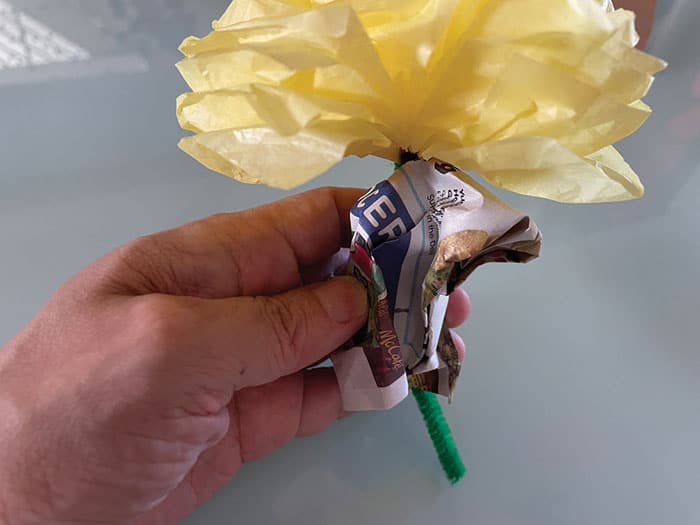
6. Separate the layers of tissue paper and fluff up the paper to create the flower.
7. Poke the pipe cleaner stem through a scrap of newspaper and bunch up the newspaper around the stem.
8. Stuff the newspaper-wrapped stem into the cone. Add more scraps of newspaper if necessary to hold the flower securely in place.
Jonathan Fong is the author of “Flowers That Wow” and “Parties That Wow,” and host of “Style With a Smile” on YouTube. You can see more of his do-it-yourself projects at jonathanfongstyle.com.
One verse, five voices. Edited by Salvador Litvak, the Accidental Talmudist
And it shall be with him, and he shall read it all the days of his life so that he may learn to fear the Lord, his God, to keep all the words of this Torah and these statutes, to perform them.
– Deut. 17:19
Miriam Mill-Kreisman President, Tzaddik Foundation
A king that is bound to follow G-d’s Torah cannot be swayed by the political or social whims of his generation. We had riots in the streets of Israel mainly because of this lack of a balance of powers. We can’t stomach it anymore. Who is the boss? In a democracy we want the people to choose its government. And we want a judiciary that upholds its country’s laws. When the judiciary feels empowered to create or negate the government’s laws or when the government overpowers the judiciary, where is the balance? This can only be created when a “document” or a “constitution” or a written in stone set of rules limits the power of the government and the judiciary. In the United States, the Constitution is that (or tries to be) such document.
Now imagine a country (or even better a world) where the word of G-d, the Torah, is that document. After all, who else knows how the world should best be governed? Being obligated to have a Torah scroll with him at all times and to learn from it all the days of his life, Israel’s king will always be aware of Who is really in control. It will hopefully keep in check any ruler’s unlimited power. The more we learn from the Torah, the more we will be ready to live in a world ruled by G-d and His righteous Moshiach. And what a different world that will be.
Rabbi Abraham Lieberman Judaic Studies, Shalhevet HS
Josephus (37 – c.100 C.E.), in trying to explain to his non-Jewish readers the legislation of Torah law, said the following: “Our Legislator … ordained our government to be what, by a strained expression, may be termed a theocracy, by ascribing the authority and the power to God” (“Contra Apion” 2:17).
When we consider words like “democracy” and “monarchy” and compare them to the word “theocracy,” we can begin to see the nuances of power, rule, corruption, abuse of power and human responsibility. The Jewish king was required to retain the Torah with him at all times, as Maimonides explains: “The Torah was stringent regarding the removal of his heart … for his heart is the heart of the entire congregation of the Jewish People. For this reason, the Torah instructs that he must cling to the Torah more than the rest of the nation, as the verse states, ‘all the days of his life” (Hilchot Melachim 2:36).
The guidance provided through this instruction, if adhered to, would ensure an ethical rule where abuses of power cannot arise. The King’s responsibility through this constant reminder and with such understanding, would reassure that justice for all will be carried out equally,and not even the king can be exempt. The limitations of power inherent in this kind of system are self-evident.
This should be a lesson for us all, in our own dealings in life, to keep the Torah as a moral-ethical anchor to ground us in proper behavior.
Rabbi Chaim Tureff Rav Beit Sefer Pressman, and author of “Recovery in the Torah”
The rabbis understand that the king needs to carry the Torah with him so that he will always remember G-d is with him, and act accordingly.
Since the king had almost unfettered power, including the ability to execute someone, his ego needed to be kept in check. The king was chosen by G-d for this job. Hence he was imbued with this power and it was due to this, not some inherent greatness, that he was the king. As people in addiction recovery know, there is often an extreme feeling about oneself that colors how one feels: “I’m the most unworthy person, if anyone really knew who I was …” or “I deserve this and if I hadn’t been wronged I’d be in a better position.”
This is called the terminally unique syndrome. The ego or lack of it creates almost a bipolar understanding of oneself. The commandment of the king can teach everyone that G-d is always with us. The commandment to carry a Torah scroll should remind us that we are who we are for a reason. This symbol of carrying G-d’s law with us is to remind us of our inherent worth and in turn the worth of others. If we can keep this balance it will allow us to see our unique task. So remember, we are never as bad as we think we are and we also are not the greatest human ever created. We, like everyone else, are a work in progress.
Aliza Lipkin Writer and Educator, Maaleh Adumim, Israel
The Torah states regarding the Jewish nation: “I will set a king over myself, like all the nations around me …”
These words indicate that it is due to the will of the people they appoint a king. God, in turn, commands the king to abide by a set of laws.
God commands the king to write for himself two copies of the Torah. He is to keep one copy with him and “read it all the days of his life, so that he may learn to fear the Lord, his God, to keep all the words of this Torah and these statutes, to perform them.”
The Hebrew word in the Bible for fear is yirah. Yirah can also mean “he will see.”
It is exceedingly difficult for a king in all his power not to become a pompous autocrat. The commandment for him to constantly review the Torah is to keep him grounded. It is a continual reminder that although he sits on an earthly throne, Hashem is the King of the Universe. When the earthly king makes it his daily practice to review God’s word via the Torah, “he will come to see” God in everything and act accordingly. This enlightened perspective will ensure the king faithfully keeps God’s commands and publicly sanctifies His name. This will yield a kingdom worthy of His Name, one in which each individual can gain a glimpse (he will see) of a Kingdom on earth that is truly divine.
Rabbi Cheryl Peretz Associate Dean – Ziegler School of Rabbinic Studies at AJU
This “it” this verse references isn’t just any it. It’s the Torah, and commitment to Torah is not surprising. After all, Talmud Torah has been a hallmark of Jewish life. Each morning and evening, we recite the Shema as a reminder that no matter where we are or go, the words of Torah should always be on our lips. And, while the beginning of this passage renders the appointment of a Jewish monarchy optional, this verse is clear that any such monarch is obligated to have God’s teachings (torah) on a scroll.
The 19th century Lithuanian Rabbi, Netziv (Naftali Zvi Yehuda Berlin), teaches that while contemplating Torah may well be a requirement for any Jew, it is even more so for the one chosen for a position of power, influence and leadership. As such, the verse unfolds as a mindful progression to the one who commands others — put Torah front and center, read it every single day; study it so that it leads to your own Divine awe and ultimately influences enactments and work of your governance. This, Netziv says, leads to putting God at the center and serves as a reminder that the monarch is called to the same service as anyone else — a service that changes who we are and what we do.
The period of Jewish monarchy ended. But the Divine call to hold Torah at the center, to study it that we experience awe and change our behavior, remains a beacon of light and vitality.
There was a time when writers cared more about the truth than their status; when reason and respectful debate were privileged over trendy ideology and virtue signaling; when critical thinking and analysis were honored more than branding and “influencers.”
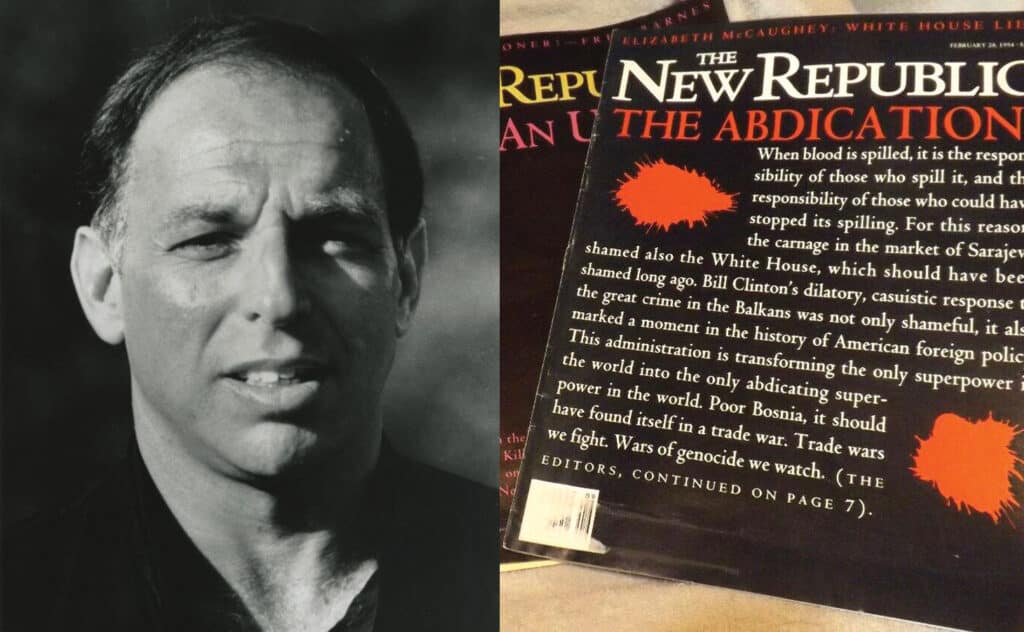
In my 20s, I was lucky enough to work at a magazine that was at the epicenter of truly liberal thought and debate: The New Republic (TNR), in its second iteration. Led by Marty Peretz, Michael Kinsley, Leon Wieseltier, and Rick Hertzberg, TNR was both influential and well-respected precisely because of its complexity — its willingness to call out both sides.
For the nearly 40 years that Peretz owned The New Republic, the weekly magazine was considered essential reading by both the left and the right.
Peretz’s new memoir, “The Controversialist: Arguments with Everyone, Left Right and Center” (Wicked Son), brings us back to a time when intellectual rigor, civil discourse, and vigorous debate prevailed. For the nearly 40 years that Peretz owned TNR (1974-2012), the weekly magazine was considered essential reading by both the left and the right.
The book also offers a chance to revisit a hugely important time in both Jewish and American history. Jewish intellectuals, previously shut out by both universities and established magazines, were finally given a well-respected platform to dissect and devise important ideas. The book also speaks to the current moment of ideological authoritarianism and activist anti-journalism by showing precisely how we got here.
Early life
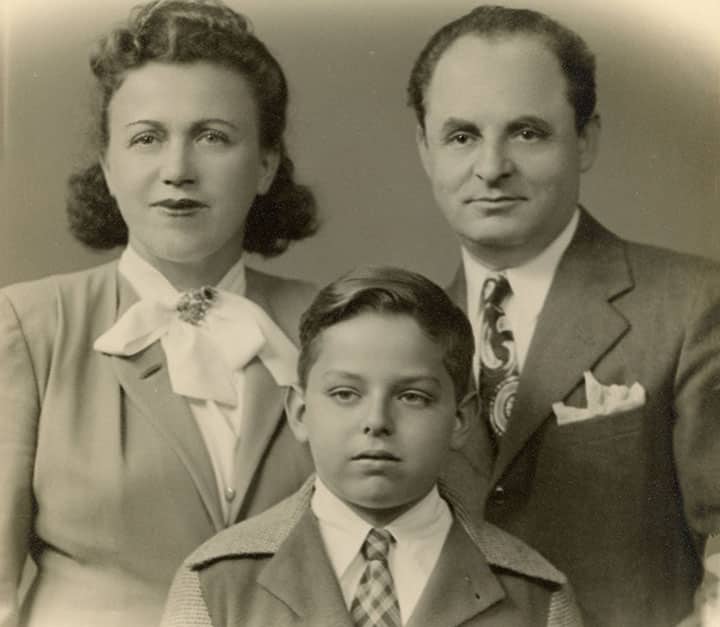
Peretz was born on December 6, 1938 to Polish immigrants in a Yiddish-speaking Bronx neighborhood. After Hitler invaded Poland in September 1939, most of his parents’ immediate and extended family were murdered in the Holocaust. “In Germany we were scapegoats; in the Soviet Union some of us, many of us, colluded in our own destruction,” writes Peretz.
Family portrait, mid 1940s (Credit: Gus Wittmayer Studio)
Peretz speaks of having a difficult relationship with his father, who nevertheless instilled in him a deep pride in his Judaism. “I was Jewish and American at all times, and there was no contradiction between those inheritances.”
His disdain for over-assimilated Jewry runs throughout the book. He sees Judaism as an ethnicity, which allows for a particularist, as opposed to universalist, sensibility. “My Jewishness… it’s a force in me — not a belief, a force — so strong, so roughly and deeply sensed, that it obviates contradictions with which other people grapple. Jewishness spans 3,000 years, between antiquity, with its rigors and abstractions, and modernity, with its difficulties and contradictions. To me, there are no divides between the eras: Jewishness bridges them.”
Still, he was well aware of the complexities of first-generation Jewish immigration. “[T]he hearts of Jewish immigrants were torn. They loved America but they were somehow still in the old country. Their home had been eradicated forever and there was not even an urge for return. But in her heart, my mother was still there.”
Harvard
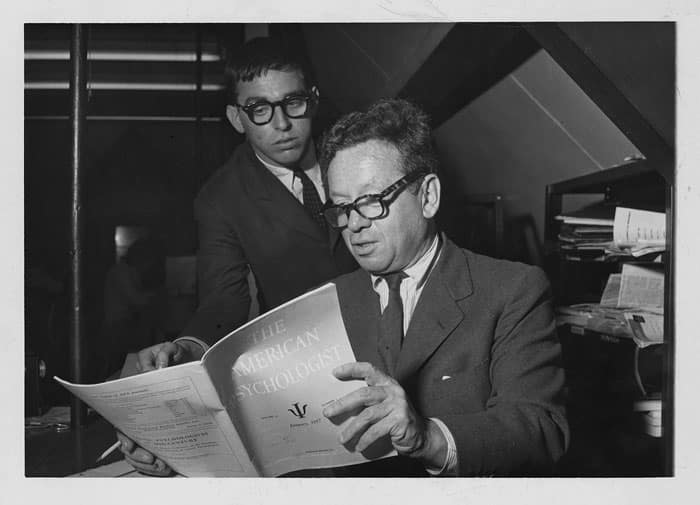
After graduating from the Bronx High School of Science, Peretz entered Brandeis University, where he studied with Herbert Marcuse and Max Lerner. Peretz then went on to earn his Ph.D. at Harvard. “The America the Protestants had put in place was opening up. We [Jewish students and faculty] knew it, and it seemed like they knew it too. It was my good fortune to walk up to this golden door just as it was opening up.”
Peretz was one of the founders of Harvard’s Social Studies program, where he became a permanent lecturer and eventually found future TNR writers and editors. He recounts his role in the rise of a Jewish intellectual movement that replaced the WASP establishment: “I was an intellectual entrepreneur.”
He also became deeply involved with the major protests of the 1960s and ‘70s, against the Vietnam War and in support of civil rights. He became close to Martin Luther King Jr. “The civil rights movement was a model for all my activisms to follow because it drew in all kinds, many of them politically minded Jews,” he writes.
In 1968 Peretz tried to forge a synthesis of the civil rights and anti-war movements by organizing the National Conference for New Politics. But at that conference, the Jewish-black Democratic coalition fell apart. One night during the planning sessions, he came downstairs “to find blacks and whites together on my porch singing antisemitic songs about Jewish landlords overcharging and evicting black tenants in Harlem,” Peretz recounts. “I threw them off the porch. … It was true that Jews had more opportunities in America than blacks. But we had struggled too, and now we wanted to break open the Establishment and help other people along.”
It was a defining moment for Peretz, both personally and politically, a harbinger of what was to come: Liberalism degenerating into illiberalism. The alliance between a radical black caucus and white communists soon denounced both Zionism and the U.S. and called for a revolution.
“The antisemitism of the American Left was no different from that of the Communist parties in Eastern Europe, with the new element of race added to the mix,” Peretz writes. It was “the American iteration of the Communist mistake, aided and abetted, again, by Jews rejecting their Jewish identity in the name of an ideology that persecuted Jews.”
In 1967, he married Anne Devereux Labouisse, a Protestant heir to the Singer Sewing Machine Company fortune. “For her, I was an escape. For me, she was an arrival. … I was taking a social leap into the domain of ruling Protestant America.”
Radical chic
From the late ‘60s on, Peretz began to move away from the neo-Marxist Left “instinctually and politically.” Peretz shows the trajectory of how universities became activist anti-universities, beginning in the 1970s. An illiberal ideology “removed from reality” began to prevail, with the dissolution of the center as one of the many negative outcomes.
He began to see much of leftist activism as “theater,” not meant to solve actual problems. “The more radical idealists put justice, feelings, and groups over rigor and individuality.”
This also began his disillusionment with the Democratic Party. “The party I had come up in could no longer govern the society it had helped create. In fact, its governance was worsening America’s problems.” He began to see much of leftist activism as “theater,” not meant to solve actual problems. “The more radical idealists put justice, feelings, and groups over rigor and individuality.”
But Peretz battled the Democratic Party from within, “arguing for the sake of clarifying, holding others to account” and becoming what he calls “a controversialist: Someone determined to stir the pot and who answers to his own emotions and instincts and to not much else.”
“My faith is a very Jewish one, though my life is testimony of many more people than Jews holding it: that the solutions to our problems lie in debate, learnedness, cultivation, and honest differences among smart, talented, committed people.”
The New Republic
Founded in 1914, The New Republic had been the preeminent weekly journal of liberal journalism and opinion in the U.S.
By 1974, TNR was still respected but it had lost its direction and influence. Peretz wanted to restore the magazine to its previous prominence by building a new TNR:Intellectual but not academic, contesting policies from first principles; “protect the private life of individuals from overarching political theories”; argue for why Zionism mattered. He quickly brought on Michael Kinsley, Charles Krauthammer, Rick Hertzberg, and then Leon Wieseltier to create the literary section. “Together we were upstarts — young and pluralist, Jewish and intellectual, not afraid to provoke.”
“We had in our hearts the worst atrocity in recorded history, and it affected our thinking, our approach, to the issues of the day … There had never been such a widely read magazine of Jewish journalists before.”
Understanding what made TNR great under Peretz is really understanding classical liberalism:
• Intellectual honesty;
• Willingness to criticize both sides;
• Unwillingness to conform;
• For nuance, against simple answers to complex questions;
• Importance of discourse, argument, and debate;
• Iconoclastic, unpredictable, provocative;
• Contempt for extremism, dogmatism;
• Gradualism; organic, incremental evolution;
• Intellectual but not academic: a publication of ideas;
• Individuality and freedom, not mandates.
“It was a very Jewish philosophical line to take,” Peretz writes. “Jewish thought throughout the ages was oppositional, discordant, argumentative, and intricate.”
The magazine was for racial equality but wary of racial preference. “The idea of government, the market, or culture defining people by their membership in racial groups seemed exactly like what the civil rights movement had been created to transcend.” He published leading black intellectuals such as Glenn Loury, Albert Murray, and Stanley Crouch.
TNR also tried to stop the Democratic Party from moving away from liberalism. “We thought maintaining a society of multiplicity meant taking a firm line against totalisms … in whatever guise they existed.” The larger effort was to “save [the country] from extremes,” standing firmly against any ideology that provides instant and effortless answers to serious questions.
With Max Lerner, 1957 (Credit: Henry Grossman)
The magazine’s support for Israel was uncompromising and unapologetic. “Zionism was the one thing I absolutely would not compromise on. … When it came to Israel, I answered to no one but myself.”
As a result, TNR became the center of intellectual disputes about liberalism and America. It remained deeply committed to the classical liberal tradition and willing to defend it against attacks from both sides.
The magazine was not without controversy. One of the most glaring was allowing editor Andrew Sullivan to publish an excerpt from “The Bell Curve,” which argued that cognitive differences between “races” are biological — in our DNA. Despite the protests of all of the editors, his own civil rights background, and the backlash that ensued, Peretz still stands by his decision in the book.
Decency
In 1966, Peretz wrote Ramparts a letter after the leftist magazine “savagely” attacked Max Lerner in a cartoon. “Decency may not be one of the revolutionary virtues but without it we cannot possibly build a good society or … have any notion of what a good society is.”
Indeed, decency is another core element of classical liberalism. But decency did not always prevail in the magazine’s offices in Washington, D.C.
Throughout the book, Peretz discusses his personal issues with anger, stemming from his own anxieties and relationship with his father. He admits to outbursts of anger, and that he “often picked on smaller, weaker people.” As an editor/writer in my 20s, I suppose I fit that category. It wasn’t pleasant. But the positives of working there for three years — most especially working with Leon Wieseltier — well made up for it. Wieseltier championed women writers at a time when we were working 24/7 to prove our intellectual equality. Ironically, Wieseltier was the one who was ludicrously accused of sexual harassment decades later, a “cancellation,” I believe, that was orchestrated by those who were jealous of his brilliance.
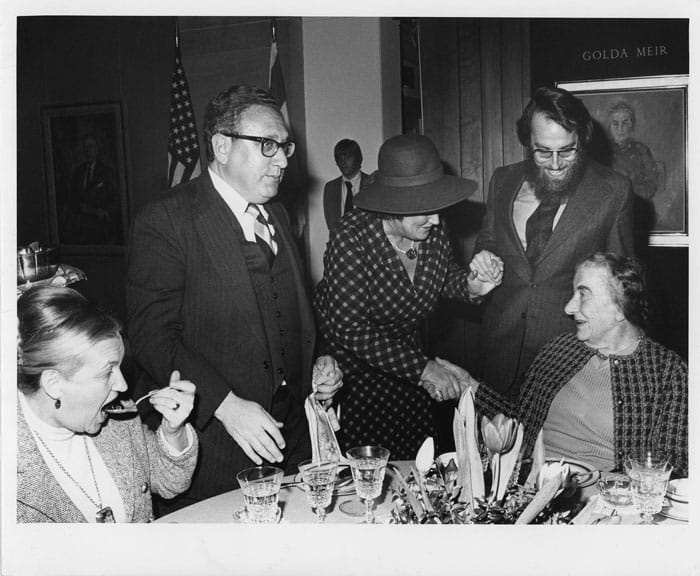
ebrating the addition of Meir’s portrait to the National Portrait Gallery, 1976. (Credit: Post Hill Press)
One could fault the book for being both self-congratulatory and at times mean. Perhaps the worst example is when he calls editor Michael Kelly, who was killed while covering the war in Iraq, a “nut.”
But as we well know from history, the person and the legacy are often two very different things. And looking back now, I think it’s fair to say that most TNR editors and writers saw the magazine as the most defining, formative part of our careers. I know I do.
Legacy
Peretz heralded a new era of opinion journalism, one that’s needed now more than ever.
“The equal society I hoped for in the ’60s has not materialized; if anything, it has gotten more unequal in the intervening years,” writes Peretz. “Politics are divided, with a media making those divides into cartoons: Between a multicultural statism that doesn’t ring true to the complexity of life on the ground and an antistate conservativism that feels misplaced, grafted onto an era that no longer exists. … The warring parties cannot even refer to a shared reality.”
And the Internet magnified the near extinction of real journalism. “The market … did not value the slow and reasoned thought that was our signature.” Faced with financial pressures from “free news” and the collapse of the liberal center in American politics and intellectual life, in 2012 Peretz sold TNR to Chris Hughes, one of Facebook’s founders, and then in 2016, Win McCormack, a co-founder of Mother Jones, bought the magazine.
In the dozen years since Peretz sold it, the magazine has spiraled into an unintelligible leftist mess that is truly a parody of non-journalism. It’s now the anti-TNR.
Peretz rightfully feels disappointed with the current state of politics and journalism. “Now, we’re in an age of disjuncture, where the wrong people are fighting for the wrong causes. … The migration of radicalism to the national institutions as society at large has lost its mediating institutions.”
The book is a reminder of all that American journalism has lost. It’s an elegy for a world of complex ideas —of reason, truth, and bravery.
There’s no question that if the Peretz TNR still existed today we would not be in the political disarray we’re now in. The book is a reminder of all that American journalism has lost. It’s an elegy for a world of complex ideas — of reason, truth, and bravery.
But he ends the book with faith in the people he’s taught and worked with. And the truth is, most of us who worked there will never be silent about how far journalism — and our national conversation— has fallen, and the dangers of extremism and insipid ideology. We will continue to try to reteach the world the true meaning of liberalism.
The TNR legacy lives on in all of us who were privileged to have played a part in the most important magazine of the 20th century. And for that Peretz should feel that his legacy is quite secure.
Karen Lehrman Bloch is editor in chief of White Rose Magazine.
On August 7, home cook Brad Mahlof was named the winner of the second season of PBS’s “The Great American Recipe.” “I think I made the Jewish community very proud,” Mahlof told the Journal. “I know my family is thrilled. I’m thrilled.”
The New York-based real estate developer’s aim was to share his Jewish culture and love of cooking. He is of Libyan Jewish descent on his father’s side, while his mother’s side is Ashkenazi. “There are no Jews left in Libya; all that we have left to pass down is our food,” Mahlof said. “I’m not a food creator by profession, so to have this opportunity to come on a TV show and share my stories, share my food, is so surreal.”
Throughout the season, talented home cooks from around the country showcased their signature dishes as they competed to win. Unlike other food competition shows, (and unlike its first season), on the second season of “The Great American Recipe,” the judges did not eliminate a chef each week. Instead, the show kept track of the scored dishes on each episode.
The three highest-scoring chefs — Mahlof; Salmah Hack, who cooks Guyanese food and Leanna Pierre, whose recipes are Caribbean-inspired — competed in the finale.“I don’t know what the secret sauce was that drove us to success, but I’m not surprised that it was the three of us in the finale,” Mahlof said.
Pierre was the first person Mahlof met on the show, which is filmed at a barn in southern Virginia. “We shared a ride from the airport to the hotel, and we immediately connected,” he said. “I’m like, ‘She’s serious competition.’” He felt the same way about Hack, noting “the way she cooks and her gift with spices and being able to meld delicious flavors together.”
In the first round of the finale, each contestant was given a letter and a recipe card from a loved one. For this assignment. Mahlof’s mother sent him the family Matzah Ball Soup recipe to cook. For the second and final round, the chefs had three hours to create an entrée, side dish and dessert that represented their Great American Recipe.
Then, each chef had a special someone arrive to help out. Mahlof’s mother appeared to assist him with his winning dish of Mafrum (a meat-stuffed eggplant that is fried and then braised until soft) with couscous, which he described as the “crown jewel of Libyan Jewish cuisine. For dessert he made Fig Upside-Down Cake with Whipped Cream for dessert. “My mom gave me a hug, and [whispered] in my ear, ‘I’m proud of you, no matter what. So let’s just have fun.’” he said.
Mahlof said sharing that experience with her made it even more special. “I think the love that we put on our plate was definitely tasted by the judges, and I think that might have been one of the contributing factors to the win.”
At the beginning of the pandemic, when Mahlof started sharing his love of cooking and his heritage via Instagram, he had no idea this is where it would lead. “I took it upon myself to make it a passion project to record and cook these recipes, and hopefully memorialize them, so they get passed down to the next generation and beyond,” he said.
When a casting person from the show reached out, Mahlof thought it was a joke. “I got a DM on Instagram, saying, ‘We think you’d be such a good fit for this show,’” he said.Although Mahlof ignored it, they kept messaging him until he finally responded. “It was just so off my radar to ever do something like this,” Mahlof said. “But the opportunity came about, and I said, ‘Why not?’ If this is what the universe is saying, let’s go for it.”
Mahlof represented well; he is the definition of “putting himself on a plate.” In fact, his winning recipe is on the cover of “The Great American Recipe Season 2 Cookbook.”
Mahlof looks forward to the next phase of his culinary career, so stay tuned. “This is just the start of the journey,” he said.
Learn more about Brad Mahlof and “The Great American Recipe.” Follow @CookwithBrad on Instagram.
For a taste of Mahlof’s cuisine, try his hummus recipe.
Brad Mahlof’s BEST 10 Minute Quick Creamy Homemade Hummus
Brad Mahlof’s Hummus
Israeli and Middle Eastern families take tremendous pride in their hummus recipes and claim to make the best version. They clearly have not tried mine!
Hummus is a must have in my kitchen and has been a pantry staple since I was a little kid. I use it to accompany meals and also as a wonderful healthy snack. While store-bought hummus is fine, and can work in a pinch, there really is no comparison between that and a fresh homemade batch.
The creaminess, depth of flavor and freshness are unparalleled.I’ve timed it and I can make my “instant” version, from start to finish in 6 minutes, so there really is no reason not to make it yourself.
Ingredients
2 15-oz cans of chickpeas
2/3 cup tahini
1/3 cup olive oil
4 Tbsp freshly squeezed lemon juice (more can be added to taste)
4 cloves garlic
1 Tbsp cumin
¾ Tbsp Kosher salt (more can be added
to taste)
Directions
1. In a high-powered blender or food processor add 1 can of chickpeas, liquid and all, plus 1 can of drained chickpeas, but be sure to reserve the liquid in case it’s needed.
2. Next, add the tahini, olive oil, lemon juice, garlic cloves, cumin and kosher salt.
3. Blend ingredients on high for 5 minutes, until perfectly smooth. See note below.
4. Taste and adjust seasoning if needed.
Notes
I sometimes make this in two batches so that I do not overcrowd the blender and ensure that the blender does not get stuck when trying to blend the ingredients.
Whenever we visit Israel, we always spend at least a few nights with my aunt Daisy. My children have the fondest memories of staying in her high-rise apartment in the Marom Naveh area of Ramat Gan. It overlooks a huge lush green garden and the views of the Gush Dan skyline are breathtaking.
My children have fond memories of playing in the park downstairs with cousins and splashing in the stately fountains. They remember hanging out at the Kinyon (mall) with the kiddie rides, arcade games and candy shop and shopping at SuperSal, Superpharm and Steimatsky. They savor the special meals they ate at Cafe Joe, Cafe Cafe, Roladin and Burger Ranch and drinking date and banana smoothies at Rebar.
But mostly, they remember how kind and loving and nurturing my Aunt Daisy has always been.
Her parents (my grandparents) Rafi and Rosa lived in a large house in the new neighborhood of Kerrada on the Tigris River. (Unlike the majority of Jews in Baghdad who lived in the densely populated Jewish Quarter.)
While my father and his brothers attended Massouda Sultan, a Jewish school in Baghdad, my aunt Daisy went to a local girls school. Her friends were Jewish, Muslim and Christian. Whenever the teachers gave a class on the Koran, Daisy and her Jewish friends were excused.
In 1951, when she was 17 years old, Daisy and her younger brother Eliyahu flew to Israel. She joined my father, her older sister Toya and brothers Moshe, Shlomo and Naim, who had all escaped Iraq illegally. Her parents arrived a little later and when the dust settled, Daisy married Mordechai, a fellow Iraqi emigre. Like all good Iraqi Jews, he was an accountant and he bought her this beautiful apartment in Marom Naveh. Unfortunately, he passed away just before they were to move in.
Of course, my aunt Daisy is the best cook and a prolific baker, a guardian of my Savta Rosa’s recipes. She makes incredible t’bit (slow-cooked Shabbat Iraqi chicken and rice dish), delicious meatballs with apricots and perfect Kubbah—different ones with shells made from semolina, rice or bulgur stuffed with ground beef or shredded chicken breast. Some Kubbah are served in a stew, others are fried to serve to guests as part of a Mezze.
This week we had the privilege of staying in her airy apartment and enjoying her wonderful food. And while we can no longer visit the old stone house of my paternal grandparents in Iraq, being in her kitchen allows me to imagine the rhythms of their life. In this one week alone, she had made a huge batch of Kubbah B’ral (bulgur), she had made dried apricot fruit leather and huge jars of fresh apricot jam and she had pickled vast quantities of cucumbers and other vegetables.
Knowing how much my brothers and my nieces and nephews love her ba’ba tamar, she also baked many trays. My husband Alan, tasked with bringing the heavy bags of ba’ba back to Los Angeles, was seriously worried that his luggage would be overweight.
Over the years, whenever we would stay with my Aunt Daisy, she would fry delectable Ajja J’bin for our breakfast. This week she made these yummy cheese omelettes and they were as delicious as we remembered.
The recipe is beyond simple. She mashes a white cheese like feta or bulgarit, blends in some flour and beats in the eggs and then she deep fries it in a small frypan. The result is the most delectable egg fritter. Light, fluffy, crispy. Absolutely irresistible.
The recipe is beyond simple. She mashes a white cheese like feta or bulgarit, blends in some flour and beats in the eggs and then she deep fries it in a small frypan. The result is the most delectable egg fritter. Light, fluffy, crispy. Absolutely irresistible.
— Sharon
Ajja J’bin Recipe
8 oz Feta or other salty white cheese
3 Tbsp all-purpose flour
4 eggs
Avocado oil or vegetable oil for frying
In a medium bowl, mash the cheese.
Mix in the flour.
Add eggs and beat until mixture is thoroughly blended.
In a small frypan, warm oil over medium high heat.
When oil is hot, pour in half the egg mixture.
When the bottom of the omelette is golden brown, flip and fry the other side.
Remove omelette.
Repeat with remaining egg mixture.
Serve hot or cold.
Sharon Gomperts and Rachel Emquies Sheff have been friends since high school. The Sephardic Spice Girls project has grown from their collaboration on events for the Sephardic Educational Center in Jerusalem. Follow them on Instagram @sephardicspicegirls and on Facebook at Sephardic Spice SEC Food. Website sephardicspicegirls.com/full-recipes.