God did not create religion. God created the universe; and within the universe, men and women. Men and women created religion.
Religion is powerful, and power is ambivalent. It can move mountains, raise cathedrals, poison the atmosphere and level mighty towers. God is one, but religion has many faces. Even within each face, there are different configurations of light and shadow.
Religion is multifaceted. The task of every responsible religious observer is to sort out the healthy from the unhealthy elements within faith, to distinguish the moral from the immoral aspects of belief.
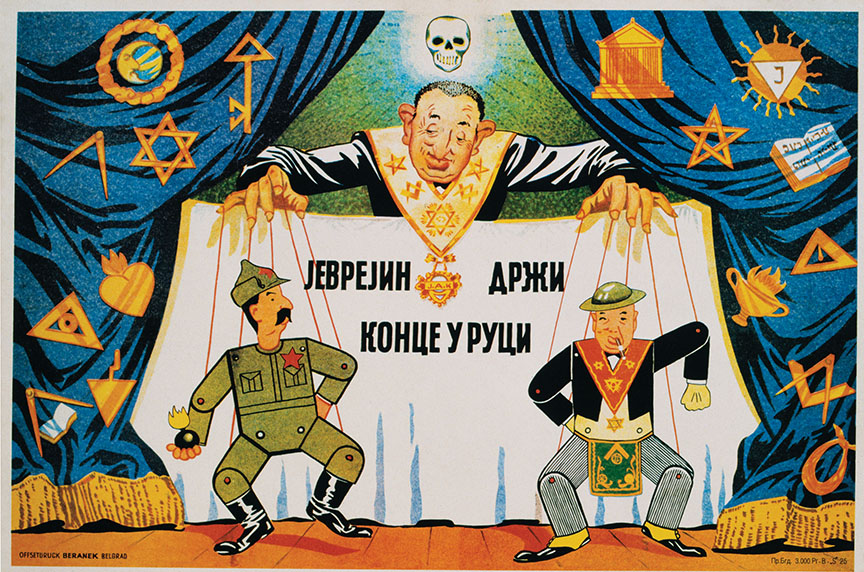
Within each religion, to a lesser or greater degree, a fundamentalist mind-set may reside. That mind-set insists that it alone can read God's mind, alone knows God's will and alone is mandated to do God's will.
The fundamentalist mind-set polarizes God's creation into children of light and children of darkness; those chosen and those rejected; those blessed and those cursed; those saved and those damned; those considered sacred and those called profane.
What is called for in these turbulent times, is the wisdom to differentiate the sane from the insane elements of tradition, and to sort out the ethical from the unethical aspects of belief.
Religion is not blind. Religion is meant to enlighten the heart and mind. It is not meant to sacrifice the intellect on the altar of faith.
The times warn us against violating the third of the Ten Commandments: “Thou shalt not take the Lord's name in vain.” This means that we must guard against those who in God's name project their own bigotry, envy and hate onto God. It is not God who calls dissenters anti-Christ or condemns doubters to eternal damnation or stigmatizes people and nations as agents of Satan.
It is not Hebrew scripture, nor Christian testament, nor the Muslim Quran that turns tragedy into divine punishment and converts innocent passengers of planes and occupants of buildings into sinners, and fanatic killers into martyrs doing God's will.
Religious wisdom does not ask: “Do you believe in God?” It asks: “What kind of God do you believe in?” Religious wisdom does not ask: “Do you follow God's will?” but, “What do you believe God's will to be?”
Religious wisdom does not endlessly ask: “Where is God?” Religious wisdom knows that God is not in the fire, the explosion and the debris, but in the heroic Godliness of those who leapt into the cauldron to save lives of strangers not of their faith or catechism. It knows that Godliness is manifest in the moral energy that tore apart twisted steel to reach for a torn human limb; to offer some measure of closure for the helpless families and friends who continue the long vigil into the night.
Religious wisdom hears God's question responding to man's question: “Where are you? Where is your intervention?” In turn, God asks: “And where are you? And what will you do to rebuild the city, to live again, to hope again, to love again?” Religious wisdom will not accept the fundamentalist disfigurement of faith to turn us from God's face.