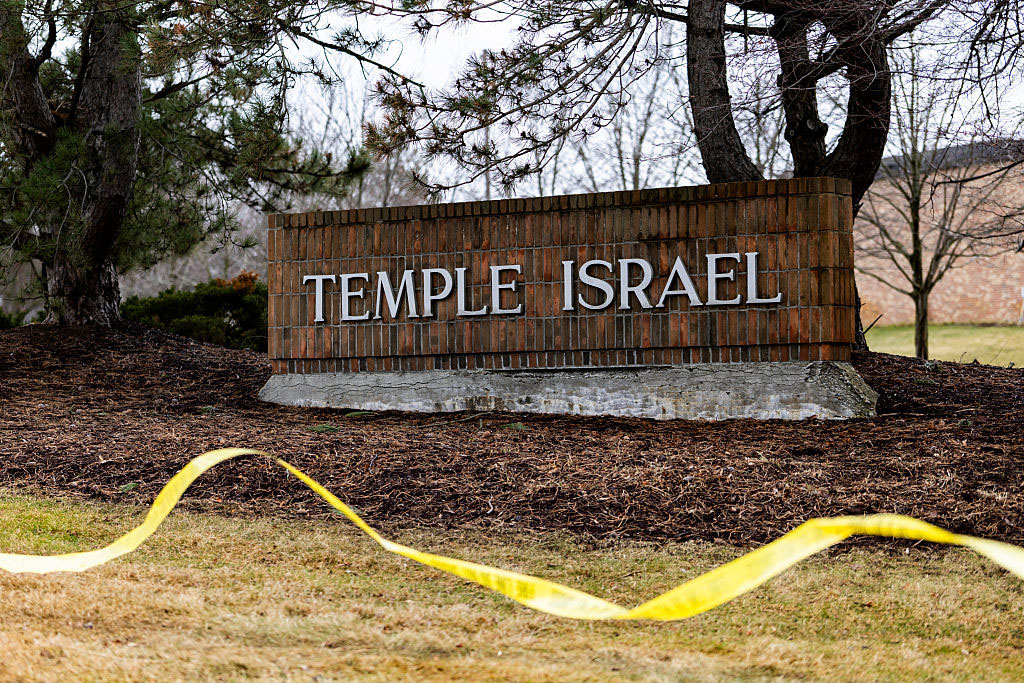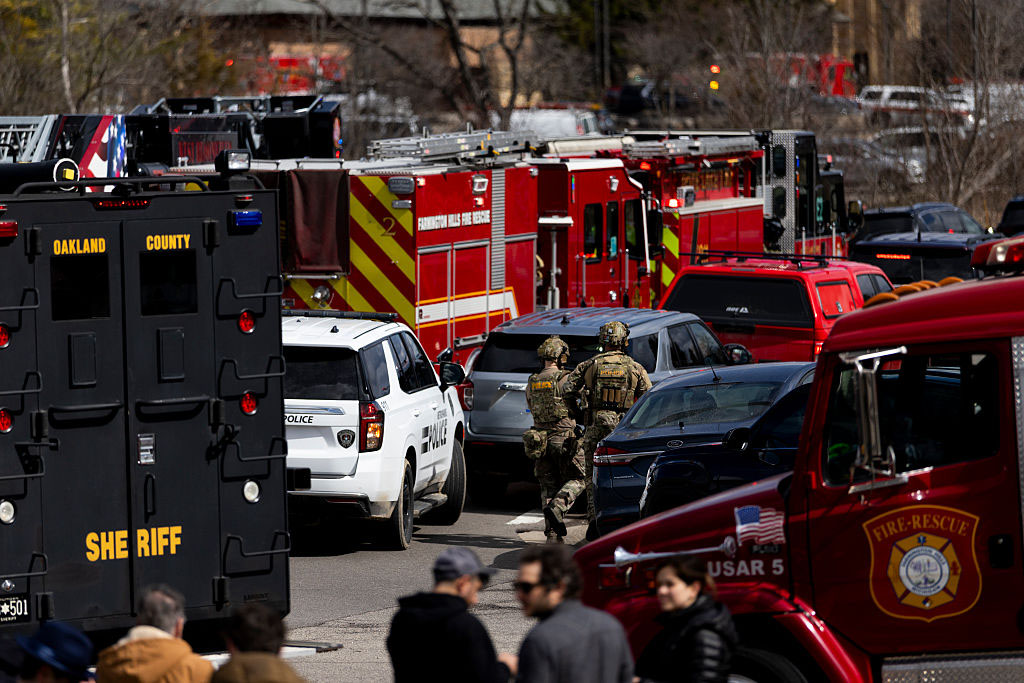
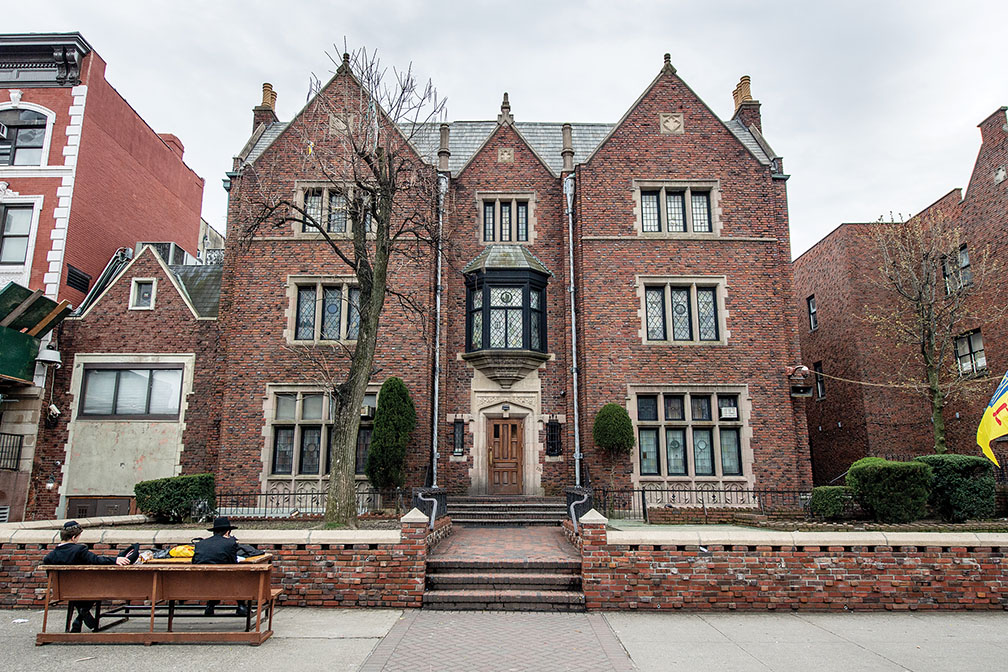
As police in NY investigate the man who drove a sedan repeatedly into the entrance of the Chabad Lubavitch world headquarters at 770 Eastern Parkway in Brooklyn on Jan. 28 in what NYC Comptroller Mark D. Levine (D) referred to as a “frightening incident at one of our city’s most iconic Jewish institutions,” those who worship and work in the building remain, as ever, undaunted.
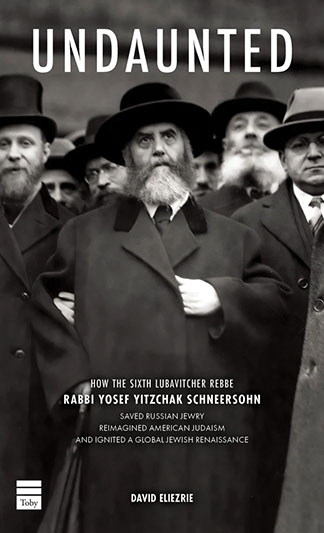 After all, as a recent biography by that name of the Sixth Lubavitcher Rebbe, Rabbi Yosef Yitzchak Schneerson, details, the now-renowned building served to launch the ever-growing, remarkable worldwide Chabad network.
As author David Eliezrie describes, after escaping the Nazis and arriving in America, instead of settling down in Brooklyn’s religious hub, Brownsville, then nicknamed the ‘‘Jerusalem of America,’’ Rabbi Schneerson put down roots in Crown Heights. A three-story brownstone was purchased on the main thoroughfare of Eastern Parkway for him to live and work in. “It is a beautiful residence in a wonderful location,” Rabbi Shmuel Levitin wrote in a letter to the Chabad community on the day of the purchase, “with room for the Rebbe’s needs, including offices, a library and synagogue like there was in Lubavitch that will be renovated and that will welcome all …”
As the book recounts, Rabbi Schneerson “recreated the spirit of Lubavitch in the midst of America’s largest city. Just outside, the subway raced underground to Manhattan. Large apartment buildings filled with Jews lined the leafy parkway. Metropolitan New York bustled with first-and second-generation immigrant Jews striving to make it. A synagogue was carved out of the ground-floor rooms, and during his first years there, the Rebbe would occasionally come downstairs for services or to recite a maamar. With his mobility constrained and his health precarious, he mostly remained in his second-floor apartment. There he took part in services, accepted visitors for yechidut (private audiences) and led farbrengens [festive gatherings]. Hasidim, yeshivah students and Jews of all backgrounds would jam the stairways leading up to the apartment, hoping to be admitted to a service or farbrengen with the Rebbe. They came for advice, to be comforted, receive blessings, hear the Rebbe’s teachings and some just to catch a glimpse of the saintly figure.”
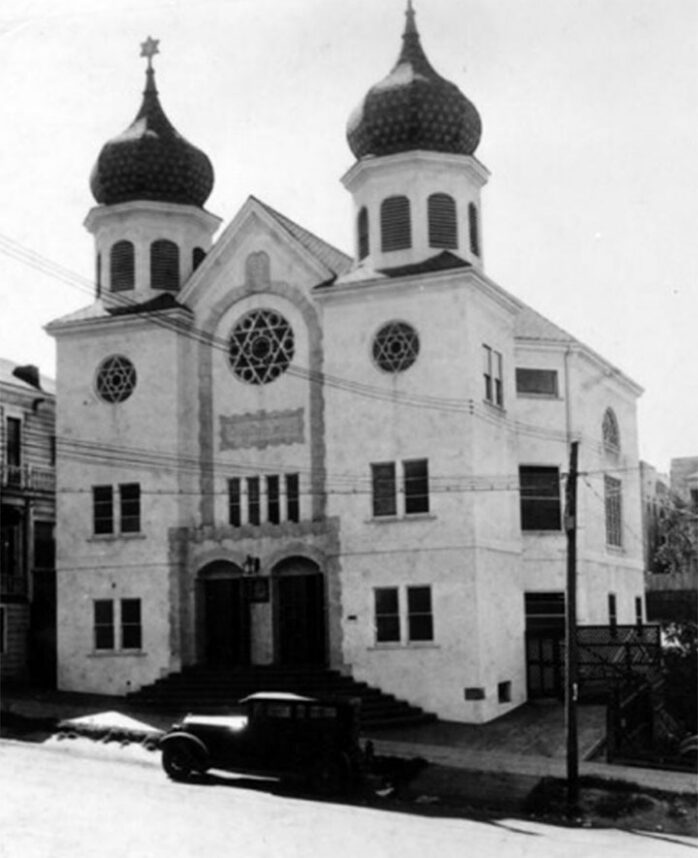
Chasidim quickly began to refer to the address simply as “Seven-Seventy.” Its iconic profile would become a symbol of the movement, and replicas would be designed across the globe.
Within its walls, the Sixth Rebbe organized countless impactful initiatives. During WWII, he secured visas for Jews seeking to escape the Holocaust. In 1947, he organized, through the support of the JDC, Chabad ritual slaughterers who were sent to Ireland to create a kosher meat production plant to feed refugees. Rabbi Schneerson not only helped feed countless survivors, he also helped them resettle and rebuild their lives.
On the educational front, in addition to initiating numerous Chabad educational institutions, behind the scenes, he helped arrange for the seminal 20th century theologian Rabbi Joseph B. Soloveitchik to become rosh yeshiva of Yeshiva University (the two had met years earlier in Berlin). In 1949, the Rebbe initiated what would later become an extensive network of Chabad educators on American college campuses by sending two (Shlomo Carlebach and Zalman Schachter-Shalomi) to Brandeis University.
While today most observers think of the Seventh, and last, Rebbe, Menachem Mendel Schneerson, when they admire Chabad’s work, the Sixth Rebbe’s ample contributions are themselves worthy of study.
As Eliezrie summarizes, “The Rebbe’s life spanned just 69 years. He lived through one of the most tumultuous and challenging periods in Jewish history. Born under tsarist rule in the town of Lubavitch, he endured the state-sponsored antisemitism of the Russian monarchy. As the forces of modernity shook the foundations of Jewish identity, he stood at the forefront of the struggle to retain traditional Jewish values, first standing at the side of his father [who served as Rebbe] and later as the lone soldier facing down Communism. After his expulsion from Russia, he undertook the integration of the mores of Hasidism into Western Europe. Escaping from the Nazi regime, he finally arrived in America, where he resolved to remake and rebuild Jewish life in the face of assimilation. In the postwar years, he expanded that agenda internationally to lay the foundation for a global Jewish renaissance.”
News reports noted that the violent incident last week occurred towards the end of “Yud Shvat,” a date in the Jewish calendar marking the anniversary of Rabbi Yosef Yitzchak Schneerson’s death in 1950, and the date when his son-in-law became his successor one year later. Though both remarkable leaders have passed, their powerful legacy continues to stand tall at 770 Eastern Parkway, undaunted as ever. As Chabad rabbi Mordechai Lightstone posted on X: “I think it’s very important to stress: The response to events like this, is ALWAYS to remain strong, proud, vigilant and unafraid. 770 is a center of light that illuminates the entire world. Thank G-d it will continue to do so, brighter, prouder, stronger.”
Rabbi Dr. Stuart Halpern is Senior Adviser to the Provost of Yeshiva University and Deputy Director of Y.U.’s Straus Center for Torah and Western Thought. His books include the newly released “Jewish Roots of American Liberty,” “The Promise of Liberty: A Passover Haggada,” “Esther in America,” “Gleanings: Reflections on Ruth” and “Proclaim Liberty Throughout the Land: The Hebrew Bible in the United States.”