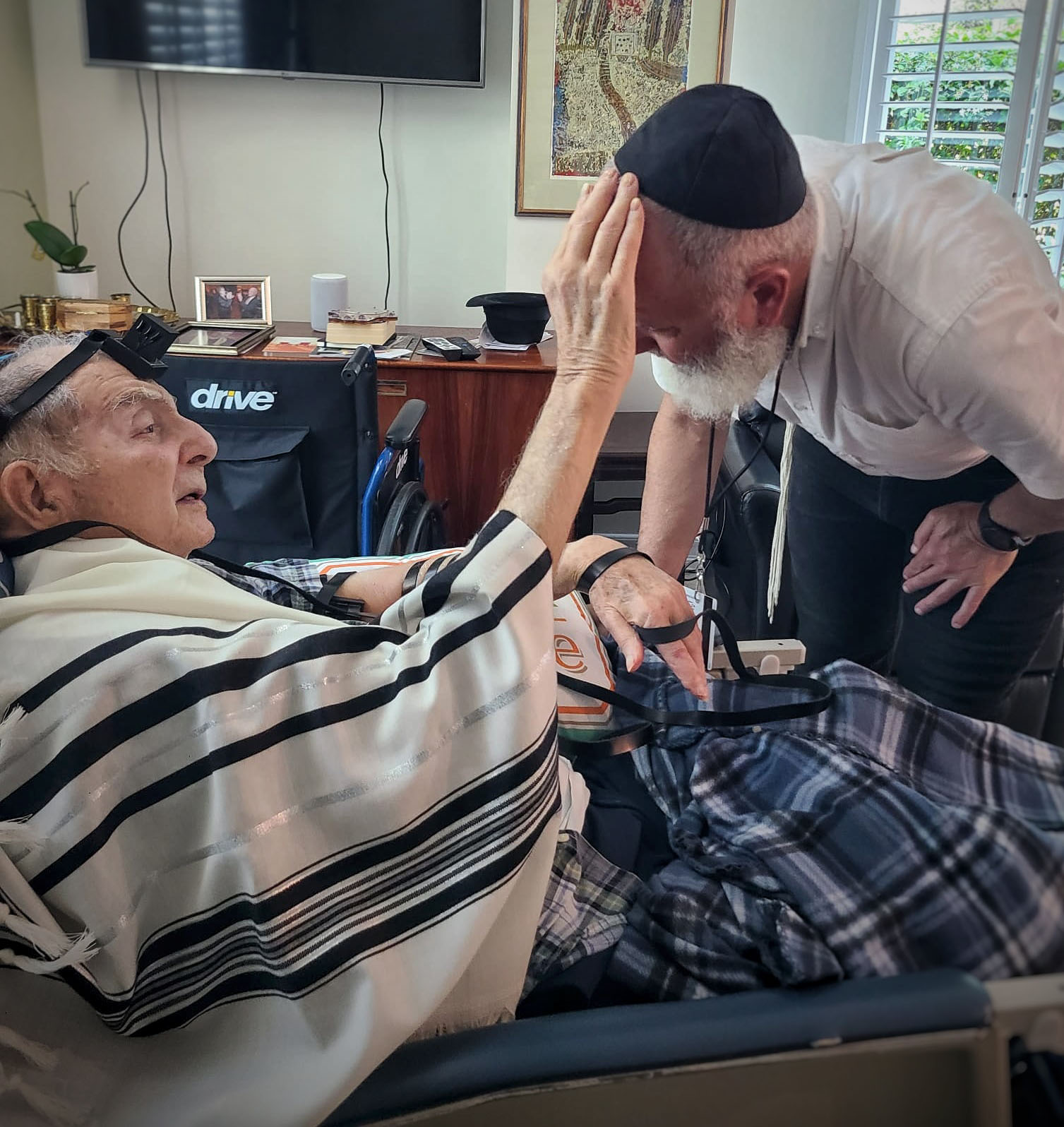
My father, Rabbi Gilbert Kollin, z״l, passed away on the 21st of Cheshvan—November 12, 2025. He was 91 years old and lived a long, meaningful life. In the days that followed, I found myself reflecting less on the loss itself and more on the unexpected shape of my grief. You see, when my dad was alive, our relationship was loving but transparently thin—present, yet somehow not fully formed. We cared for each other, but the deeper bond I imagined between a father and son never really materialized. For a long time, I thought that was just our story: a good man, a well-meaning child, but a connection that never quite jelled.
Only in my adult years did I begin to wonder why. Perhaps it was because I was so clearly my mother’s son, shaped by her temperament and emotional sensibility, which stood in quiet contrast to his. Or maybe he sensed the distance and, seeing no way across it, quietly stopped trying. It’s also possible that he did make attempts—perhaps small or awkward ones—that my recalcitrant teenage self dismissed or never recognized at all.
Only after his passing did something unexpected happen. Since becoming much more observant and taking on the responsibility of saying Kaddish every day, I’ve begun to sense a relationship with him that feels more real, more intimate, and more meaningful than anything we shared while he was alive. Feeling that connection grow through an act meant to elevate him led me to ask the question: Why be elevated at all? If he lived a life of doing good, shouldn’t he already be where he needs to be? Where, quite frankly, he deserves to be? The short answer, it turns out, is not exactly.
What I’ve learned is that in Judaism, the soul does not simply “arrive” at a station marked Olam Ha’Bah and stop there.
“Tzaddikim ein lahem menuchah lo ba’olam hazeh v’lo ba’olam haba”—“The righteous have no rest, not in this world nor in the next.”
(Berachos 64a)
The Ramban (Shaar HaGemul) and the Zohar (II:150b) echo this idea: the soul’s journey in the next world is one of unending ascent, each level revealing a deeper clarity and closeness to G-d than the one before. In the language of Chassidus, the Rebbe taught that closeness to the Infinite is itself infinite—there is no “top floor” in spirituality.
As the Rebbe put it:
“A Jew’s journey is always forward and always upward—ein sof l’mailah. There is no end to higher.”
So even a good person—even a very good person—isn’t “finished.” The soul’s nature is to seek more light, more understanding, more nearness.
But after a person passes away, they lose one thing: the ability to create new spiritual merit through their own deeds. Their growth continues, but the engine no longer produces new fuel. That’s, apparently, where my siblings and I come in.
The Talmud (Sanhedrin 104a) states:
“B’ra mezakeh abba”—
“A child brings merit to a parent.”
And the Zohar (III:70a) teaches that when a child performs a mitzvah in a parent’s merit, the soul of the parent is elevated to a place it could never reach on its own.
The Rebbe expands this idea with a beautiful framing:
“When you illuminate your own life, you illuminate theirs.
Your mitzvah becomes their aliyah.”
So yes—Kaddish isn’t only honoring my father; it is literally continuing him.
And this leads to a surprising truth: the relationship we rarely found in life is now emerging in a new form. My Kaddish doesn’t just connect us—it binds us in a shared spiritual movement. I’m helping him rise in ways he can no longer achieve on his own, giving him spiritual gifts he is powerless to give himself.
It’s strange and beautiful to realize that the closeness we never discovered in life has appeared now, in this quiet, daily act. Each Kaddish feels like a conversation across worlds—my offering and his response, not as a sudden rise but as accumulation. One more step added to the last. A bond taking shape not by leap, but by repetition.
Some relationships find their fullness in time. Ours is now taking shape beyond it.
In the end, the connection I longed for with my father didn’t vanish with him. It just changed form. And in that transformation, I discovered something I never expected: that love can grow even when one of us is no longer here, and that a father and son can meet—and lift each other up—in the space between a few ancient words.
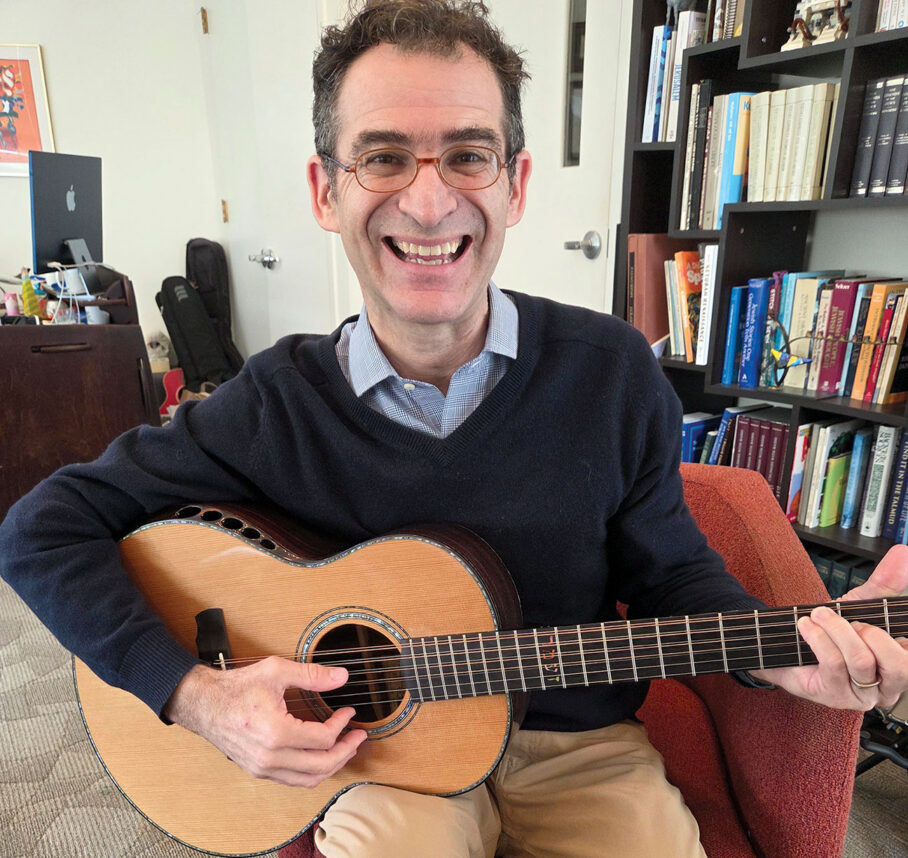
Daniel Kollin is the award-winning co-author of the science fiction “Unincorporated” novels and a general studies teacher in Oxnard, California.