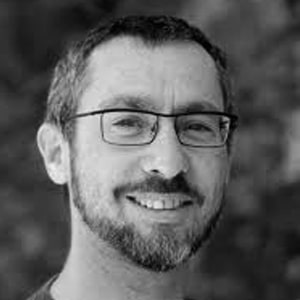
Maikel Nabil Sanad draws back the curtain on Egypt’s military
Jackson Diehl of the Washington Post meets the Egyptian blogger who maintains that the changes in his country have been purely cosmetic.
Nabil turned out to be right about where the Egyptian generals were headed. In March of last year, just weeks after the revolution, the activist posted an essay on his blogcontending that, contrary to the slogan shouted in Cairo’s Tahrir Square during the revolution, “the Army and the people were never one hand.” In deposing Mubarak, Nabil argued, the military was merely protecting its own interests — and seeking to preserve its preeminent position of power in Egypt.
A nuclear Iran is too much to risk
It is dangerous to believe that Iran is a permanently rational actor who can be trusted with nuclear weapons, writes Alan J. Kuperman in the Los Angeles Times.
The problem is that Iran does not always act quite so rationally. Rarely, but repeatedly over the years, it has launched attacks that seemed to invite massive retaliation, for apparently little gain. Iran’s targets have included the U.S. Embassy and Marine barracks in Lebanon in 1983, the Israeli Embassy and a Jewish community center in Argentina in the early 1990s, and the U.S. military’s Khobar Towers inSaudi Arabia in 1996. Just last year, the Iranians were behind a botched scheme to assassinate the Saudi ambassador in the United States.
In an open letter in Jewish Ideas Daily, Dr. Yoel Finkelman explains his decision to resign as a writer for Peter Beinart’s Daily Beast blog Open Zion.
I wanted serious discussion of how, without sacrificing its vital security interests, Israel can help empower moderate Palestinian leadership, foster the creation of a stable and trustworthy Palestinian state—and, crucially, diminish Palestinian suffering until such time. Instead, I got morally confused debates over whether Israel is or is not an apartheid state. I wanted insight into the complexities of how and under what circumstances Israel might relinquish more territory to Palestinian control now that Israel’s withdrawal from Gaza has brought on a Hamas takeover. Instead, I hear far too much self-righteous moralizing about Zionism’s culpability for the evil of the occupation. I wanted serious consideration of how Zionist proponents of territorial compromise can minimize conflict and violence between the State and the settler population that stands to lose so much. Instead, I hear cavalier posturing about Jews boycotting other Jews.
Perry-tales in ‘Foreign Policy’
Writing in the Times of Israel, veteran Israeli journalist Ehud Yaari takes apart Mark Perry’s claim that Israel is planning to use Azerbaijan’s airbases in a strike on Iran.
Elementary, Mr. Perry: How would the Israeli Air Force reach those airbases in Azerbaijan? Are the Israelis going to get a permit from Mr. Erdogan to fly over Turkey on their way to hit Iran? Does it make any sense? Or, alternatively, does Perry want us to believe that the Israelis will choose to bypass Turkey on their secret mission via the longer route over Greece and Bulgaria, thus becoming fully exposed to Russian radar in the Black Sea? Take a look at the map, Mr. Perry — there is no other way for the Israelis to get to Azerbaijan!
The Muslim Brotherhood’s Presidential Gambit
Marc Lynch of Foreign Policy looks at the causes – and consequences – of the decision by Egypt’s Islamist party to field a candidate in the presidential election.
Advancing a candidate, while in line with this newly found willingness to flex its muscles, nevertheless creates a no-win situation for the Brotherhood. Backing an acceptable but non-Brotherhood Presidential candidate would have protected their core interests without triggering fear in others. If a Brotherhood candidate wins, then the movement would control the Parliament, the Constitutional Assembly, and the Presidency. It would therefore stand alone in the face of the military, and would bear full responsibility for whatever happened in Egypt’s economy, politics and society in the coming period.