fbpx

March 18, 2026

The First Witnesses: How Two Men Escaped Chelmno Death Camp and Told the World

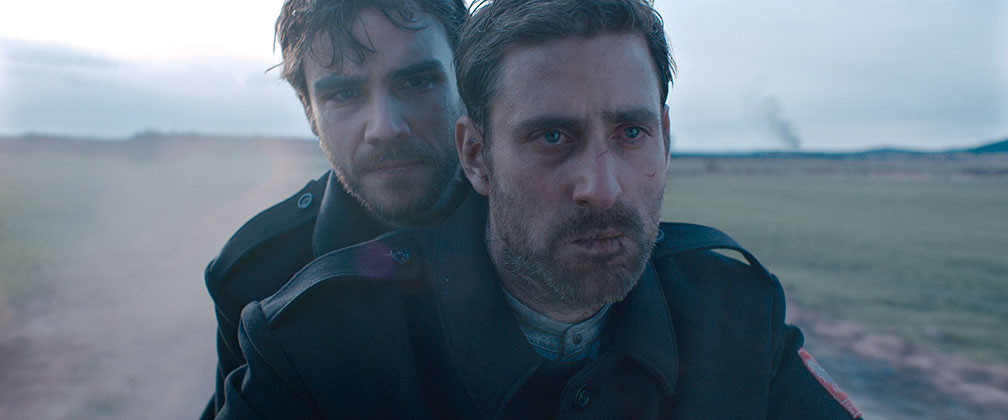
In one of the most shocking scenes in “The World Will Tremble” (currently streaming on Amazon Prime) a group of men stands inside a ditch, digging. They have been ordered to bury Jews murdered by the Nazis in a gas van. Helplessly, they remove the bodies from the truck and place them into the mass grave.

Then one of them screams. He recognizes his daughter.

It is almost impossible to grasp the horror of that moment. But it doesn’t end there. He discovers his other child’s body, and then his wife’s. They are all dead.

In desperation, he begs the Nazis standing above the ditch to kill him as well. They refuse. He is still strong, and they need him to keep working. They can kill him later.

This broken man was Mordechai (Michael) Podchlebnik, and he would survive to tell the story of the first Nazi death camp, Chelmno. He would recount the atrocities he had witnessed at the Chelmno trials of the SS officers in 1945, and he would recount them again in 1961 at the Eichmann trial.

Set in January 1942, “The World Will Tremble” tells the story of Podchlebnik and Solomon Wiener, who witnessed the mass murder of Jews at the first Nazi death camp. Realizing the world must learn the truth, the two men made a daring escape while being transported with other forced laborers to bury victims killed in trucks re-equipped as mobile gas chambers, or gas vans.

Seizing a moment when fellow prisoners distract the guards, they cut through the side of the truck and leap to freedom, beginning a desperate journey to warn others about the Nazis’ secret plan to annihilate European Jewry.

After reaching the nearby Grabów ghetto, they recounted their story to Rabbi Schulman, who initially struggled to grasp the scale of what Wiener was telling him but gradually came to accept the truth of his account. As Wiener spoke, the rabbi wrote down his testimony, which would become one of the first eyewitness accounts of the Holocaust to reach the outside world.

Lior Geller, “The World Will Tremble”’s director, told The Journal he was surprised to discover that no major film had previously been made about the two men. He only came across the story while researching his own family history after his aunt — the last Holocaust survivor in his family — passed away about 13 years ago. Wanting to learn more about his family and what they had gone through during the war, he began looking into the history of the Jewish community from which they came. “She was separated from her parents at a young age. They believed she had died, but two weeks after the war ended, they returned to their town in Romania and were reunited with her. My father was born later and didn’t know much about what his sister went through, because she didn’t like to talk about it.”
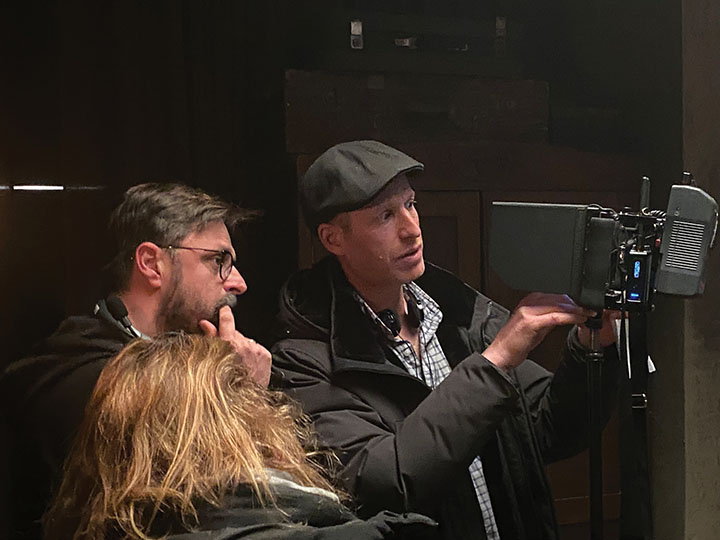
While researching his family’s past, Geller came across the story of the Chelmno death camp and became deeply absorbed in it. What began as a personal search turned into an 11-year investigation into the story of the two men who escaped and helped reveal to the world what the Nazis were doing to the Jews.

Geller said that tracing Podchlebnik’s family proved to be one of the most difficult parts of the research, largely because the family had changed their name after the war. Podchlebnik’s sons had changed their last name to Peled, which made the connection almost impossible to track down.

“There was no obvious link to Podchlebnik,” Geller said. “It took a lot of work — searching, contacting people on Facebook, even hiring a researcher. Eventually I reached out to many people with the name Peled until one of them said, ‘Yes, that’s my father.’ That’s how I finally found his two sons.”

Podchlebnik remarried after the war. His eldest son, Jacob, who was born in a displaced persons camp in Frankfurt before the family made Aliyah to Israel, knew a great deal about his father’s story and helped Geller with the research for the film. Yona, the younger son however, knew very little — including the fact that his father had once had a wife and two young children who were murdered by the Nazis.

Geller said one reason Chelmno remains far less known than other Nazi death camps is the lack of surviving witnesses. Although the camp played a crucial role in the history of the Holocaust — Jews were murdered there months before gas chambers were built at Auschwitz — very few people survived to tell what happened. Out of the hundreds of thousands sent there between 1941 and 1945, only four men survived it. “They estimate that there were 220,000 people who were murdered there, but this is the lower end of the estimate. I believe that the number is more likely to be 320,000 people,” he said. “The Nazis destroyed the structures in the camp in January 1945 because they didn’t want to leave any evidence to what had taken place there.”

With the help of Podchlebnik’s son Jacob, Geller was able to put together the story and write the script. He even invited him to the film set in Bulgaria to meet with the man who would portray his father, actor Jeremy Neumark Jones, but just before he was scheduled to arrive on set, Jacob passed away.

Geller said he felt bad that Jacob didn’t get to see the film, but he is planning to watch it along with Yona once the film premieres in Israel on Holocaust Memorial Day, April 14.

As for how the testimony of the two men made it to London, Geller said it was another fascinating story—one he didn’t include in the movie because it would have made it too long. Their account took several months to make its way out. Movement at the time was extremely difficult, so the document had to be smuggled. It was ultimately carried with the help of Swedish diplomats who managed to reach London, where they connected with the Jewish underground leadership there. One of the leaders took it upon himself to expose the information and brought the testimony to the BBC and the press. In June 1942, the first reports based on that testimony were published.

“The Daily Telegraph and The Guardian were the first newspapers to report the story,” said Geller.

It was later published also by The New York Times, Chicago Tribune and The Los Angeles Times.

The Israeli director, who lives in Thousand Oaks, is already looking ahead to several new projects. One of them is a series about the Maccabees, and a political thriller set in Congo about the takeover of the U.S. consulate, as well as a planned miniseries about the Treblinka uprising.

The First Witnesses: How Two Men Escaped Chelmno Death Camp and Told the World Read More »
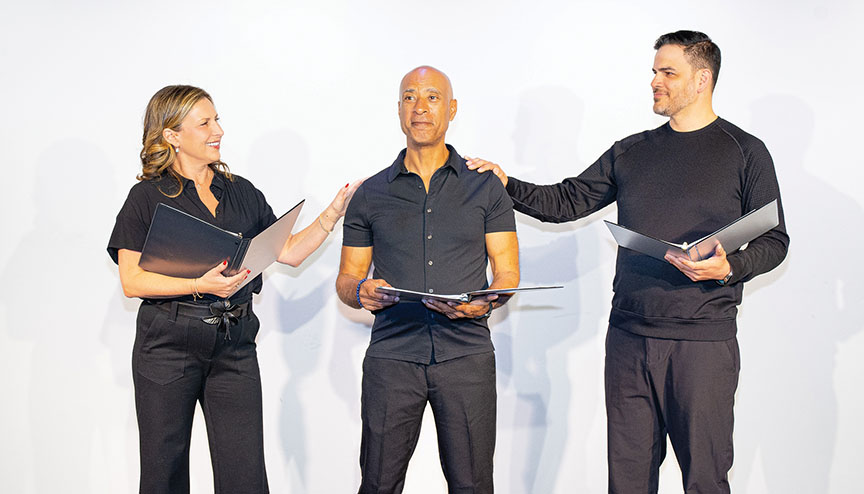
‘On Being Jewish Now’ Comes to The Braid

The Braid is known for bringing Jewish voices to the stage via their salon shows. The Jewish theater company has adapted singular stories from essays, short stories, blogs and excerpts from novels and memoirs. They’ve even adapted an opinion piece from The New York Times.

Their latest endeavor – which, per usual, is timely – is an adaptation of stories from Zibby Owens’ bestselling anthology “On Being Jewish Now.” These essays offer a window into what American Jews have been experiencing in a post-Oct. 7, 2023 world.

“This is the first time in The Braid’s 18-year history that we’ve taken a book of essays and used stories from that book as the basis for a Salon show,” The Braid’s founder and artistic director Ronda Spinak told The Journal. “In these times of confusion, division, fear and a deep desire to live with Jewish joy and pride, despite the bad news experienced every single day, ‘On Being Jewish Now’ is particularly enticing to share at The Braid.”

“On Being Jewish Now” – the book and the show – bring real, personal stories of humor, heartbreak and hope to life.

“When I first thought of the idea and started working on the project, I just knew it would be the most important thing I ever did; I could feel it in my bones,” Owens told The Journal. One of the reasons the book has been so successful, she said, is because it has “served as a touchstone for a community in shock, in pain and, yet, indestructible.”

The book, she explained, has brought people together in person all over the country.

Owens hopes the show will bring people together in the same way the book has. “To make the members of the community feel seen, help others understand the Jewish experience and also, make people laugh,” she said.

Along with Owens’ powerful and vulnerable self-reflection about the need to stand up and make one’s voice heard, the show includes gripping personal revelations by author Joanna Rakoff (“My Salinger Year”) when she visits a hidden underground synagogue from pre-Inquisition Spain; actor Mark Feuerstein (“Royal Pains”) who shares a whimsical tale of being a 50-year-old man who breakdances at his twins’ b’nai mitzvah; and Rabbi Sharon Brous who reveals the story of a trip in the emotional wake of Oct. 7.

There are also stories by novelist and Boston Book Festival co-chair Jeanne Blasberg, writer/journalist David Christopher Kaufman, award-winning journalist Keren Blankfeld, children’s book author Courtney Sheinmel, author Rebecca Raphael, author and creative director Alison Hammer, film and TV writer/director Jeremy Garelick and novelist Elizabeth L. Silver.

Spinak said choosing which stories to include took months of reflection and conversation. “Our team of literary experts at The Braid includes Lisa Kenner Grissom and Lisa Pearl Rosenbaum,” she said. “Each of us read the book many, many, many times; we chose not only our favorite stories but ones that had heart and humor.”

The show, directed by The Braid’s producing director, Susan Morgenstern, features veteran The Braid actors Abbe Meryl Feder, Karen Macarah, Benmio McCrea and A.J. Meijer. “I think audiences will strongly identify with various stories,” Morgenstern told The Journal. “To offer a show where everyone can see themselves represented and recognize an author’s journey as similar to their own is always impactful.” She added, “I think even non-Jews who attend will relate to the stories, and hopefully, will gain understanding of how it feels to be Jewish at this particular time in history.”

When asked what “being Jewish now” means to them, Morgenstern said, “While my work with The Braid over the last 14 years has steadily increased my affiliation to my Jewish culture and religion, Oct. 7 certainly deepened my resolve to acknowledge and celebrate being Jewish. I’m not so quiet about it anymore. I wear my Star of David more often — and not just at Jewish events.”

For Owens, it means “speaking up, creatively tackling the current problems, giving back and inspiring the next generation. … For me, being Jewish now means holding the uncertainty of the future while being proud of my Jewish soul and speaking out in the best way I know how … through telling our Jewish stories in America today,” Spinak said. “I’m grateful to Zibby Owens for trusting me and The Braid to share these beautiful personal stories on stage. … Her trust inspires me; and I feel this show is exactly what our community needs right now.”

“On Being Jewish Now” running at the Braid in Los Angeles March 22-April 23 , and performances in the Bay Area (April 11 and 12), as well as live on Zoom (April 16 and 19). For tickets and more information, the-braid.org/beingjewishnow

‘On Being Jewish Now’ Comes to The Braid Read More »

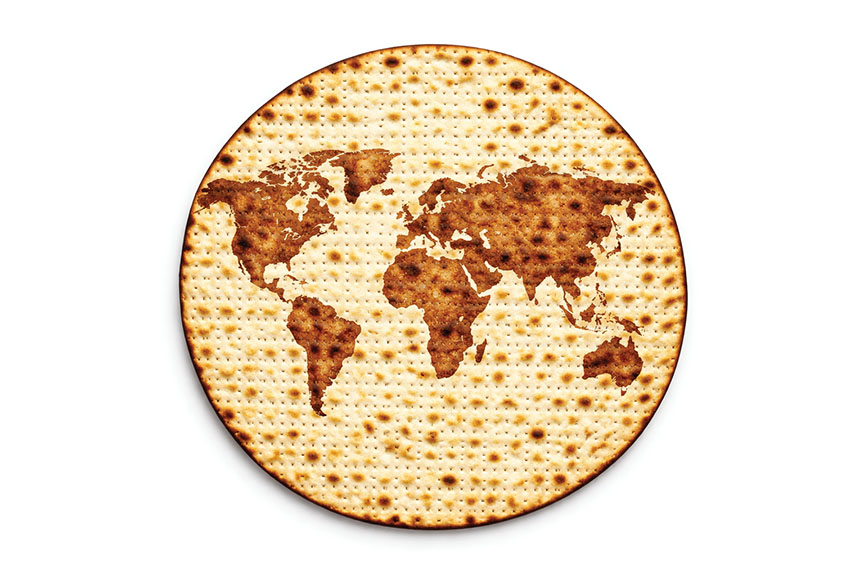
AJU Event to Explore ‘Passover Around the World’

For Jews everywhere, Passover is rooted in the same foundational story: the Exodus from Egypt. Yet the way the holiday is celebrated — from the foods on the seder plate to the rituals performed around the table — varies widely across Jewish communities around the globe.

An upcoming online event organized by American Jewish University (AJU) will explore those diverse traditions and the ways they reflect the rich cultural tapestry of Jewish life. Titled “Many Traditions, One Exodus: Passover Around the World,” the 90-minute program on March 29 will be led by Sarah Bunin Benor, a professor of contemporary Jewish studies at Hebrew Union College (HUC) and founder of the HUC Jewish Language Project.

The online lecture promises what organizers describe as “a warm and engaging exploration of how Jewish communities around the world bring the seder to life.” Drawing on materials from the Jewish Language Project’s website, jewishlanguages.org/passover, Benor will highlight traditions preserved across centuries of migration and cultural exchange.

“These resources show the centrality of Passover, one of Judaism’s holiest holidays, to Jewish culture and tradition, and display how the preservation of customs has held across so many widely dispersed languages and cultures,” the Jewish Language Project website, which even includes instructions on how to create an afikomen escape room, explains.

During the program, Benor will guide participants through a variety of global Passover practices, illustrating how communities have adapted the ritual while maintaining its core themes.

“I’ll be sharing haroset recipes from around the world,” Benor told The Journal in a recent phone interview.

The sweet mixture of fruit, nuts and wine — meant to symbolize the mortar used by enslaved Israelites in Egypt — varies widely depending on local ingredients and culinary traditions. In some Sephardic communities it includes dates and sesame seeds, while Ashkenazi families often incorporate apples, cinnamon and walnuts.

Beyond food, Benor said the seder itself takes on different forms in different communities, whether via afikomen rituals, the arrangement of ritual items on the seder plate or what Haggadah is used. Passover seders and how they’re performed vary around the world, she said.

“I’ll be talking about how this plays out in different Jewish communities and how we as American Jews can infuse our seders with this content as a way of feeling more connected with our people,” Benor said.

One example she plans to highlight is a Moroccan seder ritual known as “Bibhilu.” During the ritual, the leader lifts the seder plate — adorned with the traditional symbolic foods — and walks around the table, waving it above the heads of participants. “When my father did this, each of us wondered whether he would simply wave the plate above our heads or knock us over the head with it,” Rabbi Daniel Bouskila, director of the Sephardic Educational Center, recalled in a 2005 essay for The Journal.

The unique ritual traveled along with Moroccan Jews as they migrated to other parts of the world. In Brazil, for example, where a sizable Moroccan Jewish community settled, Bibhilu is still performed around many seder tables.

Other variations appear in the very structure of the seder itself. The arrangement of items on the seder plate — and sometimes the plate itself — differs from community to community.

“Foods used for different symbolic foods varied by community,” Benor said.

In Yemenite Jewish tradition, for instance, the entire table can function as the seder plate, with the ritual foods arranged across the table rather than on a single platter. In Libya, families often use a woven basket tray known as a “sabadj” to hold the ceremonial items.

Even the order of the Four Questions can differ slightly in Yemenite tradition, reflecting the diversity that has developed within the shared framework of the Passover narrative.

The origins of the program date back to the early months of the COVID-19 pandemic. In 2020, the Jewish Language Project, an HUC initiative that aims to highlight the diversity of the Jewish people, had planned an in-person event titled “Passover Around the World.” As lockdowns spread and families began planning seders that incorporated Zoom, the program was quickly adapted into an online format.

The virtual event proved timely, offering participants new ways to enrich their holiday celebrations during a moment when many were physically separated from loved ones.

Now, six years later, Benor will revisit and expand upon that material for the AJU audience, sharing stories, visuals and traditions from Jewish communities spanning multiple continents.

By incorporating global customs into their own celebrations — whether through a new recipe, ritual, song or story — families can experience the seder as both a personal tradition and part of a much larger, shared Jewish journey.

“The seder is a liturgical event,” she said, “but it allows room for song and conversation in a community’s local language.”

As Benor sees it, exploring these diverse traditions offers a powerful reminder: while Jewish communities may celebrate Passover in different ways, they remain united by the same story of liberation.

“Passover Around the Table” takes place on March 29 at 5 p.m., live on Zoom. For more information or to register for the event, visit aju.edu/events/many-traditions-one-exodus-passover-around-world

AJU Event to Explore ‘Passover Around the World’ Read More »

Love Across Enemy Lines: The Story of an IDF Soldier and an Iranian Woman

Dean Golan Cohen never expected that a casual night out at a Santa Monica bar would lead him to the woman he would one day marry. Cohen, 30, an Israeli who moved to Los Angeles in 2018, met his Iranian fiancée at a popular student bar near UCLA in 2019. They exchanged contact information but lost touch for a few years.

It wasn’t until 2021 that they reconnected. “I was in Israel,” Cohen recalled. “She saw a photo I posted from a Persian restaurant in Tel Aviv and commented on it. That started the conversation again. I told her, ‘When I come back to Los Angeles, we should go out.”

Today the couple is engaged and planning to marry — a union that bridges countries, cultures and religions. Cohen is Israeli and Jewish. His fiancée, “Azadeh” — a pseudonym used to protect relatives still living in Iran — was born in the historic city of Isfahan.

Although she was born in a country widely regarded as Muslim, Azadeh said she doesn’t consider herself Muslim — a distinction she believes is widely misunderstood outside Iran. While the country is officially an Islamic republic, she said many Iranians privately identify as secular or nonreligious, like her.

“If you went door-to-door in Iran, many would say they don’t really consider themselves Muslim.” That’s part of the reason this relationship with a Jewish man wasn’t a taboo, as far as Azadeh was concerned. “He was the first Jew I’ve dated,” she said. “Religion has never been important to me. I was excited and curious to ask him about his culture and traditions.”

Azadeh moved to Los Angeles in 2013 at the age of 18. She said leaving Iran was not her choice, but rather the result of family pressure. “My mother’s siblings had already moved to the United States before the revolution,” she said. “My mom used to travel back and forth but never wanted to leave Iran. My aunt kept pushing her to bring me here. So I went to the embassy for an interview, and I received my visa to the USA.” After her mother brought her to Los Angeles, she returned to Iran where her son still lives. Azadeh hadn’t seen them in 13 years; they only occasionally connected on FaceTime.

Cohen served in the elite Golani Brigade, completing his service in 2016. He moved to Los Angeles, where he started studying nutrition science and food engineering. But when the war broke out after Oct. 7, 2023, he returned to Israel to join his reserve unit.

During the past two years he lost several close friends in the war in Gaza, including his commander, whom he describes as a father figure. Raised by a single mother with an absent father, Cohen said the loss hit him especially hard. “When I wanted to study in the United States, he pushed me to do it. When he died, it crushed me. I couldn’t function for a long time.”

Although they were both raised in enemy countries with different backgrounds, they quickly discovered they had a lot in common. Both say that Israelis and Iranians are very similar in the way they relate to their countries. “During war,” Cohen said, “you always see something unusual. While most people are fleeing, Israelis are trying to go back to Israel. And Iranians are the same — they don’t flee, they stay and want to see the regime fall.”  Azadeh agreed. “If not for my mother, I would still be there. Nowadays, more than ever, I want to be there and witness these things.”

A couple of years ago, Cohen joined Israel-is, an advocacy organization founded in 2017 by a group of young Israeli officers, veterans of elite IDF units. After finishing their service and traveling the world on the traditional post-service trips, they often faced harsh reactions and misconceptions from other travelers simply because they were Israelis. Cohen experienced the same and was eager to devote his time to speaking on college campuses.

It doesn’t always go smoothly. Sometimes, he said, some people simply don’t want to listen or engage in dialogue. “I just came back from Oklahoma and Arkansas, where we spoke with a group of students. On one campus tour, someone told a colleague of mine, who survived Oct. 7, ‘You should have died that day,’” he recalled.

Experiences like this have only strengthened Cohen’s resolve. Although hearing such things is upsetting, he explained that what matters is how you respond — and that responding thoughtfully can actually work in your favor. “We want to use these situations to our advantage,” he said. “When people wish us harm, others who are watching, see who they want to align with. They’re drawn to the side that responds with reason.”

Cohen sees his advocacy as an extension of his military service. “It’s like serving your country on the battlefield, but now you serve it on college campuses and wherever we need to repair Israel’s image,” he said. Through Israel-is, he focuses on personal storytelling as the strongest tool to challenge misconceptions about Israel. Meeting real people, he said, makes it harder for others to hate. During the past two years, he had visited no fewer than 20 campuses across the United States.

When the recent crisis in Iran began, Cohen launched a new initiative. He helped organize a campus tour across the U.S., designed to engage students in dialogue about life under the Iranian regime.

“On the West Coast, we’re opening a Middle Eastern living room on campus, with a Persian rug, tea, sweets and seating,” he said. “We bring together an Israeli and an Iranian to share their experiences, start dialogue. We want to show how this regime in Iran shaped our lives and at the same time how it shaped theirs, because many people are unaware or are uneducated and we want to give them those personal voices.”

Cohen asked The Journal not to show his face in any photos. He explained that the reasons are the very real legal and security risks faced by former IDF soldiers abroad.

Pro-Palestinian organizations and legal groups in several countries have targeted Israeli military personnel with complaints and pursued legal actions through international bodies such as the International Criminal Court and domestic courts — efforts that in some cases have led to arrest warrants or summonses against individuals with alleged ties to the conflict.

“There are organizations that track Israeli soldiers living abroad,” Cohen said. “They follow you online, and if they see you traveling, they can file arrest warrants or complaints to try to have you detained.” Because of these threats, Cohen prefers to maintain a level of anonymity while continuing his advocacy work.

Cohen and Azadeh look toward the future after the war and look forward to visiting each other’s homelands, walking through the streets of Tel Aviv and Tehran together, and finally meeting the families they’ve only spoken about until now.

“Next year in Tehran,” he said with a smile, putting his own twist on the traditional Haggadah phrase, “Next year in Jerusalem.”

Love Across Enemy Lines: The Story of an IDF Soldier and an Iranian Woman Read More »

Mac & Cheese Kugel Mash-Ups

March is National Noodle Month. It’s the perfect time to celebrate all things carb-y and comforting, especially with Passover fast approaching.

Want the perfect comfort mash-up? Make a kugel-y mac and cheese. These two creative twists are guaranteed to entertain your taste buds.

“I love a classic noodle kugel (baked pasta casserole) packed with sugar, rich dairy, dried fruit, and over-the-top add-ins,” Faith Kramer, author of “52 Shabbats: Friday Night Dinners Inspired by a Global Jewish Kitchen,” told The Journal. “However, when I want real comfort, I want something with a kick that I can eat as much as I want without worrying about cholesterol.”

Kramer’s vegan Southwest mac and cheese kugel is an American riff on the classic Eastern European brunch or dessert dish.

“Thanks to chiles and nondairy ingredients, it gives me the spice I crave and comfort without guilt,” she said. “It’s rich and creamy and is topped with crunchy tortilla chips.”

A meal by itself, this recipe is parve, so it also makes a good side dish for grilled or roasted chicken or meats. You can also replace the non-dairy ingredients with dairy versions, if desired.

Southwest Mac and Cheese Kugel

Serves 4-6

8 ounces noodles or bow-tie pasta

4 Tbsp oil, divided, plus extra for pan

1 cup chopped onion

1 Tbsp minced garlic

3 Tbsp flour

1 cup unflavored and unsweetened nondairy milk

14.5 ounce can of diced tomatoes with liquid

1/2 tsp salt

1/4 tsp ground black pepper

1/4 tsp cayenne

4-ounce can diced green chiles, drained

2 1/2 cups vegan shredded cheese, divided (see note)

1/4 tsp paprika

1 cup broken corn tortilla chips (broken into 1/2-inch pieces)

2-3 Tbsp chopped cilantro or parsley

Optional: salsa

Prepare noodles according to package directions until cooked but firm to the bite. Drain. Grease an 8-by-8-inch baking pan. Heat oven to 350°F.

In a medium saucepan, heat 2 tablespoons of oil over medium high heat. Sauté onions until softened. Add garlic. Sauté until golden. Remove from the pan and set aside. Do not clean the pan. Reduce heat to medium low. Add remaining oil. Stir in flour, stirring until it bubbles. (Do not brown.)

Slowly whisk in non-dairy milk. Once well combined, add tomatoes with their juices. Stir well. Simmer uncovered, stirring often (lower heat if needed) until thickened and reduced by about half. Stir in sautéed onions and garlic, salt, pepper, cayenne, and chiles. Stir in 1 cup shreds until mostly melted. Taste and adjust seasonings.

Mix with drained noodles in a large bowl with additional 1 cup shreds. Pour into the baking pan. Sprinkle top with 1/2 cup shreds and paprika. Bake for 20 minutes. Top with chips. Return to the oven for 15-25 minutes, until baked through and firm to the touch. Let rest 5-10 minutes before garnishing with cilantro and served with salsa, if using.

Notes: Use commercially shredded cheddar-style vegan cheese or a cheese mix which includes cheddar. Look for one that specifies it melts well. I used Daiya Classic Blend.

Want more or less heat? Reduce or increase cayenne pepper and green chiles to taste.


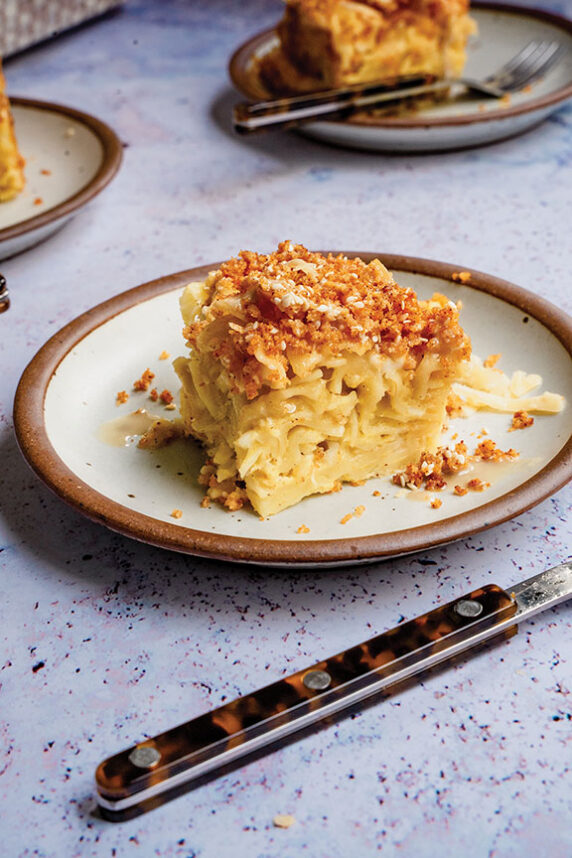
“My favorite kugel is one worthy of being a main dish,” Micah Siva, founder of Nosh with Micah and author of “NOSH,” told the Journal. “This tahini mac and cheese kugel [is] packed with smoked gouda and crispy tahini [with a ] breadcrumb topping.”

She added, “Serve it warm or at room temperature, this is not your average kugel.”

Tahini Mac and Cheese Noodle Kugel

Serves: 8

On the table in … 1 hour 20 minutes

For the kugel:

1 pound wide egg noodles

5 large eggs

2 cups cottage cheese

1/3 cup tahini

1½ cups (12 oz) shredded mild cheddar cheese

2 cups (16 oz) shredded smoked gouda

¼ tsp ground nutmeg

For the Topping:

¾ cup panko breadcrumbs

2 Tbsp sesame seeds

2 Tbsp tahini

¼ cup unsalted butter, melted

1 tsp garlic powder

1 tsp smoked paprika

¼ tsp sea salt

Preheat the oven to 350°F. Generously grease a 9-by-13-inch baking dish with olive oil or cooking spray.

Make the kugel:

Cook the egg noodles according to the package directions until al dente, 6 to 7 minutes. Drain and set aside. Let cool slightly.

In a large bowl, combine the eggs, cottage cheese, tahini, Cheddar cheese, smoked Gouda, and nutmeg. Add the cooled noodles to the cheese mixture and mix until combined. Transfer to the greased baking dish.

Make the topping:

In a medium bowl, combine the panko breadcrumbs, sesame seeds, tahini, melted butter, garlic powder, smoked paprika, and sea salt and mix well.

Top the noodle mixture with the breadcrumb mixture and bake for 40 to 50 minutes, or until golden.

Remove from the oven and let cool slightly before slicing.

Notes: Store leftover kugel in airtight containers in the fridge for up to 5 days. Wrap cooked kugel in plastic wrap and foil and freeze for up to 3 months. Reheat in the oven at 350°F until warmed through.

I like to drizzle more tahini on top of my kugel when I eat it as leftovers for added moisture.

Mac & Cheese Kugel Mash-Ups Read More »

Golden Shards of Almond Croquant

The oil embargo of 1973 and the global economic recession that followed had a direct impact on my family in Sydney, Australia. Mortgage rates skyrocketed and my father had to pivot from buying land and building houses to retailing “schmattes” (the Yiddish word for rags).

The close-knit world of the schmatta business was dominated by Ashkenazi Jews (many were Holocaust survivors). My Uncle Anthony was born into the business — his English emigrant father was a ladies clothing manufacturer and Anthony had his own factory at the age of 20. He very kindly advised my father to sell ladies clothing at the markets. He put his money where his mouth was, giving my father inventory to sell and sending invoices to “Hara Fashions” (if you speak Hebrew, you’ll get the joke).

Many Sunday mornings of my childhood were spent on the long drive to the southwestern suburb of Liverpool. Once there, my father would build a huge stall from interlocking pipes, with a canvas cover to shield the clothes and the customers from the very hot sun. Thank goodness, my parents sold a lot of dresses.

My brother Rafi and I loved the festive atmosphere of the Liverpool market. There was music, food and crowds of happy shoppers and vendors selling trendy t-shirts, jeans, flip flops, toys and home wares. I particularly remember these four loud, plump Italian mamas. They ran a very popular stall with trays and trays of toffee studded with almonds, cashews and peanuts.

This week, Rachel decided to make an Italian almond toffee bark to share with you, dear reader. It was wonderfully crunchy, not too sweet and subtly flavored with a hint of orange. And it transported me to those sweet Sundays at the market.

—Sharon

My mother made a spectacular sesame brittle for special occasions and Jewish holidays, especially Passover. She would stand over the stove melting sugar in a saucepan until it turned the perfect shade of amber and then she would quickly stir in the sesame seeds. Depending on her mood, she would sometimes add roasted almonds to the sesame. Then she would pour the hot mixture onto a tray and spread it thin. Within minutes, we had a crunchy sweet treat. It was so irresistible that it was impossible to stop nibbling!

At the time, I didn’t realize that this very simple candy belonged to a much larger Mediterranean story.

Long before refined sugar became widely available, Arab confectioners were masters at cooking honey with nuts, sesame seeds and fragrant ingredients like orange blossom water. These techniques traveled widely and helped shape many of the desserts we still see around the Mediterranean today, from Morocco to Spain, Italy to Greece.

Sicilian almond brittle, known as croccante or cubbàita, is thought to come from sweets introduced during the centuries of Arab rule.

Morocco has always had a deep connection to almonds, where they have grown for centuries and where they are central to many festive foods. Almond pastries and mazapan are staples of Moroccan celebrations, so it’s not surprising that crunchy almond sweets developed alongside them.

Nuts and honey traditionally symbolize abundance and sweetness, making these treats especially fitting for festive occasions.

If you travel around the Mediterranean, you’ll find close cousins of the brittle my mother made. In Greece, there is sesame and honey pasteli. In Italy, almond croquant appears at festivals and holiday markets. Spain has almond sweets related to turrón. In Georgia, there is honey-nut gozinaki. Iranians have a nut toffee known as sohan asali.

Inspired by the brittle my mother used to prepare for our holidays, I decided to make my own homemade version of the almond croquant scented with orange zest that I had tasted in Italy. Italians often add the zest of an orange to their brittle at Christmas, and the flavor is subtle but unmistakable.

I caramelized sugar the way my mother did, stirred in toasted almonds and added orange zest. I spread it onto a cookie sheet and pressed it between two parchment sheets, then used a rolling pin to flatten it out. Once it cooled and hardened, I broke it into uneven shards. The resulting candy was delicious, the almonds rich and nutty, the caramel deep and slightly bitter, and the orange lifting everything with a bright citrus note. My family finished most of it on Friday night.

It’s funny how a candy made from just a few ingredients can connect so many places. What started as my mother’s sesame brittle turned into something closer to an Italian croquant, but the roots of both stretch across the Mediterranean. Different nuts, different flavors, but the same simple pleasure.

Make sure to make a batch for your Pesach table.

—Rachel

Almond Croquant

3 cups raw almonds

2 cups granulated sugar

Zest of 1 large orange

Olive oil, to brush on parchment paper

Roast almonds at 350°F for 10 to 12 minutes, shaking them halfway through.

In a heavy saucepan, heat the sugar over medium heat. When the sugar has completely melted and is a light amber color, remove from the heat. Add the roasted almonds and orange zest, using a rubber spoon to coat well.

Working quickly, pour the toffee mixture onto the oiled parchment paper. Cover the toffee with another sheet of parchment. Then use a rolling pin to flatten the toffee as much as possible before the sugar hardens.

Allow to cool, then break hardened toffee into pieces and enjoy.

Note:

Melted sugar is extremely hot. Work quickly as it hardens fast. At room temperature, stored in an airtight container, it will stay fresh and crisp for about 1 to 2 weeks.


Can you believe there are people who don’t like chocolate!?

This past Friday night, Alan and I were invited to friends. I didn’t ask what I could bring because, so often, the reply is “bring yourselves.” I thought I was cleverly preempting that issue by stating that I would bring the Israeli salad and flourless chocolate torte that Rachel and I were filming for Instagram.

Our friend’s home was an oasis of calm and artful black and white design. Our small group enjoyed a delicious meal of homemade challah, an Erewhon dupe kale salad, purple cabbage slaw with sesame seeds and a sweet soy dressing, my bright Israeli salad, rosemary chicken, moist, melt-in-your-mouth, barbecue short ribs and white rice. Dessert consisted of fresh berries, a homemade carrot cake (brought by our other friend) and my chocolate torte.

I served torte and berries to everyone. But the hostess declined. “I don’t like chocolate cake,” she said.

What?! Who doesn’t like chocolate cake? Variety is the spice of life. Everyone has a favorite dessert. Every season has its special dessert: think cheesecake for Shavuot, fresh peaches and plums baked into summer cakes, apples and honey cakes for Rosh Hashanah, pumpkin and pecan pies for Thanksgiving.

However, I heartily suggest that you master one or two signature desserts. Along with my cream-and-fruit-topped pavlova, this fabulous chocolate torte is my showstopper. Whenever I bake it for friends, I always receive a torrent of texts asking for the recipe.

Cooking is an art, baking is a science. The most important, most scientific part of this recipe is separating the eggs. Make sure the eggs are cold, so that the yolks don’t break because there can’t be the slightest trace of yellow in the whites. The bowl and whisk must be clean and dry. Let the whites foam up before adding the sugar, then beat those whites into stiff velvety peaks. Use good quality bittersweet chocolate to really elevate the flavor.

This torte is truly worth the effort, and we highly encourage you to add this recipe to your Passover menu. You can easily double the recipe and make two cakes. One for you and one to bring to a friend.

Guess what?

On Saturday night, my friend texted me that she had eaten two slices of the torte over Shabbat!

Wishing you the sweetest endings for all your Pesach meals.

—Sharon

My family are all big lovers of chocolate. I truly believe it all started with my mother. Every night, after dinner, she had to have her chocolate fix, savoring a square of dark chocolate. That was the daily treat with which she rewarded herself.

Ever since my children were little, I only baked for Shabbat. Sweet treats are meant for Shabbat, a celebration of the week that was.

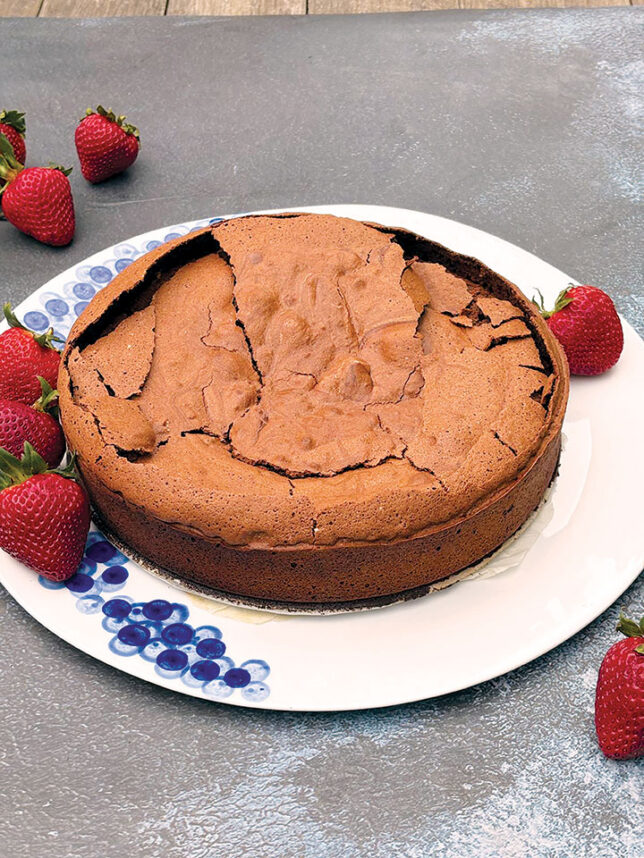
Sharon and I have been making this flourless chocolate torte for many years and this recipe never fails. It’s a cross between a fudgy brownie and a silky mousse with a thin, crackly top.

Everyone really enjoys this rich, dense, chocolatey dessert.

—Rachel

Chocolate Torte

6 large eggs

3/4 cup sugar, divided

1/2 tsp kosher salt

2 tsp vanilla extract

1/3 cup avocado oil

2 Tbsp coffee, cooled

12 oz. bittersweet chocolate chips, melted

Avocado oil, for greasing

Preheat the oven to 335°F.

Line the bottom of a springform pan with parchment paper, then grease the sides with oil.

To prevent the yolks from breaking, use eggs that are still cold from the refrigerator. Separate the whites from the yolks by dividing them into two clean, dry bowls.

Allow the egg whites to come to room temperature. Using a stand mixer, slowly froth the egg whites for 2 to 3 minutes. Gradually add 1/2 cup of sugar and the salt. Continue beating, increasing the speed to maximum, until the whites are very stiff and velvety. Set aside.

Beat the yolks with the remaining sugar, until mixture is a creamy pale yellow. Add the oil and the coffee and continue beating. Add the melted chocolate and slowly beat to combine.

Before the chocolate has time to harden, use a spatula to gently fold in the egg whites. Pour the batter into the prepared pan and bake for 55 minutes.

Allow cake to cool before gently removing from the springform pan.

Decorate with fresh berries or chocolate nonpareils.

Notes:

Tightly covered cake can be stored in the refrigerator for up to five days.

Cake can be frozen for up to two months. Defrost in the refrigerator before serving.


Sharon Gomperts and Rachel Emquies Sheff have been friends since high school. The Sephardic Spice Girls project has grown from their collaboration on events for the Sephardic Educational Center in Jerusalem. Follow them
on Instagram @sephardicspicegirls and on Facebook at Sephardic Spice SEC Food. Website sephardicspicegirls.com/full-recipes.

Golden Shards of Almond Croquant Read More »

Table for Five: Vayikra

One verse, five voices. Edited by Nina Litvak and Salvador Litvak, the Accidental Talmudist

“It is an eternal rule
for all your generations,
in all your habitations:
you must consume neither any fat nor any blood.”

– Lev. 3:17


Batsheva Frankel

Educational Consultant, Educator, Author, Podcaster

I have three reasons why I find parsha Vayikra challenging to read and not personally relevant. First, as an extremely squeamish person, there are loads of gory details about slaughtering and offering sacrifices. Second, while it’s easy to appreciate a good Peace Offering, I don’t feel that the Sin Offerings really apply to me since I ”never” do anything wrong. Okay, maybe “never” is an overstatement. Lastly, we don’t have the Holy Temple now. So how can we even perform these ancient rituals? What in this parsha is relatable?

Actually, G-d gives us the answer. Chizkuni, a 13th-century commentator, says that the Torah added “throughout your generations” to let us know that we can still connect to the Divine even if the Temple isn’t currently functioning. He states that “in all your habitations” means that even here in Los Angeles (although he doesn’t specifically mention LA), I can grow more in my spirituality. All this just for remembering to “consume neither any fat nor any blood”!

The Torah tells us that blood represents the life/soul of an animal, so various commentators give us deeply spiritual reasons why it forbids its consumption. And fat? Specifically the forbidden kind known as cheilev? Well, Maimonides tells us it’s unhealthy, therefore, we don’t consume it. Ultimately, we don’t know the reasons why refraining from these two things connects us to G-d. It’s considered a chok, a rule that transcends rational explanation. And for me, that’s what makes it special.


Rabbi Aryeh Markman

Executive Director: Aish LA and the Jerusalem American Summit

The party is over. For the first two books of the Torah, Genesis and Exodus, it has been an exciting narrative and when we did hit some rules, they were ideas we could relate to. Now we begin Leviticus (Vayikra in Hebrew) and we are introduced to esoteric laws instructing us how to be holy. This is a realm we are completely unfamiliar with in our distracted routine of making a living and pursuing our happiness, and we have no choice but to take the Torah’s word for it. If you believe in Abraham, Isaac and Jacob and leaving Egypt, then this is part of the package.

The verse seems incongruent. For the first three chapters of Leviticus, we have been learning about sacrifices in the Temple. Suddenly the Torah diverges and we are told that wherever we find ourselves in life, not to eat blood or animal fat from a kosher animal. We must drain the blood from slaughtered animals by salting the meat or roasting the liver, and we can’t use lard to grease our baking pans. But what if I like juicy steaks and my muffins to not stick? Yes, but these products have us ingesting the animal’s nature. We are what we eat. The Torah must stop in the middle of its ritual instructions that are relegated to the eventual Jerusalem Temple to warn us to stay away from these items or we will not achieve our potential. And that is holiness.


Rabbi Elliot Dorff, Ph.D.

Professor of Philosophy, American Jewish University

The Torah’s ban against consuming blood is asserted not only here, but in many other places (Gen. 9:4; Lev. 17:11-14; 19:26; Deut. 12:16, 23). In several of those the rationale for the prohibition is that “the blood is the life” of the animal. So even if we are permitted to eat meat, we must remove its blood to honor the life of the animal that we have taken and, in turn, make ourselves as little like cannibals as possible. That blood is the sign of animal and human life makes sense, for it is the part of the body that moves most within the body, and animal life is distinguished from plant life and inanimate objects by the power to move.

That said, this prohibition does not prohibit the use of blood for transfusions. Jehovah’s Witnesses believe that it does, but transfusing blood into a person is not the same process as eating it. Furthermore, transfusions save lives, and so every adult who can do so should donate blood four or five times a year (or platelets for cancer patients). I am not telling you to do what I do not: I just donated my 78th pint of blood to Cedars-Sinai. The snacks and theater tickets they give you are fine, but even for queasy people like me, helping another person live is really meaningful.


Rabbi Janet Madden 

Malibu Jewish Center & Synagogue

It is not difficult to understand why the sefer that calls us to cultivate holiness in our lives proscribes consuming blood “in all your moshavs” and “in all your generations.” Blood is the physical reminder of the soul, symbol of the life force — Torah teaches “the life of the flesh is in the blood.” Blood, inherently sacred, is employed in rituals of atonement. Therefore, eating blood is both a violation of the sacredness of life and a taking of that which belongs to the Divine. It may be more challenging to understand the prohibition against consuming cheilev — fat, specifically, suet — throughout time and space. A protective hard fat surrounding the kidneys and loins of beef and mutton, suet, like blood, sustains and protects life. Flavorful and high-energy-giving, fat is also designated for holy purpose, a way of effecting korban through offering something essential to life.

In the aftermath of animal sacrifice, “blood and fat” continues to serve as the dual symbol of offering the best to the Divine and image of korban in Jewish literature and liturgy. Judah Abravanel uses the phrase “blood and fat in suffering” in his anguished 1503 “Poem to His Son.” Lecha Eli Teshukati, Ibn Ezra’s piyyut that initiates the Sephardic Yom Kippur liturgy, expresses the human longing for Divine connection in a long series of statements that serve as heartfelt verbal korbanot. Among its deeply personal expressions of gratitude and penitence we find its reference to our parsha: “my heart, blood, and fat are Yours.”


David Porush

Writer, teacher, student at davidporush.com

Trader Joe’s carries some really juicy kosher ribeye. After barbecuing it, I drain the red juice and leave the fat on my plate. Not out of observance of the injunctions in this verse, but because I never liked this part of meat. Yet, it called my attention to how unnecessarily insistent this verse is.

Look at the redundancies that give this verse mysterious force. It’s completely overdetermined. First: “It’s a statute forever. Then: “in all your generations.” And: “Wherever you live.” Finally: It’s a chok, something that cannot be completely parsed by reason.

So what’s going on?

There are layers of Kabalistic and halachic explanations. But beyond these, the verse has foresight, a prophecy repeated throughout the Torah anticipating when Jews will be scattered and exiled from the Holy Land.

What will bind them together? This verse formulates the phenomenon that’s coming into play today. First it binds us to observe entailments of a ritual sacrifice performed in the Temple even after it was destroyed. We are held in suspense between nostalgia for and continuous aspiration for the Temple. And it binds us as a people in the Diaspora wherever we live to each other and to Israel.

Trace the ligatures back to this ineffable commandment and you find the source, the supernal source, of the shared fretful pain, resilience and support that is ensuring our survival after Oct. 7, 2023.

Table for Five: Vayikra Read More »

Shaping the Jewish Future

In a recent round of “war games” convened by Jewish philanthropists, nonprofit leaders and communal strategists, participants from across the ideological spectrum were asked to imagine what American Jewish life might look like in 25 years. The exercise explored both utopian and dystopian possibilities — revival and flourishing on one side, fracture and rising antisemitism on the other. Yet one of the bleakest of those scenarios, drafted only months ago, already feels disturbingly less hypothetical. America and American Jews seem to be accelerating toward it, raising the urgent questions of if and how we can still change course.

Participants in the exercise were given several fictional “GroundTruths” — snapshots of the future — and were asked to reverse-engineer how American Jews might have arrived at each one. Over and over, participants in the exercise approached us to say the same thing: GroundTruth C, the darkest scenario, felt not only plausible, but increasingly inevitable. They expressed a fear that Jewish life in America is heading directly toward it.

The scenario envisioned a country where AI tools, sock-puppet social media accounts and deepfakes routinely target Jews, making it nearly impossible to distinguish foreign agitators from domestic extremists. Terror attacks on Jewish institutions and individuals occur with alarming frequency. Civil unrest dominates major American cities where Jewish life once thrived, accelerating a migration to cities like Dallas, Miami, Charlotte, Atlanta and Las Vegas. Jews who do not or choose not to pass as non-Jews cluster within sprawling, gated “kibbutzim,” complete with their own schools, restaurants, synagogues, offices, commerce, greenspaces and even colleges. Online Jewish life, fenced off for safety and policed by “data-detox teams,” is derisively referred to as the “digital ghetto.”

When asked hypothetically to explain how we arrived at such a diminished and precarious state, participants pointed to the whiplash of rapid political cycling between far-right and far-left governments. Jews find themselves increasingly alienated from hostile forces in both political parties, with each side scapegoating Jews for different reasons. At a recent forum, a Jew from Brazil described strikingly similar dynamics in South America’s largest democracy: rapid political oscillation generates profound insecurity for Jews, who never know which ideology will target them next. That same instability, participants feared, is now taking shape in the United States — only sharper, faster and more ideologically charged.

And since the exercises in May 2025, this dark vision has come into even sharper relief in the Diaspora. During this past Hanukkah alone: a father and son carried out a deadly jihadist attack that killed and wounded Jews in Australia; Orthodox Jewish subway riders were brutally assaulted in New York; a peaceful Hanukkah celebration was violently disrupted by pro-Palestinian demonstrators in Amsterdam, forcing police to physically encircle Jewish families for protection; a Jewish family’s home in California was riddled with gunfire, with one of the attackers shouting “Free Palestine”; planned Islamist terrorist attacks were thwarted at Christmas markets in both Poland and Germany; and France ultimately canceled its New Year’s Eve celebrations altogether due to heightened terrorism concerns. In recent weeks, synagogues in Michigan, Toronto (two separate attacks), Rotterdam in the Netherlands, and Liège in Belgium have all been targeted by terrorist attacks.

On the political left, the election of Zohran Mamdani — a democratic socialist who has characterized Zionism as “settler-colonialism” and mainstream Jewish institutions as reactionary — as mayor of New York City has sent tremors through Jewish communities nationwide. Combined with administrations now governing Chicago and Los Angeles, the three largest cities in America are run by leaders whose ideological frameworks often portray Jewish concerns as forms of privilege and Jewish communal security as politically inconvenient. The tolerance — and in some cases, legitimization — of extreme anti-Israel activism on campuses, in certain DEI programs and police protests has deepened fears that the activist left’s hostility toward Israel and Jewish particularism is becoming institutionalized. Entire departments of some universities have entirely anti-Zionist faculty.

On the political right, the assassination of Charlie Kirk created a vacuum, unleashing more radical voices seeking to take his place in defining the next chapter of populist conservatism. The recent Heritage Foundation controversy surrounding the comments of its CEO, Kevin Roberts, about “the globalist class” and “venomous coalitions” were widely interpreted as echoing antisemitic tropes, fueling additional alarm. Tucker Carlson has increasingly amplified antisemitic, far-right voices, pushing once-fringe rhetoric into the bloodstream of conservative discourse. Vice President Vance added to Jewish unease when, at a Turning Point USA rally at Ole Miss, he declined to condemn a questioner who claimed that Jewish elites were sabotaging America from within; his silence was celebrated across far-right online networks as tacit validation.

It is not difficult to see how these two accelerating currents – the far-left anti-Zionist project and the far-right conspiratorial nationalist movement – risk forming the long feared ideological horseshoe and, at times, even merging into one. Though seemingly diametrically opposed, both amplify narratives that cast Jewish identity as inherently political, Jewish institutions as dangerously influential, and the Jewish state as illegitimate or malign. In such an environment, Jews do not merely lose allies; they lose the political “center” that once offered stability, fairness and civic protection. The result is shrinking space where Jews can comfortably or safely participate in American civic and political life.

But dystopian scenarios are cautionary tales, not destiny. Jews have flourished in America not by accident but because American liberalism — constitutionalism, pluralism, individual rights — created an environment where minorities could thrive without surrendering their identities. If that tradition is to endure, the Jewish community will need to act with greater clarity and purpose. To avoid a GroundTruth C type future, Jewish communities and leaders must:

1. Reclaim the Best of American Civic Culture

• Reassert allegiance to core American principles: equal protection, free speech, civic nationalism.

• Refuse ideological capture by either the identitarian left or the nationalist right.

• Actively model a pluralistic vision of American citizenship rooted in shared civic values rather than ethnic blocs or ideological camps.

This is not nostalgia but strategy. The more America fragments into identity-based camps, the more Jews become politically vulnerable without a camp to land in. The more we return to civic normalcy, the more secure we are.

2. Strengthen Jewish peoplehood

American Jews must conduct long-term planning that emphasizes the common bonds of peoplehood:

• Invest in cross-ideological Jewish literacy and peoplehood, not just parochial causes.

• Build coalitions across Jewish denominations and political divides, strengthening internal social capital.

• Cultivate leaders fluent in both Jewish tradition and American civic life, able to articulate Jewish interests without ideological absolutism.

• Proudly celebrate America’s 250th anniversary.

This “broad Jewish middle” is the antidote to the horseshoe.

3. Focus on the future of American Jewish life

Instead of reacting defensively to each crisis, Jewish institutions should:

• Develop 25-year strategic plans for communal security, education and civic engagement.

• Scenario-plan regularly — not to catastrophize, but to prototype solutions.

• Create regional Jewish hubs not as gated enclaves but as engines of Jewish creativity, social entrepreneurship and civic engagement.

• Conduct new “war games” exercises and planning based on extreme scenarios, such as the need to quickly relocate large Jewish communities in this country or abroad.

The Jewish future must be proactively built, not anxiously awaited.

4. Forge New Alliances — Not Just the Old Ones

Many of the alliances of the 20th century — labor unions, civil-rights coalitions, mainline Protestant denominations — no longer reliably align with Jewish interests.

New alliances should include:

• Diaspora and Israeli intellectual partnerships,

• faith-based pro-pluralism networks,

• immigrant communities with parallel experiences,

• tech leaders concerned about AI-driven hate,

• and local civic organizations committed to free expression and the rule of law.

Jewish security in America will increasingly depend on creative coalition-building. We will need to catalyze new creative organizations, much as Jews did in the early stages of the civil rights era, rather than relying solely on longstanding institutions, some of which no longer are optimal for the new approach. Some of this coalition-building will also need to begin at the level of person-to-person relationships, rather than through the more familiar organization-to-organization partnerships.

5. Reclaim Jewish Agency

Perhaps the most important point: Jews must treat themselves as agents of their future, not as victims of political tides.

This means:

building communal infrastructure with long term horizons,

• forming independent civic organizations,

• strengthening Jewish education and identity,

• teaching young people to lean into their courage, not their fears,

• and engaging American society with confidence, not fear.

A community that sees itself primarily as threatened will retreat. A community that sees itself as agentic will build and continue to thrive.

GroundTruth C may feel uncomfortably close, but it is still only a hypothetical endpoint. The future of American Jewish life remains unwritten. If Jews reclaim the best of American civic culture, reinvest in Jewish identity and cohesion, and build new alliances anchored in shared national values, the coming decades could look radically better from the dystopia we fear. We are still early enough in the story to change the ending.


David Bernstein is the Founder and CEO of the North American Values Institute (NAVI). Phil Siegel is a serial for-profit and nonprofit entrepreneur, private equity investor and philanthropist based in Austin, Texas.

Shaping the Jewish Future Read More »

Servitude as Freedom

In “How to Read Literature Like a Professor,” Thomas C. Foster explains that “Flight is freedom.” Whether it’s the ancient myths of Icarus, Disney’s Peter Pan, or Superman’s many adventures, flight is often associated with freedom from cages, be they physical, spiritual or emotional.

And yet, in the story of Exodus, the epitome of the freedom narrative, flight is barely invoked. God does not gift the Israelites the ability to fly away from Egypt. He does not command his angels to lift them out of bondage. He does not even summon the fiery chariot that picked up Elijah to carry the Israelites off into the sunset.

Instead, God keeps the Israelites landbound, forcing them to walk on their own two feet to Israel. Their travels do not just occur on any land, but specifically in the desert — an arid, dry, barren ground, full of coarse, rough, irritating sand that gets everywhere. Having just witnessed the splitting of the sea, the miracle of miracles, the Israelites turn around to face their freedom — only to be greeted by the driest and least lively of all the terrains.

But this does not imply the Israelites are not free. Quite the opposite. The Israelites are free, just not in the classical sense of the word. As it says in the Midrash Tehillim:

In the night [of the plague of the first-born] Pharaoh arose and went to Moses and Aaron, as is said And he called for Moses and Aaron by night (Ex. 12:13). And in the night he knocked on the doors of Moses and Aaron, and said to them: Rise up, get you forth from among my people (ibid.). They answered: Fool, are we to arise in the night? Are we thieves that we should go forth by night? In the morning we shall leave. It was thus the Holy One, blessed be He, charged us: None of you shall go out of the door of his house until the morning (ibid. 12:22). Pharaoh said to them: But by that time all the Egyptians will be dead! — as is written They said: “We are all dead men” (ibid. 33). Moses and Aaron replied: Seekest thou to end this plague? Then say: “Behold, you are free, behold, you are your own men, you are no longer servants of mine; you are servants of the Lord.”

Whereupon Pharaoh cried out, saying: Formerly you were my servants, but now behold you are free. Behold, you are your own men. Behold, you are servants of the Lord, and being His servants, you are now obligated to praise Him. [113:2]

God could have left us alone after leading us to freedom, as we sing in the Seder, “Had he brought us out of Egypt … that would have been enough.” But while that may have been enough for our physical safety, it would not have been enough for our human growth. Freedom by itself lacks purpose and direction. There is no call to action with freedom except to be more free, to keep flying further and higher.

But not only does freedom without boundaries lack purpose and direction, it is dangerous. As Icarus tragically learns, fly high enough, and you will find yourself too close to the sun, watching your wings melt as you plummet to the ground. It is why the Darling children return from the lawless and magical island of Neverland and why Superman creates the persona of Clark Kent. We do not want to be Lost Boys and Girls, and we cannot be Superman all the time. The former would leave us empty and floundering with nothing, while the latter would leave us overwhelmed and burdened with the possibility of everything.

So God keeps the Israelites grounded — literally and figuratively. He does not give us the opportunity to fly aimlessly into the sun. He continues our servitude, creating boundaries for everything from how we talk to what we eat. He instructs us to build His Temple, specifying exactly how and when it should be built and utilized. He makes Himself our ultimate master, commanding us to “praise Him” and follow His word. But God is not Pharaoh, and we are not simply slaves. We are our “own men” (and women). His boundaries are ours to interpret, expand and constrain. They allow for human expression and compassion, yet keep us from losing ourselves in the process.

For the people of Israel, then, freedom is not the open skies—a world of unlimited and unguarded possibilities. It is the hot and dry slog through the desert, full of prickly rules and regulations. Sometimes, the thorns need to be trimmed. Other times, we need them to keep us from falling off the edge, even if that may sting sometimes, so we can reach our final destination, one step at a time.


Samuel Gelman is the assistant director of communications and operations for the Straus Center, and chief of staff to Rabbi Meir Soloveichik.

Servitude as Freedom Read More »

Traversing Jewish History … in Reverse

A few weeks ago, after catching a 5:37 a.m. Megillah reading courtesy of a kind-hearted and early-rising friend in New Jersey, I caught the 8:25 a.m. flight from Newark to Heathrow and began my journey through Jewish history in reverse.

Desperate to rejoin my family in Israel after a business trip was extended due the outbreak of the war against Iran, I ate my festive Purim meal in seat 40L and headed toward a short layover in London. I stowed my carry-on in the overhead compartment, confident that I would be allowed safe passage with my possessions into England as the Jews had been assured when they were expelled from the country in 1290.

“Whereas the king has prefixed to all the Jews of his realm a certain time to pass out of the realm; he wills that they shall not be treated by his ministers or others otherwise than has been customary” reads a July 18 letter from that year from King Edward I to the Sheriff of Gloucester.

With as much kindness as the expellers must have possessed in those days, the edict continued to state that the monarch “ordered to cause the Jew to have safe conduct at their cost when they, with their chattels, which the king has granted to them.” Seven hundred years later, my backpack and I entered England without incident.

After a brief two-hour layover, the next leg was to Greece. In the meantime, I downed a short espresso, hoping the small amount of liquid would last me the next eight hours.

Landing in the airport in Athens, I felt luckier than my ancestors in being able to pray as a Jew in public. After all, it was the Seleucid-Greek king Antiochus in the second century B.C.E. who, per the Book of Maccabees’ recounting, had ordered the Jews of Judea “not to offer burnt offerings, grain offerings or wine offerings in the Temple, and commanded them to treat Sabbaths and festivals as ordinary work days … They were forbidden to circumcise their sons and were required to make themselves ritually unclean in every way they could, so that they would forget the Law which the Lord had given through Moses and would disobey all its commands. The penalty for disobeying the king’s decree was death.”

Thankfully, no locals broke a sweat when I broke out my tefillin.

From Athens, I then hopped on a short flight to Egypt, where our ancestors had escaped three millennia ago on their way to the Promised Land, after a back-breaking enslavement that lasted centuries. The medieval poet Judah HaLevi, visiting the (one must admit) beautiful country that had enslaved our forebears once wrote:

“From age to age Your wonders, God, are told

And not denied by father or by son.    

This river Nile has always testified

To how its waters were turned into blood.

No hierophants performed the magic trick,

But only Your name and Moses and Aaron’s rod,

Transformed by You into a hissing snake.

Help then Your trusting servant to make haste

To a place more wondrous yet than this!”

As the Israeli translator Hillel Halkin has contextualized, watching the Nile River flow in 1140, HaLevi no doubt “felt he was looking at the same water that Moses and Aaron had turned to blood with a wave of their staffs in the first of the Ten Plagues.” Yet, the renowned poet wrote elsewhere, while God’s presence in Egypt had been “like a traveler’s/ Resting in the shade beneath a tree,/ In Zion, it’s at home and dwells/ Grandly, as all Scripture tells.” In other words, while Egypt had been the site of sacred events, the Land of Israel – “a place more wondrous yet than this” – was itself sacred. Nothing HaLevi had seen in Egypt could take its place.

After a brief cab ride from Taba Airport to the Egyptian-Israeli border, I gazed at the golden blue waters of the Gulf of Aqaba to see if they might split (alas …). I then traversed the Begin Crossing by foot.

At the border, having crossed safely into Israel (which itself is hardly safe given the constant rocket bombardment) I spotted two photos hanging opposite the guardbooth’s walls. The first, from 1946, was of what seemed to be a Hassidic family photo. The caption unveiled it as depicting a ruse. The bearded individual labelled “Rabbi Sassover” in the photo was Menachem Begin himself, evading British capture after escaping the Holocaust, leading the Irgun as it fought for Israel’s independence.

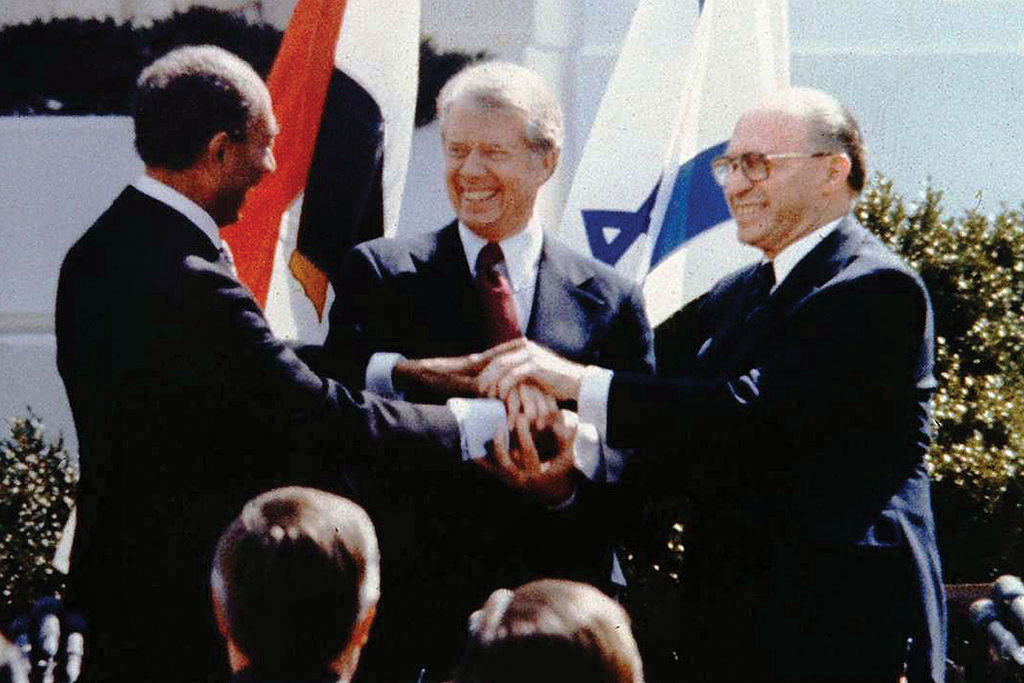
The next photo was of Begin not afraid but effervescent. It captured the now-Prime Minister, along with Egyptian president Anwar Sadat and American president Jimmy Carter, at the signing of the Israeli-Egyptian peace treaty March 26, 1979 on the White House lawn.

The triple handshake between Egyptian President Anwar Sadat (L), US President Jimmy Carter (C) and Israeli Prime Minister Menahem Begin seals the signing of the Israeli-Egyptian peace treat March 26, 1979 on the White House lawn in Washington DC. (Photo by Tel Or Beni/GPO/Getty Images)

My 36-hour journey had spanned 30 centuries. But the juxtaposition of the two photos during its last few feet captured the miraculous nature of Jewish history quite simply. While the Jewish people continue to face enemies seeking our destruction, we continue to survive. We no longer possess fear of persecution or expulsion but a powerful nation standing in defense of Jews both in Israel and abroad. The wonders of God continue to be told and cannot be denied.


Rabbi Dr. Stuart Halpern is Senior Adviser to the Provost of Yeshiva University and Deputy Director of Y.U.’s Straus Center for Torah and Western Thought. His books include the newly released “Jewish Roots of American Liberty,” “The Promise of Liberty: A Passover Haggada,” “Esther in America,” “Gleanings: Reflections on Ruth” and “Proclaim Liberty Throughout the Land: The Hebrew Bible in the United States.”

Traversing Jewish History … in Reverse Read More »