fbpx

April 10, 2025

Moment in Time: “Passover – Teaching how to Ask Questions”

Dear all,

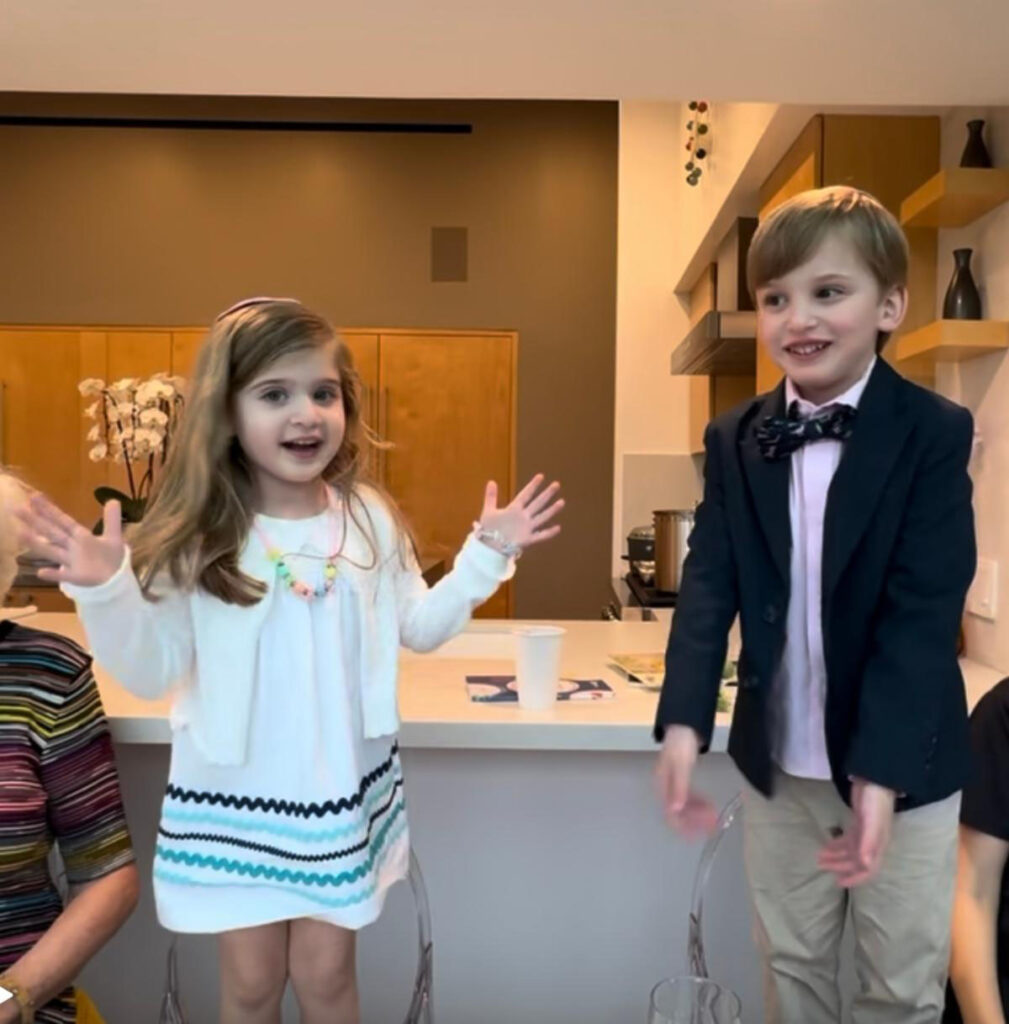
We started teaching Maya and Eli the Four Questions of Passover just as they were learning to talk. (This photo is from last year’s Seder as they stood to sing them).

Four Questions…. Judaism requires us to teach our children to how ask from the youngest age. And while there is a script to the Passover questions, the true purpose is to elicit additional questions.

Questions about life.

Questions about history.

Questions about God.

Questions about freedom.

And yes …. Questions about politics.

Some questions might make us uncomfortable. And that’s ok. The entire Seder is a metaphor, after all, of synthesizing a variety of realities.

We mix bitter with sweet. We dip leafy greens in salty water, We break matzah and bring together generations.

And so, we continue to ask.

May this Passover be our moment in time to journey toward answers.

Ron, Maya, Eli, and I wish you all a season of goodness,

Rabbi Zach Shapiro

Moment in Time: “Passover – Teaching how to Ask Questions” Read More »

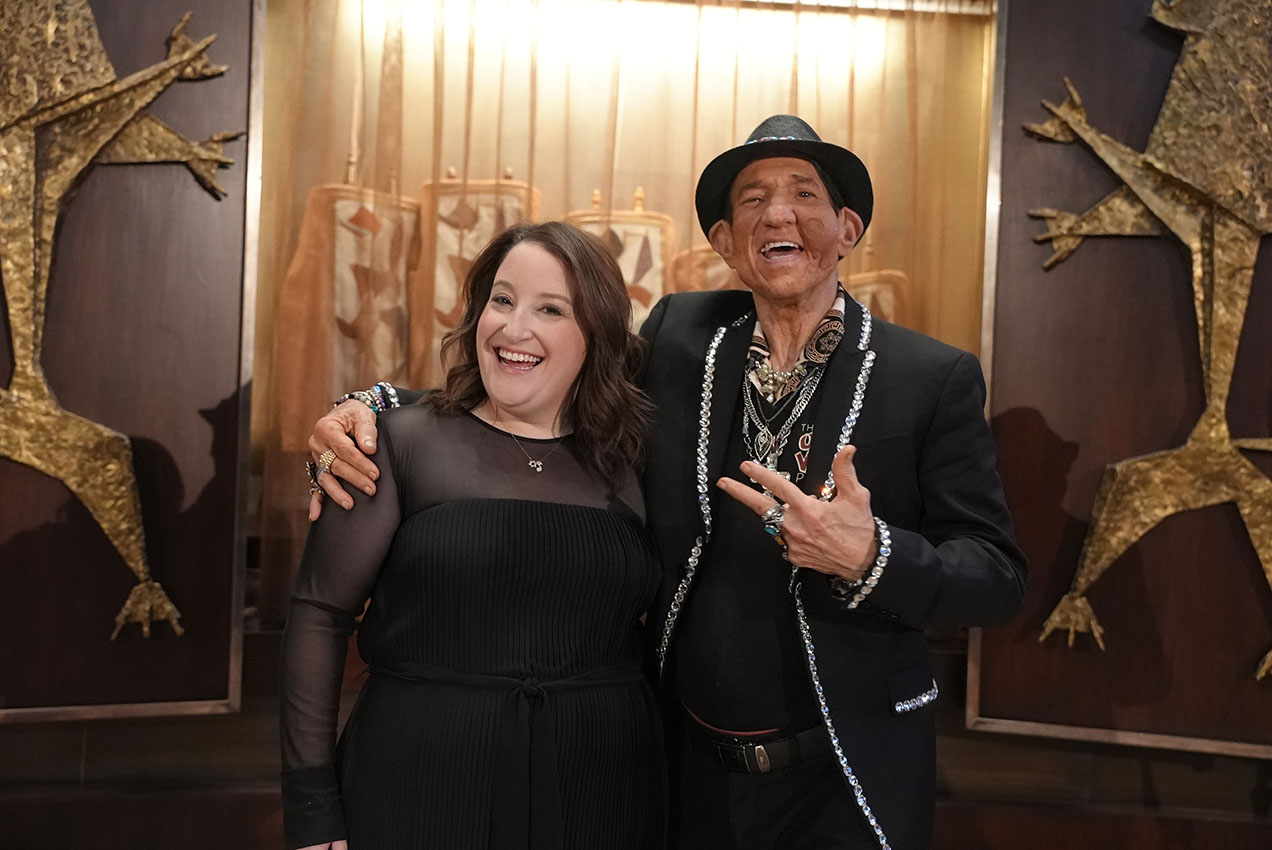
A Seder Built to Follow ‘The Office’

Writers Dave Cowen and Dan Lerman don’t want to replace your family’s traditional seder. They just want to make the second night a bit more entertaining.

“Do it 90% the same way you used to do Passover, and then bring in 10% more fun,” Lerman told The Journal.

Cowen and Lerman’s new book, “The Office Haggadah: An Unofficial Scranton Seder,” follows Michael Scott (played by Steve Carell) as he tries to win a printing contract from Maxwell House — yes, the coffee company long associated with free Haggadot — by staging an office Passover seder. Michael vows to convert to Judaism, misinterprets signs from a flaming coffee machine, and leads his staff in a table-read seder meant to prove Dunder Mifflin’s worthiness as a paper supplier.

Cowen, who’s been writing parody Haggadot since President Donald Trump’s first term, found success with a Passover Haggadah written in the 45th (and now 47th) president’s voice. “The Trump Haggadah” (2018) quickly became a hit on Amazon, inspiring Cowen to follow up with editions like “The Yada Yada Haggadah” (2019), explicitly modeled after the rhythm and style of a “Seinfeld” episode, and “The Biden-Harris Haggadah” (2021), which featured references to Dr. Anthony Fauci, then-Second Gentleman Doug Emhoff and a Cardi B parody. Cowen also created the “Meshugah Kanye Haggadah” (2023), a musical-style parody exploring fame and ego within the Passover context. In 2024, he followed with the “Spoof Seder Haggadah,” a tribute to Mel Brooks’ film catalogue.

The American version of “The Office,” starring Steve Carell, John Krasinski, Jenna Fischer, and Rainn Wilson, ran for nine seasons from 2005–2013. It won five Primetime Emmys and was one of NBC’s most-watched shows during its run.

Cowen sees the second night of Passover specifically as an ideal opportunity for experimental storytelling. “Our first night could be serious and traditional, and the second night can be the fun night, or a children’s version,” Cowen told The Journal, citing various Haggadot written by others that were baseball-themed, inspired by “Harry Potter,” or feature superheroes. “There’s ways to do what you normally do and then bring in some seasoning!”

Cowen recalled while growing up, his family’s Passover seders sometimes felt disengaging and sometimes like a hazing of the youngest hungry people at the table. One of the hallmarks of Passover is the heavy reliance of metaphor, which both Cowen and Lerman both think lend itself naturally to comedy to keep guests engaged. Their format is deliberately interactive: each participant gets assigned a speaking part, and casting rotates chapter-by-chapter. 

“It’s a table read, fun table read,” Cowen said. “Imagine about 30 people around a U-shaped table. We’ve got the microphone and we’re giving out roles. Every chapter we recast so that everyone gets involved.” Their working relationship began at a celebrity pickleball tournament last year, where Lerman mentioned that Passover was his favorite Jewish holiday—and that he once named his dog Afikomen.

They’re still not sure who will play who when their second-night seder kicks off on April 13. Lerman seems like a natural fit to start the night as Dwight Schrute (Rainn Wilson), and Cowen as Michael Scott. A handful of comedian friends are expected to step up to the mic. Cowen hopes his sister — who’s a doctor, not a comic — will read the part of Pam Beesly (Jenna Fischer).

Lerman is also “one of the best party throwers in Los Angeles,” according to Cowen. Lerman hosts a monthly showcase titled “Backyard Comedy Series: Larchmont Village.” Its tagline is “curated comedy, industry crowd, old-school hangin.’”

“I think people like connecting with one another,” Lerman said. “Anything you can do to encourage people to have their voice heard and to actually have little conversations. For example, with Passover, we’ll say, ‘We’re all slaves to something.’ So I was thinking about maybe starting our seder by asking, ‘What are you a slave to right now? Talk to your neighbor about that.’”

Sometimes it takes a bit of theater and pop culture to get audiences engaged in Jewish traditions. I shared with Cowen and Lerman that by the spring of 1995, I was 10 years old and had already made it through two years of Hebrew school, six years of Sunday school and another two years at the JCC Milwaukee nursery school. But still, I didn’t fully understand the story of Passover until I saw the animated “Rugrats” version of the story on Nickelodeon.

“You’re proof to the concept that mixing the dominant culture of Hollywood, or American culture with the Jewish stuff is how many get the traditions to really click,” Cowen said.

“The Office Haggadah” strikes a fun balance between Passover rituals and the charm of one of the most popular television comedies of the last 20 years. Dwight burns chametz snacks. Pam paints Michael parting the Red Sea. Creed (played by Creed Bratton) peddles black-market snacks. And Michael Scott, trying to show his spiritual sincerity, repeatedly misquotes Leonard Bernstein.

Proceeds from the Haggadot in the past have supported Jewish organizations including Temple Beth El in Rochester, New York (Cowen’s home town), the Israel Defense Forces, Nefesh in Los Angeles, and Wilshire Boulevard Temple.

And if all else fails, just remember Michael Scott’s pitch: Let. Your. Paper. Go.

“The Office Haggadah: An Unofficial Scranton Seder” is available at www.parodyhaggadahs.com 

A Seder Built to Follow ‘The Office’ Read More »

BRAVE-ish wins International Impact Book Award

My book, Brave-ish, has now received its 10th award, earning recognition for Travel from the International Impact Book Awards. This milestone marks another highlight in an incredible journey of accolades, affirming the book’s impact on readers seeking adventure, courage, and personal transformation. I am honored to see Brave-ish resonate with so many, and I’m truly grateful for these honors.
From the International Impact Book Awards:
“Your exceptional talent, dedication, and creativity have set you apart in a competitive field… This award is a testament to the impact your work has made in the literary world. Your story, your voice, and your commitment to excellence have resonated with readers and judges alike, and we are proud to celebrate your success.”
Since its release, Brave-ish has been celebrated across multiple categories, from travel and memoir to self-help and women’s nonfiction. Earning recognition across such diverse categories underscores the book’s wide-reaching impact, inspiring readers from all walks of life. Here’s a look at the awards and recognitions Brave-ish has received:
  • 2025 International Impact Book Awards—Travel
  • 2024 Gold Medal – Inspirational – North American Book Awards
  • 2024 Gold Bookfest Award – Nonfiction Memoir Travel
  • 2024 Gold Nonfiction Book Award – Nonfiction Authors Association
  • 2024 Literary Titan Gold Book Award – Non-fiction
  • 2024 Silver Bookfest Award – Nonfiction Self-Help Inspiration
  • 2024 Readers’ Favorite Honorable Mention – Non-Fiction – Women’s Genre
  • 2023 Hearten Book Awards First Place Winner – Inspiring & Uplifting Non-Fiction
  • 2023 Zibby Awards Runner-up – Best Book for The Strong Woman
  • 2023 Goody Business Book Awards Winner – Memoir/Self-Help
Beyond these prestigious awards, Brave-ish has also gained recognition in top publications. It was featured in Condé Nast Traveler’s Women Who Travel Book Club as one of “10 New Books We Can’t Wait to Read This Fall” and recognized in Forbes’ Best New Nonfiction list. Each of these awards and features reinforces the book’s mission: to encourage readers to step outside their comfort zones, embrace adventure, and redefine what it means to be brave. Additionally, I have won nine awards in The Southern California Journalism Awards and the National Arts and Entertainment Journalism (NAEJ) Awards
Thank you to everyone who has supported Brave-ish along the way!

MORE AWARDS FOR BRAVE-ish

BRAVE-ish has received a Gold Medal in the INSPIRATIONAL category of the 2024 North American Book Awards. 
My book Brave-ish has received its ninth award, earning the prestigious Gold Medal in the Inspirational category of the 2024 North American Book Awards.

BRAVE-ish wins READER’S FAVORITE Women’s Genre!

From Gold to Jingle: Celebrating My Awards and Two Years with The BookFest I’m thrilled to share that my work has received recognition at The BookFest, earning both a Gold and a Silver award. Click here to see the TWO AWARDS that my memoir, BRAVE-ish, won!
Congratulations! The BookFest honors authors who create outstanding works of fiction and nonfiction. The BookFest’s mission is rooted in the belief that literature has transformative power and, in a desire to support and celebrate those who create it.

My memoir, Brave-ish, is a 2023 HEARTEN Book Awards First Place Winner for Uplifting & Inspiring Non-Fiction and Memoir!

BRAVE-ish is a Nonfiction Gold Book Awards Winner

BRAVE-ish is a winner: 2024 Literary Titan Gold Book Award

Goody Business Book Awards: Memoir/Self-Help

Zibby Awards: Best Book for The Strong Woman

My Podcast, Make Your Own Map, won 2nd place for Diversity in TV/Streaming at the NAEJ Awards

My website is #10 on the top 100 Travel Lifestyle Blogs and Websites

I am also the #3 Top Travel Influencer for 2024 for Afluencer as well as #10 of Female Influencers Brands Can’t Get Enough of for 2024!

North American Book Awards 2024

Learn with LISA: Travel Writer 101


BRAVE-ish wins International Impact Book Award Read More »

Print Issue: A Women’s Seder | April 11, 2025

CLICK HERE FOR FULLSCREEN VERSION

Print Issue: A Women’s Seder | April 11, 2025 Read More »

Honoring the Women of the Exodus: A Women’s Seder

Reader:

On the last day of Passover the rabbis teach we journeyed through the Sea of Reeds, we walked on dry land as the waters of the sea turned back upon Pharaoh and 600 of his “elite chariots … with officers on them all.” (Exodus 14:7) We withhold our joy in celebrating the death of our enemies, but join with Miriam, the prophetess, and the women who went forth after her with drums, with dances and singing.

Group:

Miriam spoke to them, “Sing to Hashem for S/He is exalted above the arrogant …” (Exodus 15:21)

Reader:

Today we gather, women from different generations, different religious perspectives, and different levels of knowledge of our tradition. We come together, searching for both personal and spiritual meaning in the story of our mothers, the women in our tradition, and those who are essential to the liberation of our people and the Exodus from Egypt.

Group:

We come here with an open heart, eager to learn, ready to listen, and willing to share as we elevate our experience of this most important Holy day. Hineini, “We are fully present,” honoring important and pivotal women in the formation of our history, role models of values and action, inspirational human beings who helped to shape the narrative of our past, transforming their darkness and redeeming their exile.

Reader:

We come in search of a past and of missing voices that can expand our understanding of how we navigate our future. Together we create a sanctuary of safety for inquiry and sharing through words and music. Together, in the comfort of sisterhood, we find women with common needs, fears, hopes and dreams as well as common feelings of self-judgment, self-imposed expectations, insecurities, losses, pain and grief.

Shechinah

Group:

Today we take pride in those who stood with strength, courage, and hope and allow their ‘chutzpah’ (audaciousness) and ‘grace’ to infuse us with greater insight and wisdom. We are reminded from where we came, how far we have come, and how far we still need go.

Reader:

We honor our texts that teach us to see through multiple lenses the variety and complexity of these Biblical women. Faced with challenges of survival, and enemies in their midst, they never backed down but rose up to defy tyrants. Let them inspire each one of us to do the same.

Group:

We accept the dark with the light, transform enslavement into potential for possibility, and know that freedom is a gift that brings redemption and responsibility.

Reader:

Seder means order, so our ceremony shall follow a pathway, an emanation of Shechinah, the indwelling presence of the Divine, through sixteen sections, the numerical value of Her Name, Shin (300), Chaf (20), Yud (10), Nun (50), Hay (5), which equal the number 385. When added together these three numbers equal 16, a Jewish alpha-numeric code called Gamatria. (1+6=7)

Group:

Today we will let the Shechinah, the female presence of the Divine in physicality, guide our path and lead us as a community of women who will then become representatives of Her divine presence and express her through our actions in the world.

Reader:

Let us speak and sing, ask and tell, and acknowledge our tears and express our joy. Let us remember struggles of the past, or the present, yet continue to sweeten them and voice our gratitude. Through our own struggles we empathize with others, particularly those in need today.

Group:

“In every generation, each woman is obligated to see herself ‘as if’ shestood in Egypt, facing down Pharaoh, defending the life of all children, and expressing their hope for the future.” Perhaps face down today’s Pharaoh.

1. Candlelighting

Reader:

On the first day of Creation, when darkness and chaos enveloped the world, G-d said, “Let there be light,” and the spiritual light of potentiality and hope came into existence. Today we light these candles creating sacred space and sacred time, celebrating the spirit of the feminine, the holy Shechinah.

Group:

May the light of the candles cast their glow on each one of us, on all those we love, and those in need of healing and Shaleym, wholeness. May they bring radiance to those who live with darkness, loneliness, and deprivation.

Baruch Atah Adonai, Eloheinu Malkah ha-Olam, asher kidshanu b’mitzvot v’tzivanu l’hadlik ner shel yom tov.

Blessed are you Adonai, Our G-d, Ruler of Existence

Who sanctifies us with commandments, commanding us to light the candles of this Holy day.

Reader:

Kadosh means holy, to “set apart” for uniqueness, purpose, and transformative promise. When we bless wine we are actually blessing the grape, the fruit of the vine. The grape represents potentiality to create sweet wine, tart juice, or even sour vinegar. It is round like a womb, filled and birthing possibilities to enrich each moment.

Group:

We will drink and bless four cups of wine that represent G-d’s four promises of redemption. Today we unveil Shechinah, partner with HaShem through the courageous acts of our ancestral women. They risked their lives to save ours. Had they not acted we would still be slaves. With each promise, “to free, to deliver, to redeem, and to take,” women of courage and integrity, emanated Shechinah, and acted in partnership with the Holy One. Each cup represents the four levels of the Kabbalistic view of the Universe: Assiyah, world of physicality, Yitzirah, world of Formation/angelic/emotive, B’riah, world of Creation, mind/consciousness, and Atzilut, world of close to the Divine. We acknowledge being lifted from the lowest world in Egypt, to the place of crossing the sea and tapping into the utter joy of reaching the possibilities of the future, the place of Sinai and the formation of a people and covenantal partner with the Holy One, and the place that comes, Mishkan, where G-d and people meet and draw near.

2. First cup of wine – “V’hotzaiti–I will free you …” through Shifra & Puah

Reader:

The king of Egypt said to the Hebrew midwives Shifrah and Puah, “when you deliver the Hebrew women … if it is a son, you are to kill him, if it is a daughter, she shall live. But the midwives were in awe of G-d and they did not do as the king of Egypt spoke to them, and they caused the boys to live.” (Exodus 1:16)

Group:

As we bless the first cup of wine let us remember these defiant and courageous women. They demonstrated awe for the Holy One and because of their righteousness “the people increased and became very strong.” They “freed” the babies.

Baruch Atah Adonai, Eloheynu Malkah Ha-Olam Borei Pri Hagafen.

Blessed are You Adonai, Our G-d, Ruler of Existence who creates the fruit of the vine.

3. Four Questions

Ma Nishtanah HaLailah Hazeh Mikol HaLailot? Why is this night different than all other nights?

Because tonight/today is the night we crossed the Sea of Reeds leaving Egypt behind and moving forward to Mt. Sinai to be in covenant with HaShem.

Because tonight/today we go through the birth canal of our mother, the great Shechinah, discovering a new soul in our liberation.

Because tonight/today we drink four cups of wine to recognize and bless our mighty ancestral mothers, partners who made the Exodus possible.

4. Second cup of wine – “V’hitzalti- I will deliver you” through Yocheved

Reader:

“The woman conceived and gave birth to a son. She saw that he was good and she hid him for three months. She could not hide him any longer, so she took for him a wicker basket … she placed the child into it and placed it among the reeds at the bank of the River.” (Exodus 2:2)

Group:

As we bless the second cup of wine we remember this defiant and courageous mother who saved her son and saw the light of Shechinah above his head and knew he would bring good.

Baruch Atah Adonai, Eloheynu Malkah HaOlam Borei Pri HaGafen.

Blessed are You Adonai, our G-d, Ruler of Existence Who creates the fruit of the vine.

5. Four Girls

Reader:

Four times Torah bids us to tell our children of the Exodus from Egypt. Four times the Torah repeats: “And you shall tell your child on that day …” From this our tradition understands that there are four kinds of personalities – a wise one, a wicked one, a simple one, or a silent one (that may not know how to ask). Perhaps each one of us has these four personalities within us at different times of our lives.

Four Girls Within All of Us

Girls Who Don’t Know How to Ask – Sometimes we are girls who don’t know how to ask; we don’t understand; we find that we cannot speak the language of the people in our company; we are struck dumb by a profound or strange new experience; or we are fearful because nothing like this has ever happened to us before. If we can remain silent, and tolerate our fear and our inability to speak for a while, we may discover worlds of riches we couldn’t possibly have imagined. But if our fear paralyzes us, if we love confidence yet withdraw from the world, or if it is fear of others that silences us, we truly need to be brought out from our slavery “by a might hand and an outstretched arm.”

Simple Girls – At times we are simple girls: relaxed and playful, enjoying life without questioning, analyzing or examining deeply; loving others with passion that cannot be expressed in words; being loved in return without any logic or reason. Yet, as simple girls we risk missing the color and texture of our complex universe, and we may forfeit the opportunity to contribute to tikkun olam, the repair and healing of the world.

Wicked Girls – At other times we are wicked girls: angry, rebellious, critical, and negative. We set ourselves apart from our community, feeling perhaps, that we don’t belong and not understanding that it is we, not others, who place ourselves on the outside. Yet, it is as wicked girls that we are able to see our world from another perspective, to see that sometimes the emperor wears no clothes and to speak up and criticize what is wrong and what is unjust.

Wise Girls – At times we are wise girls: strong and confident in what we know and who we are, curious and eager to learn more, seeing clearly through tangled and complex dilemmas, able to make wise and appropriate decisions for ourselves and on behalf of others. Yet, as wise girls we risk growing complacent in our knowledge, smug in the “superior” wisdom of the status quo, and so caught up in the pursuit of learning and producing that we neglect others around us and our own well-being.

“May we come to know and accept the four girls within all of us so that we can grow closer to wholeness and freedom this year.” – Ruth Berger Goldstone.

Which one rings true for you? 

6. Third Cup of Wine – “V’ga-alti-I will redeem you” through Miriam

Reader:

“His sister stationed herself at a distance to know what would be done with him…she said to Pharaoh’s daughter, ‘Shall I go and summon for you a wet nurse from the Hebrew women, who will nurse the boy for you?’ So she went and summoned the boy’s mother…so the woman took the boy and nursed him.” (Exodus 2:4, 7,8)

Group:

As we bless the third cup of wine we remember the loyal, devoted and protective sister of Moshe who approached the Pharaoh’s daughter after picking up Moshe from his basket. She would make sure his real mother was able to make an intimate connection with her son ensuring his heritage and tradition would be instilled in him.

Baruch Atah Adonai, Eloheynu Malka HaOlam, Borei Pri HaGafen

Blessed are You Adonai, our G-d, Ruler of Existence Who creates the fruit of the vine.

7. Taste of Maror – Bitterness 

Reader:

Maror comes from the word in Hebrew, Mar, which means bitter. We are reminded of the hard labor and embittered lives of the once enslaved people in Egypt. The word for Egypt is Mitzrayim, which literally means from a narrow place or Mi-tzar-yam, from a constricted sea. Egypt represented narrow and constricted thinking and values. It was a place of darkness, controlled by an autocratic ruler who believed he was not only the King but also a god. He watched as Israelite immigrant community grew and he became fearful that they could overtake Egypt. (Sound familiar?) “Behold! The Children of Israel, are more numerous and stronger than we. Come let us outsmart them lest they become numerous and it may be that if a war will occur, they too may join our enemies … he appointed taskmasters over them in oder to afflict them … Egypt enslaved the Children of Israel with crushing harshness.”

Queens, warriors, judges, prophetess, midwives, leaders, teachers, rabbis, cantors, wives, mothers, sisters and daughters. Jewish women throughout history have left their mark and even saved our people.

Their wisdom, strength, resilience, compassion, empathy, honesty, creativity and generosity shine as a beacon on to the world, their families, their friends and their communities.

Even today there are many peoples still enslaved, roughly over 40 million people throughout the world. They include forced child labor, forced marriages, forced sex exploitation, forced workers etc. Bitterness is the taste of many throughout the world. For some women there are continued struggles for equity and dignity in their work setting, financial challenges that leave them without health insurance for themselves and their families and others remain homeless without sanctuary and nutritious food to eat.

Some of us have the great fortune to be free of such evil and yet we all have known the taste of bitterness. We experience physical, emotional or spiritual pain, we know personal or professional loss, we experience physical and psychological trauma, we are caregivers for those ill and in need of support, and we encounter grief as loved ones leave this world. Here it is safe to speak of such bitterness.

What is or has been your taste of bitterness?

Group:

As we bless the eating of this maror let us acknowledge that the bitterness of slavery must be eradicated. May we be able to release the taste of bitterness, freeing ourselves from its hold, if only for a moment, knowing we can move through the pain, inch by inch, sweetening it with small pleasures, finding hope for the future.

Baruch Atah Adonai, Eloheynu Malkah Ha-Olam, asher kidshanu b’mitzvot v’tzivanu al achilat maror.

Blessed are You Adonai, our G-d Ruler of Existence, Who hallows us with commandments, commanding us regarding the eating of maror.

8. Taste of Charoset – Sweetness

Reader:

Charoset, because of its color and texture, is symbolic of the mortar used by our ancestors in building the great cities of Egypt. Yet Charoset is sweet, made from apples, dates or other fruits, along with nuts and wine, reminding us that often our own struggles and difficulties are doorways to new found possibility, potential, and even unexpected joy. Simple and pure food contains nutrition and goodness and brings sweetness to our lives. What sweetens your life?

Group:

As we bless this pure food, may we taste the sweetness of its inner sparks, being reminded that we can sweeten the bitterness in our lives through the pleasure of the senses – through taste, smell, sight, sound and touch. We honor the good with the bad, the light with the dark and the achievable in difficulty.

Baruch Atah Adonai, Eloheynu Malka HaOlam, Borei Pri HaEtz.

Bless are You Adonai, our G-d, Ruler of Existence, who creates the fruit of the trees.

9. Lo Dayeinu – It is not enough!

Reader:

Each year we sing of the many gifts we have received from the Divine, acknowledging that at any moment it would be enough, Dayeinu!

Let us also acknowledge the steady but slow progress for women and at that each stage it would not have been enough for there is still much to do to bring equality in the life of women within the family, work, and the political arena.

Group:

If Shechinah had brought us forth from bondage

And had not educated us, it would not have been enough.

If She had educated us and not given us opportunity to work, It would not have been enough.

If She had given us opportunity to work and not allowed us to advance, It would not have been enough.

If we were allowed to advance yet still maintain majority of housewife duties, it would not have been enough.

(Women’s Haggadah, 1993)

If we are allowed to advance yet still be paid 20-50% less than men, It would not be enough.

If we are allowed to advance yet there are only 25% women leaders in government,

It would not be enough.

If we are allowed to accuse men who abuse us physically & sexually, Yet we are always seen as the perpetrators and not the victims,

It would not be enough.

Reader:

Since ancient times, when women were seen as chattel and possessions, we have come a long way. Yet we must continue to work, march, and fight for equality, safety, healthy and realistic body images, and deserved acknowledgement and reward so we can sing Dayeinu.

Dai-dai-einu, Dai-dai-einu, Dai-dai-einu…

If I speak truthfully about the pain, joys and contradictions in our lives, If I listen to others with sensitivity and compassion,

If I fight against injustice – economic, sexism, racism and homophobia where we live, work, study and pray, Dayeinu

If I care for the earth and its future responsibly, If I realize my power to effect change,

If I teach my children and students to pursue justice, Dayeinu

If I bring holiness into my life, home, and community,

If I accept difficulty with grace and see potential in change.

If I honor my visions more than my fears.

Dayeinu

Dai-dai-einu, Dai-dai-einu, Dai-dai-einu…

Ma’yan Passover Haggadah

10. Hallel – Praise & Thanksgiving

Reader:

Three names are ours as a people; Ivri, which means border crosser, Yisrael, which means one who wrestles with G-d and man and prevails, and Y’hudim (Jews), which means “Thank You.” Each reflects important values that we hold dear – to cross into unknown territory and take risks, to wrestle and question the Divine and other human beings, and to express gratitude in our lives to the great Father and Mother, the source of all.

When this Passover holiday comes to an end, we are reminded of the gift of freedom, and the ability to have shared with loved ones, friends, and perhaps even strangers, festive meals with all of its customs and traditions. The end of the Pesach journey marks the “crossing of the sea,” arriving to the other of leaving Egypt. We are grateful for our lives and to have come to this moment, acknowledging our shared experience, a community of women, exploring, learning, and elevating the conclusion of this Pesach with this new and unique seder. Let us join in singing the Shehecheyanu, praising the Holy One, unity of male and female, for keeping us in life, sustaining us and bringing us here together for this sacred celebration.

Baruch Atah Adonai Eloheynu Malka HaOlam, Shehecheyanu, V’kiy’manu V’higianu Lazman Hazeh-2x A—men

Group:

We acknowledge the transcendent and imminent Divine presence, the male and the female of unification, HaKadosh Baruch Hu and the Shechinah, together as One, who heard the cries of the women and responded to their call. Shechinah protected women of wisdom and courage to face the tyrant Pharaoh. “There is no place devoid of the divine.” Tikkunei Zohar The Almighty also guided the prophet Moshe, the prophetess Miriam and the priest Aaron, to fulfill their “tikkun,” their purpose as leaders of the people, bringing them to Sinai to make a Covenant with HaShem. We praise Him/Her, the One, Who fills all of Existence, guiding and supporting each one of us.

Sing Hodu (Debbie Friedman, z”l)

Hodu L’Adonai ki tov, ki l’olam chasdo, ki l’olam chasdo.

Yomar-na, Yomar na, Yisrael, ki l’olam chasdo, ki l’olam chasdo.

Yomru-na yomru-na veit A-ha-ron, ki l’olam chasdo, ki l’olam chasdo.

May all who revere G-d’s name now say, ki l’olam chasdo, Sing praise to the Lord for G-d is good, ki l’olam chasdo. Hodo l’Adonai ki tov, ki l’olam chasdo, ki l’olam chasdo.

11. Fourth cup of wine – “V’lakachti – I will take you” through Bat-Yah

Reader:

“Pharaoh’s daughter went down to bathe by the River…she saw the basket among the reeds and she sent her maidservant and she took it. She opened it and saw him, the child, and behold! He was crying. She took pity on him, had compassion, saying ‘I will take you;’ ‘This is one of the Hebrew boys … She called him Moshe, as she said, ‘For I drew him from the water.’” So righteous is this woman, that the rabbis say she should be called Bat-Yah, daughter of Yah, G-d. (Exodus 2:5, 10)

Group:

As we bless this cup of wine let us acknowledge the compassion and the courage of the daughter of Pharaoh, well aware of her father’s decree to kill the male Hebrew babies, who took and protected this child. Her kindness allowed Moshe to be breastfed by his own mother, allowed to live with her till he was weaned, and then she raised him in the palace of her ancestors.

Baruch Atah Adonai, Eloheynu Malkah Ha-Olam, Borei Pri HaGafen.

Blessed are You Adonai, our G-d, Ruler of Existence Who creates the fruit of the vine.

12. Last taste of matzah

Reader:

“Seven days you shall eat unleavened bread; on that very day you shall remove leaven from your house.” (Exodus 12:15) And so we rid our homes of physical chametz, all that which can ferment and expand, and we rid our lives of emotional/spiritual chametz, all that takes up much too much room or grows to inflate our egos, our expectations, or is a hindrance to growth and moving forward. The matzah of our opening Seders is the bread of affliction or the bread of poverty and leads us to the bread of freedom acknowledging our journey.

“Zohar teaches however that matzah is also the bread of faith and the bread of healing.” -Tirzah Firestone

Today we eat the last taste of matzah representing hope for the coming weeks as we move towards Sinai to receive Torah. We remember that Passover is just the beginning of the journey for it culminates, seven weeks later “as if” we stand at Sinai, together with all Jews, ready to take Torah into our lives.

We acknowledge that this plain bread, baked no more than 18 minutes, 18 (Chai) means life, reminds us that we can sustain ourselves in simplicity with small yet meaningful pleasures, appreciating the power of un-complicating our lives. How can you simplify your life?

What are some of the little pleasures that can nurture joy in you?

Group:

As we bless this bread let us take a last taste of goodness and hope that all peoples will be sustained by pure and simple food. Let us find the spark of its nourishment in each bite and be grateful for the Divine, whose gift of sun and water encourages the growth of necessary ingredients so we can create delicious morsels.

Baruch Atah Adonai, Eloheynu Malka HaOlam asher kidshanu b’mitzot v’tzivanu al achilat matzah.

We praise You, our G-d, Ruler of Existence, Who hallows our lives with commandments and commands us regarding the eating of matzah.

Reader:

The second-century sage, Hillel, would take the three essential elements of the traditional seder, meat of the pascal offering, matzah and maror, and eat them together. Now we take the maror and the charoset, the bitter and the sweet, acknowledging that both exist in the world and in our lives and mingle them together between two pieces of matzah, a unification of both potentialities in harmony with the Source of All.

Group:

Today we place maror and charoset between two pieces of matzah, creating the ‘Hillel’ sandwich being reminded of the need to accept both the light and the dark, good and the bad, the sweet and the bitter. A celebration of life is learning how to transform our pain into possibilities of meaning and purpose.

13. Washing Hands – N’tilat Yadayim (Elevating our Hands)

Reader:

Before eating our meal we wash our hands, thanking G-d for the commandment that impels us to mindfulness … because our hands are the instruments with which we work in the world. It is hands that plant and write, that caress and create — but also hands can strike in anger to do violence and harm. 

“We wash our hands to affirm to use our hands in holiness … to remind ourselves that tikkun olam is the task to which we, and our hands, are called.”
-Rachel Barenblat

Group:

Repeatedly we read of G-d’s interventions, “with a strong hand HaShem removed you from Egypt.” (Exodus 13:14) The hand represents redemption, strength, action, as well as gentleness and caring. It represents creativity, innovation, and formation as well as destruction, punishment, and death. Today we reflect on “how we use our hands.” [Moment of Silence to Contemplate]

Reader:

Just as the Priest washed his hands before officiating in his duties overseeing the offerings in the Mishkan and the Temple, so do we wash our hands before eating at the table, a symbol of the Altar, and enjoy this food we receive in gratitude. We do this in silence, in mindful awareness of how many were part of this food, its growth, harvesting, delivering and being here now.

Group:

As we pass the bowl of water around our table, assisting each other in cleansing our hands, we are cognizant of the purpose of our hands, our work and actions in our lives, with our families, our friends and others in the world. As we say the blessing let us be mindful of how we use our hands and the holiness of our bodies. Mindfully focus on this act.

Baruch Atah Adonai, Eloheynu Malkah HaOlam asher k’dishanu b’mitzvot v’tzivanu al n’tilat yadayyim.

Blessed are You Adonai, our G-d, Ruler of Existence, who hallows us with commandments, commanding us to wash (elevate) our hands.

14. Festive meal

Birkat Hamazon (Blessing for the source of our food)

Reader:

We now acknowledge the gift of our food, the sustenance it provides and the joy it brings as we share it with others.

Group:

Brich Rachamana Malka D’alma Marei D’haipita

You are the source of life for all and your blessing flows through me.

15.  Miriam’s cup

 Miriam’s Well

 Reader:

Miriam, the prophetess, merited a well of water that accompanied the people on their journey through the desert to the Promised Land. The sister of Moshe and Aaron, she found her place and her voice. Midrash teaches that when Pharaoh decreed that newborn baby boys should be thrown into the Nile River, her father Amram divorced his wife Yocheved so that they would not be sexually active. Miriam, as a child, confronts her father, “Father, Father, your decree is harsher than that of Pharaoh. Pharaoh only decreed against the males, but you have decreed against both the males and the females.” (BT Sotah 12b) Amram remarries Yocheved and Moshe is born.

Later in Torah, Miriam uses her voice again, this time to challenge her brother, Moshe, who has abandoned his wife, Tziporah and their two sons, depriving her of intimacy and sexual union. Torah however states that she and Aaron spoke against Moses, complaining that “G-d speaks only to him and not to us as well.” Midrash interprets her speech in a variety of ways, as defending her sister-in-law versus slandering her brother and G-d. G-d punishes her with leprosy and she must leave the community for seven days to do T’shuvah, to repent, heal and then return.

The people do not journey forward until she rejoins the community. Ultimately she is seen for her righteous acts, standing by her baby brother as he floated down the Nile River and then bringing their mother to Moshe when he needs a wet-nurse. The well follows her until her death when it disappears. She receives the great honor of becoming great-grandmother to Betzalel, builder of the Mishkan, the dwelling place for the Divine in the desert.

Group:

We acknowledge the presence of Miriam’s cup on our table, remembering the power of water to purify, to cleanse, to heal, to nourish and sustain us. It is also a reminder of the Mikveh, the gathering of the Divine flow from above for moments of transformation. Let us also become aware that our own tears are like an internal Mikveh, a cleansing through our tears in moments of joy and sadness. Today let us honor this great woman, this loyal and courageous ancestor who prophesied her brother “would save Israel.” (BT Megillah 14a) She led the women through the waters in dance and song, praising the great Divine spirit, male/female together as One.

Miriam’s Song

(Debbie Friedman)

Chorus – And the women dancing with their timbrels, Followed Miriam as she sang her song.

Sing a song to the One whom we’ve exalted,

Miriam and the women danced and danced the whole night-long.

And Miriam was a weaver of unique variety,

The tapestry she wove was one, which sang our history. With every thread and every strand she crafted her delight, A woman touched with spirit, she dances toward the light. Chorus

As Miriam stood upon the shores and gazed across the sea, The wonder of this miracle she soon came to believe.

Whoever thought the sea would part with an outstretched hand, And we would pass to freedom, and march to the promised land. Chorus

And Miriam the Prophetess took her timbrel in her hand, And all the women followed her just as she had planned. And Miriam raised her voice with song,

She sang with praise and might. We’ve just lived through a miracle, we’re going to dance tonight. Chorus

16.  Elijah’s Cup

Reader:

A empty cup sits upside down on our table. It is Elijah’s cup, which stands for the redemption to come for all peoples. Elijah the prophet, associated with the end of days, represents the hope for the Messiah when all peoples will be free and seen as One.

What enslaves you?  How can you become freed?

The prophet Malachi, speaking for G-d, announces, “A sun of righteousness will shine for you…with healing in its rays…I will send you Elijah the prophet, and he will turn back the hearts of the parents to children, and the hearts of children to their parents … Behold, I send you Elijah before the coming of the great and awesome day of Hashem.” (Malachi 3:20, 23)

Group:

As Elijah’s cup is carried by the youngest at the table, each one of us will pour a drop of our wine into the cup as a promise to participate and contribute to the redemption of the world so that all peoples can be free from slavery, bigotry, hostility, and injustice.

Eliyahu Hanavi, Eliyahu Hatishbi, Eliyahu, Eliyahu, Eliyahu Hagiladi.

Bimheyra v’yameinu yavo eleinu

Im Mashiach Ben David, Im Mashiach Ben David.

Reader:

We conclude our service in gratitude to have been together to share this sacred time and sacred space. We have remembered the women who are central to the Exodus story. Let us also honor a number of women from our texts who have made an indelible difference in our tradition. Their actions have contributed to the evolving history of our people. Their sacrifice, their voices, their courage and their integrity changed the face of Judaism for all time.

Group:

We remember the four Imahot, the four ancestral mother, Sarah, Rebecca, Leah and Rachel who dedicated their lives to support their husbands, raise their children, and play pivotal roles in assuring the future of the people Yisrael.

We remember Tziporah, Moshe’s wife, who had to sacrifice her marriage so that her husband could sustain an intimate relationship with the Holy One.

We remember the unnamed women who seduced their husbands, weary and despondent from their slavery, to revive their spirits and embrace each other, once again, to bring life into the world as a statement of hope and confidence.

We remember the daughters of Zelophehad who requested that they inherit their father’s property since they had no brothers, changing the laws of inheritance for all women.

We remember Hannah who went to the Temple at Shiloh, standing in the place where only men stood and prayed to the Holy One, with sincerity and passion becoming a model for the sages of the most central prayer in our worship service, the Amidah.

We remember Deborah, prophetess and judge, whose wisdom caused the defeat of the Canaanite army.

We remember Ruth, the Moabite widow, who follows her mother-in-law Naomi and chose the people Yisrael and their G-d, becoming the first convert to Judaism, rewarded with birthing the line of the House of David.

We remember Esther, the young, beautiful, and clever queen who beguiled the King of Persia and defeats the evil Haman’s plot to destroy her people.

May the memory of these women be for blessing and inspiration.

Reader:

“Retelling the heroic stories of Shifrah/Puah, Yocheved, Miriam and BatYah reminds our daughters that with vision and the courage to act, they can carry forward the tradition these intrepid women launched.” -Ruth Bader Ginsburg

Acknowledging the women of our past gives them a deserved place in our history and we gain strength and inspiration for the future.

Take a moment to remember our heroines, women, past/present, in our lives and their impact on our lives.

For hundreds of years Jews have celebrated Passover with festive and ceremonial seders ending with the words “Next Year in Jerusalem.” Let us pray for peace in our homeland. May we one day all share moments such as today in the land of our ancestral women connecting not only to their stories but also to the land in which they stood unified and blessed by Shechinah.

Group:

May this seder ignite a spark of continued searching, learning, and connecting. May we be inspired to participate in the healing and wholeness of others. May we access a desire to play, to sing, and to dance, to find joy and celebration, like Miriam, even when life presents challenges and difficulty. May we feel the imminent presence of Shechinah within us at all times. May we find strength from the past, the blessings in our lives in the present, and continue to not only find hope for the future, but be part of shaping it. 

After the dark and wet winter we welcome spring with its promise of sweetness, lightness, joy, growth and creativity.

May we see the beauty of G-d’s creations before us at all times and treasure the liberty and freedom to enjoy them.

T’fillat Haderech  (Debbie Friedman)

May we be blessed as we go on our way, May we be guided in peace,

May we be blessed with health and joy, May this be our blessing, Amen

A—men, A—men, May this be our blessing A—men – 2x

May we be sheltered by the wings of peace, May we be kept in safety and love,

May grace and compassion find their way to every soul, May this be our blessing, Amen

A—men, A—men, May this be our blessing A—men – 2x 


Eva Robbins is a rabbi, cantor, artist and the author of “Spiritual Surgery: A Journey of Healing Mind, Body and Spirit.”

Honoring the Women of the Exodus: A Women’s Seder Read More »

Sephardic Torah from the Holy Land | Seder? Lo B’Seder

In Hebrew, Seder means “order.” Add the letter “bet” and it becomes “B’Seder,” which means “everything’s in order, everything’s allright, all’s good.” But add the word “Lo” and it becomes the opposite of “all’s good.” Lo B’Seder – all is not good.

The bread of affliction, tearful salt water, bitter herbs.

This year, on this “Lo B’Seder” night, these are not symbols from our past. In a tragic carry over from last year’s “Lo B’Seder”, affliction, tears and bitterness are ever present parts of our lives. Every single day and night – including on this “Night of Freedom” – we are afflicted with war, terrorism and global anti-Semitism. We shed tears over our fallen soldiers and the 59 hostages still in captivity. We cry for our displaced families, our physically injured and our emotionally traumatized. Every hostage who has returned has brought with them the testimonies of bitterness, pain and suffering. As Jews, we live in a bitter world, where Jewish college students are subjected to more hatred than learning.

Four children? Two of them – Ariel and Kfir – were murdered in cold blood. They were the the captive child, whose four questions were “Where am I? What is this horrible place? What did I do wrong? Why am I here?” Before their mother Shiri could answer – she was also murdered in cold blood. The Bibas family, they are our collective Maror.

Maror is bitterness, Matzah is hope. Hillel took Matzah and Maror, put them together and said “This sandwich represents our collective Jewish experiences: bitterness blended with hope.”

Is there hope on this “Lo B’Seder Seder”?

From the testimony of released hostage Liri Albeg, we draw hope amidst the bitterness:

“There was one moment of hope in the perpetual darkness we were held in, and that took place on Passover, as Agam Berger and I prepared to mark the Seder. A few days before the holiday I took a pen and paper and improvised a Haggadah. I wrote down verses from a Siddur we had, drew some pictures and added Passover songs. We sat down for the ‘Seder’ and read from our Haggadah. It was a moment of bonding and unity for Agam and I. Despite our difficult circumstances, it was important for us to observe the holiday and maintain our belief that freedom would come soon. We prayed that the holiday would bring with it the news we so yearned for. Although we were not released then, that moment gave us the strength to carry on.”

The strength to carry on, the strength to carry on, the strength to carry on, the strength to carry on. Four cups of hope.

Maror – Lo B’Seder. Matzah – Hatikvah.

Am Yisrael Chai.


Rabbi Daniel Bouskila is the international director of the Sephardic Educational Center.

Sephardic Torah from the Holy Land | Seder? Lo B’Seder Read More »

Empowering Futures: Romi Lassally’s Dedication to Youth Success

Romi Lassally is the co-founder of Ready to Succeed (RTS), a career and personal development program that provides youth impacted by foster care and low-income, first-generation college students with the resources, relationships and opportunities they need to thrive both personally and professionally.

Lassally co-founded the program with her friend Pat McCabe in 2016 after learning that many young college students across California who had aged out of foster care were dropping out at an alarming rate. It became clear to them that without support, these students faced uncertain and often bleak futures. Many would struggle with homelessness, minimum-wage jobs and teen parenthood. The odds of them succeeding and building stable lives were far lower than those of their peers who had the security of a stable home. 

Next month, on May 15, the two partners will celebrate the graduation of their students. In the nine years since its inception, every youth in the program has graduated from college, with some continuing to graduate school. All of them are now working and thriving. Without the program, their chances of success would have been slim — only 3% of foster youth graduate from college.

Lassally was working as an entertainment executive and producer when she decided to make a complete shift in her career. Since then, she has helped over 500 students and many of them, eager to give back, serve as mentors to other RTS youth who are going to college.

“We wanted to leverage our network for good. Pat and I knew how challenging it was for them to get anywhere in life. We realized that those who get to college, no one supports them when they are there. Ten percent of them drop out in their first year,” she said. “It seems like they have made it so far, but they are failing, and it’s not only college but what it represents — economic mobility and a future.”

The partners started with a group of six students, working around their dining room table. They asked them a simple question: “What do you want to be when you grow up?” The high school students, who had probably never been asked that before, responded with dreams like: “I want to be a veterinarian,” “I want to become a lawyer,” or “I want to go into finance.”

At first, the students likely didn’t believe these two adults were actually going to help them get there. They had been disappointed too many times before. Many foster kids are moved from home to home throughout their lives, frequently changing schools and lacking stability. This time, however, proved to be different.

“We said, ‘OK. We’re going to help you get there,’” Lassally said. “We’re going to make introductions and help you apply to college. Pat literally drove our first scholar, Natalie, to an internship interview, and she’s now working at a big finance company and is on the board.”

The program took off from there. It begins in a student’s sophomore year and lasts four years.

“Everyone is assigned a career advisor, so it’s a very proactive career advising program. We created something to fill the gap we saw in schools. These kids have no family. If I’m going to college and my school wasn’t helping me career-wise, at least I could turn to my family for support but these kids don’t have that, and schools don’t provide institutionalized career support. We’re making up for that lack of family and resources.”

Romi Lassally (at right) with student scholar.(Jeff Lewis)

All it took for these students to succeed was someone to believe in them and show them the way. Without RTS, the chances of them completing four years of college would have been slim. Some of them even became lawyers — an incredibly difficult achievement, even for those with a stable home, a quiet place to study, and parents to cover tuition. “They are very motivated. They want a better life,” said Lassally. “And they know that the way to achieve that is by completing their education.”

She attributes their success to the confidence they gained through the program. Some students have told her, “I didn’t believe in myself because so many people overlooked me and didn’t believe in me. But you guys actually saw me.”

The nonprofit has 23 full-time advisors and runs “Camp Ready” each summer, a two-day residential bonding experience designed to prepare students for college. The program includes speakers and volunteers who help build students’ confidence and readiness for the challenges ahead. They also run “Project Dorm Room,” where Lassally personally helps students transition to college life by providing dorm essentials and creating a sense of home.

In January, Lassally lost her home in the Pacific Palisades fires. She now lives in an apartment until she can move back and rebuild. This didn’t slow her down for a moment — she continued running RTS programs full force.

The rewards for her have been immense. She recalled receiving emails from young people in the program excitedly sharing that they had been accepted to Harvard Law School, Stanford Law, or Columbia Law.

“One wrote, ‘Sorry to flood your email box, but I was just accepted to Harvard’ and it’s like, ‘Oh my God!’” Lassally said, sounding like a proud mom. 

Her three children, ages 34, 27 and 24, serve as mentors to the students in the program. The ability to talk to someone who has graduated or is successful in their career does wonders for their confidence, showing them that they can achieve the same.

“We are keeping them away from being homeless,” said Lassally. “They have no safety net, nothing to catch them. We are that net for them.”

To learn more about Ready to Succeed, visit: readytosucceedla.org

Empowering Futures: Romi Lassally’s Dedication to Youth Success Read More »

How to Zionize Our Seders

This Saturday night, millions of Jews, more or less simultaneously, will be time-traveling and boundary-crossing, joining together in this ancient ritual with a modern Zionist resonance.

On one level, admittedly, my call to “Zionize the Seder” is redundant. The seder is deeply Zionist already, in marking our freedom as a people. The Exodus is from Egypt…. to the Promised Land. The “Hallel” psalms of gratitude were sung ecstatically during festivals in Jerusalem’s Holy Temple. The 1370 Barcelona Haggadah devotes a whole decorated page to proclaiming: “LeShana HaBa’ah BeYerushalayim” – next year in Jerusalem.  

And can anyone honestly sing Dayenu – especially the stanza celebrating our return to the Land of Israel then – without appreciating our good fortune to have a thriving Jewish state now – or the many miracles that saved us after Hamas’s horrific invasion of October 7?

Still, in 2018, I felt compelled to add texts from my book The Zionist Ideas to “Zionize the Seder.” It was so easy to integrate the Haggadah. So many texts jumped off my pages and embraced the ancient rituals, our old-new ideas and ideals.

Rabbi Joseph Soloveitchik’s 1956 sermon marveling at Israel’s founding enhances the kiddush’s celebration of the miracles of creation and national liberation. The author Hillel Halkin’s cataloguing of Israel’s convention-defying accomplishments evoke Dayenu. Instead, I placed his text with the Four Questions. Halkin asks a pointed question: “Would anyone believe that one could repeatedly declare how much this people means to one but think the [Israel] adventure is entirely for others?” 

Reframing the Wicked Son, highlighting how Zionism liberated us, in Israel and beyond, I add Berl Katzenelson’s 1934 “Revolution and Tradition.”  We all need the skill of remembering, to anchor us and give us identity, he taught — and the skill of forgetting, to free us to innovate and grow. 

Where the Haggadah notes how Jews become a numerous free people, I inserted the playwright David Mamet’s epic line: “Real life consists in belonging.” Just soak those five words in for a moment.

Before singing Hallel,  I propose reading Golda Meir’s 1958 UN speech, applauding Israel’s 10th anniversary. She proclaimed: “our purposes since the establishment of our state have remained unaltered: to rebuild a poor, barren land, to enable the return of an ancient people to its source, to regain our independence and national self-expression, to live in peace with all peoples near and far, and to take our place in the community of free nations.” Consider how far we’ve come – and where else we need to go.

The Zionization requires more than reading. The great danger of the Haggadah is that the text is so rich, our seder plate and agenda so full, that we will just rush through the experience – or simply mimic the teachings from before. It’s important to carve out time in the seder to debate, to talk, to learn actively.

As we start, while recalling Rabbi Eliezer sitting around learning all night with colleagues 1900 years ago, I ask, why not prepare for Israel’s 77th anniversary next month by replicating the small “salons” that popped up throughout Eastern Europe more than a century ago, debating three key Zionist ideas: that we are a people as well as a religion, that we have a homeland, and that we, like other nations, have rights to establish a state on that homeland.  

With no additional readings, we can mirror Rabbi Eliezer and his buddies, and think big. Let’s ask:

• “What’s the most inspiring experience you’ve had in Israel? Jewishly in general? 

• “What does having a State of Israel mean for us today?”  

• “How should we celebrate Israel’s 77th?” (starting with ice cream for breakfast!).

• “Do we seek a closer a relationship with Israel – why or why not?”

My Zionizing supplement ends with 20 Zionist one-liners, encouraging a parlor game. Give each participant a key Zionist quotation (two can get the same one).  Each one reads it and reacts, saying “Huh, this is an interesting piece of the puzzle explaining Zionism,” or “Wow, this is exactly what I think” or “Uh-uh, I disagree.” This way we learn to model a nuanced conversation going beyond all-or-nothing agreement or condemnation. 

Because the seder is interactive, opportunities to relive Jewish history – and choreograph family memories – abound. When our kids were young, we stood up, singing and dancing around the table to re-enact the Exodus.

Since October 7, I’ve updated the supplement to include testimonials and reflections, remembering our holy hostages, honoring our fallen soldiers.  I wrote two prayers. One, a memorial prayer to recite as we sit down to a seder table with one empty chair – naming one fallen soldier or one of the 59 hostages Hamas still holds. And, a second, as we sing Dayenu, is a modern Dayenu – “thanks, each would have been enough” — acknowledging Zionism’s seven modern triumphs, from establishing Jewish sovereignty and a robust old-new culture, to inspiring and strengthening Jews worldwide. 

Breaking the Matzah to transform it into the “afikoman” dessert, ritualizes the process of breaking and building, of losing and healing. That brings to life Ben Zussman’s letter, read after this 22-year-old fell in Gaza, telling his parents: “Probably no one is happier than me right now. I’m truly on the verge of fulfilling my dream soon. I’m happy and grateful for the honor I have to defend our beautiful country and Am Yisrael, the Jewish people.”

Before “Baruch HaMakom” praising God’s redemptive abilities, recite the poem Rachel Goldberg read to the UN 67 days into the hostage crisis –the first seder is on the 553rd day of hell for them. The heroic mother of Hersh Goldberg z”l, considering the “million tears” she and many others shed since October 7, wondered: “Can we take the… sea of tears… remove the salt/ and pour them over our desert of despair/and plant one tiny seed?”

For the four sons, this journal’s columnist Tabby Refael modeled how to be wise by listening generously. Last year, she wrote about assuming a questioner’s good intentions and choosing not to be possessive about her “lived experience” as a Persian Jew. Instead, she welcomed him and us to broaden our understanding of Judaism and Jewish peoplehood, beyond our particular subgroup and historical chip-on-the-shoulder. 

To pre-empt anguished discussions around the 10 plagues and the drowning at the Red Sea, I include an important analysis from West Point’s urban warfare expert. John Spencer concluded that Israel “has painstakingly followed the laws of armed conflict and implemented many steps to prevent civlian casualties, despite enormous challenges.” More information like this is found in my “Essential Guide to October 7th and Its Aftermath: Facts, Figures, History..”

And, as we sit down to the meal – finally – remember it’s the highly-caloric Jewish version of the half-time show: there’s more to come! 

Still, while eating, learn from the last will and testament of another Jerusalem soldier who fell, Shachar Fridman, 21. He urged: “Be good people – smile – strive to make every person you meet smile too….” 

That’s a life lesson to remember, forever. Of course, that’s why the seder has long proved so resonant. It was relevant then. It was relevant last Pesach. It feels not just relevant but urgent today. And its Jewish, Zionist, freedom-loving and humanity-affirming lessons resonate every day of the year, for Jews and non-Jews alike.


Professor Gil Troy is a Senior Fellow in Zionist Thought at the JPPI, the Jewish People Policy Institute. His supplement to “Zionize the Seder” can be found at www.giltroy.com

How to Zionize Our Seders Read More »

Pre-Passover ‘Songs of Freedom’ Celebrates Interfaith Ties

“Sing, girl!” a member of the St. Brigid Catholic Church, an African American South L.A. based church, called out encouragingly from her seat in the synagogue pews, as a young vocalist, part of Temple Emanuel of Beverly Hills’ (TEBH) choir, nailed the high notes in her solo. 

It was a moment that captured the warm and generous spirit permeating the Temple Emanuel sanctuary during TEBH’s fourth annual Bird Goldstein “Songs of Freedom.” Taking place on April 6, less than one week before the start of Passover, the interfaith concert aimed to celebrate stories of liberation from different faith traditions through the universal language of music.

“Kindness, we just need kindness, and that is the motivation for singing this song today,” Temple Emanuel Senior Cantor Lizzie Weiss said before leading TEBH’s choir in David Friedman’s “We Can Be Kind.”

Temple Emanuel of Beverly Hills Cantor Lizzie Weiss is joined by a singer from the Urban Voices Project. Photo by Tess Cutler

The Sunday afternoon program included individual performances by Church of the Good Shepherd, a Beverly Hills-based Catholic community; Urban Voices Project, composed of artists and performers from Skid Row; TEBH and St. Brigid Catholic Church. 

Each faith community’s choir performed two or three songs, with a crisp backing band accompanying each of them.

Things got lively from the get-go. As Urban Voices Project took the stage, the energetic group sung the hopeful “Everything’s Gonna Be Alright.” Immediately, the crowd was on its feet, clapping to the beat and singing along with lyrics that were conveniently displayed on a TV screen beside the bimah. 

The choir of the Urban Voices Project is one of several programs offered by the Skid Row-centered nonprofit. It’s an organization well versed in dealing with trials and tribulations. On Sunday, the group conveyed those struggles through song as it performed the decisive “Walk with Me,” a tune written by songwriter, activist and actor Maggie Wheeler, perhaps best known for her recurring role on sitcom “Friends.”

At the end of Urban Voices Project’s three-song set, the crowd gave them a standing ovation. It was the first of many that would happen over the course of the two-hour afternoon. 

At the conclusion of the program, all the choirs came together—nearly 50 performers onstage at once, ranging in age from children to older adults—to perform two more numbers: “When You Believe,” Stephen Schwartz’s inspirational song from the animated Exodus feature “The Prince of Egypt,” as well as “Freedom,” an upbeat take on the “mi chamocha” prayer.

The latter required folks from the church choirs to sing along in Hebrew.

There were multiple moments of the different faith traditions learning from one another. During the TEBH choir’s three-song set, Temple Emanuel’s Senior Rabbi Jonathan Aaron introduced the group’s first song, “Am Yisrael,” by explaining to the mixed-faith crowd what that phrase meant. Aaron, who wrote the song, said that everyone in the room, regardless of their beliefs, were part of “Am Yisrael.”

Showing they were taking this notion to heart, the St. Brigid Catholic Church community announced during its performance it would be doing a seder with TEBH before the start of Passover this year.

TEBH Co-President Kara Corwin was in the crowd. Toward the end of the concert, she joined Cantor Weiss to offer a few words of thanks to everyone who had played a part in putting the concert together, particularly Temple Emanuel’s Robert Bird and Gail Goldstein.

Though there was a healthy turnout—approximately 150 guests seated in the sanctuary’s pews—Weiss expressed her wish for even more people to show up next year.

“Let’s hope up that one year that wall goes up,” she said, referring to the removable wall in the back of the sanctuary, “and there’s a 1,000 people in this room.”

Pre-Passover ‘Songs of Freedom’ Celebrates Interfaith Ties Read More »

Amid Ethnic Studies Debate, AJU Offers New Course Centering Jewish-American Voices

Ethnic studies requirements have become a flashpoint for Jewish communities across California. With a lawsuit filed against the Santa Ana Unified School District resulting in the suspension of ethnic studies classes, reported findings of anti-Zionist advocacy at UC Santa Cruz, and countless OpEds penned by advocates for Israel and the Jewish people, the fight against antisemitic tropes in ethnic studies courses has taken center stage in public debate.

American Jewish University (AJU) believes it can offer a unique resource to support school districts and educators and guard against antisemitism while maintaining the goal of ethnic studies. The University is launching ETH 105: American Jewish Ethnic Studies – a free, online course designed to fulfill local district requirements while ensuring Jewish-American narratives are accurately represented in the classroom. 

California Assembly Bill 101 passed in October 2021 and added the completion of an ethnic studies course as a high school graduation requirement for students graduating after 2030 in the State of California. This follows an existing ethnic studies course graduation requirement for students in the CA Community College and CA State University systems. Yet, the lack of state funding to implement the mandate means that how the subject is taught—and whose voices are included—varies dramatically from district to district without oversight or accountability.

Early versions of standard ethnic studies curricula excluded or inaccurately portrayed Jewish-American stories, prompting concern from Jewish educators, families, and advocacy groups. As antisemitism is on the rise across the U.S. and globally, the stakes are high for how students learn about Jewish people, history, and identity.  

“The Jewish American experience has long been overlooked in public education,” said Dr. Robbie Totten, AJU’s Chief Academic Officer. “With California’s ethnic studies requirements, we have a unique opportunity to elevate the voices of Jewish Americans through our course, ETH 105.”

ETH 105 offers an academically rigorous, inclusive option that centers Jewish voices while promoting cross-cultural understanding. The course examines the complex history and identity of Jews in America, including Jewish Americans who also identify as African American, Chicana/o/x and Latina/o/x, Native American, or Asian American and Pacific Islander. It also explores the cultural contributions and histories of these communities to offer students a broader understanding of American diversity.

“As a Jewish educational institution, American Jewish University has profound knowledge in teaching and educating about the Jewish experience,” said Rabbi Carrie Vogel, Director of Undergraduate Initiatives at AJU. “ETH 105 is a crucial step toward building a more inclusive and accurate story of American Jews, Israel, and the Jewish people.”

AJU is actively recruiting high school partners throughout California to offer ETH 105 for academic credit. 

With this course, AJU aims to ensure that the history and experiences of Jewish Americans are included in how students learn about race, ethnicity, and identity in the United States while helping combat antisemitism through education.

Amid Ethnic Studies Debate, AJU Offers New Course Centering Jewish-American Voices Read More »