fbpx

January 8, 2025

L.A. Fires Emergency Resource Guide

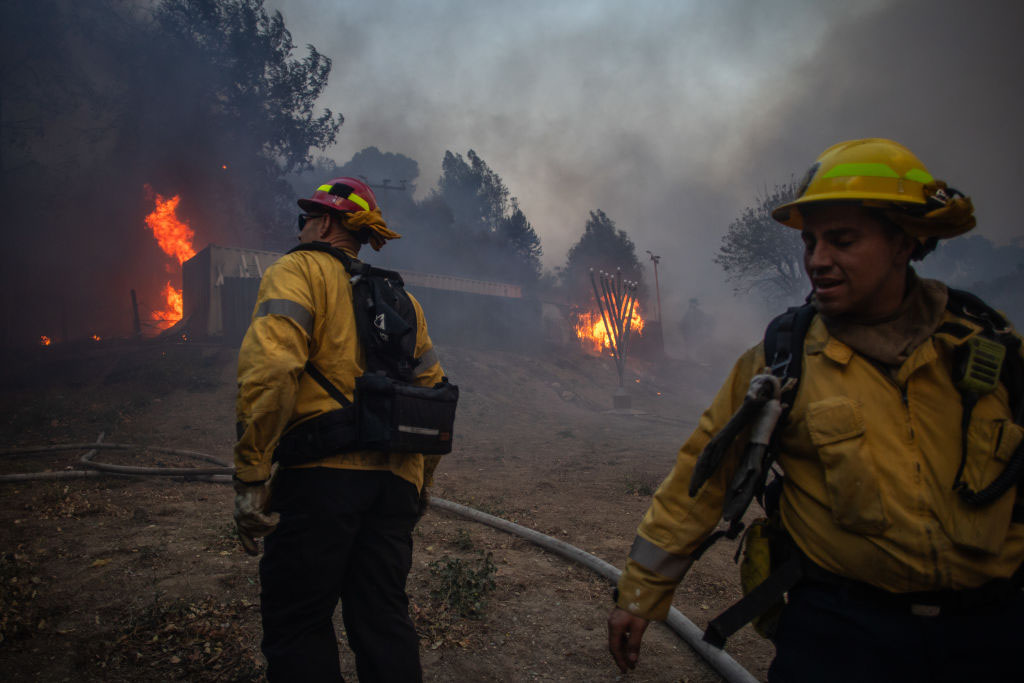
For those who’ve been impacted by the current wildfires in L.A. County, the Journal has compiled resources that’ll hopefully be helpful. The list below is by no means exhaustive, and we’ll continue to update it. Community members are also encouraged to reach out to their synagogues, which are providing various forms of assistance.

To suggest an organization or resource not listed here, please email ryant@jewishjournal.com.

Animals

  • Pasadena Humane: The animal shelter organization is actively providing for pet-support needs in disaster-affected areas. https://pasadenahumane.org

Emergency Shelters 

  • Palisades Fire evacuees: Westwood Recreation Center, at 1350 S. Sepulveda Blvd., Los Angeles, 90025. The shelter also accepts small animals.
  • Hurst Fire evacuees: Ritchie Valens Recreation Center, 10736 Laurel Canyon Blvd., Pacoima, 91331.
  • Eaton Fire evacuees: Pasadena Convention Center, at 300 E. Green St., Pasadena, 91101.

Financial

  • Federal Emergency Management Agency: According to FEMA, federal assistance is available to eligible individuals and families affected by the fires. Jewish Federation Los Angeles is working with FEMA to provide support to those eligible for assistance. gov, http://jewishla.org/fema
  • Jewish Free Loan Association: The nonprofit, interest-free loan organization is offering emergency loans to cover evacuation expenses, such as hotel or motel rooms, short-term rentals and travel outside of the area. Available to eligible applicants of up to $15,000. There are also a limited number of loans for up to $2,000 for applicants without access to guarantors, available on a first-come, first-served basis. org 
  • National Council of Jewish Women: NCJW/LA is addressing immediate clothing needs by offering displaced individuals and families $100 vouchers to The Council Shop locations in Los Angeles.org/lafire/ 

Food

  • A. Regional Food Bank: The organization is working with government agencies and nonprofit partners to respond to the needs of those impacted. https://www.lafoodbank.org

Housing

  • Hotel Association of Los Angeles: The self-described voice of L.A.’s hotel industry is demonstrating how to use Google to find competitive hotel rates. hotelassociationla.com
  • Stay Housed LA: Tenants affected by the recent wildfires can learn more about their housing rights, as well as get answers to questions related to eviction defense, at stayhousedla.org/wildfires.

Legal and Social Services

  • Bet Tzedek: The pro bono legal aid agency – which has Jewish roots – is providing free legal aid to those impacted by the fire. For more information, contact Jessica Ayon at (661) 425-9509 or visithttps://bettzedek.org 
  • Jewish Family Service LA: JFSLA is aiding all those affected by the catastrophic fires. This includes emergency financial aid, emotional support and housing assistance. If you or someone you know needs help, call (877) 275-4537 or email services@jfsla.org. 
  • Maple Counseling: The provider of low-cost mental health services is offering six free therapy sessions for those impacted by the fire, with ongoing support or referrals if the patient wishes to continue.Additional services include free assessments within 48 hours as well as guidance with resources and insurance navigation. (310) 271-9999. org

 Opt-in Notification Programs, Hotlines and Apps

  • Alert LA County: Los Angeles County system allows individuals to receive emergency alerts by text, email, and/or phone call.https://lacounty.gov/emergency/
  • Jewish Federation Los Angeles’ Community Call Line: (855) JFED-HLP, org
  • Watch Duty: A free fire-tracking app run by a Bay Area nonprofit, which has seen its userbase grow exponentially since the outbreak of the Los Angeles fires. org

Donate, Support and Volunteer

  • Chabad of Pasadena: The Chabad is offering daily daycare for kids whose schools burned down, distributing meals to the displaced and providing gift cards for essentials, among other services. To support this work, visit https://www.charidy.com/fires
  • Factor’s Famous Deli: The iconic Westside-area deli is helping to feed first responders. If you’d like to donate $25 toward meals to the firefighters, Factor’s will coordinate the delivery. Learn more at com.
  • Holy Smokes Kosher Barbecue: The kosher catering company, led by small business owner Danielle Goldblatt, has mobilized to feed firefighters and displaced families. Volunteers are chipping in. Learn more at https://www.instagram.com/holysmokeskosherbbq/ 
  • Jewish Federation Los Angeles: L.A. Federation has compiled listings of community spaces and support, volunteer opportunities, mental health services and government resources. https://www.jewishla.org/wildfire-crisis-relief/
  •  Jewish Silver Lake (JSL): An initiative of Chabad Jewish Silver Lake, JSL has established an emergency relief fund to support Angelenos facing a difficult time. Additionally, JSL and East Side Kitchen are coordinating volunteer opportunities, including meal prep and distribution for displaced families and firefighters. More details at https://jewishsilverlake.com/fire1
  • Kehillat Israel (KI): The Reconstructionist synagogue in Pacific Palisades, was miraculously unscathed by the Palisades Fire. Many of the congregation’s members, however, lost their homes. In response, KI has launched a Fire Assistance Fund. https://www.ourki.org/firefund
  • Nourish LA: Support Nourish LA’s ongoing efforts to fight hunger and build community. https://www.nourish.la
  • Our Big Kitchen Los Angeles: The Pico-Robertson-based organization is providing freshly prepared meals to anyone affected by this emergency. Volunteers are needed for this ongoing effort. For additional details, contactinfo@obkla.org
  • Operation Teddy Bear: A volunteer initiative, inspired by a similar, post-Oct. 7 effort in Israel, is bringing teddy bears to families displaced by the fires and currently living in hotels. Organizers are requesting new or very gently used teddy bears. They’re also seeking delivery volunteers. To arrange drop-off, text Courtney at (310) 447-4714 or Chava at (818) 518-6762.

L.A. Fires Emergency Resource Guide Read More »

Table for Five: Vayechi

One verse, five voices. Edited by Nina Litvak and Salvador Litvak, the Accidental Talmudist

Noticing Joseph’s sons, Israel asked, “Who are these?”

-Gen. 48:8


Denise Berger

Freelance writer

Any long-distance grandparent can relate to this moment. A man in his old age sees his young descendants and almost can’t believe who’s in front of him. So much time has passed, they might be strangers walking down the street, and yet there’s an intimate familiarity. A smile or even a tilt of the head bridges decades, so that the grandfather is seeing not only these children in front of him but also his own children so many years before. Time passes and stands still in the same instant. But this isn’t just a tender moment for Jacob Avinu, it’s also a moment of healing. He can sense the love between Joseph’s sons, the lack of animus. From the beginning of time, the Torah records how brothers have been at odds. Jealousy between Cain and Abel led to murder. Unresolved rivalry between Isaac and Ishmael continues to haunt us. And much of Jacob’s life was defined by this theme of feuding siblings, first by vying with Esau, and then his own sons setting out to destroy Joseph. The fact that these boys, who love each other without competition, were raised by the man whose brothers sold him as a slave, underscores how far they had come. Hashem puts us in the same situations over and over, until we can re-write the ending. When Yakov Jacob later blesses them (us) to be like Ephraim and Manashe, it’s about rewriting endings as much as it’s about getting along.


Rabbi Elazar Bergman 

Author of the forthcoming “The Daven Better Handbook“

Hmm. Where have I heard this story before? A blind man approaching death wants to bless one of his children, gets tricked and ends up blessing a different one of his offspring. Ah, yes. Our Patriarch Isaac. He wants to bless Esau, but is deceived, by his nearest and dearest no less, and ends up blessing Jacob, aka Israel, instead. Our verse tells us that Israel sees Joseph’s sons. Yet two verses later, we are told that Israel is unable to see. Which is it? Can he see or not? The answer is that physically, he cannot, but spiritually, he can. When Joseph brings his sons to be blessed, our patriarch, Israel, is ready and willing to do so. By all outward appearances, they are fine, upstanding examples of what the Jewish people would become. Then, he prophetically saw that the two would produce eminently wicked descendants. So he hesitates to give his blessing. True, his son Joseph brought them, but it wouldn’t be the first time a son deceived his blind father. Years ago he had deceived his. Might not Hashem be righting the scales? We aren’t prophets (well, maybe you are), but sometimes we feel or are shown that something is not quite right. That something may be our past deceits. Heed the message. Do the necessary teshuvah. Give — and be — a blessing. Good Shabbos!


Rabbi Dr. Chaim Meyer Tureff  

Rav Beit Sefer at Pressman Academy and author of “Recovery in the Torah”

What a sad thing to hear from a parent about your children and their grandchildren, “Who are these?” According to Chizkuni, Yaacov Jacob had eyesight issues. Hence it was actually difficult for him to see who they were, whereas he recognized Joseph from his voice. According to one midrash, there was a more nefarious reason why Israel asked, “Who are these?” The midrash states, “our father Jacob foresaw that a descendant of Ephraim, Jeroboam ben Nebat the Ephraimite, would make two golden calves.” Hence Yaacov Jacob saw this awful premonition and was disturbed by the future actions of his offspring, consequently asking the question, “Who are these?” This is what happens many times in a family that’s struggling with children with addiction. They see their children or grandchildren and ask the similar question, “Who are these?” Their actions seem foreign to what they’re used to. They were fun and affable while growing up and now their actions are diametrically opposed to the morals, values, and life that the adult once knew with their child. They have not come to terms with “Who are these?” And sometimes these children are completely different people. Once the parent or grandparent seeks help for their children from trained professionals, they are able to see through the pain, suffering, and core issues that their child is struggling with. Hopefully they will be able to assist in the miraculous turnaround that will ultimately be able to answer the question and know who these are. 


Nicholas Losorelli 

Ziegler School of Rabbinic Studies Class of 2025/5785 

Family is, well, complicated, and during this holiday season many of us have been flitting from one place to another, visiting family, friends, and/or chosen family. My family is a beautiful mix of ethnicities, nationalities, and religious traditions — Mexican Catholic, Mexican Jewish, Filipino, Hawaiian, Italian, African American and so much more — and at any family gathering it can be easy to get who’s who mixed up. “Whose kid is that?” “Whose cousin is that? Oh — does that make them my cousin?” The answer to that last question in my family is often, yes, we’re all cousins, it’s easier that way, because family isn’t nearly as simple as the almost mythical image of the nuclear American family that exists in the popular imagination, it’s often much more varied than that. 

At the end of his life, after much familial strife Jacob blesses his sons and meets Joseph’s sons — his grandchildren — Ephraim and Manashe, for the first and last time. He experiences this varied-ness, because they are half Israelite and Half Egyptian, and it could have been easy for the story to go in an unfortunate direction here, but Jacob blesses Ephraim and Manashe without hesitation. This is a moment of recognition that no matter how varied and different we are, whether it’s ohana, familia, famiglia, chosen family, or mishpacha, family is still family, and my family doesn’t have to look like yours, and yours doesn’t have to look like mine, but cousin, I hope we will always find moments to bless one another.


Rabbi Elchanan Shoff

Rabbi, Beis Knesses Los Angeles

Who are they, asked Isaac? Joseph replied, “They are my sons, which Hashem gave me as a gift.” Our children are not simply ours, they’re entrusted to us by God. The old joke tells of the shul announcement: “We wish Mazel Tov to Dr. and Mrs. Goldstein on the birth of their son Dr. Goldstein!” “The hands of merciful mothers cooked and consumed their own children,” says the book of Lamentations. Sometimes, children can be used by parents to meet the needs of the parent. A parent wants their child to reflect a certain way upon them, perhaps. But what is best for that child? Has their future been mapped out from birth, like that little fictional Goldstein baby? Joseph, who raised children faithful to God and monotheistic values in a very unfriendly-to-monotheism Egypt, tells us the secret. They are God’s children, and he has entrusted them to me. They are not just mine. Child sacrifice is against basic Torah values. Though it is thankfully a thing of the past, in a way people act similarly when they fail to place their children’s wellbeing as primary. Abraham learned this when he was told that only God is in charge of the life of one’s child – not he, despite his great love for Isaac. We must remember this. Our own happiness and wishes for ourselves must take a back seat to what’s truly best for our children, for they are not ours. We are watching them for God.

Table for Five: Vayechi Read More »

Saving California

Editor’s note: This article went to print before the LA fires hit the city.

Some life lessons come from the least likely of places.

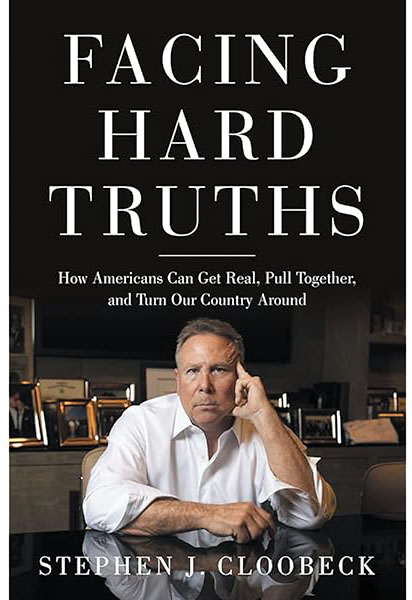
In the case of businessman Stephen J. Cloobeck, who hopes to become California’s next governor, his major life lesson happened while he was a busboy in the early 1970s in a resort near San Francisco.  

“While staggering across the lodge’s crowded dining room, struggling under the weight of about two dozen glasses on a massive tray, I either slipped or lost my balance, I’m not sure which,” he writes in his new book, “Facing Hard Truths: How Americans Can Get Real, Pull Together, and Turn Our Country Around.”
“The next thing I knew, my arms gave way and the heavy load came tumbling down to the door. Crash! The glasses were smashed. It was a total disaster.”

After he cleaned up the mess and the embarrassment was behind him, his boss sat him down to discuss the incident, explaining that they’d be taking the cost of those broken glasses out of his paycheck.  

“He wasn’t trying to be mean,” Cloobeck writes, “but it was only fair: You break it, you pay for it. That’s how life works. Good intentions don’t make up for bad results.”

Getting his pay docked as a busboy turned into a transformative life lesson for the simple reason that he had never thought much about the principle of accountability.

Today, as he gears up for his campaign for governor, he has zeroed in on that very idea of accountability.

“As I’ve since come to realize, this isn’t just how a well-run business works. It’s how life works.” More importantly, he adds, “it’s how politics should work.”

He wonders: “Can you imagine how much safer, happier, and more prosperous America would be if we closely tracked the performance of our elected officials and held them accountable to delivering the results they promised on the campaign trail? Or better yet, if politicians held themselves accountable?”

At a time when trust in politicians is at an all-time low, the cynic in me hears the notion of accountable politicians and can only think of pipe dreams and magical thinking.

But Cloobeck doesn’t see himself as a politician. He may be a registered Democrat, but he sees himself, above all, as an experienced problem-solver. As it says on the book jacket, Cloobeck “built his reputation transforming dysfunctional companies on the brink of ruin into performance powerhouses.”

His mission, as bold and idealistic as ever, is to bring back the powerhouse of his broken and beloved California and return it to its rightful place as the primary home of the American Dream.

His mission, as bold and idealistic as ever, is to bring back the powerhouse of his broken and beloved California and return it to its rightful place as the primary home of the American Dream.

“I still remember what my home state used to be: a place of dynamism and hope, with safe communities, clean streets, and the best schools,” he writes. “During the final few decades of the 20th century and into the 21st, California was a place where businesses thrived and created opportunities for millions.

“It was a place where hardworking people from other states and around the world came to better their lives and claim their share of the American dream. Growing up, I would ride my bike around my neighborhood in Encino or to my Little League games, just being a kid and never having to worry about my personal safety or whether my family would lose our modest home. I’m sure you, too, can recall better days in the communities where you live.”

True to his blunt and direct style, he begins his book by reminding us how far we are from the California of the American Dream. “How the hell did we get here?” he asks.

“Making my way around Los Angeles, I encounter traffic-clogged streets, trash strewn sidewalks, empty storefronts, and tent encampments occupied by the unhoused. I also hear stories from folks I meet about how tough life is today,” he writes.

“It used to be that you could work hard and enjoy a reasonably comfortable middle-class lifestyle, even without a college degree. Not anymore. The cost of living is out of control. And thanks to sky-high home prices and an insurance crisis, it’s almost impossible for working people to buy a home.”

Given that he bills himself as an obsessive problem solver, it’s a smart idea to kick off his book with a hard-nosed accounting of California’s litany of problems.

“What was once was a place of aspiration, immortalized in songs like the Mamas & the Papas’ ‘California Dreamin’, is turning into a nightmare. Rising unemployment. Failing schools. Increasing retail theft. The nation’s highest poverty rate. A health care crisis. An enormous budget gap, in the tens of billions of dollars.

“It’s no wonder so many residents have been leaving the state in recent years. As one demographer says, noting the state’s population declines, ‘California is no longer the preferred destination it used to be.’”

Cloobeck’s biggest challenge will be to convince enough voters that he can deliver on the politics of accountability. He’ll be up against many seasoned politicians who know the ropes of lining up votes. But he sees that as an advantage. He doesn’t carry the baggage of an establishment that has largely failed its constituents.

Cloobeck’s biggest challenge will be to convince enough voters that he can deliver on the politics of accountability. He’ll be up against many seasoned politicians who know the ropes of lining up votes. But he sees that as an advantage. He doesn’t carry the baggage of an establishment that has largely failed its constituents.

If he has one thing going for him, it’s timing. People are nearing the breaking point. The more taxes they pay, the more insecure they get. They see bloated budgets, bloated promises and incompetent leadership. All too many Californians are now voting with their feet, taking their tax dollars and broken dreams to friendlier places like Texas, Florida, Nevada and Arizona.

Indeed the other thing Cloobeck has going for him is that he has put his finger on the most relevant truth of all: after they win our votes, our leaders don’t hold themselves accountable. It’s the eternal virus of democratic politics: voters must wait for the next election cycle to boot out failed leaders.

But as we’ve seen all too well in California, a lot of damage can happen while we wait for that next election. How much better things would be if politicians were conditioned to hold themselves accountable—without demoralized voters having to constantly replace them.

In a sense, Cloobeck is a merchant of attitude. The seven hard truths he highlights in his book are all about changing attitudes to effect positive change:

1.  Life is tough. Get a helmet.

2.  A team that is divided cannot win.

3.  Rules are rules.

4.  The best economies benefit everyone.

5.  Leadership is about competence, not celebrity.

6.  True success requires putting “we” before “me.”

7.  Social trust or bust.

In each chapter, he shows his policy chops by outlining creative ideas and practical solutions to some of the toughest problems facing California and America. But as his “hard truths” make clear, those solutions don’t stand a chance without the right attitude.

That includes us, the voters. He doesn’t let us off the hook, because bringing back the American Dream is a two-way street. “We must try to cultivate the kind of seriousness we want to see in our elected officials,” he writes in his last chapter. We can’t get sucked in, in other words, by superficial solutions. “Politicians do it all the time,” he writes. “But if you never try to solve complex problems at their root, then sooner or later you wind up asking yourself the question I posed at the beginning of this book: How the hell did we get here?

We know how Cloobeck got here — he got his pay docked as a busboy, learned the lesson of his life, and is now ready to share it with the California of his dreams.

Saving California Read More »

Rethinking Israel’s Security

There two ways to think about the dramatic events that rocked the Middle East in the last year and a half. 

One – a tactical failure in Gaza, and an unexpected decision by Hamas, led to unprecedented upheaval. Had Israel been slightly readier for the confrontation, either by looking more carefully at the intelligence hinting at possible attack, or by having more forces on the border on the morning of the attack, the result would have been not much different from the results of previous violent rounds in Gaza.   

Two – a strategic miscalculation, whose roots go back several decades, cost Israel dearly and served as a wake-up call. Israel failed to understand the motivations of its enemies, failed to ready itself to likely occurrences, failed in preparation, division of resources, allocations of funds. Had Israel been slightly readier for the confrontation it would not much matter. The upheaval would still lead to catastrophic outcomes. 

If the failure was tactical, what Israel needs is adjustment. If the failure is strategic, what Israel needs is rethinking. And a few Israelis are already engaged in attempts to envision a change to Israel’s strategy that is more than tactical adjustments. The most ambitious of these attempts reimagine an overhaul of Israel’s security strategy. That is, to rethink the principles established by Israel’s founder, David Ben-Gurion. These principles, claims one such Israeli – Prof. Eviatar Matania – must be reconsidered. In fact, he writes in a paper for the Misgav Institute, even if thus far no one formally changed “the principles of Israel’s historical (“Ben-Gurionist”) security strategy … in practice there is a ‘behavioral’ change in Israel’s political-security actions.” 

What Matania proposes in his detailed work is more than tweaks to Israel’s strategy. True, he writes, two of the main assumptions on which Israel’s strategy was founded are still valid: That the “region” doesn’t want Israel to be there, and that “there is a catastrophic asymmetry between Israel and its enemies in population, territory and the number of countries those who oppose Israel.” But one dramatic change necessitates rethinking: “Israel today, unlike before, is a strong Western economy — even after the upheavals it experienced — and its GDP is greater than that of any of the countries in the region (except Saudi Arabia and Turkey).” Thus, he writes, “Israel can currently invest considerable budgets in security.”

What would a new strategy look like? It is not easy to explain the full meaning of Matania’s proposition in a short article, but I’ll try to capture its essence by giving examples. 

One important change he proposes concerns “Deterrence.” Deterrence is one of the original “three principles” of Israel’s strategy — deterrence, early warning and decisive defeat of the enemy. Matania believes that deterrence ought to be replaced with what he calls “Coercion,” an amalgamation of Deterrence and “Compellence.” “Deterrence and Compellence create Coercion, which tries to prevent war through the threat of levying a heavy price (deterrence) or restoring deterrence through implementation (enforcement) while constantly moving between the two.” And by enforcement he means “angry” – his term – and “disproportionate” enforcement, “meaning that Israel will change from being a threatening yet contained actor to a player who reacts harshly to any injury, large or small.”

By enforcement he means “angry” – his term – and “disproportionate” enforcement, “meaning that Israel will change from being a threatening yet contained actor to a player who reacts harshly to any injury, large or small.”

Why give up on the idea of proportional response? Matania explains: “The term ‘proportional’ was invented by those who do not understand the essence of Coercion.  Coercion is not relevant if the enemy knows that a response [to provocation] will be measured.” Only “real fear that any small realization of a threat will be met with a blow of no Proportionately could strengthen deterrence.”

Matania doesn’t just propose to add layers to Israel’s strategy, he also believes some of the current pillars ought to be eliminated. Chief among them: early warning. “Early warning failed in the supreme tests that it faced, in the Yom Kippur War and the Oct. 7 disaster, and it is likely to fail in the future as well. Early warning will fail not because it is sometimes impossible to warn about impending war, but because it is impossible to guarantee such warning – especially when surprise is the essence of the enemy’s planning.” Israel, he writes soberly, “must assume that there may be another surprise in the future … on land, in the air or at sea, and perhaps also in cyberspace … Respectively, the IDF must be built so that any enemy can be stopped even when it has the advantage of surprise.”

Easier said than done? Costlier done than said? No doubt. And yet, Matania believes it’s possible, and essential.

Something I wrote in Hebrew

Following a Pew report on the religious composition of the incoming Congress I wrote this:

Is it good for Jews to have many Jews in Congress? This is a complicated question to answer. A large number of Jews in Congress attracts attention, sometimes conspiracy theories, often feelings like jealousy. On the other hand, the Congress is a focal point where it is possible to influence “Jewish interests,” assuming there is such a thing (fighting antisemitism is perhaps the only one to which all Jewish members of Congress will subscribe). Congress is a place that radiates power, and the presence of many Jews there indicates that this group has power. It is good for Israel that when its enemies look at Congress, they recognize that there are many Jews in it — even if, in the eyes of Israelis, a large portion of these members of Congress do not support Israel to the extent desired. It is good for all Jews that when non-Jews look at Congress, they recognize that the Jews are a successful elite group, and therefore, at least sometimes, will want to engage with it. In other words, it’s complicated.

A week’s numbers

See the above text.

Screenshot


A reader’s response

Debbie Dorch writes: “President Carter succeeded because he was the only president willing to pressure Israel to accept peace for land.” My response: Or maybe because Anwar Sadat was the only Arab leader to truly mean “peace” when he proposed a peace.


Shmuel Rosner is senior political editor. For more analysis of Israeli and international politics, visit Rosner’s Domain at jewishjournal.com/rosnersdomain.

Rethinking Israel’s Security Read More »

Pasadena Synagogue Destroyed by Fire; Palisades Devastated as Fires Rage Overnight

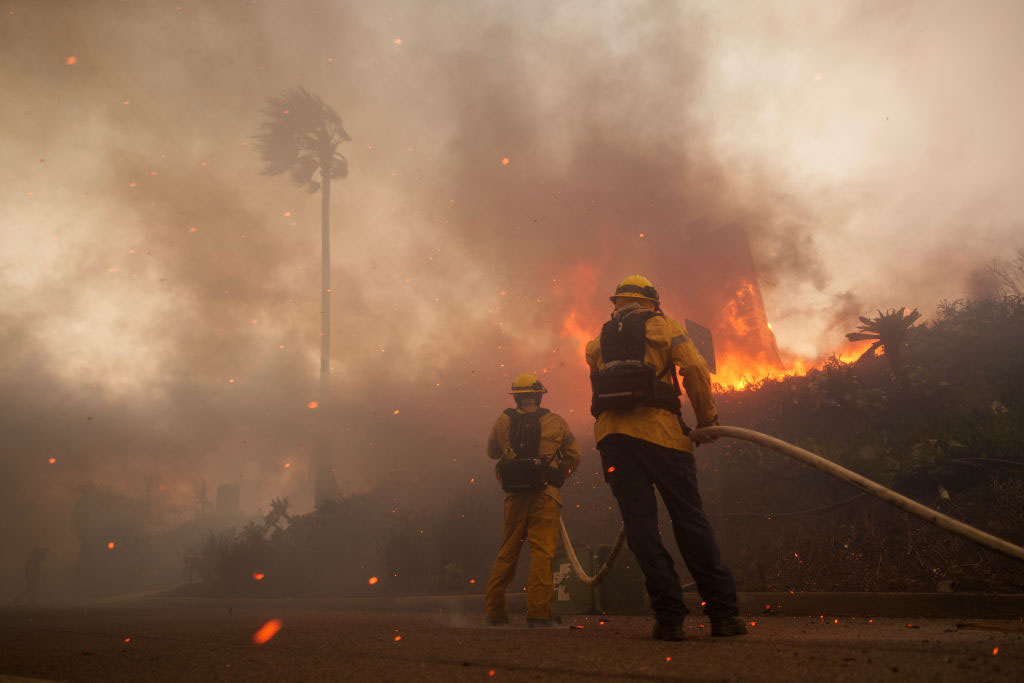
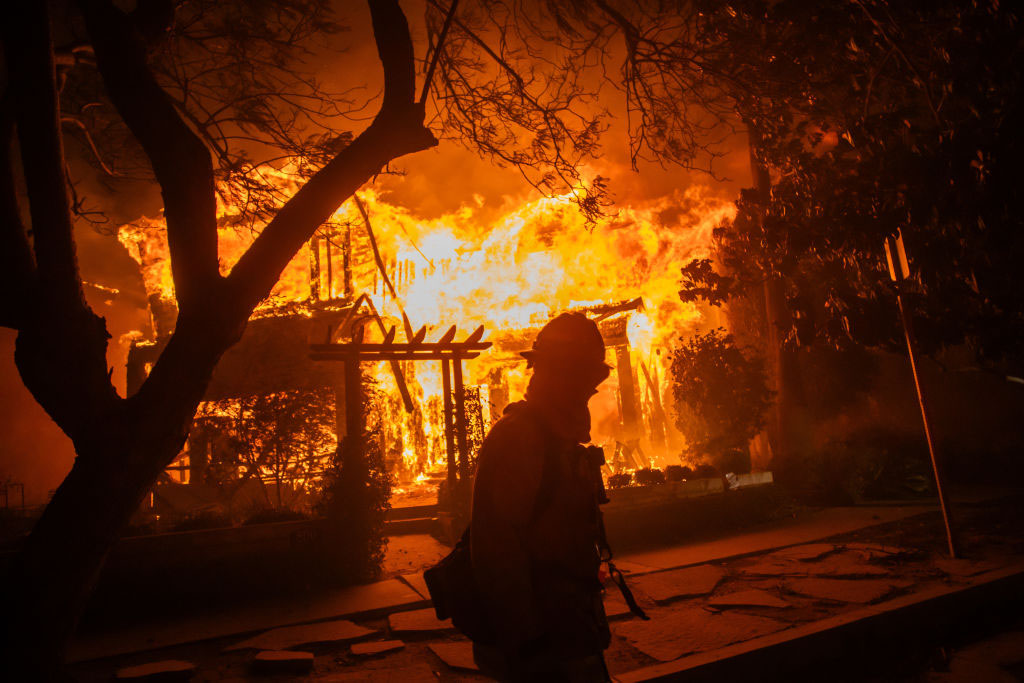
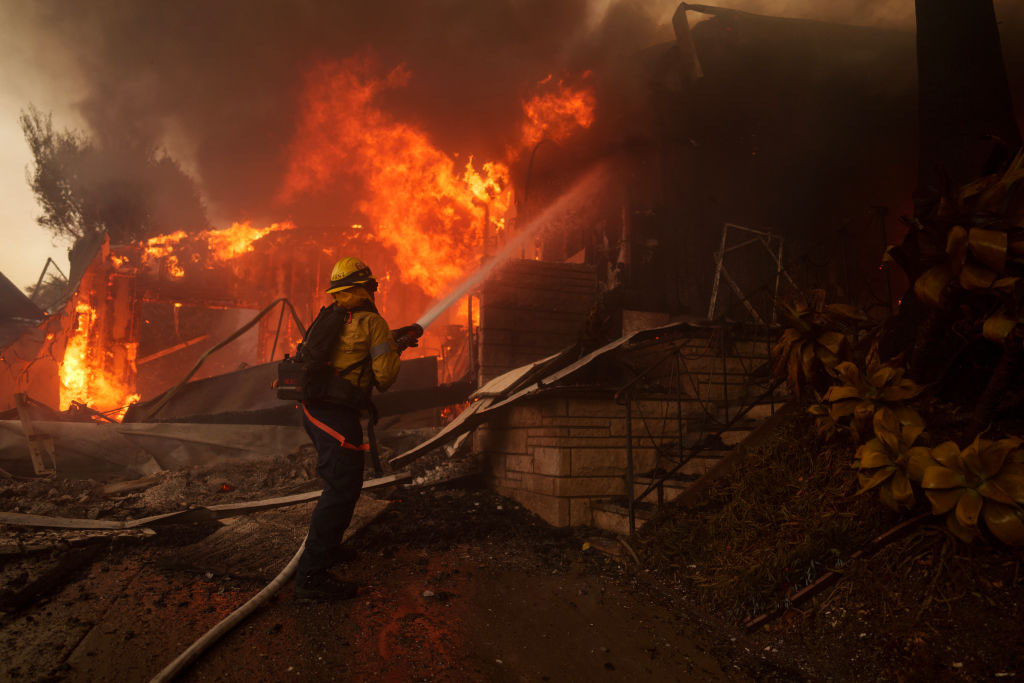
Wildfires driven by intense Santa Ana winds have devastated Los Angeles County, destroying over 1,100 structures, displacing tens of thousands, and causing at least two fatalities. Among the destruction is the Pasadena Jewish Temple & Center, reduced to ashes as the Eaton Fire ravaged overnight.

The Pasadena Jewish Temple & Center, a conservative shul built in 1949, was consumed by the Eaton Fire, which has burned over 2,200 acres across Pasadena and Altadena.

“This is a devastating blow to our community, but we’re grateful for everyone’s safety,” said Melissa Levy, the synagogue’s executive director. Levy confirmed the safe evacuation of Torah scrolls and staff.

A press conference was held at 8 a.m. Jan. 8 with leaders of the Los Angeles City and County Fire Departments, the LAPD, Los Angeles Sheriff’s Department, the county’s Office of Emergency Management, county Office of Public Works, the chief engineer of the Los Angeles Department of Water and Power and elected officials to report on the city and county’s response.

The Palisades Fire has grown to over 5,000 acres, destroying approximately 1,000 structures and forcing 37,000 residents to evacuate. Flames reached Pacific Coast Highway (PCH), prompting closures from Topanga Canyon to Los Flores Canyon. Many cars were abandoned by fleeing residents on Tuesday afternoon and had to be bulldozed by authorities to clear emergency routes.

LAUSD Superintendent Alberto Carvalho confirmed significant fire damage at Palisades High School.

High winds exceeding 75 mph grounded all firefighting aircraft Tuesday night, leaving crews to battle advancing flames on the ground, and tapping water reserves and pressure.

“We depleted three million-gallon tanks in the Palisades by 3:00 a.m.,” said Janisse Quiñones, chief engineer of LADWP. A boil water notice is in effect for residents in the Palisades due to ash contamination, and LADWP warns that water quality may worsen before improving.

All officials are urging residents to stay alert, keep their phones charged and a go bag ready, since they cannot predict with certainty where the fires will spread next.

“Overnight, embers jumped roads, igniting structures miles away,” said L.A. City Fire Chief Kristin Crowley. “These conditions are unprecedented and unpredictable.”

Reports of looting have surfaced, with Sheriff Robert Luna confirming two arrests.

“If you are thinking of exploiting this disaster, you will be caught and prosecuted,” he said. Deputies remain stationed in evacuation zones, but personnel are being spread thin.

L.A. County Fire Chief Anthony Marrone confirmed that mutual aid had been requested from five neighboring counties: Orange, Ventura, Santa Barbara, San Luis Obispo, and Los Angeles. He stated that the state Office of Emergency Services had also been contacted to deploy 50 engine strike teams, consisting of 250 fire engines and over 1,000 personnel, many of whom were already en route to assist in LA County.

In Sylmar, about ten miles north of Sherman Oaks, the Hurst Fire has burned over 500 acres, prompting the evacuation of 3,000 residents. Burning within the historic Saddle Ridge Fire footprint, the blaze continues to threaten Olive View-UCLA Medical Center.

Across L.A. County, two civilian fatalities and multiple injuries have been reported, according to Marrone. A firefighter is also being treated for a serious head injury.

Evacuation orders now extend to parts of Monrovia, Glendale, and La Cañada Flintridge, with over 32,500 residents under mandatory evacuation. An additional 38,600 residents remain under evacuation warnings. The Altadena Sheriff’s Station was evacuated after being damaged by fire. Sheriff Robert Luna described deputies narrowly rescuing residents as flames engulfed nearby homes.

These are the roads closures around the Palisades fire as of 10:00 am Wednesday.

Pacific Coast Highway closed from Las Flores Canyon Road to Santa Monica Freeway, SR-10

Coastline Drive and Southbound Pacific Coast Highway

Southbound Topanga Canyon Boulevard at Mulholland Drive

Scheuren Road at Stunt Road

Southbound Tuna Canyon Road at Saddle Peak Road

Old Topanga Canyon Road at Mulholland Highway

Around the Hurst Fire, Westbound 1-210 closed between Roxford and I-5 is closed.

Around the Eaton Fire, Altadena Drive from Allen Avenue to New York Drive is closed.

Burbank Airport reported delays due to heavy smoke, and LAX flights faced turbulence during landings. With passengers posting horrifying aerial footage of the Westside fires.

Authorities are urging residents to stay off the roads unless evacuating.

“Visibility is less than one block because of the smoke, so if there is not a good reason for you to be on the roads, we ask that you leave the roads open as possible,” said LA City Council President Marqueece Harris-Dawson. He is acting as Mayor Pro Tempore while Mayor Karen Bass returns from a mission to Ghana in West Africa.

Schools across the region remain closed, including all campuses in the Santa Monica-Malibu Unified district and over 100 LAUSD schools.

Emergency shelters have been set up at Westwood Recreation Center, Pierce College, and the Dream Center Foundation on Bellevue Avenue. Large animals are being housed at the L.A. Equestrian Center and Pierce College, while small animals are sheltered at Pasadena Humane Society and Agoura Animal Center.

With high winds and red flag conditions expected to persist through Thursday, officials warn that the situation remains volatile.

“Strong winds, low humidity, and embers traveling over a mile mean we are not out of danger,” said Chief Marrone.

Over 135,000 customers are without power, and restoration could take up to 48 hours due to downed lines and damaged circuits.

“Urban water and power systems are being pushed beyond capacity. We need residents to conserve resources and follow all evacuation orders,” the LADWP’s Quiñones said.

President Joe Biden, in Santa Monica for an event that was supposed to take place in the Coachella Valley on Tuesday, has delayed his departure to monitor the crisis. Governor Gavin Newsom is in Los Angeles coordinating emergency efforts.

“We were here not too long ago — the Franklin Fire, a few weeks prior to that, the Mountain Fire in November and December, now, January,” Newsom said at a press conference on Tuesday afternoon. “There’s no fire season anymore; it’s fire year — year-round. It’s incredibly important that we heed the warnings and calls. We are not out of the woods by any stretch of the imagination.”

“There’s no fire season anymore; it’s fire year — year-round.” – Gov Gavin Newsom

Newsom declared a state of emergency on Tuesday.

“The President of the United States happens to be in town, and it didn’t take more than a text message to get the Fire Management Assistance Grant approved,” Newsom said. “That means we’re getting reimbursed for the vast majority of these costs. No politics, no hand-wringing, no delays. The President said, ‘Yes. What else do you need?’”

Still, emergency management crews are bracing for what is to come over the next few days.

“This is a historic natural disaster, and we are just beginning to assess the scale of destruction,” said Kevin McGowan, director of L.A. County’s Office of Emergency Management.

Pasadena Synagogue Destroyed by Fire; Palisades Devastated as Fires Rage Overnight Read More »

A Prayer During the Southern California Fires 2025

Ribono shel Olam, Master of the Universe, protect those that are impacted by the devastating Southern California fires. Guide them towards shelter and safety. As family, friends, neighbors and fellow Angelenos experience physical and emotional loss, may we turn towards each other with open homes and open hearts.

God, spread a blanket of security over the firefighters and first responders that serve our community. Grant them strength and courage and may each one come home safely to those they love.

Let us be reminded of how to help one another. Holy One of Blessing, give us increased compassion and an abundance of kindness that we may extend our hands and hearts to those in need. As the prophet Elijah experienced, “There was a great and mighty wind, splitting mountains and shattering rocks by God’s power, but God was not in the wind. After the wind—an earthquake; but God was not in the earthquake. After the earthquake—fire; but God was not in the fire. And after the fire—a small, still voice.”

God’s small, still voice runs through each one of us. May God’s voice compel us to reach out to each other and find pathways that lead to hope and ultimately, peace for all in need. Amen.

A Prayer During the Southern California Fires 2025 Read More »

As I Freeze in Montreal, I Watch My City Burn

As I sit here in my mother’s living room in heart-of-winter Montreal, in the midst of freezing temperatures and a snowstorm that brings back childhood memories, I’m watching my beloved Los Angeles burn.

Again, I’m stuck between my mind and my heart.

My heart is texting friends to see how they are doing, and following every detail of this tragic inferno unfolding at the speed of howling winds.

My mind pesters me to think straight and report the story for our readers, and ask our reporters to look for personal stories and testimonials.

In the meantime, as the heart and mind compete for my attention, I can’t help thinking that the freezing winds that cut my face the other night in Montreal are the same winds that are emblazing my friends in Los Angeles.

Who knew that a freezing snowstorm could ever look like paradise.

As I Freeze in Montreal, I Watch My City Burn Read More »

Pasadena Synagogue Burns Down as Fires Rage across Southern California

A synagogue with more than 100 years of history in Pasadena, California, burned down overnight as fires swept across parts of Southern California.

The fate of a Chabad center about 40 miles away near the coast was unclear as a major fire flared in the Pacific Palisades, one of three different blazes destroying structures and threatening lives in multiple pockets of the greater Los Angeles area. Additional Jewish institutions lay in evacuation zones, while others took preparations in case of further spread.

The Pasadena Jewish Center and Temple burned for hours as fire spilled out of the Eaton Canyon, fueled by strong winds. The 434-family congregation had operated from the Mission-style building, which had a wooden Torah ark carved by the Jewish artist Peter Krasnow, and three outbuildings since the 1940s.

“It’s a massive center, it’s just crumbling with the intensity of the heat,” a KTLA reporter said while broadcasting from the scene. She added, as flames shot through the synagogue’s roof, “It looks like the concrete and the metal is just melting. … It’s just a total loss.”

Added a neighborhood man whom the newscaster said used to go to the synagogue, “I feel numb to this. It’s like a bad bad horrific dream. To see that it’s not going to be here tomorrow … ” His voice broke.

The newscaster, Tracy Leong, showed fire trucks driving past the synagogue but said she had not seen any attempt to quell its burning while she was on the scene. “It’s really hard to get a handle on this fire,” she said. “There are so many structures burning and they’re doing what they can, and there’s just not enough of them right now.”

The congregation’s executive director told The New York Times overnight that everyone employed by the synagogue was safe.

“We are devastated, but our staff are safe and we managed to get our Torahs out safely as well, while ash was coming down in our parking lot,” said Melissa Levy, who said she had been evacuated from her own home.

Southern California has long been vulnerable to devastating fires, but climate change has altered weather patterns that in the past largely limited fire season to only parts of the year.

Earlier in the night, the Pasadena fire was not the major one on the radar for residents of the region. A larger fire in the Pacific Palisades, located on the Pacific coast north of Santa Monica, was under an evacuation order as strong winds spread a fire there. A third fire later erupted several miles north.

Zibby Owens, the publisher and bookseller who recently put out an anthology titled “On Being Jewish Now,” posted footage on Instagram showing that her family’s home in the area had been lapped by flames before losing its camera feed.

Kehillat Israel, a Reconstructionist synagogue in Pacific Palisades, was also under an evacuation order and closed starting on Tuesday.

And the Chabad of Pacific Palisades evacuated 100 children from its preschool on Tuesday as fire neared the property, Rabbi Zushe Cunin told local TV news. He and other rabbis posed with the community’s Torahs as they removed them from the fire’s path on Tuesday evening.

“The night is still a very long one, and the winds are still raging,” the center said on Instagram. “We need all of your prayers to overcome this dangerous fire.”

The center is located squarely inside the evacuation zone for the Palisades Fire. None of the three fires was contained on Wednesday morning, with continued strong winds expected to fuel them throughout the day.

On the other side of Topanga State Park from Pacific Palisades in Calabasas, the Reform synagogue Congregation Or Ami was taking precautions in case conditions changed.

“We have removed Torah scrolls and other sacred/business-critical items from Congregation Or Ami. It’s without power now. We have people whose homes are endangered, people who have friends/relatives who lost homes. In a holding pattern for the moment,” Rabbi Paul Kipnes wrote on Facebook on Thursday, noting that the Palisades fire was just 17 miles away with winds gusting up to 100 miles per hour at times. “Distances here feel large yet small.”

Pasadena Synagogue Burns Down as Fires Rage across Southern California Read More »

Let’s Bring Jewish Vibrancy to 2025

Welcome to 2025, a year brimming with potential—not just for the world at large, but for the Jewish people. As I sit here reflecting on what it means to step into this new chapter, I feel an overwhelming sense of gratitude for the generations who came before me. Millions of Jews—countless souls whose names we may never know—sacrificed everything to ensure I could stand here today, boldly declaring: I am Jewish. I am proud. And I will not let our story be reduced to a tragedy.

Because here’s the truth: We owe them more than survival. We owe them vibrancy.

Yes, we live in a time when antisemitism is on the rise, when the Jewish people are once again being vilified, and when standing tall can feel like an act of defiance. But if 2025 is going to mean anything, it cannot be the year we let ourselves be defined by our enemies. Fighting hate is necessary, but it cannot be the entirety of our identity. If the only reason to fight for the Jewish people is to stop them from being erased, then we have already failed.

I don’t want to fight for a community that’s merely surviving. I want to fight for one that is thriving. One that takes its rightful place as a source of light, love, and life.

That’s the Jewish world I want to be part of—a world that is just as passionate about living Jewishly as it is about resisting those who wish us harm. We should be shouting from the rooftops about the joy of Shabbat dinners, the wisdom of our traditions, the beauty of our music, and the resilience of our communities.

Why should anyone care to defend a Jewish world that is meh? We have to be amazing. As amazing as our ancestors believed we could be when they risked everything to carry our story forward.

Earlier this year, I stood looking out at the sea on the beaches of Israel, and I cried. 

I cried thinking about the indescribable gratitude I have for everyone who worked to keep this tribe alive and in our homeland. I looked to my right, I looked to my left, and all I saw for miles were families and friends camping along the beach, laughing, sharing meals, and simply being.

We can get so consumed with the fight that we forget what we’re fighting for. But that moment, standing there with the waves crashing before me, I remembered: 

This is why. This is what we’re fighting for.

It wasn’t just an emotional moment—it was a transformative one. It stripped everything down to the essence of what it means to be Jewish: joy, connection, resilience, and a deep love for the life we’re building. It was a reminder of the beauty we are all part of, the legacy we’re upholding, and the responsibility we have to carry it forward.

That feeling stays with me and, I hope, with all of us. Because these moments—the laughter of children playing on the sand, the warmth of a shared meal, the quiet power of lighting candles on Shabbat—are what make the fight worthwhile. They’re the moments that remind us of our why.

In my work, I am lucky to witness this Jewish magic every day. I see it in the laughter of teens learning about their heritage for the first time, in the volunteers who pour their hearts into rebuilding communities, and in the courage of activists who use their voices to make the world a better place. I see it in the thousands of people who gather for Shabbat, not just to light candles but to ignite a collective spirit of belonging.

This is what it means to be Jewish in 2025—not just to endure but to thrive. To wake up every morning and say, “I am here because they dreamed I could be.”

So let this be the year we put as much energy into celebrating as we do into resisting. Let’s sing louder than the voices that try to silence us. Let’s embrace our differences and build bridges across generations and denominations. Let’s embody what it means to be a light unto the nations—not by dimming our flames, but by letting them burn brighter than ever.

Because being Jewish isn’t just a label or a checkbox on a census. It’s a living, breathing testament to everything our ancestors believed in. It’s a gift. A privilege. And a responsibility we cannot take lightly.

We are ready. And not just to fight—but to shine, to celebrate, and to build a Jewish world so full of life that it will make those who sacrificed for us proud.

So to 2025, I say this: Bring on the challenges. Bring on the noise. Bring on the work. We are ready. And not just to fight—but to shine, to celebrate, and to build a Jewish world so full of life that it will make those who sacrificed for us proud.

Am Yisrael Chai. Let’s make this year amazing. For them. For us. For everyone.


Shanni Suissa is the podcast and social media director for the Jewish Journal.

Let’s Bring Jewish Vibrancy to 2025 Read More »

Of Monsters and Minyans

Might a golem help make a minyan? Over 300 years ago, a rabbi considered the question, now cited in countless discussions about the implications of artificial intelligence and Judaism.

As Rabbi Dr. Yosie Levine, a Los Angeles native now serving as the rabbi of Manhattan’s Jewish Center, notes in his magisterial new biography “Hakham Tsevi Ashkenazi and the Battlegrounds of the Early Modern Rabbinate,” the itinerant sage and former Chief Rabbi of Amsterdam included in his book of responsa an analysis of the question. 

The golem, a man-made Frankenstein’s monster-like creature, was made famous in fictional tales ascribed to the 17th-century Rabbi Judah Loew ben Bezalel of Prague but actually composed in the 19th century. Golems were also discussed a millennium earlier in Talmudic legends. But it wasn’t until the Hakham Tsevi writing in 1712 that the figure was brought into the realm of Jewish law.

As Levine notes, at the time, mechanization had become a source of fascination both within and beyond the Jewish world. The lines separating science and superstition were blurry, if they existed at all.  

As Levine notes, at the time, mechanization had become a source of fascination both within and beyond the Jewish world. The lines separating science and superstition were blurry, if they existed at all.

Hakham Tsevi had learned that his ancestor, Rabbi Elijah of Chelm, had supposedly used the mystical text “Sefer Yetsirah” to create a golem. Hakham Tsevi’s son, Rabbi Jacob Emden, later recounted that “when [Rabbi Elijah] saw that the golem was growing larger and larger, he feared that he would destroy the universe. He therefore removed the holy name [of God] that was still embedded in his forehead, thus causing him to disintegrate and return to dust. Nonetheless, while he was in the process of forcibly extracting the holy name from him, the golem injured him, scarring his face.”

So it was that Hakham Tsevi examined the implications of golems and prayer quorums. On the one hand, he noted, the figure was obviously not born from a woman, and therefore could not be considered Jewish in accordance with Jewish law. On the other hand, the Talmud rules that one who adopts a child is considered to have birthed the child. The handiwork of a righteous individual, even a human-like creature formed from clay, the rabbi reasoned, was like that person’s child. So perhaps the golem could count.

To resolve the competing factors, Hakham Tsevi cited the following Talmudic tale: “Rava created a golem using the forces of sanctity. Rava sent his creation before Rabbi Zeira. Rabbi Zeira would speak to him but he would not reply. Rabbi Zeira said to him: You were created by one of the members of the group, one of the Sages. Return to your dust.”

Since Rabbi Zeira was not considered a murderer for rendering the golem back into its constitutive elements, it must be, concluded Hakham Tsevi, that the creature had never been fully human. As Levine summarizes the responsa’s verdict, “A golem – or any other artificial life form – cannot be considered a human life unless and until it issues from a human womb … the golem might have been alive, but it was little more than a soulless brute.”

Having introduced the golem into the realm of Jewish law, the responsum of Hakham Tsevi sparked subsequent discussions. Could a golem perform ritual slaughter? Would its corpse generate ritual impurity? If a golem found a lost object, would he be able to claim it or would the object belong to the person that created the golem? 

“In our day,” Levine writes, “with the arrival of questions generated by modern scientific advances, Hakham Tsevi’s responsum has taken on new relevance. His treatment of the issue began to inform discussion about questions never before considered. What is the halakhic status of a robot, a clone, or another form of artificial intelligence? How might the status of a golem bear on matters of reproductive biotechnology or the disposition of human embryos? For ethicists and policy-makers alike, Hakham Tsevi’s responsum became required reading, and often served as the starting point for the conversation.”

The implications of AI on Jewish law will no doubt continue to be debated. In the meantime, if a golem shows up to shul, though it can’t count for a minyan it probably couldn’t hurt to invite it to kiddush. Who knows? You might even be able to get it to become a dues-paying member.


Rabbi Dr. Stuart Halpern is Senior Adviser to the Provost of Yeshiva University and Deputy Director of Y.U.’s Straus Center for Torah and Western Thought. His books include “The Promise of Liberty: A Passover Haggada,” which examines the Exodus story’s impact on the United States, “Esther in America,” “Gleanings: Reflections on Ruth” and “Proclaim Liberty Throughout the Land: The Hebrew Bible in the United States.”

Of Monsters and Minyans Read More »