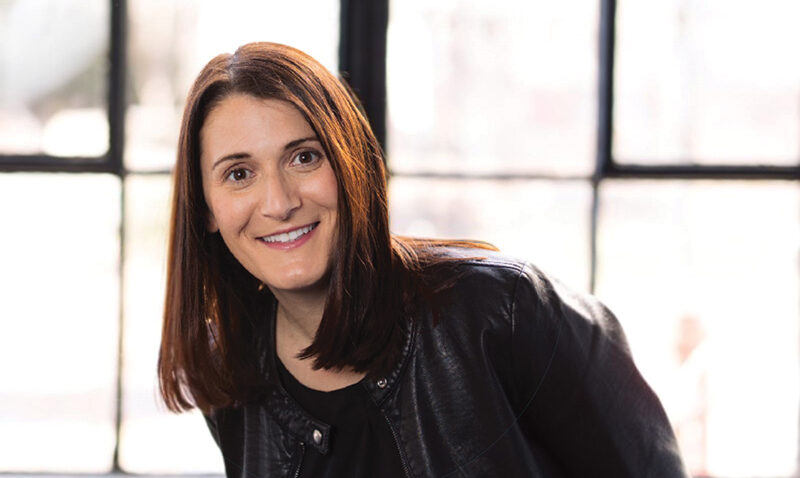
On Oct. 7, Rochel Leah Bernstein was in a bomb shelter in Israel with her children and other family members. After this scary and shocking event, she was motivated to give back to Israel in any way she could.
She met pro-Israel activist Lizzy Savetsky, who referred Bernstein to Israel on Campus Coalition, a group she’s involved with, that unites and empowers pro-Israel campus organizations.
Now, after seeing the antisemitism that’s been happening in the United States and abroad, Bernstein has decided to join ICC’s board of directors. There, she’s advising the nonprofit on the digital war and combating antisemitism online.
“As a proud third-generation American Jew, I was cautiously optimistic that, with social impact movements, antisemitism would have diminished,” she said. “Yet, I was disheartened to see its prevalence, especially on college campuses. Witnessing organizations that champion DEI while excluding Jewish people — as well as other groups like Asians and Indians — further motivated me. As a mother of four Jewish children and someone dedicated to building bridges, I felt it was my duty to get involved.”
Bernstein, a well-known CEO and co-founder of Spark Family Offices, is all about giving back. She is the founder and executive director of Child Safety Pledge (CSP), which is an organization that works to prevent and combat child sexual abuse in the U.S. A survivor herself, she helps youth-serving organizations, funders and parents to ensure strong policies and best practice that detect, present and respond to child sexual abuse. The group merged with Darkness to Light, which empowers adults to work to prevent child sexual abuse as well.
As a mother, she makes sure to give sound advice to her fellow parents so they can protect their children. “[Make sure you] engage proactively with all youth-serving institutions your children attend, such as schools, camps and houses of worship,” Bernstein said. “Ensure these institutions have robust frameworks for prevention, detection, treatment and care. Remember, the responsibility for keeping children safe lies with us, the adults. At the same time, it’s equally important to educate your children about child sexual abuse prevention. Utilize resources like The Daring Conversations toolkit available on the Child Safety Pledge website. Teach your children anatomically correct names for their body parts and how to set boundaries with peers and adults.”
Along with serving on the ICC board and working to prevent child sexual abuse, Bernstein is vice chair for “Tell My Story,” an organization that educates parents on teen suicide, and she’s a board member for the MINDS Foundation, a nonprofit that aims to eliminate stigma and provide support for parents suffering from mental illness in developing countries.
“I focus on mental health, combating antisemitism in the media and on college campuses and addressing sexual abuse,” she said. “These are the areas where I believe I can make the most significant impact. I envision a world where every child can grow up in an environment that nurtures their potential and supports their mental and emotional health, allowing them to become resilient, compassionate and empowered adults.”
Bernstein has been deeply influenced by Jewish leaders, including the Lubavitcher Rebbe, Menachem Mendel Schneerson, who said, “God gave each of us a soul, which is a candle that He gives us to illuminate our surroundings with His light. We must not only illuminate the inside of homes, but also the outside, and the world at large.” This belief in “the power of each individual to bring light to the world drives my commitment to service,” she said.
She also found inspiration in the work of Rabbi Lord Jonathan Sacks. “The greatest legacy one can pass on to one’s children and grandchildren is not money or other material things accumulated in one’s life, but rather a legacy of character and faith,” is a Sacks quote that resonated with Bernstein. “The legacy I leave for my children is paramount,” she said. “I strive to be in action to create a sense of humanism.”
For Bernstein, giving back is her way of fixing the world. And, of course, she hopes to ensure the safety of the Jewish people and Israel so they can both continue to thrive. “No matter what our backgrounds, we must recognize the humanity in each other and come together in our shared values,” she said. “Through my work in mental health, child protection and Jewish advocacy, I strive to do that. My work is deeply rooted in my Jewish values: the concept of ‘neshama’ (soul) comes from ‘neshima’ (breath), symbolizing the shared humanity that connects us all. This belief in humanistic connection and breaking down what divides us fuels my efforts to create a better world for everyone.”
Hear, O Israel: Adonai is our God; Adonai is One. ~ Deuteronomy 6:4
Listen, family, these words
meant for your ears are the
most important words.
These words distinguish us
even if we want to blend in.
These words, if we heed them,
get us the goods. These words
don’t come lightly, they are
our marching orders.
These words should be
spoken of at breakfast, at lunch,
in the living room after dinner.
We should always be
speaking of these words –
even on the treadmill.
These words are meant
for our youngest ears and
it is our job to put them there.
These words should be the
first thing that leave your lips
after the alarm clock
and the last thing before
your soul leaves for the evening.
There is a biology to these words.
Check with your cardiologist.
They will confirm this.
Strap these words to your hands
and forehead. Don’t worry about
what that looks like. Just do it.
And so everyone knows
put them by your front door
in a small decorative box. And if
you’re lucky enough to have gates,
put them there too. The gift shop can
help you with this. We’re going to need
all the help we can get.
Rick Lupert, a poet, songleader and graphic designer, is the author of 28 books including “God Wrestler: A Poem for Every Torah Portion.” Find him online at www.JewishPoetry.net
Los Angeles Deputy District Attorney (DDA) Shea Sanna filed a lawsuit against DA George Gascón on Aug. 13 alleging that the DA engaged in workplace retaliation against him over criticizing, among other things, Gascón ’s handling of a child molester case.
The lawsuit states that it all began when Sanna was assigned to the case of James Tubbs, who was convicted of sexually assaulting a 10-year-old girl at a Denny’s bathroom in Palmdale on New Year’s Day 2014 and is a suspect in two other cases of child sexual assault, one of them with a four-year-old girl. One of Gascón directives was that minors could only be charged with “the lowest possible criminal code section that corresponds with the alleges conduct, mandating a maximum of one count charged per incident, and importantly, preventing the filing of motions to transfer youth to the adult court system, regardless of aggravating circumstances,” per the lawsuit. And because Tubbs was a few days away from turning 18 at the time of the sexual assault, the directive applied to his case, and the most Sanna could ask for was a two-year sentence in a Secure Youth Track Facility (SYTF); he was successful in that regard.
The lawsuit alleges that Sanna, who is represented by the Dhillon Law Group, was ordered by Gascón Special Advisor DDA Alisa Blair and Chief DDA Sharon Woo in Jan. 2022 not to argue in court for Tubbs to be housed in a county jail. At this point, Tubbs was going by the name “Hannah”; the lawsuit alleges that this was a part of a ploy by Tubbs and his father to get Tubbs more favorable housing by having Tubbs pretend to be a transgender woman. Tubbs was ultimately sentenced to two years in a juvenile facility.
Subsequently, Sanna sent Tubbs’ rehabilitation team recordings of Tubbs’ jailhouse calls with his father which he believed showed the disingenuous nature of Tubbs’ claim to be transgender and signaled that he was going to play the recordings in court. A day later, Sanna was pulled from the case, which the lawsuit claimed was retaliation from Gascón’s office.
In Feb. 2022, Gascón initially defended his office’s handling of the Tubbs case, but a few days later acknowledged that Tubbs “gamed the system” and “if I had to do it all over again, she would be prosecuted in adult court.” Gascón, the lawsuit alleges, had the Tubbs recordings in his possession even before he initially defended his office’s handling of the case. Gascón’s reversal, according to the lawsuit, was because that the media got ahold of the Tubbs recordings and he wanted to get out in front of it before anything was published about the recording. Once national coverage came about of the matter and sparked public outrage against Gascón’s handling of the matter, “Gascón perceived Sanna as disloyal and sought to make an example out of him as a cautionary note to the many district attorneys who disagreed with his inflexible policies,” the lawsuit alleges.
That same month, Sanna told other DDAs that Blair was sabotaging cases, pointing to an instance in which he claimed she had worked to secure convicted murderer Andrew Cachu’s release from prison six years into a 50-year sentence, per the lawsuit. Sanna sent recordings of phone calls in which Cachu’s mother excitedly told him that “the district attorney is on our side — THAT IS CRAZY!” When Sanna’s complaint went nowhere, he went public with a post on X that stated to Blair, “Will they be discussing your administration’s policy of sabotaging cases and covering it up? If so, I’m aware of some emails and recordings they could use in their presentation.”
About a week later, Sanna learned that a complaint was filed against him on Blair’s behalf, the reason given was that he misgendered Tubbs when they discussed the case virtually in January. But the lawsuit notes that, despite Sanna’s concerns that Tubbs’s identification as a transgender woman was not genuine, it was actually Sanna’s direct supervisor, Deputy-In-Charge Andre Holmes of Antelope Valley’s Juvenile Office who accidentally referred to Tubbs with male pronouns. And in April, Woo filed a complaint against Sanna alleging the same thing as Blair.
In May 2022, Tubbs was charged with murdering a man in Kern County; it was alleged he hit the victim’s head with a rock and threw the body into a river. Tubbs plead guilty to voluntary manslaughter in Nov. 2023 and was sentenced to 15 years in prison. But Gascón, according to the lawsuit, was “livid” that Tubbs was charged because he knew that Sanna was instrumental in making that happen and thus “it furthered the narrative that Gascón’s policies were ineffective and supported Sanna’s position that Tubbs was a dangerous individual that should have been tried as an adult initially.” “The day Tubbs was charged with murder, Gascón’s office immediately began calling Sanna’s department nonstop,” the lawsuit alleges. “It became so hectic that Sanna’s Deputy-in-Charge, Andre Holmes, asked Sanna to transport boxes 50 miles away to Santa Clarita just so Sanna could escape the fray.”
The lawsuit proceeds to claim that a couple months later, Sanna was told by Christine Diaz-Herrera, an attorney at Sanders Roberts LLP, that she would be investigating the complaints against him; the lawsuit notes that the Sanders Roberts is representing Gascón’s office in pending litigation. Diaz-Herrera told Sanna she was looking to see if he “made false representations about pending Los Angeles County criminal court cases via social media and the news media from 2021 to present” and “the appropriateness of [his] language regarding defendants,” per the lawsuit. Also in July, Holmes was asked by Gascón’s office to complete an evaluation of Sanna in three days, which Holmes said “was an unusually short amount of time to draft an evaluation,” the lawsuit states.
Sanna was informed in Feb. 2023 he was suspended for five days without pay for misgendering Tubbs; Holmes said he did not know that Sanna was being suspended and “that he would have expected Sanna to have been issued multiple warnings,” the lawsuit states.
Sanna found himself suspended again in June 2023, this time for 10 days without pay, because a complaint had been filed against him for saying in Oct. 2021 that when three defendants assaulted and robbed a victim they acted like hyenas attacking their prey; an anonymous DDA, later revealed to be Blair, alleged that Sanna’s “hyenas” remark was racist. But the lawsuit notes that Blair was not present in the courtroom at the time that Sanna made it, and that those who heard the remark did not interpret it as being racist. The suspension was later reduced to five days after witnesses came out in support of Sanna.
Further, the lawsuit alleges that Sanna has been demoted and his salary was reduced and was passed over for promotions despite receiving exemplary evaluations from his supervisors and receiving a perfect score on the exam for promotions. The lawsuit notes that prosecutors who received lesser evaluations and scores were promoted over Sanna.
“For the past two years, Gascón has tried to silence me,” Sanna claimed in a statement. “He has suspended me without pay, threatened my livelihood, attacked my credibility, tarnished my reputation, demoted me, investigated me, and harassed me, all so I would obey him; so I would stay quiet; so I wouldn’t speak up on behalf of those most affected by his misguided political policies.”
The DA’s office told The Journal that they do not comment on pending litigation.
The Los Angeles Times reported in July that “20 prosecutors have accused Gascón of workplace retaliation” and that there are “more than a dozen” civil lawsuits against the DA. In March 2023, a jury concluded that the DA engaged in retaliatory behavior against DDA Shawn Randolph, a 30-year prosecutor, and that the DA owed her $1.5 million. Randolph alleged that because she felt that Gascón’s directive on juveniles was illegal and unethical, Gascón transferred her from being head of the juvenile division to the parole division. At the time, Randolph was prosecuting a 17-year-old male who allegedly killed his sister and girlfriend and then set an apartment on fire in an attempt to destroy the evidence. The DA’s office has also previously forked over $1 million in a settlement agreement to since-retired prosecutor Richard Doyle who similarly alleged workplace retaliation.
The July L.A. Times report included a statement from Gascón denying that he engages in workplace retaliation but didn’t comment on any specific cases; the report also noted that Gascón’s “allies have argued that the transfers are well within his discretion to rotate people into different positions in the office.”
“Yet another L.A. County Deputy DA is suing George Gascón for retaliation — the record 21st prosecutor to sue the county over Gascón’s unfair practices,” Nathan Hochman, who is running against Gascón for Los Angeles DA, posted on X. “When I’m DA, I will fight crime — not my own prosecutors.”
Yet another LA County Deputy DA is suing George Gascon for retaliation — the record 21st prosecutor to sue the county over Gascon's unfair practices. When I'm DA, I will fight crime — not my own prosecutors. #GasconMustGo#HochmanForDAhttps://t.co/ad2Kiky5e4
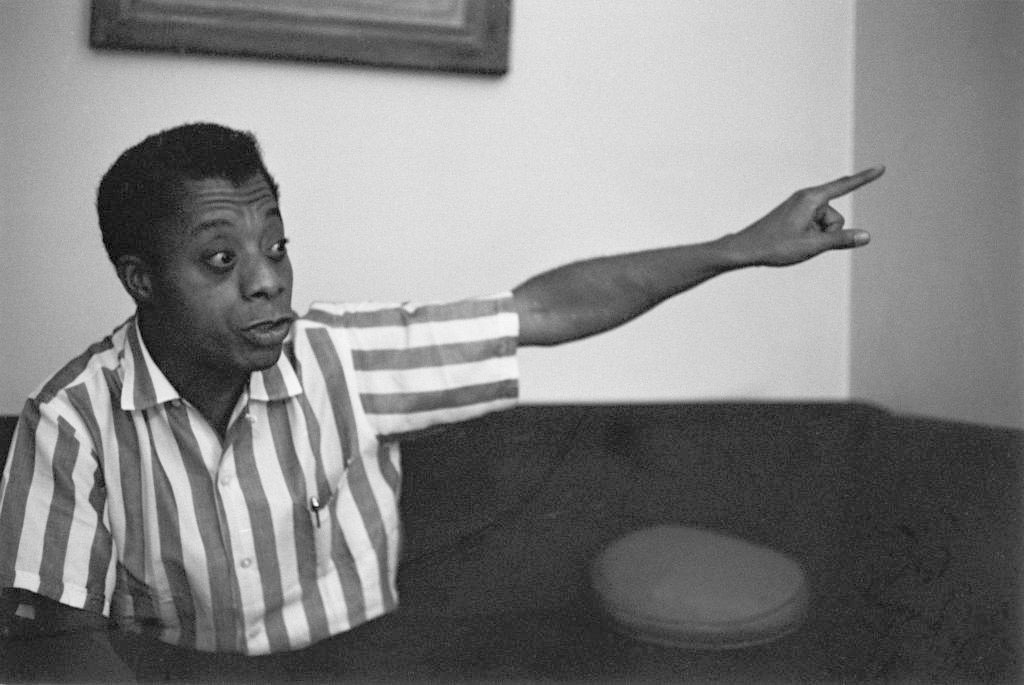
“You can only be destroyed if you feel that you can be labelled by the most outrageous n-word,”
is a PC version of a statement by James Baldwin that Chris Rock on Martin Luther Day omitted
because political correctness determines that they should not literally be heard,
even when declared by someone who is dark-skinned and, unlike objectors, not dim-witted.
Relationships with other people basically depend on how they are by us defined,
not literally but mentally, in language of the state in which we live, which is our state of mind,
a state determining as well not always well, how people judge you if you’re Jewish,
the state to which we all pledge our allegiance, while regarding all its rules as more than merely trueish.
In “James Baldwin & the Fear of a Nation,” NYR, 5/12/16, Nathaniel Rich, writes:
No one has done more to popularize Baldwin in recent years than Ta-Nehisi Coates, who used Baldwin’s address to his nephew in “My Dungeon Shook,” the first part of The Fire Next Time, as a model for Between the World and Me, the most widely read book on race in America in a generation.2 Consecutive short essays by Coates in The Atlantic about his response to Baldwin’s nonfiction demonstrate the difficulty in pinning Baldwin down. “Baldwin’s writing is roughly contemporaneous with the Civil Rights movement, but he seems to share none of its hope, none of its belief in the power of love to conquer all,” Coates wrote in the first essay. Writing two days later: “My point is that after all of this—after all his hard talk—Baldwin is still talking about love.”
This year on January 18, Martin Luther King Jr. Day, the most-viewed speech in America was Chris Rock’s recitation of “My Dungeon Shook.” Delivered at Harlem’s Riverside Church, about a mile west of Baldwin’s childhood neighborhood, the performance was remarkable both for Rock’s impassioned delivery and his omission of the essay’s most incendiary passage: “You can only be destroyed by believing that you really are what the white world calls a nigger.” There remain limits to what even a figure as respected and outspoken as Rock can say about race in America today.
In “Blues for Mister Charlie,” Anna Venarchik writes in the NYT, 7/29/24:
How do people come to know themselves? One way is by reading fiction. The profound act of empathy demanded by a novel, forcing the reader to suspend disbelief and embody a stranger’s skin, prompts reflection and self-questioning. But most people don’t read novels. In his essays and public speeches, Baldwin tried to create a similar effect through allegory and metaphor. At times he reduces the nation to the size of an individual (speaking, for instance, of the American “state of mind”); elsewhere he elevates the individual to the level of an entire race. Baldwin went so far as to suggest that the racial anxieties of white America derive from the most primal, universal fear of all: fear of death. “White Americans do not believe in death,” he writes in The Fire Next Time, “and this is why the darkness of my skin so intimidates them.” It is difficult to take this literally—it requires, first of all, that you accept his claim that black people have no fear of death—but as metaphor it stands to reason that confronting the subject of racial iniquity requires questioning one’s most basic assumptions about the workings of American democracy. Can a system of representation be said to be successful when equal representation is denied to so many? …..
Gershon Hepner is a poet who has written over 25,000 poems on subjects ranging from music to literature, politics to Torah. He grew up in England and moved to Los Angeles in 1976. Using his varied interests and experiences, he has authored dozens of papers in medical and academic journals, and authored “Legal Friction: Law, Narrative, and Identity Politics in Biblical Israel.” He can be reached at gershonhepner@gmail.com.
This year my birthday fell on Tisha b’Av. Tisha b’Av is known as the saddest day in Jewish history. The day in which both Temples in Jerusalem were destroyed and the Jews were expelled from England and Spain. Other tragedies of the Shoah also occurred on this fateful day.
The birthday messages took on a somber tone: Happy birthday, sorry it is Tisha b’Av! Hope you find a little happiness on this terribly sad day. Or: don’t forget to celebrate at the end of the fast!
My emotions were mixed. On one hand, I experienced a Tisha b’Av more connected to the holiday than ever before. I refreshed the news over and over again to hear what was happening in Israel. My heart broke hearing about the potential death and injuries of hostages being held in Gaza. I can barely breathe wondering about Iran’s potential impact. And since October 7th, I feel as if my body is split into two: a piece of my soul continuously mourns with the Jewish people.
And yet, I was gifted another year of life. Time to spend with my family, witness the smiles of my children and hear beautiful messages from friends and community members. What a blessing to wake up and be able to laugh, cry, hope, dream, build and grow. Who is able to deny such pleasures?
This birthday was a renewed connection to so many of you. We continue to experience births, bnai mitzvah, weddings and milestones while agonizing over what is happening in the Holy Land. A reminder that no matter where we are in the world, our heart is always turned eastward. Especially now.
A different birthday to say the least. But a birthday that once again solidified: am echad b’lev echad, we are one people, with one heart. A heart that sheds tears, sometimes simultaneously: tears of sorrow and tears of joy.
Shabbat shalom
Rabbi Nicole Guzik is senior rabbi at Sinai Temple. She can be reached at her Facebook page at Rabbi Nicole Guzik or on Instagram @rabbiguzik. For more writings, visit Rabbi Guzik’s blog section from Sinai Temple’s website.
Early in my rabbinic career, I attempted to lead a committee meeting but failed because I was unable to navigate multiple competing personalities. (OK – that’s a nice way of saying that participants began yelling at one another).
Shell-shocked, I went home with little hope of being able to move forward.
While pages of Talmud offered some guidance, it was the profound wisdom of my mother that came to the rescue.
”Try building something together.”
At the following meeting, that’s exactly what we did. At first, we did a team building project with our hands. And then we built dreams with our hearts.
Flash forward, and I employed the same technique when parenting (Eli was going through a rough spot – and so we began to build together). As we constructed with Legos, we talked about the incredible adventures of the day ahead. And it worked (at l least for 19 minutes).
Whether in personal, familial, or professional relationships, capturing a moment in time to build can create possibilities from roadblocks and can form communities out of individuals.
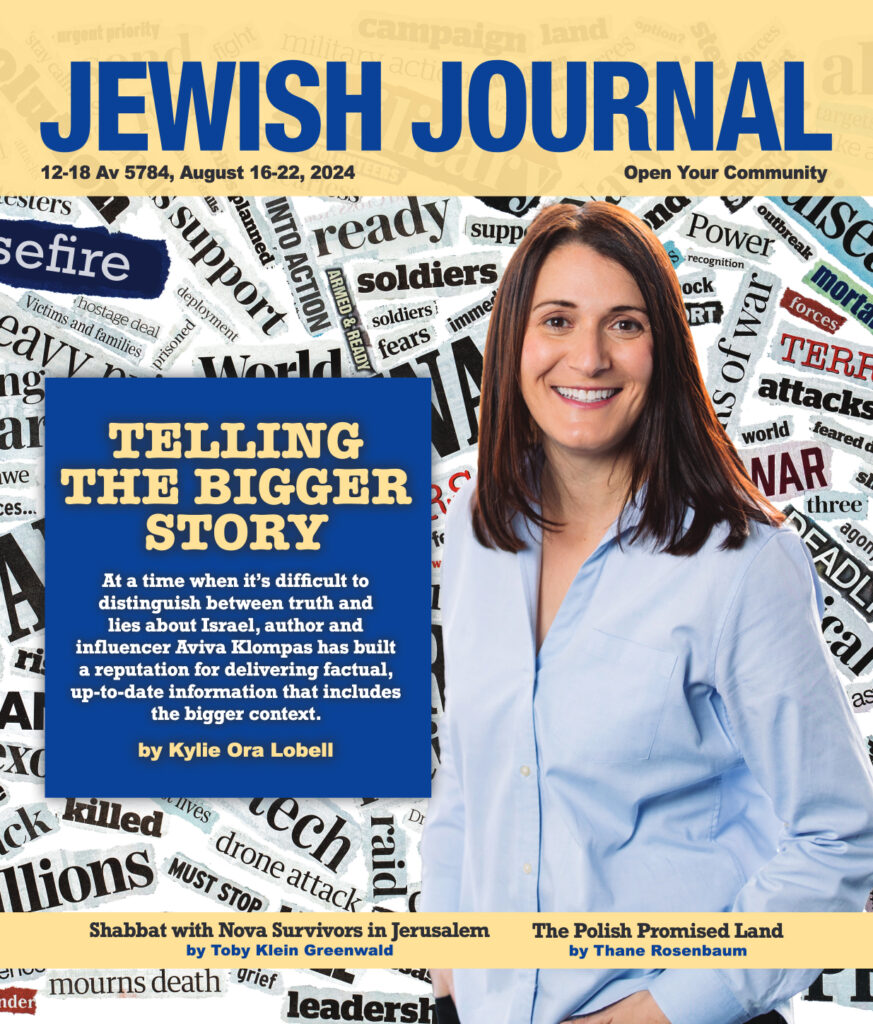
Following Oct. 7, there was so much misinformation surrounding what really happened that day and during the war that followed. Both the mainstream media and social media were rife with it, and it was difficult to distinguish what was true and what was a lie.
One person who consistently delivered factual, up-to-date, reliable information was Aviva Klompas, an X user who had quite the impressive resume. She’s co-founder of Boundless Israel, a think tank that specializes in Israel education and combating antisemitism, she was the associate vice president of Israel and Global Jewish Citizenship at Combined Jewish Philanthropies, and she served as the head of speechwriting at the Israel Mission to the UN.
When Klompas, who is smiling in her profile photo on X, showed up on your timeline, you knew you could trust what she had to say. On Oct. 7, she went into full-time advocacy mode – and she hasn’t stopped since.
“The pinned tweet I have on X from Oct. 23 is, ‘The IDF is going to attack our enemies by land, sea, and air. And the rest of us are going to fight on the battlegrounds of academia, law, business, media, and every other damn front we can think of,’” she told The Journal. “That’s been my mantra and motto every single day. I read the news, and I’m outraged and indignant not just on a daily basis, but also on an hourly basis. I’m responding to it as best I can.”
“The pinned tweet I have on X from Oct. 23 is, ‘The IDF is going to attack our enemies by land, sea, and air. And the rest of us are going to fight on the battlegrounds of academia, law, business, media, and every other damn front we can think of. That’s been my mantra and motto every single day.”
Klompas, who has more than 300,000 followers, checks the news every morning when she wakes up, constantly throughout the day and right before she goes to bed at night, putting out posts as much as once per hour and often being one of the first people to break news.
“I have unhealthy habits when it comes to my phone,” she said. “I think about how we can better fight this narrative war all day, every day.”
Now, Klompas has come out with a book, “Stand-Up Nation: Israeli Resilience in the Wake of Disaster” (Wicked Son), which is a unique approach to Israel activism. Rather than sharing news about the war, this book highlights Israel’s altruism towards the world.
“Today, Israel is nicknamed the ‘Start-Up Nation,’ and it is celebrated for its booming economy and ingenious innovations,” she wrote in the book. “Less celebrated is the story of how Israel lifted up other nations as it lifted up itself — the story of Israel, a force for good in the world.”
“Today, Israel is nicknamed the ‘Start-Up Nation,’ and it is celebrated for its booming economy and ingenious innovations. Less celebrated is the story of how Israel lifted up other nations as it lifted up itself — the story of Israel, a force for good in the world.”
The author started working on “Stand-Up Nation” four years ago, back when she was a speechwriter for Israel at the UN and researching Israel’s history. She was fascinated by the remarkable story of how just 10 years after the modern state of Israel was founded, at a time when it was struggling and poor and fighting for its very survival, it started MASHAV, the Ministry of Foreign Affairs, in 1958. This is Israel’s international development agency, founded by then Foreign Minister Golda Meir and Prime Minister David Ben-Gurion, which helps fellow nations with their development challenges by sharing knowledge and resources.
Klompas’ book outlines MASHAV’s work, such as when they built the first utility-scale solar field in East Africa, spearheaded clean water initiatives in Israel, Jordan, the West Bank and Gaza and provided meals to starving children in India.
“For a while, Israel became a global leader in supporting newly independent states. Precisely because it was small and poor, Israel had an advantage over larger, richer, and more established countries,” Klompas wrote. “It was a model and source of inspiration for newly emerging nations facing their own array of challenges.”
She saw this with her own eyes. After finishing up at the UN, she founded and led Project Inspire, an initiative to show Israel’s work in social, environmental and economic development in low-income nations. She ran tours in Uganda, Kenya, Guatemala, India and Nepal, showing participants how people in these countries utilize Israel’s teachings and technologies to tackle poverty and inequality.
When Klompas traveled, she saw Israel in “the most unlikely of places,” she wrote. “While trekking in East Africa and walking through a small craft market, I spotted a handmade beaded bracelet with the flag of Israel alongside bracelets with the flags of Kenya, Tanzania, and Uganda. In the remote hills of Nepal, I happened upon a group of children, and as I passed by they yelled to me: ‘Shalom! Namaste! Hello!’ In Uganda, I visited a remote island on Lake Victoria. Getting there required a windy bus ride, followed by a rickety boat ride, followed by another bumpy bus ride. When we finally reached Osanidde Village, an orphanage for children with HIV, we were greeted by teenagers who sang the Ugandan national anthem followed by ‘Hatikva.’”
“In the remote hills of Nepal, I happened upon a group of children, and as I passed by they yelled to me: ‘Shalom! Namaste! Hello!’”
“Stand-Up Nation” is a callback to what Israel really is, and what a massive impact the small Jewish State has had on the world – a much-needed reminder post-Oct. 7, when it is being bashed everywhere we look. Klompas believes that enough isn’t being done to communicate Israel’s nation-building initiatives.
“I think I’m the first one to write a book about it, if not one of the first,” she said. “I’m not sure that people who have been to Israel dozens of times are even familiar with MASHAV. How many people know this story about Israel as a developing country and founding an international development agency at the same time? It’s an untold story. And the more that I learn about it, the more it shocks me that people don’t know it.”
While responding to antisemitism and anti-Zionism are necessary, it’s also crucial to zoom out and see what bigger story we can tell.
“Israel was sending experts out into the world to share how you can more successfully grow more crops and better crops, or how you can harness solar energy to be able to pump water from deep in the ground,” Klompas said. “It was bringing thousands and thousands of people from developing countries to Israel to get trained in MASHAV training centers. The world’s engagement with Israel is much larger and much different from what we understand only in the North American context.”
What “Stand-Up Nation” shows is no matter what circumstances Israel and the Jewish people are in, we will continue to reach out to others in need.
“Throughout the history of the Jewish people, we’ve always engaged with the world,” Klompas said. “We value life and justice and compassion. We read about these values from Biblical times and are living them in the present. We are committed to our families, our communities and so on. We have a really unique and special place in the world.”
Even after Oct. 7, when Israel is in upheaval, fighting Hamas and Hezbollah and Iran, trying to help out thousands of displaced citizens, dealing with an interrupted economy and defending itself on the world’s stage, MASHAV keeps carrying out its critical work.
Recently, it opened the 17th Rwanda National Agriculture Show, where participants learned how to build resilient and sustainable food systems, and it taught a Spanish-language course, “Management and Application of Agrochemicals,” in partnership with the Embassy of Israel in Honduras.
“Despite the lack of political reciprocity or improved reputation, the work continues to expand for the simple reason that Israelis feel compelled to help,” Klompas wrote. “Whether the driver be idealism, pragmatism, adventurism, chutzpah-ism, or some combination, the Israelis who have devoted their careers to elevating low-income nations prove that, like Israel, you can be small and make a big impact. In an age where cynicism reigns, they inspire us to think big, dream audaciously, act boldly, and work tirelessly to build a better future for ourselves and for others.”
“Whether the driver be idealism, pragmatism, adventurism, chutzpah-ism, or some combination, the Israelis who have devoted their careers to elevating low-income nations prove that, like Israel, you can be small and make a big impact.”
Klompas submitted her manuscript six weeks before Oct. 7. It wasn’t until early 2024 that she was able to go back in and take another look, adding what happened on that tragic day. She also asked those whose stories were featured if they wanted to contribute postscripts to their chapters, and many of them did.
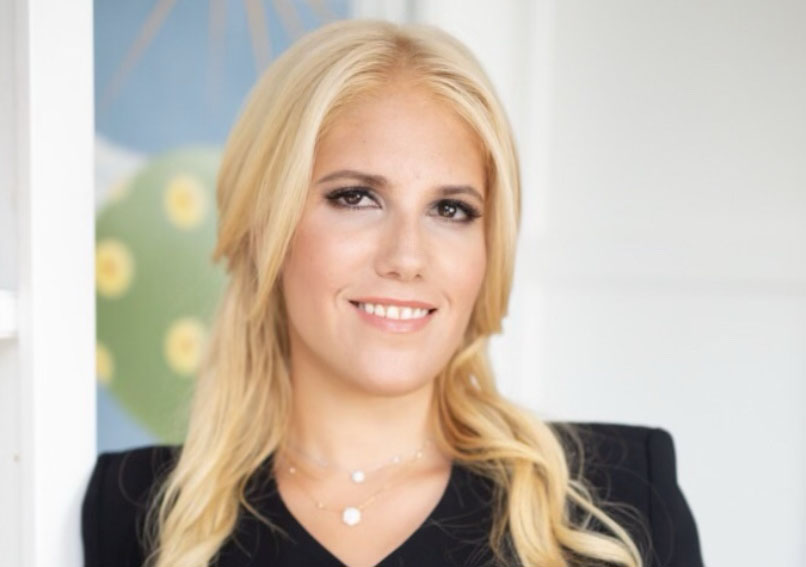
On stage at AJC Global Forum 2024 with AJC Chief Advocacy Officer Belle Etra Yoeli and actor Michael Rapaport (YouTube screenshot)
“They all wrote about their commitment, and how they hadn’t wavered as a result of Oct. 7,” Klompas said. “It’s much harder for them in this context, mostly because fundraising is more difficult right now. Most people understandably want to give money inside of Israel, but this hasn’t stopped anyone from doing their work.”
For Klompas, the past 10 months have been a bit of a blur. “There’s so much about the timeframe in October, November and December that I actually don’t remember,” she said. “There are just big blank spaces about what those early months looked like, because for me, every day since Oct. 7 has been focused on this war.”
Klompas splits her time between Boston, New York, Israel and Toronto – she’s originally from Canada. In the past 10 months, she’s been to Israel seven times.
She has also witnessed the antisemitism that proliferates on social media. Though Elon Musk has expressed empathy for Israel, at the same time, X has its fair share of real-life antisemites as well as bots.
“Antisemitism is exploding in the real world, and social media is a reflection of that,” Klompas said. “The echo chamber I’m in is filled with trolls and lots of people who hate Jews. When I post, 99% of the time, I don’t go back and read the comments or check my engagement. I’ve had Elon Musk occasionally reply to my posts, and I only know this because somebody messaged me and told me.”
She believes that there is too much emphasis on what Musk or other celebrities and influencers think. Instead, the Jewish community should focus on fighting antisemitism.
“The question is, what are we going to do to try to put this monster back into the box?” Klompas said. “I don’t think that the answers are solely going to be on social media. We have to be thinking in terms of education, public policy and having real world relationships with real people, and credibility with communities outside of the Jewish world. Ultimately, we need the people who are silent to speak up and say, this is not what I want my community to look like. This is not what I want my campus to look like. This is not what I want my country to look like.”
Creating alliances with other communities, like Christians and minority groups, is going to be crucial for garnering support for Israel and the Jewish people, according to Klompas.
Speaking at the AZM 2023 National Biennial Assembly with Amy Spitalnick, CEO, Jewish Council on Public Affairs and Ilana Meirovitch, Executive Director, The Focus Project (YouTube screenshot)
“We all know that the hate that starts with the Jews never ends with the Jews,” she said. “Hate is like pollution. It doesn’t have a border to it. It’s not going to stop at the Jews. It’s going to infect our institutions and other communities. The only way to stop it is to get other people to understand that it’s a collective problem, and it’s not a problem of just the Jews. Once they understand that and they’re willing to take steps and actions to mitigate it, then society becomes safer for everybody.”
Despite everything that happened on Oct. 7 and the stressful, depressing and worrisome months that followed, Klompas sees how strong her fellow Jews are, and she has no doubt that we will continue to thrive.
“In the Jewish community, we feel a little bit safer, more secure and more comfortable when we’re with other Jewish people,” she said. “That sense of community and solidarity gives us resilience and courage.”
Oct. 7 may have caught us off guard, unleashed a wave of antisemitism and left us feeling anxious about our future. But Klompas hasn’t given up hope.
“We’re going to be the authors of the rest of the story.”
“This is, without question, the most heartbreaking and scary time in my lifetime, and in the lifetime of many Jewish people,” she said. “It’s certainly one of the most heartbreaking and scary moments in our modern history. Hamas wrote a chapter in the book of our history on Oct. 7, but that’s it. It’s one chapter. We’re going to be the authors of the rest of the story.”
Kylie Ora Lobell is an award-winning writer and community editor of the Jewish Journal. Follow her on X @kylieoralobell or Instagram @kylieorawriter.
The current wave of antisemitism grows out of a larger assault on Western, American and democratic values and can only be countered by strengthening bipartisan public support for these basic values. The most effective way to counter this challenge is to build broad coalitions with diverse ethnic and civic groups who support American values as a bulwark against extremism of all kinds, including antisemitism.
These potential allies largely share our concern about the extremist elements within the anti-Israel movement that propagate antisemitism but likely have other concerns that grow out of the same extremist ideological framework that has become dominant in many institutions. Their motivation stems from a shared perception that such ideologies undermine the very fabric of American society as well as their community’s well-being.
We liken the radical ideology to the head of an octopus with multiple tentacles, antisemitism being just one such tentacle, along with an attack on open discourse in universities, the concept of merit in schools and the workplace, and the foundations of scientific inquiry, etc. Each tentacle also produces constituencies willing and able to fight for the fundamental values that protect them and their fields of interest.
However, implementing such a strategy presents a significant challenge for the Jewish community, one that cuts to the heart of America’s current political polarization.
The elephant in the room is the partisan divide over American values. In our conversations with Jewish professionals and lay leaders, many expressed concern that in the current political climate, even a non-partisan campaign for American values risks being politically stigmatized as “rightwing.” Moderate Democrats who may agree with us at a theoretical level may hesitate to align with an effort that could be perceived as politically slanted.
This perception creates a dilemma for Jewish organizations seeking to build broad coalitions for American values. Two potential approaches emerge from this quandary. The first is a grand reclamation project, aiming to redefine American values across the political spectrum. This would involve actively working to disentangle these principles from any single party association. In other words, it would require us to articulate a “liberal patriotism” that upholds America’s highest ideals of democracy, pluralism, and freedom.
The second approach would seek alternative framing, such as “core democratic values” to avoid triggering partisan reactions, but the downside is that this framing may be so general that it fails to convey a full commitment to the American idea. Even ideologues on the far left and right claim to embrace democratic values, albeit with very different ideas in mind.
There are parallels between this dilemma and the challenges Jewish organizations have faced over the past 15 years in using the term “Zionism” on college campuses. As criticism of Israeli policies intensified and delegitimization campaigns gained traction, the term “Zionism” became increasingly contentious. Public opinion researchers warned the Jewish community that the term consistently polls badly, yet many Jews felt that Zionism is so central to our collective identity that we had no choice but to proudly reclaim it.
The debate over these strategies—whether to reclaim contested terminology or seek alternative framing—reflects a broader question in advocacy: Is it more effective to fight for the original meaning of a term, or to shift to less controversial language that might be more readily accepted?
The authors of this op-ed strongly believe in the reclamation strategy in this instance because the concept of American values is so central to our ability to sustain a democratic society based on the highest ideals and aspirations. If we cannot say “American values”—or some version of the phras—we cannot advocate for and protect those values. The very fact that the concept of American values has been so demonized is evidence of the root problem itself. If we fail to change this reality then we will be unable to generate the very conditions in which Jews and others can survive and thrive.
The specific terminology we use, however, may be less critical than achieving a shared understanding of how the diminution of American values fuels social ills, including antisemitism. If we can align diverse groups around the goal of resurrecting a common values framework, we can create the broad, systemic effect needed to combat extremism and hate effectively.
If we can align diverse groups around the goal of resurrecting a common values framework, we can create the broad, systemic effect needed to combat extremism and hate effectively.
The historical example of the 1951 MacIver report offers an intriguing parallel. This report, commissioned by the umbrella organization of the Jewish community relations organizations and of several national agencies, the National Community Relations Advisory Council (NCRAC), called for Jewish organizations to prioritize their common cause and unify their efforts over individual organizational interests. While initially rejected due to concerns about centralization and loss of autonomy, the resulting decentralized and “chaotic” structure paradoxically contributed to the rise of U.S. Jewry to unprecedented influence and prosperity during the Civil Rights movement and soon later during the Soviet Jewry movement in the ’60s and ’70s. It showed that where there is a shared understanding of the essence of a challenge, even when different tactics are deployed by politically diverse groups, an effective advocacy ecosystem can be generated.
Our current challenge may benefit from a decentralized approach that allows for diverse strategies united by a common understanding of the threat. To further this crucial conversation and encourage more effective responses, every community and Jewish organization should conduct its own strategic deliberation and develop tailored strategies that align with the shared goal of combating antisemitism. As long as there is a shared understanding of how contemporary antisemitism undermines American and Western values, even substantially diverse strategies will serve the purpose of mitigating the current rise in antisemitism.
Eran Shayshon is Founder of Atchalta. David Bernstein is Founder of the Jewish Institute for Liberal Values.
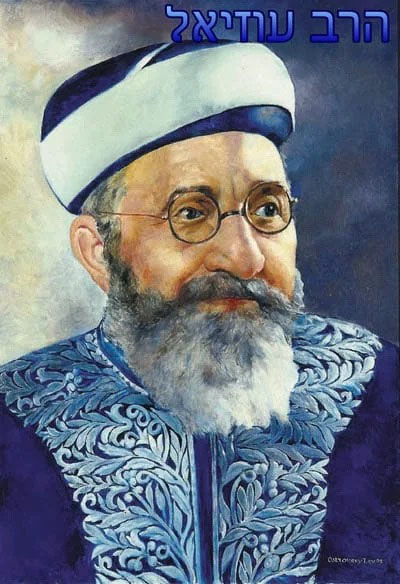
As a rabbi who made Aliyah in the shadow of October 7th, I challenge myself everyday to transmit messages of comfort and hope to my students, readers and followers. It’s easy to fall into the trap of pseudo-political commentary, where everyone – including rabbis – thinks they are an “expert on the situation.” As spiritual leaders, rabbis must rise above that discourse and offer hope in the face of despair.
Shortly after Tisha B’Av in 1933, Rabbi Uziel laid out a challenge to all who go by the title “rabbi.” He spoke about the ongoing problems we face beyond Tisha B’Av, those of political and religious divisions that continue to tear us apart. He reminded us that fasting on Tisha B’Av is not the sole “remedy” to our problems, and that only an internal process of soul searching will lead to change:
“Great is our mourning on this day, during which we engage in an internal accounting of our own deeds, along with a search for actions that will lead to our comfort and healing.”
Reading his words in a post-October 7th world, I look back to what Rabbi Uziel and the Jewish world were facing after Tisha B’Av, Summer of 1933. Just six months earlier, Hitler rose to power. What “actions” did Rabbi Uziel believe will help “comfort us” following the first Tisha B’Av observed in the shadow of Nazi Germany?
“On this Shabbat Nahamu (the post-Tisha B’Av “Shabbat of Comfort”), let us comfort ourselves by taking action towards healing all that is broken, mending all that is tearing us apart, and changing our direction by forging a path towards removing the poisonous divisions and baseless hatred from our midst.”
With Nazi Germany in power and all the dangers that represented, Rabbi Uziel nonetheless turned inward, asking us to strengthen ourselves against outside threats by healing our internal rifts. Thus his challenge to our nation’s “Spiritual Leaders”:
“Who must take the lead in this sacred work? I call upon all rabbis – our spiritual leaders – to take the lead in uniting us and healing our divisions. Redemptive change will only come about when the Torah becomes our agent of unity. Its time that the Torah’s faithful gatekeepers -our spiritual leaders – join together towards the goal of unity. At this moment, when waves of malicious evil threaten our very existence, this internal healing will be our greatest source of comfort.”
In the shadow of October 7th, Rabbi Uziel’s post Tisha B’Av message of internal healing remains as powerful and relevant today as it was in the shadow of Nazi Germany – for rabbis, for everyone.
“Nahamu, Nahamu Ami – Be comforted, Be comforted, my people.”
Shabbat Shalom
Rabbi Daniel Bouskila is the international director of the Sephardic Educational Center.




 The author started working on “Stand-Up Nation” four years ago, back when she was a speechwriter for Israel at the UN and researching Israel’s history. She was fascinated by the remarkable story of how just 10 years after the modern state of Israel was founded, at a time when it was struggling and poor and fighting for its very survival, it started MASHAV, the Ministry of Foreign Affairs, in 1958. This is Israel’s international development agency, founded by then Foreign Minister Golda Meir and Prime Minister David Ben-Gurion, which helps fellow nations with their development challenges by sharing knowledge and resources.