fbpx

August 15, 2024

Campus Watch August 15, 2024

Columbia Student Who Said “Zionists Don’t Deserve to Live” Might Return to Campus

Columbia University student Khymani James, who made headlines after a livestream was unearthed of him saying “Zionists don’t deserve to live,” might be returning to campus this fall.

The Washington Free Beacon reported that the university will not say if James will be allowed on campus in the fall, citing “privacy concerns.” The conservative news outlet noted that James, despite being banned from campus by the university, is still listed as a student in the university’s directory; three deans who recently resigned from the university are no longer in the directory. Daily Wire journalist Kassy Akiva noted on X that James’s April 26 statement apologizing for his remark has been deleted from his X account. His April 26 statement had said that that “what I said was wrong” and that he “misspoke in the heat of the moment, for which I apologize.”

Three Columbia Deans Resign Over Text Messages About Antisemitism Panel

Three deans at Columbia University have resigned after text messages came to light in which they denigrated a panel on antisemitism.

Among the texts in question included that it “comes from such a place of privilege… hard to hear the woe is me” and “huge fundraising potential,” according to NPR. President Minouche Shafik had denounced the deans’ text messages as being “not only unprofessional, but also, disturbingly touched on ancient antisemitic tropes.” University spokeswoman Samantha Slater told NPR that the three deans had in fact resigned but did not comment further.

Young Democratic Socialists Plan “Student Strike for Palestine”

The Young Democratic Socialists of America (YDSA) are planning to hold a nationwide “Student Strike for Palestine” to “disrupt campus life” as a means to work toward “Palestinian liberation.”

The Free Press reported that YDSA organizer Erin Lawson wrote in a July op-ed for The Activist that a strike “shakes the very foundation of the university to its core” because “no one can ignore large swathes of empty classrooms… as students who live in the belly of the beast, we have the responsibility to demand that our institutions take our tuition money out of Israel.”

Columbia Business School Professor Ran Kivetz, who is Israeli, told The Free Press that university administrators need to enforce their policies to shut down the strike, but he doesn’t “have the confidence that they’ll do that.” He pointed to the fact that after anti-Israel protesters occupied and vandalized a university building and held three janitors hostage, the university reinstated 12 suspended students and most of the arrested protesters had the charges against them dropped.

Former Columbia Student Sentenced to Nearly Two Years in Jail Over Threats Against Jews

Former Columbia University student Patrick Dai, 22, was sentenced to 21 months in jail after pleading guilty to making anonymous threats online in Oct. 2023 to murder and rape Jewish students.

The Justice Department announced in a press release on Aug. 12 that, as part of his April guilty plea, Dai admitted to posting that he was “gonna shoot up” a kosher dining hall, “bomb a Jewish house,” “bring an assault rifle to campus and shoot all you pig jews,” “slit the throat” of Jewish men he sees on campus, cut off the heads of Jewish babies and rape Jewish women he saw and toss them from a cliff. After Dai serves the prison sentence, he will get three years of supervised release and a $100 special assessment.

AAUP No Longer Opposes Academic Boycotts

The American Association of University Professors (AAUP) have adopted a statement supporting academic boycotts in certain circumstances––a reversal of their decades-long anti-boycott stance.

InsiderHigherEd reported on that the AAUP’s national council voted to approve their new position on Aug. 9. The AAUP, which InsideHigherEd described as “a union and a national faculty group that establishes widely adopted policies defining and safeguarding academic freedom and tenure,” announced in a statement that their Committee A on Academic Freedom has officially opposed academic boycotts since 2006, but now the AAUP’s stance is “that individual faculty members and students should be free to weigh, assess, and debate the specific circumstances giving rise to calls for systematic academic boycotts and to make their own choices regarding their participation in them. To do otherwise contravenes academic freedom.” The statement added “that academic boycotts should neither involve any political or religious litmus tests nor target individual scholars and teachers engaged in ordinary academic practices… Academic boycotts should target only institutions of higher education that themselves violate academic freedom or the fundamental rights upon which academic freedom depends.”

The AAUP has yet to endorse an academic boycott against Israel, though they have called for a ceasefire in the ongoing Israel-Hamas war, per InsideHigherEd.

Campus Watch August 15, 2024 Read More »

Teen Philanthropist Sends 40 Underprivileged Kids to Coding Camps Across Los Angeles

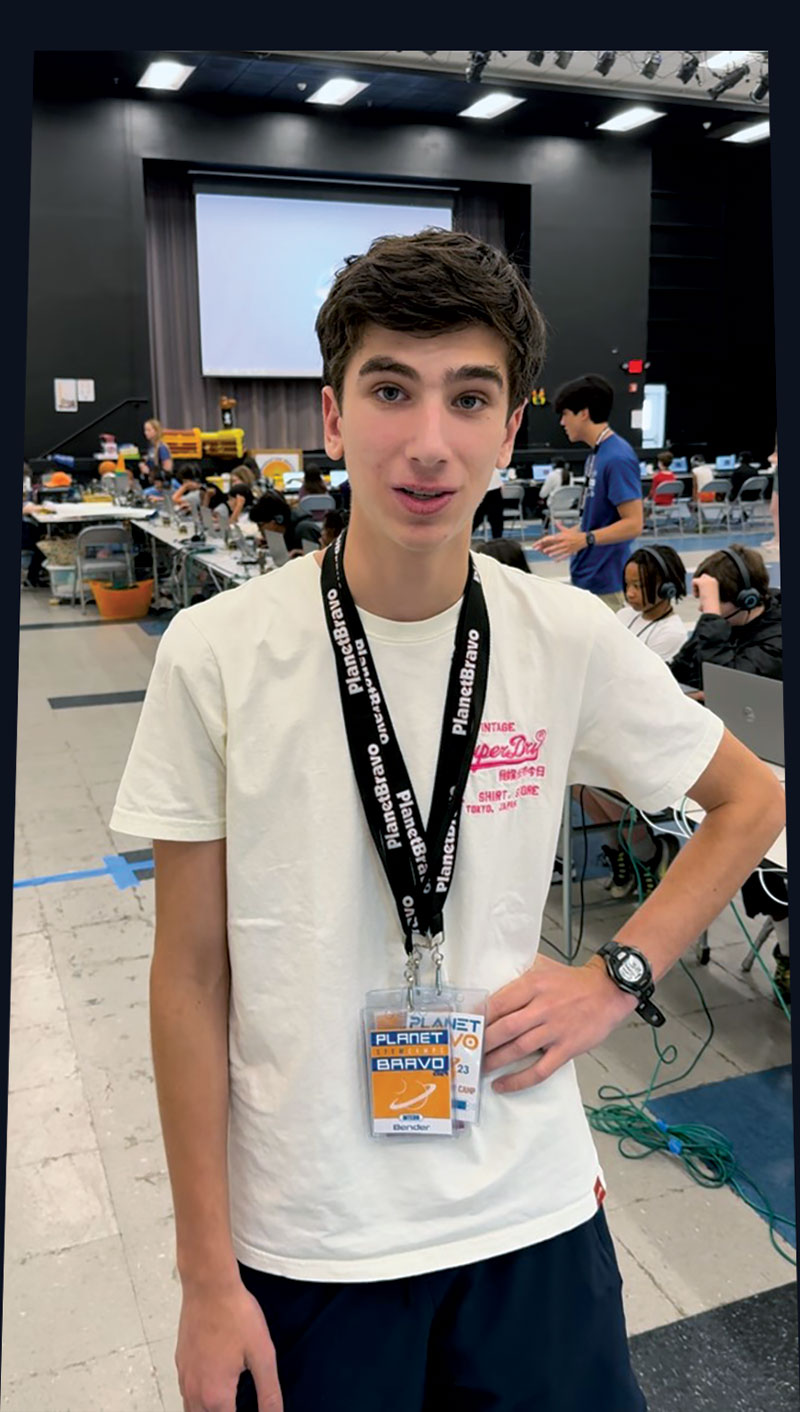
Jack Segil, 17, a student at Chadwick High School in Palos Verdes, enjoyed his time at Planet Bravo — a STEM (Science, Technology, Engineering and Mathematics)-focused summer program — so much that he decided to help underprivileged kids get the same experience he did. This summer, his charity is sending 40 children to coding camps all over Los Angeles.

“It’s a great camp,” he said in a Zoom interview with The Journal. “My parents started sending me to this camp when I was 10 years old, and I fell in love with it and kept coming back each year. One day, I looked around and noticed that every single kid was from a wealthy family that could afford this expensive camp in Manhattan Beach.”

Segil started thinking about how other children, who weren’t as fortunate as he was, could also enjoy the same experience. So, he went home and presented the question to his parents.
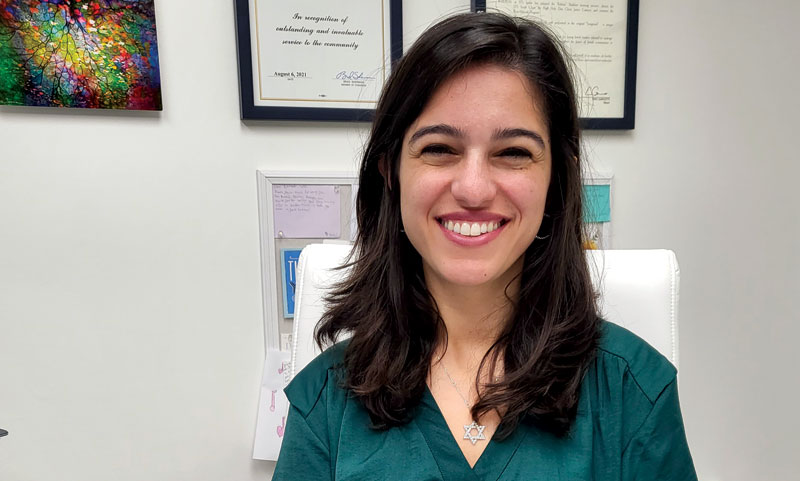
“My parents always raised me with the importance of charity,” he said. “I went to Hebrew school, and there wasn’t a room without a charity box. I was always taught that it’s important to give back to the world, and that’s how we came up with the idea to create a charity.”

The first step was to fill out forms to set up a non-profit organization and get tax-exempt status, then wait patiently. It took a couple of years. After that was done, the more challenging task of raising funds began. The high school student was able to raise over $250,000 from corporate sponsors and individual donors who loved his idea. He called the charity “Code to Grow.”

The high school student was able to raise over $250,000 from corporate sponsors and individual donors who loved his idea. 

In 2022, when the charity officially opened, Segil sent his first cohort of four kids to camp, the following year, he sent six kids, and this year, he sent 40 kids. The camp costs $1,100 per kid for two weeks.

“A lot of the funds came from our First Media grant that we got,” said Segil. “First Media is a social and advertising company that runs several high-profile Instagram accounts. They have this grant for STEM-related programs, much like what we are running, which we applied for and received $50,000 per year for three years.” Other donors, including The Motorola Solution Foundation, The Jewish Community Foundation and private donors and contributors, followed. 

He then developed partnerships with Jewish Big Brothers Big Sisters, Camp Bob Waldorf, CASA of LA, Happy Trails Camp and Culture Club. “There are a bunch of summer programs and DCFS [Department of Child and Family Services] offers all of them to social workers who, in turn, offer them to the kids,” said Segil. “They gave us a list and helped us reach out to many foster kids.”

The campers come from the foster system and from low-income homes. Each student attends two weeks of coding camp for free, receives lunch and rides to and from the camp and gets a chance to be a part of the year-long coding curriculum Segil developed.

“It’s designed to emulate how I learned to code,” he said. “It uses online resources and projects that I’ve made myself, twelve to be exact. They can do it on their own time, at their own pace, when they are not in camp. They meet with mentors once a week or every other week to help them overcome roadblocks. It teaches them all the fundamentals, and at the end, they can say, ‘I know coding.’”

Segil is now a counselor-in-training (CIT) and enjoys watching the children learn the basics of coding, and is thinking of becoming a teacher. It fills him with a great sense of accomplishment and pride when he sees how much other children enjoy coding.

“There was one kid, Shailoh, who came in with the first group of kids to Camp PlanetBravo. Before that, he was in another program where he did sports stuff. He is a very athletic guy, but when he came to our camp, he suddenly discovered computer science and found something else he loves. He is now working as a CIT and helps other children learn.” He then proudly spoke about another student who had been a problem student and hadn’t managed to complete a summer program without being kicked out. “But when he came to PlanetBravo, he enjoyed it so much, he finished it.”

Segil’s three younger brothers, Jonah, 15, Noah, 12 and Gabriel, 12 and his parents, Donne and James, also lend a hand. His father, who had immigrated to Los Angeles from South Africa in his youth, said the entire family helps prepare sandwiches for the campers. “It’s a whole family operation,” he said.

Jack credits his father for instilling in him the importance of giving back. He recalled how, as a young kid, his dad helped him and his brothers pack care packages for the homeless and then took them to Skid Row to hand them out. “My dad explained to us that many homeless people once had homes and families, some even had a college degree, but for some reason, they ended up on the street. He said that we, as a society, need to help them in any way we can,” said Jack.

Thanks to his extraordinary charity work, Jack was recognized this month by the mayor of Manhattan Beach, Joe Franklin, for his community service.

James, who takes an active part in the charity added, “Like most Jews who immigrated to the land of opportunities, I think that living here in the Diaspora, we are very blessed and lucky, but we have the obligation to help those who don’t have that much. The idea that this young man said, ‘I feel there is inequality, and I want to give,’ is a really important skill to have. I’m really proud of him.”

Teen Philanthropist Sends 40 Underprivileged Kids to Coding Camps Across Los Angeles Read More »

Cantor Jacqueline Rafii: Bringing an Age-old Tradition into the 21st Century

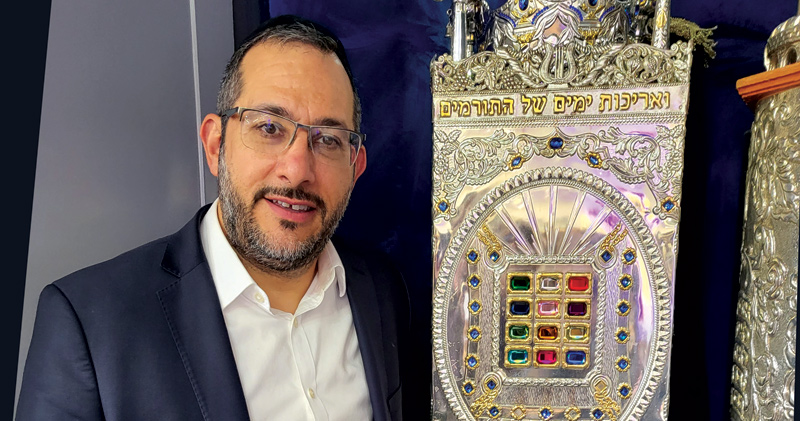
“Persian Jewish melodies, to my knowledge, never have been transcribed,” and Cantor Jacqueline Rafii of Valley Beth Shalom has made it a life goal of her unique career to correct that absence. 

As one of only three Persian women cantors in the United States, she believes that in the past there wasn’t a need or interest to preserve those documents. “The melodies were passed on, generation to generation, orally, by men, like my grandfathers,” she said. “You knew Hebrew liturgy. You had to chant it because it was passed down to them. Their voices had been recorded on cassette tapes. We Persian Jews only have been in the United States for one and a half generations.”

“The melodies were passed on, generation to generation, orally, by men like my grandfathers. You knew Hebrew liturgy. You had to chant it because it was passed down to them. Their voices had been recorded on cassette tapes.”
– Jacqueline Rafii

The 2,000-year history of Persian Jews in Iran effectively ended with the 1979 Revolution. Now there is an interest in preserving, sharing and hearing these melodies. “But that same oral transmission is not possible,” said Cantor Rafii. “Many people who knew the melodies [such as her grandfathers] have passed away.”

There’s also a cultural hitch. In the process of fleeing Iran, she said, “some translation has been lost because now we are assimilating into America. People don’t speak the language as well. We are assimilating into Ashkenazic traditions and Judaism.”

The cantor’s parents arrived in 1980; both she and her brother were born here. The tight-knit Persian community was drawn to the same synagogues: Sinai Temple, the Sephardic Temple and Nessah.

Not the Rafiis. “My parents wanted something different for my brother and me,” said the cantor, “so he and I could do the same things, so I would not be prevented from chanting Torah.” Girls could not read from the Torah at more traditional shuls with large Persian congregations. Cantor Rafii’s mom “wanted to make sure we were in a progressive synagogue, one that allowed boys and girls the same level of participation. We were the first Persian family to join Wilshire Boulevard Temple in 1991.” 

That change, she said, put her on “a totally different trajectory.  I was able to live on the margin of two cultures.” While she had strong Persian American identity, she was exposed to Ashkenazic American Reform Judaism, which encouraged women to sing. At Wilshire Boulevard, Cantor Don Gurney, Rabbi Steve Leder and others encouraged Rafii to pursue a cantorial life.

When the elder Rafiis fled Iran in 1979, the cantor’s father brought a cassette of her grandfather leading the Passover seder in Tehran in 1971. 

“We found the tape about 2017,” Cantor Rafii said. “My father and I listened to it together. I heard the voice of my grandfather, Yehuda Rafii, of blessed memory, singing Persian Jewish melodies at the seder. I was so moved.”  Her passion for music emerged “from the depths of my soul. I had a love for music instilled in me by my parents — especially my dad, who played the violin growing up.”

As a sophomore at Beverly Hills High School, the 15-year-old Jackie began her classical training, which continued on to UCLA and law school. For three years, she would practice entertainment law. “The convergence of all the different parts of my identity,” she reflected, would need time to emerge. “I knew the greatest way to live out my calling was to become a cantor. But it was not a common path. Only recently had the door been opened for Persian women cantors.”

But she was interested in “a rigorous education and having a community. I thought law was a safer choice.” During law school and while practicing law, she served as a cantorial soloist at Wilshire Boulevard Temple, Sinai Temple, a few times at Temple Judea, Kehillat Ma’arav, and at a Persian High Holy Day ceremony. 

While increasingly involved in leading services, given the complex circumstances, she calculated it could take 15 years to become a cantor. She was still working as a lawyer when a group of young musicians performed at an office holiday party. One lyric they sang struck a deep chord, one that altered her life path: “How long will you wait before you die to pack up your bags and fly?”

For Rafii, “it was a lightbulb. I was crying. My heart was being tugged in a creative direction. How much longer can I turn my back on my calling?” Her then-boyfriend [now husband] Lev, regularly asked, “What are you waiting for?”

Together, they brainstormed ideas. She would have to quit her job, take a full-time position in the Jewish community, preferably as a cantorial soloist — and go to school full-time. An opportunity arose at Shomrei Torah (now HaMakom), a Conservative shul in the west Valley. “They were looking for a musical person to engage the community, and we took a chance on each other,” she said.

Two years ago, she came to Valley Beth Shalom, Encino, where she may have more duties than fingers: She oversees the music for VBS’s four schools and for the synagogue and handles b’nai mitzvah programs. She also packs in a range of pastoral duties, including starting a women’s spiritual group. She has become known for her deep Torah commentaries. When time permits, the cantor has dinner on Wednesday evenings.

And if she wasn’t busy enough, she turned to preserving Persian Jewish melodies. “You must notate music in today’s world,” she said, “marking with spots or lines. Then you write and record. I listened to the tape of my grandfather’s voice about 500 times,” she said. “My dad sat next to me. We tried to figure out the notes my grandfather was singing. Then I transcribed them and wrote them down. My grandfather had translated a psalm into Farsi. We put it back into the original Hebrew.”

She broke the process down. “You listen to the music, put it down on paper, and anyone who reads music can take this, sit at a piano, play it out and sing it.” But there are issues. Once you put it on paper, you are freezing it, she said. One challenge of living in America is that to put the music on paper, you must take an Eastern system of music and make it understandable to Western musicians. It becomes seriously complicated. “This is a lifelong project,” Cantor Rafii said.

She also composes Persian melodies, taking Persian motifs and applying them to prayers. “Composing,” the cantor noted, “also is a wonderful way to build upon a tradition.”  But she had to figure out “what to do once you find and record them. “If you keep them in a museum, they will die.” 

The idea hit her: What if you incorporate them into prayer services — and perhaps concerts. Her goal is to collect as many melodies as possible, preserve them, credit the people who have been preserving them, and then collaborate with other musicians studying this music and work together.

Long-term, she thirsts for togetherness. “I would love to build bridges of understanding and interest within our large Jewish family,” said the cantor. “We are so diverse. I hope we can embrace our different traditions. It will build connection and warmth within our Jewish family. This is what we need.”

Cantor Jacqueline Rafii: Bringing an Age-old Tradition into the 21st Century Read More »

Sweet and Love-ly Recipes for Tu b’Av

Tu b’Av is a romantic Jewish holiday. Also known as “Jewish Valentine’s Day, Tu b’Av serves as a day of matchmaking, proposals and weddings. This year, the holiday starts the evening of Sunday, August 18, and runs through August 19. 

Want to celebrate your sweetie? Here are some lovely love-themed recipes.

One of Judy Elbaum’s family’s favorites is her scrumptious coffee cake. For Tu b’Av, Elbaum, founder of LeaveittoBubbe.com, gives it heart. 

“I use a 9×2” heart pan with great results,” Elbaum told The Journal. “I love to serve this cake with a cup of coffee accompanied with little floating marshmallow hearts or chocolate-dipped spoons to swirl in the coffee.” 

For an additional treat, Elbaum makes fruit lollipops by using heart-shaped cookie cutters on fruits of different colors, such as watermelon, cantaloupe and kiwi. 

Heart Coffee Cake

Serves 8 to 12

Cake: 
2 cups flour
1 tsp baking powder
1 tsp baking soda
4 oz (1 stick) butter, softened
1 cup sugar
2 eggs
8 ounce or ½ pint sour cream
2 tsp vanilla

Filling and Topping:
1 tsp cinnamon
¼ cup sugar
½ walnuts or pecans, chopped
½ cup mini chocolate chips

Before you begin, grease and flour a 9×2” heart-shaped pan.  Preheat the oven to 350°F.  

Sift together flour, baking powder and baking soda.

In a medium bowl of an electric mixer, beat the butter for about 1 minute, then add the sugar and beat for about 2 minutes, until fluffy.

Add the eggs, one at a time, and beat well. Then add the sour cream and vanilla, and beat for another minute, until well combined.

Add in the flour, baking powder and baking soda mixture; beat on low speed until just combined.  

In a small bowl combine the filling and topping ingredients. Mix well.

Pour ½ of the batter into the prepared heart pan. Sprinkle ½ of the filling/topping mixture on top of batter.

Spread the remaining batter into the loaf pan and sprinkle with remaining filling/topping mixture.

Place in the preheated oven and bake for about 55 minutes, until a cake tester inserted into the middle of the cake comes out clean; the cake should be golden brown and starting to pull away from the sides.  

Allow the cake to cool in the pan. Gently remove the cake from the pan and serve on a round or heart-shaped cake plate. If desired, dust with powdered sugar before serving.  

No time to bake cookies for your sweetheart on Tu b’Av? No problem! 

“With a package of Reko Pizzelle on hand, you’ll be able to whip up gorgeous and tasty heart-shaped cookies in no time,” Elbaum said.

“With a package of Reko Pizzelle on hand, you’ll be able to whip up gorgeous and tasty heart-shaped cookies in no time.” 

– Judy Elbaum

She added, “Before you begin, make sure to have heart cookie cutters on hand; you will need one large heart (about 3 inches) and one smaller one (about 1 ½ inches).”

Courtesy of Leave it to Bubbe

Pizzelle Linzer Hearts

Makes about 20 cookies

7-ounce package Reko Pizzelle
3 ounces bittersweet chocolate
2 oz (½ stick) butter or margarine
½ Tbsp maple syrup
½ tsp instant coffee
Heart sprinkles

Place a pizzelle in the microwave and heat for about 30 seconds, until softened. Working quickly, place softened pizzelle on a cutting board and immediately press the 3-inch cookie cutter on it to cut out a heart. Repeat this process to make up to 20 hearts that will form the bottoms of the cookies. 

Place another pizzelle into the microwave and heat for 30 seconds. Remove and immediately press the larger heart cookie cutter on the pizzelle, while simultaneously pressing the smaller heart cookie cutter in the center of the larger one.  

Gently remove the small center heart (reserve it for decoration). You should now have the larger heart with a smaller heart opening in its center. This will form the top of the cookie. Repeat this process until you have enough tops for the cookie bottoms.

Place the bittersweet chocolate in the top of a double boiler with the butter, maple syrup and instant coffee. Whisk all ingredients together, until melted. Allow to cool to about 90°.

Spread a teaspoon of the melted chocolate on one of the bottom hearts.  Place a heart with the open heart center on top of the chocolate and lightly press together. Center a red or pink heart sprinkle on the chocolate.


Nothing says ahava (love) more than sweet challah and pink sprinkles,” Rabbi Yael Buechler, a Jewish food stylist and fashion designer, told the Journal.  

Making your own Tu b’Av-themed challah is as simple as adding egg wash and then pink and metallic sprinkles to your favorite challah dough recipe.

“To complete the Tu b’Av vibe, I covered these challot with my Barbie-inspired Shabbat Shalom challah cover,” Buechler, founder of MidrashManicures.com, said.  

But why stop there? Belcher suggested leaning into the pink.

“Your Tu b’Av table will really sparkle with pink-frosted [cupcakes], pink and white cookies and scattered pink jellybeans and candies,” she said. 

Happy Tu b’Av!

Sweet and Love-ly Recipes for Tu b’Av Read More »

All You Need Is Love and Chocolate

When I was a little girl, my mother worked as a sales lady at David’s World of Fashion, a chain of fashion boutiques in the western and southern suburbs of Sydney, owned by her younger brothers. She worked at different stores, most located in Westfield Shopping Centres, malls founded by two Jewish immigrants, John Saunders and Frank Lowy, a survivor of the camps. In those days, the “shmata” business was dominated by European Jews, many of them Holocaust survivors.

Whenever it was the school holidays, my mother would work at Miranda Fair, which was close to our house in Kirrawee, and Rafi and I would accompany her. The malls would entertain the children with musical shows, fun activities and giveaways, so that their mothers would still come to shop. 

Every afternoon there was “teatime,” when my mother and the Australian sales ladies (with names like Mrs. Dixon and Mrs. Burton) would put the kettle on for a cup of tea accompanied by a slice of cake or biscuits (cookies). As a treat, my mother would buy a huge “family” block of Cadbury’s milk chocolate. She would unwrap the signature purple wrapping and hand each of us a row of chocolate. I would savor each square of that chocolate as it melted in my mouth. 

When the Australian economy took a downturn and real estate became difficult for my father, my uncle Anthony convinced him that he could make money selling dresses at the “markets.” Anthony, his brother Roger and his father Dennis were all very successful clothing manufacturers and they supplied my father with their overstock. Every day there was a different market where my father would rent a stall and set up racks of dresses. On weekends, we would all go to help him. 

Soon my parents were able to open their own dress shops. On Thursday nights, all the stores were open until 9 pm, so I would go to work there. After school, I would take a train from Central Station to Merrylands or Liverpool. But first I would grab a small bar of Cadbury’s Hazelnut Chocolate, my favorite thing in the whole world.

Then my family moved to Los Angeles and I experienced the five stages of grief. At first, I was in denial — Hershey’s chocolate wasn’t that bad! Then anger — why wasn’t the American Cadbury chocolate as good as the Australian product? Then bargaining with everyone who traveled to Australia to bring me back my beloved Cadbury‘s. Then depression that I probably wouldn’t be eating Cadbury’s so often. And finally, acceptance that I probably didn’t need to eat Cadbury’s so often. 

—Sharon

Author’s Note — Baruch HaShem, my mother has just returned from Sydney and she has brought me back huge slabs of Cadbury’s Hazelnut Chocolate.

While Sharon might not be fond of American chocolate, the cocoa bean is native to the Americas. In 1520, the ruthless Spanish conquistador Hernán Cortés encountered chocolate in the court of the Aztec Emperor Moctezuma II. The Mesoamericans drank a chocolate drink blended with chiles, vanilla and achiote and Moctezuma was reputed to drink 50 cups a day!

In 1544, Dominican friars brought a delegation of Q’eqchi’ Maya nobles to meet the future King Phillip II and they brought with them beaten chocolate as a gift. The Spanish nobility soon developed a taste for this new drink, which was warm, spicy and sweet. When women of Spanish nobility married French aristocrats, they took cocoa with them, helping to spread cocoa’s appeal. 

Although the Inquisition forbade Sephardic Jews and conversos from traveling freely, many found their way to Brazil, Suriname, Guyana, Venezuela and the Antilles, where they became integral to the trans-Atlantic cocoa trade. They were also involved in developing methods for processing sugar and vanilla, which helped make bitter cocoa the wonderful chocolate treat we know and love today. 

Coming up on the Jewish calendar is Tu b’Av, an ancient and modern holiday. In ancient Israel, unmarried women would dress in white and dance outside the walls of Jerusalem under the light of the full moon and their suitors would come and dance after them. In modern Israel, Tu b’Av is a day of love, celebrated with red hearts and chocolate bonbons.

In modern Israel, Tu B’Av is a day of love, celebrated with red hearts and chocolate bonbons.  In honor of this holiday of love, we are presenting you with two fabulous, very easy chocolate recipes. 

In honor of this holiday of love, we are presenting you with two fabulous, very easy chocolate recipes. 

Sharon’s daughter Alexandra was inspired by the recent internet kanafe chocolate trend. She made chocolate cups stuffed with strings of crispy kataife pastry and tahini sweetened with maple syrup. 

I made chocolate molten lava cakes. A riff on a chocolate soufflé, they are gooey and melted on the inside. This dessert is surprisingly easy to make. But the crucial part is not overbaking them and getting them to the table straight out of the oven while they’re hot. When that dark chocolate starts oozing out of the center, your guests will oooh and aaah!

We hope you indulge in these sweet desserts. After all, dark chocolate is a rich source of zinc (linked to virility), magnesium (a mineral that helps us relax), and quercetin (an anti-inflammatory flavonoid that improves blood flow). 

Isn’t it romantic?

—Rachel 

Chocolate Kanafe Cups 

1 cup kataifi pastry
1/4 cup tahini
2 tbsp maple syrup
12 ounces semisweet chocolate chips
2 Tbsp avocado oil

Line a cupcake sheet with paper cupcake holders.

Toast shredded kataifi in a dry pan over low heat. 

In a small bowl, blend the tahini with the maple syrup, then add the toasted kataifi. Set aside. 

In a glass bowl, melt the chocolate chips with the oil in the microwave in 30 seconds increments. 

Pour the melted chocolate to fill the bottom of the cupcake liners. Then spread up the sides. 

Fill the chocolate cups with the kaitafi tahini mixture, then cover with another layer of melted chocolate. 

Refrigerate until ready to serve. 

Chocolate Lava Cake
Photo by Alexandra Gomperts

Decadent Chocolate Lava Cakes

6oz bittersweet chocolate
4 oz butter or avocado oil
3 large eggs
1/4 cup sugar
¼ cup flour or two tablespoons potato starch
1 tsp vanilla extract
½ tsp cinnamon
½ tsp Instant coffee or espresso powder optional

Preheat oven to 400°F. 

Generously butter and dust 6 (4 oz) ramekins with cocoa powder or sugar; set aside.

In a medium microwave-safe bowl, melt chocolate and butter in 30-second increments.

In a separate large bowl, whisk the eggs and sugar until pale and fluffy. Whisk in the melted chocolate along with the flour, vanilla, cinnamon and instant coffee.

Divide batter into ramekins and place them on a baking sheet. Bake 10 minutes or until the edges begin to pull away from the ramekins but the center is still jiggly.

Remove from oven and serve immediately with ice cream or whipped cream.

If you do not have ramekins, divide into six well-greased muffin cups.


Sharon Gomperts and Rachel Emquies Sheff have been friends since high school. The Sephardic Spice Girls project has grown from their collaboration on events for the Sephardic Educational Center in Jerusalem. Follow them
on Instagram @sephardicspicegirls and on Facebook at Sephardic Spice SEC Food. Website sephardicspicegirls.com/full-recipes.

All You Need Is Love and Chocolate Read More »

Table for Five: Vaetchanan

One verse, five voices. Edited by Nina Litvak and Salvador Litvak, the Accidental Talmudist

And you shall know this day and consider it in your heart, that the Lord He is God in heaven above, and upon the earth below; there is none else.

– Deut. 4:39


Kari Gila Bookbinder Sacks
LCSW, Partners in Torah Mentor, L.A. Jewish Ladies Chorale member

As I write these words, my thoughts are on the Land of Israel, my heart beating furiously for our brothers and sisters there. “My Heart is in the East,” Yehuda HaLevi says, “libi ba’mizrach ve’anochi be’sof ma’arav.” We are spiritually interwoven and in love with Israel forever. And just like the eternal Home Land, Hashem’s Torah has both a timeless and timely relevance to us. 

The book of Devarim, and Parsha Vaetchanan — even more poignant — give us a glimpse into the gift of our perpetual love affair with Israel. Just as everything in creation has a physical and a spiritual manifestation, every person has a soul and a body working together, and every event has an inner significance, so too, the Land of Israel has a spiritual counterpart: The Jewish Nation. Each of us is a sacred “spirit partner” to the Land. Further, when we are mindful, mentally and mystically, of G-d’s omnipotence in Heaven and on Earth, and of his Oneness as Our King and Our loving Father, we can withstand whatever comes our way. Not only have we all been there for Israel, but The Holy Land lends us the strength to stand upright as Jews in history. Rabbi Kook writes: “The strangeness that a Jew feels outside the Land of Israel causes a greater bond with the inner spiritual yearning for Eretz Yisrael and its holiness.” May our mourning turn into dancing with the hostages in our beloved Homeland soon.


Rabbi Gershon Schusterman
Author of “Why, God, Why?”

In a verse previous to this week’s chosen verse, G-d reminds the Israelites of their Exodus from Egypt and G-d’s revelation to them at Sinai, which they had personally experienced, saying, “You have been shown [these miraculous events] in order for you to know that G-d, He is the Lord, there is none besides Him.” (Deut. 4:35). The two verses are almost identical to each other. What does this verse add? 

The Jews were at the threshold of transitioning from their 40 years in the desert to entering the Land of Israel. In the desert they were coddled “as a nurse carries a suckling” (Num. 11:12), miraculously provided with manna from heaven and water from Miriam’s well, and they spent their time learning the Torah, G-d’s new instruction for them. 

In their soon-to-be home in Israel, however, they will have to provide for themselves, as it says, “By the sweat of your brow you shall eat bread” (Gen. 3:19). They will have to stand on their own feet. The G-dly relationship of the desert would become a thing of the past. Now G-d instructs them: “Know this day and consider it in your heart.” Just as harvesting does not happen without the toil of planting, living deliberately with G-d-consciousness, the raison d’être of the Jewish people, does not happen without considering it in our hearts. As Jews we are expected to live deliberately, to know G-d, and to consciously bring Him into our hearts. 


Rabbi Chaim Singer-Frankes
Chaplain & Spiritual Care Guide, Kaiser Panorama City

This verse inspires us to contemplate both the inscrutable God and our covenant with Him, forged on this splendid but complicated earthly stage. Ironic that we are in relationship with a God whose interventions are broadcast, while He remains concealed. We aspire to perceive Him in the mountains, through a sunset, or regally in the humpback breaching the Pacific. God made us cosmically aware of all this — experiencing the transcendent together with the profane — and left with but a contract. Between the lines, God is saying “I gave you sight, hearing, feelings, and the power to interpret. My singular nature is accessible to you through reason and trust.” 

Hashem’s wisdom conveys our potential to hold competing ideas at once. Our world is not simply physical, but also one of ideas, promises, principles, and actions. Our brains “see” things which aren’t materially present. Human beings walk this world in awe, worshipping something unseen. Our verse infers that by fulfilling the covenant, God becomes revealed. However, what we behold in this pageant — liminal above and splendorous on earth — is unto itself not God. Despite that Judaism isn’t pantheistic, Torah discloses that all this created majesty reflects what is truly Divine. Torah also counsels us that above all, on this and on every day, God dwells in our midst, in our mind and heart. The embodied creation in which we revel, show our love—and occupy for so fleeting a time — is no illusion. It is an expression of The Eternal. 


Rabbi Elchanan Shoff
Rabbi, Beis Knesses of Los Angeles

“You shall know today, and bring it into your heart.” Apparently we can know things and yet they have not yet entered the heart. The heart is a muscle, it doesn’t have feelings or emotions, it’s tissue. Torah uses expressions like “loving God with all your heart.” 

What role does the heart have in knowledge? We have multiple levels of knowledge. For example, you can know in your mind, that when a person insults the mother of another person, that this is incorrect behavior. But were someone to insult YOUR mother, your heart begins to beat more rapidly. When knowledge is abstract, it is knowledge nonetheless. But the Torah demands that our concept of God not be relegated to the brain. It must be knowledge that is in your heart. It must impact your emotions and your heart rhythms. It must get you excited about its ideals. It must give you peace and calm during trying times. 

Those who believe in God as an abstract disconnected idea are not yet up to the Torah’s requirement. Does the Torah animate your choices and your behaviors? Does it change the way you reply to insult? Does it cause you to modify your behavior in terms of how you relate to your spouse or child? Do you wake up early for the Torah? Do you allow its Truth to actually shape your feelings? You surely ought to — after all, God is the ruler of Heaven above and Earth below, there is no other. 


Abe Mezrich
Torah|Writing – abemezrich.substack.com

I want to compare this verse with the story at the outset of this week’s parsha. Moses asks God to let him cross the Jordan and walk into the Land just once before he dies. God tells Moses no. “Go up to the summit,” God says: “and gaze about, to the west, the north, the south, and the east. Look at it well, for you shall not go across the Jordan” (Deut. 3:27).

In that moment Moses is an old man, facing all the things he will never touch. But at the same time, God is guiding Moses to stand in the heaven above, and gaze in all directions at the earth below. To see as God sees.

It is only by being cut off from the end of his own story that Moses gets to see heaven and earth just as God sees it. Much like it is by knowing that there is no one else ruling heaven and earth — by cutting off all the other gods — that our heart can consider God. When you can’t go on with the journey, when all the old gods fall from the sky, don’t despair. Sometimes that’s when the real God enters.

Table for Five: Vaetchanan Read More »

‘So Important to Teach American Jews What It Is to Be Israeli,’ Elan Carr Says

Just as Israelis unified against a common foe after Hamas’ Oct. 7 terror attack, the hundreds of thousands of Israeli Americans stateside have also mobilized in the past 10 months to fight rising Jew-hatred, including on U.S. campuses. 

Elan Carr, CEO of the Israeli American Council, said recently during an interview with JNS that his “national community-based organization” has been a “bridge” strengthening the U.S.-Israel relationship and engaging with the estimated 800,000 to a million Israelis in the United States.

“These are community members that turn out in good times to celebrate Israel and rejoice — on Yom Ha’atzmaut or Purim and various events — but also turn out in bad times,” Carr, a former U.S. special envoy to monitor and combat antisemitism, said. “We have seen that par excellence since Oct. 7, where our community has been at the forefront of leading the fight for the Jewish people in the State of Israel in the United States.”

Those with whom the IAC engages turned out in large numbers after Oct. 7 “from Boston through Austin to Los Angeles and everywhere in between,” Carr said. “Mass amounts of our community members took to the streets and had rallies demanding that the United States support Israel unequivocally and unconditionally.”

Israeli-Americans demanded that Hamas free the hostages, including doing so in the heart of Manhattan. “We closed the northern part of Times Square. We had every digital billboard surrounding Times Square with pictures of hostages,” he said. “We held a rally in that intersection of the world that Times Square is.”

When Jew-hatred “exploded” on U.S. campuses, IAC “was the first organization to jump into the fray,” holding “massive rallies” at or near Columbia University, Massachusetts Institute of Technology, George Washington University, University of California, Los Angeles and elsewhere, according to Carr.

“We came and showed that much-needed solidarity with students, with Jewish students and Jewish faculty who are pro-Israel, who are frankly besieged, suffering unbelievable harassment and discrimination,” he said. “We leapt into the action and brought much-needed strength and solidarity to campus.”

Investment in the future

Carr told JNS that he has been service-focused for his entire life.

He served in U.S. law enforcement, as a criminal prosecutor who went after Los Angeles gangs and as a U.S. Army officer, who served in Iraq for a year. 

“Service to country, service to the Jewish people,” he said. 

Carr also served as the international president of the Jewish fraternity Alpha Epsilon Pi, because “investing in the future leaders of the Jewish people is the most important investment we can make,” he told JNS.

As U.S. special envoy, he had the “tremendous honor” of both serving the country and fighting for Jews worldwide. The job, he told JNS, involved “really leading all U.S. policy globally on this fight against this vicious scourge of Jew-hatred, ancient and yet modern.” 

At the IAC, which was founded 17 years ago, Carr is focused on helping unify the Israeli-American community and making the Israeli-American voice an essential part of the U.S. Jewish world.

“It’s so important to teach American Jews what it is to be Israeli,” he said. “The Hebrew language isn’t just the Israeli language. It’s the language of the Jewish people, and the idea of Jewish sovereignty and understanding that living in the Jewish homeland, under Jewish sovereignty, is something that belongs to all Jews.”

“The essence of IAC is to bring the Israeli-American voice and ethos into the Jewish American experience and really create a joint identity, whereby Israeli-Americans and Jewish-Americans are entirely together and unified in how we approach our identity, the future generation but also the great challenges affecting us today,” he said.

Beyond rallies

Since Oct. 7, IAC’s department devoted to fighting Jew-hatred has worked intensively on 600 individual cases — 300 in universities, and 300 in primary and secondary schools — including meeting with families and attending school board meetings and diversity, equity and inclusion events.

“It’s not only about rallies and taking to the streets. We do that better than anybody, but it’s also about being aggressive in confronting challenges and threats and in advocating for our rights, something that the Israeli ethos is famous for,” Carr said. “We’re not only reactive and handling these many, many cases of harassment and discrimination and violence — terrible stuff. We’re also proactive.”

IAC has trained nearly 2,000 public school teachers about Jew-hatred, anti-Zionism, Jewish peoplehood and the International Holocaust Remembrance Alliance working definition of antisemitism since Oct. 7, according to Carr.

“Think about impact,” he said. “Think about one teacher. One teacher, 40 kids in a class. Class after class after class. That’s one teacher. We’ve trained nearly 2,000 since Oct. 7.”

The organization is proactive in approaching schools, rather than waiting for them to come to the IAC. “We rush into the fire, because we know now this is a crossroads, and we have to mobilize our community, unite not only Israeli-Americans but the Jewish-American community and rush to defend ourselves, because we are under attack.”

IAC, through its IAC for Action, has also focused on lobbying states to adopt the IHRA definition of antisemitism.

“I had the great privilege of being at signing ceremonies across the country, where governors in ceremonies have said, ‘I am signing this IHRA law that not only adopts but uses IHRA to determine whether it’s antisemitic harassment or discrimination or hate crimes,’” Carr said. “‘And I’m proud to sign it because my state is standing with the Jewish people unequivocally.’”

“That’s what these governors are saying. I was with Gov. (Kristi) Noem (R) in South Dakota and Gov. (Henry) McMaster (R) in South Carolina and Gov. (Brian) Kemp (R) in Georgia, and the list goes on,” Carr said. “Gov. (Chris) Sununu  (R) in New Hampshire just signed an IHRA legislation. All of these bills are bills that IAC was integrally involved in helping craft and helping pass.”

Not just a blip

Although Jew-hatred has been rising for two decades, much of the world turned a blind eye, according to Carr. “Even some of the Jewish organizations said, ‘Well, it’s just a blip,’” he said. “Everyone gets it now.”

The Oct. 7 attack, “the most horrendous and savage pogrom since the Holocaust,” not only didn’t embarrass the world’s antisemites, but it had the opposite effect. “The fact that that savagery, in all of its barbarous medieval cruelty, would cause the antisemites of the world to come out of the woodwork and with unvarnished, unhinged vehemence against our people demand more of the same.”

“Let’s be clear. That’s what this is. They demanded more of the same,” Carr said. “They saw what happened. They know what happened to babies, to women, and they said, ‘Intifada revolution.’ ‘Globalize the intifada.’ Meaning ‘Bring it here. Let’s not stop there. Let’s do this to all the Jews in the world.’ Or ‘From the river to the sea. Let’s do that to every person who lives in Israel.’ This is an absolute disgrace. It is horrific.”

It is also “absolutely unacceptable” that certain states, governments, mayors and others allow this to happen and allow campuses to be taken over by antisemites. The IAC and its partners “are saying, ‘Not on our watch,’” Carr said. “We are not going to let this happen, and we’re going to fight.”

Anti-Western

Jew-hatred has been hiding not in the shadows but in plain sight, according to Carr. “It’s taught in classes, the new antisemitism that brands Jews as ‘white oppressor colonialists,’” he said. “Certainly the State of Israel that way, and defines people of color, regardless of their skin color, as perpetual victims from whom nothing should be expected and who can’t be criticized for any conduct, because they have every right to rip the system apart.”

“This is an ideology, a neo-Marxist ideology that is orthodoxy on campus and has been orthodoxy on campus for a long time,” Carr said.

Since Oct. 7, parents and others have realized that “we can’t allow our most important asset, our kids, to be indoctrinated in this poisonous anti-American, anti-Western and of course antisemitic ideology,” he said. 

Even as that hatred of Jews has spread in the halls of Congress and elsewhere, Carr is optimistic that it can be countered.

Even as that hatred of Jews has spread in the halls of Congress and elsewhere, Carr is optimistic that it can be countered.

“If I weren’t optimistic, I wouldn’t have taken the appointment in the Trump administration and I wouldn’t be leading the IAC now,” he said. “There is no question that if we are unified and if we take the right actions together, we absolutely can roll this back. Not only contain it, but roll it back.”

“That requires a muscular, strong, aggressive, forward-leaning approach,” he added. “Not only to defend ourselves. Yes, certainly that. But also to go on the offense. This is a war.” 

In the ideological war against Jews worldwide, as in every war, one needs to be aggressive. “I’m an Army officer, 22 years in the U.S military. Let me tell you, you don’t win only by playing defense,” Carr said. “You have to defend yourself, but you also have to go on the offense. If we do that, there’s no question that we’ll win.”

‘So Important to Teach American Jews What It Is to Be Israeli,’ Elan Carr Says Read More »

Staircase to Heaven

It’s Judaism’s most famous verse — yet it’s rarely, if ever, properly understood.

The opening words of the Shema prayer, found in Deuteronomy 6:4 in this week’s Torah portion, Va’etchanan, are usually translated: “Hear, O Israel, the Lord our God, the Lord is one.” Yet, as the scholar Judah Kraut has noted in a learned academic article, the original Hebrew wording is not reflected perfectly in this commonly used version. A more exact translation of the final clause, which in Hebrew reads “…Hashem echad,” would be the clunky “…the Lord one.”

The difficulty in properly representing the Hebrew has led interpreters to add the English word “is,” which Biblical Hebrew lacks, to arrive at “the Lord is one.” While that makes that part of the sentence read more smoothly, it leaves us with what seems to be, after the introductory bit explaining that Israel should listen, an incomplete thought – “the Lord our God.” The Lord our God is what, what wonders. We then have the verse’s final phrase, “the Lord [is?] one.” 

Why does the verse not just say “the Lord our God is one,” then? Why the seeming purposeful stutter in attempting to complete the clause?

Kraut suggests that the verse is purposefully poetic. In fact, it utilizes a sentence structure common in the ancient world, and in the Bible itself, called “staircase parallelism.” Sequenced in an ABAC matter, with “the Lord” being A, “our God” being B, “the Lord” as A again, and “is one” as C. This type of style appears numerous times in some of the Bible’s most commonly recited parts, including the Song of the Sea. There, in Exodus’ 15th chapter, Moses and the Children of Israel praise God, who has just led them out of Egypt and across the miraculously dry land amidst the sea, “Your right hand, O Lord, glorious in power; Your right hand, O Lord, dashes the enemy to pieces.” Here, “Your right hand” acts as A, repeated twice in the sentence. 

As the medieval sage the Rashbam notes, “This verse is like . . . [Psalms 93:3, 94:3, and 92:10, in that] . . . the first phrase makes an incomplete statement; then the second phrase comes and repeats and then finishes the statement.”

Other verses in the Song of the Sea, “Who is like You among the gods, who is like You majestic in holiness,” and “the Lord is a man of war, the Lord is His name,” follow the same style. 

The key to understanding this poetic device then, is that in all instances, including the opening line of the Shema prayer, the second “A” element should be treated as if it’s not really there – it’s decorative, reflective of the heightened oratory of the context. The meaning, and proper translation, should reflect this. Thus, “the Lord is a man of war, the Lord is His name” really means to say “the Lord, Man of War is His name.” God’s right hand? Well, it’s glorious in power, dashing the enemy to pieces. 

These verses don’t contain two distinct statements – they are one succinct idea, dressed up by a stylistic flourish.

That opening verse of Shema, then, is correctly understood as stating, in no uncertain terms: The Lord our God is one. 

As Kraut puts it, “staircase parallelism here, at the outset of Moses’s epic speech — as in other cases — serves to frame, heighten, and emphasize the content embedded within the verse itself, and to reinforce the importance of the message that is to follow.”

As Kraut puts it, “staircase parallelism here, at the outset of Moses’s epic speech — as in other cases — serves to frame, heighten, and emphasize the content embedded within the verse itself, and to reinforce the importance of the message that is to follow.”

Launching into his epic final address before dying on Mount Nebo, Moses urges the Israelites to stay loyal to the covenant their ancestors committed to with God. Primacy of place is given to God’s unified nature, a monotheistic contrast to the multiplicity of pagan deities believed to be prevalent in ancient times. As the late Lord Jonathan Sacks has elaborated:

“[Shema] means something like: ‘Listen. Concentrate. Give the word of God your most focused attention. Strive to understand. Engage all your faculties, intellectual and emotional. Make His will your own. For what He commands you to do is not irrational or arbitrary but for your welfare, the welfare of your people, and ultimately for the benefit of all humanity … then you will love the Lord your God with all your heart, all your soul and all your might. In God’s unity you will find unity — within yourself and between yourself and the world — and you will no longer fear the unknown.’”

“The Lord our God is one” is a core Jewish principle of belief we can now properly translate, in words as in deed.


Rabbi Dr. Stuart Halpern is Senior Adviser to the Provost of Yeshiva University and Deputy Director of Y.U.’s Straus Center for Torah and Western Thought. His books include “The Promise of Liberty: A Passover Haggada,” which examines the Exodus story’s impact on the United States, “Esther in America,” “Gleanings: Reflections on Ruth” and “Proclaim Liberty Throughout the Land: The Hebrew Bible in the United States.”

Staircase to Heaven Read More »

Tone Deaf

American Jews are tone deaf, indifferent to the animosity our liberal politics are provoking.

Just as the Jew sees no substantive difference between the Nazi sympathizer and the Nazi, the “goy” may see no distinction between liberal and leftist. 

Liberal Jews live in an echo chamber and are ignorant to the breadth and depth of antisemitism.  Whites are not particularly enamored of the attitudes coming from Jewish intellectuals such as Susan Sontag — that “Whites are the cancer of human history.”  Nor does Sarah Silverman help. “The Jews killed Jesus, and I would do it again.”

We did not invent the Left – it comes from the French Revolution. We did not cause the Russian Revolution. It was the Germans who planted Lenin in St. Petersburg for that very specific purpose. Antisemites, though, hold us solely responsible.  Because atheist Jews were disproportionately involved, the charge sticks. Communists killed 90 million people in the last century.

Nietzsche wrote that man is a herd animal. Perhaps that is coming into play.   While some cultures prize athleticism, honor or dignity, ours prizes brilliance.  Brilliance has little to do with wisdom, and even less with morality. Few of us are familiar with the Frankfurt school, but our values and attitudes have been impacted by such intellectuals. 

We are a highly politicized people.  When asked why we are on the Left (70-80% are), the typical American Jew would provide the stock answer: social justice.

The phrase was popularized by Father Coughlin. Social justice then was anti-Jewish.  Now it’s anti-White. 

The stock phrase always offered in response to the Holocaust is “Never Again.” A slogan isn’t an answer. History doesn’t repeat itself, but it does rhyme. Conditions are similar. We are not the Weimar Republic, but in some critical ways far worse.   

Liberals remain oblivious that they are universally regarded by the Left as useful idiots. There is a quote from Mark Twain —  “It’s easier to fool people than to convince them they’ve been fooled.” It is exponentially more so with the indoctrinated. 

The enemy of the good is the perfect.  For a certain mindset, good is never enough — perfection must be attained. There has never been any country remotely as good as America. Founded on Judeo-Christian principles, long before that phrase was invented, she gave us a haven from persecution. For us America was like manna from heaven, and for humanity as a whole — the greatest nation for good there has ever been. The last statement, of course, will be viewed with derision by liberals whose attitudes have been shaped, directly or indirectly, by the likes of “A People’s History of the United States.” But one should be intellectually and morally consistent. Just where do they think Howard Zinn’s sympathies would lie on the events of Oct. 7? 

Liberals take pride in being open-minded — being able to step into the other’s shoes. Are Jewish liberals open-minded enough to see how we appear to the “deplorables,” the nativists our community’s leaders despise? Nativist is a term created to delegitimize native born Americans, much like Khazar is used by antisemites to delegitimize us.

Liberal American Jews tend to be hostile to evangelical and fundamentalist Christians despite the latter’s fervent support for Israel and admiration for Jews.

We take for granted the continued support of our Christian neighbors for Israel, but these kind people are elderly, and dying off. The future may be less Charlie Kirk, and more Nick Fuentes. 

The life of a Laken Riley has at least as much value to us as any of the Gazan hostages. We know this, but our open border Tikun Olam politics — “refugees welcome here” — argues otherwise.

There is an arrogance in our social engineering.  HIAS is the stereotypical American Jewish NGO, pursuing an agenda to push America beyond a demographic tipping point. Demography is destiny, and America’s destiny will soon be pro-Hamas.

We must divorce from the progressive agenda.

Politically and morally, we are far, far out on a limb. We have made ourselves vulnerable, and being tone deaf is neither a virtue nor a strength.


Martin Weiss recently retired from the faculty at the UCLA medical school and publishes extensively in the medical and scientific literature.

Tone Deaf Read More »

Rabbi Perez: From Israel, to Paris, to O.C., to Micronesia and L.A.

He’s a globetrotting mohel, serves as a dayan (judge of a Jewish court) and he launched the Jewish French Community Center. He’s also the father of nine. You have to wonder where Rabbi Tal Perez finds the time. 

Married at 20, he performed his first bris at 25, circumcising his first-born.  He traveled 40 hours to do a brit milah in Micronesia, which he claimed was “the first in Micronesia since the creation of the world.” Looking back at his career, Rabbi Perez said, “HaShem is very kind to me because I love traveling and I love babies.”

Born in Rehovot, Israel, of Tunisian parents, Rabbi Perez grew up in Paris. He was leading a Sephardic minyan in Irvine when opportunity knocked. “I met some French guys who needed help for the Jewish French community.”

In 2016, the rabbi and his new friends began shopping for synagogue space. They landed on an upper floor on South Beverly Drive. Next month the Jewish French Community Center celebrates its seventh birthday.

Originally, Rabbi Perez conducted services in French, but an influx of Persians and Israelis changed the main language to English.

Given his religious life as an adult, it’s ironic that Tal, third of three boys with a younger sister, grew up in a family that was not initially religious. “We were eating kosher, though,” he recalled. “My mother always went to the mikveh, something North Africans always are keeping. Even the less religious. Once when we went to Israel, my wife came out of the mikvah in Ashdod.  She said it was ‘so beautiful to go to the mikveh here because this is not a religious community.’”

 What made the Perez family become more observant? “His parents went from growing up religious to less religious,” said his friend Sarah Yazdani sitting nearby. But when the rabbi’s little sister was born, his father suddenly stopped working on Shabbat and went to shul every week. “My parents had been hoping for a girl for so many years,” said the rabbi. “My father wanted to show his gratitude to God.” 

His oldest brother started attending synagogue regularly at age 16. The family followed. Young Tal was 8 at the time. When his mother began relating stories of tzaddikim, notably the Moroccan rabbi Baba Sali and Tunisian Rabbi Chai Tayeb, he became serious about his Judaism.

“I never had a purpose of becoming a rabbi,” Perez said. “My purpose was to become a scholar.  I was 19 when I started making decisions. When you learn Torah, your maturity level is much higher than any other career because you are learning about yourself all of the time. The learning is based on morals with a lot of introspection.”

Next, he decided he wanted to be a dayan – “my dream,” he said. After marrying, Perez enrolled in rabbinical school and started studying halacha. “For three years, I learned under the former Chief Rabbi of Israel, Of Blessed Memory, Rabbi Mordechai Eliyahu,” he said. It was an intense education, learning every day from 9 a.m. to 7 p.m. 

This was the deal Tal Perez made: “They told me, ‘We learn for three years and we give you a salary, on the condition that when you finish, you will go spend three years [doing] outreach,’” he said.  “I went to France and spent three years teaching university students. I was 25, so I was teaching people around my age, and they were comfortable with me. I had a class learning Gemara with 25 students from the Sorbonne, the highest university.”  With the knowledge of Talmud, he said, “you learn that the wisdom of Torah is higher than anything else.”

Rabbi Perez has fond memories of his time at the Sorbonne. “I was playing with the students,” he said, “using the wisdom of Gemara, guiding them through the pages of Gemara, asking them questions they were not able to answer. That method exposed them to divine wisdom. This is what Torah is about, wisdom from God. Nothing can be higher. Thank God, many of them established religious families.”

It became his hobby, he said, “to pass the love of Torah to the next generation. This is what I love to do.”

It became his hobby “to pass the love of Torah to the next generation. This is what I love to do.”

After completing his obligation in France, the rabbi decided to follow his next dream, to become a dayan. For eight years he studied to become a dayan. Students were paid $750 a month. To supplement his income with his expanding family, at night he was writing mezzuzot and tefillin. “That was how I made a living,” he said. “We were having a very comfortable life. I was learning all day and then working two hours at night.”

Twenty years ago, stepping away briefly from his studies, he came to Los Angeles and met the French community. In 2007, Rabbi Perez met a Tunisian from his parents’ hometown. The friend lived in Irvine and was leading Beth Jacob’s Sephardic minyan. A cantor was needed for the High Holidays. Vacancy solved. After four years, the board wanted a Sephardic rabbi. When the Beth Jacob board told him, “We want you to move to California,” Rabbi Perez said yes.

But the 2012 move with six children proved more complicated. A satisfactorily religious school was not available. They were enrolled at Toras Emes by La Brea Avenue, “a beautiful school for the boys and the girls,” which meant the family lived in two homes, Irvine and Los Angeles.

Around the time Beth Jacob concluded it no longer could afford Rabbi Perez, a Los Angeles group — noticeably French — approached him. “We need another community because we are not comfortable anywhere,” they said, and the Jewish French Community Center was born.

Fast Takes with Rabbi Perez

Jewish Journal: Do you have any unfulfilled goals?

Rabbi Perez: Of course. Number one, that every Jew I know will discover the beauty of Torah. There is no restriction in Torah. It’s just the best way of living in this world that God created. He gave us The Book. Like a machine, you have instructions. We are clearly at the end of the exile.

JJ: What do you do in your spare time?

RP: I don’t have much, but when I do I like to spend it with my wife and kids, including our 18-month-old baby.

JJ: What is your favorite Shabbat meal?

RP: Once I was able to organize a Shabbat meal here with 130 singles mingling. It was beautifully done because we had a lot of help. We were able to make one marriage out of it, too.


Rabbi Perez: From Israel, to Paris, to O.C., to Micronesia and L.A. Read More »