fbpx

April 18, 2024

Prof. Menashri: Israel Should Not Retaliate Now; Measured Iranian Strike Is a Message

To read more articles from The Media Line, click here.

Following a calculated missile and drone strike by Iran into Israeli territory, Professor David Menashri, founder and director of the Alliance Center for Iranian Studies at Tel Aviv University, argued against immediate retaliation by Israel. He explained to The Media Line how he interprets the attack as a strategic message and noted the importance of a measured response to avoid further escalation.

Through a detailed examination of Iran’s tactics, including the use of proxy conflicts and deliberate avoidance of direct military confrontation, Menashri offered his insights regarding the broader implications of the strike for regional stability, the calculated nature of Iran’s actions, and how Israel’s international alliances and internal pressures will evolve under Prime Minister Netanyahu’s leadership.

Menashri emphasized that Iran’s strategy is intricately planned, aiming to signal its capabilities without escalating to a full-scale war. “Iran absolutely doesn’t want this conflict to deteriorate and involve Iran itself,” he explained. He, instead, pointed to a broader Iranian strategy to extend its influence across the region while avoiding the costs of direct conflict, adding, “They established this ring of axis of resistance with proxies to do for them the job. … This was not the moment that the Iranians wanted this to erupt or escalate.”

Additionally, Menashri provided The Media Line insights into the character and strategic mindset of Ayatollah Ruhollah Khomeini, highlighting the founding father of the Islamic Republic’s pragmatic approach to governance. Menashri noted, “Khomeini was not merely a radical ideologue but a pragmatic leader who often placed strategic interests above ideological purity.” He referenced Khomeini’s readiness to issue fatwas that contradicted traditional religious principles if they served the state’s needs, demonstrating flexibility in leadership that prioritized the regime’s survival and stability over strict religious adherence.

Discussing the implications for Israeli policy, Menashri cautioned against the internal and external pressures that might compel Israel to retaliate. He advised, “Wait a bit,” suggesting that responding in haste could unravel crucial international alliances and escalate the conflict unpredictably. He underscored the importance of strategic patience, invoking historical precedents where restraint proved more beneficial than rapid military action.

“The Israeli public’s desire for a strong response is understandable, but leaders must act in the nation’s long-term strategic interests, which may sometimes require resisting the impulse to retaliate.” – Prof. David Menashri

Menashri also reflected on the domestic pressures facing Israeli leaders and pointed out that public opinion and political pressures often drive decisions that may not align with strategic interests. “The Israeli public’s desire for a strong response is understandable, but leaders must act in the nation’s long-term strategic interests, which may sometimes require resisting the impulse to retaliate,” he explained to The Media Line.

Furthermore, Menashri reflected on the regional dynamics, including the involvement of Hizbullah and other proxies that continue to pose a threat to Israeli security. “The problem is that there are some limits to what this government can do to preserve this coalition with Arab countries, the United States, and Europe,” he stated, pointing out the complex diplomatic landscape that Israel must navigate.

Prof. Menashri: Israel Should Not Retaliate Now; Measured Iranian Strike Is a Message Read More »

Four Questions About Asian Passover

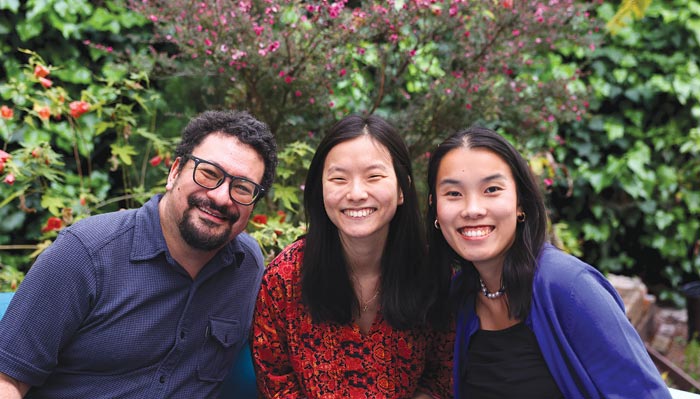
On April 27, the Los Angeles hub of The LUNAR Collective will host its third annual Asian Passover seder. A national organization of Asian American Jews, LUNAR cultivates connection, belonging and visibility through events and authentic digital storytelling.

“Some attendees have told me this is the only Passover experience they have or the first time they’ve felt fully welcome at a Seder,” David Chiu, LUNAR Los Angeles Community Leader for Passover, told the Journal. “Others, including myself, are deeply enmeshed in Jewish community with multiple Passover gatherings, and yet this one still feels really special.”  He added, “We’ll read from our Asian Jewish Haggadah, sing traditional songs and new Asian Jewish ones and engage in identity processing and sharing.”

As is traditional for this holiday, the Journal asked Four Questions of the three Los Angeles LUNAR community leaders: Chiu, Vanessa Bloom and Maetal Gerson. 

What makes Asian Passover so special? 

Chiu: It’s a chance to bring my full cultural self into the space, and there’s something intangibly liberating about that… a liberation that feels perfectly aligned with the themes of Pesach.

“I’ve been moved by the number of families, especially those with young kids, who have been attending. It’s a mixture of interfaith, multiracial, adoptee and Jew-by-choice.“ –Vanessa Bloom 

Bloom: In past years, I’d say the food, the music, the schmoozing and the warm atmosphere, and these are all beautiful displays of heritage and community. But more recently, I’ve been moved by the number of families, especially those with young kids, who have been attending. It’s a mixture of interfaith, multiracial, adoptee and Jew-by-choice. 

The most beautiful thing about seeing Asian Jewish babies and kids at these events is that I know their future is secured; they will grow up with a community that is for Asian Jews, by Asian Jews. They will see people like them and will never wonder if they’re “the only one” like I and so many others did growing up. For them, being Asian and Jewish will be the norm, not the exception.

Gerson: I find it really meaningful to see this Asian Jewish community develop over the past few years at these seders. Growing up, seders were always a big family event that we planned for months in advance. The same is true for the Asian Jewish seders, and I feel that we have been able to honor our traditions by creating a space where we can practice ritual and be in community together. It’s a time to reflect on what makes us similar and what makes us different, and to celebrate both things.

How do you combine your cultures?

Chiu: Over the years, the LUNAR Collective has written an Asian Jewish Haggadah. I’ve served on the creation committee two years in a row. We’ve had the expertise of Rabbi Mira Rivera, LUNAR’s rabbi-in-residence, but also a talented group of writers, artists and songwriters. The result has been something that follows tradition but also adds an extra kavanah from the perspective from the Asian American Jewish experience. For instance, imagine the Four Children as Four types of Asian Jews seeking welcome and embrace at the seder: The patrilineal Jew, the interfaith and mixed race Jew, the adoptee and the Jew-by-choice. This year, we get to add a fifth, as we have some attendees who grew up in historic Jewish communities in India. Where they grew up, being an Asian Jew was the norm. I’m so excited for them to share their traditions and songs at our seder as well. 

Gerson: The LUNAR seders give me a chance to express my identity as a member of an Asian community that is also Jewish. As a Chinese adoptee, I have not had as much experience combining cultures as I have had exploring my identity and how I might participate in communities that this identity connects to. 

What foods do you enjoy? Do you have a favorite recipe?

Bloom: I love Mediterranean food. My mom’s side is from the Balkans so we have a lot of fish, olives, salads, pita, stuffed peppers, etc., as well as classic Jewish favorites like matzah ball soup. I don’t have a favorite recipe, because I alternate between my mom’s sautéed fish or her brisket. 

Gerson: I love matzah ball soup. I don’t have a specific Asian Jewish recipe but have made cauliflower curry. I usually make chickpea curry with Garam Masala and curry powder but since chickpeas and ingredients in those spices are considered kitniyot, I change it for Pesach. Ingredients: 3 heads cauliflower chopped into bite-sized pieces and roasted, 2 cans of diced tomatoes, 1 whole tomato, 1 can coconut milk, half clove garlic diced, 1 tsp ginger grated, 1 tsp honey, 2 tbsp oil, 1 tsp salt, 1 tsp brown sugar. Chop the onion, garlic and tomato. Put the onion in a pan until sizzling; then add garlic and diced tomato and cauliflower. Stir in grated ginger, honey, salt and brown sugar. Add canned tomatoes and coconut milk. Stir until fragrant. Serve as a side dish.

What music do you incorporate into your seder?

Chiu: This year we’ll be including more music, including a song by Asian Jewish rabbinical student Arielle Korman called “The Moment” and the “LUNAR Niggun” written by LUNAR’s co-founder and co-executive director Jenni Rudolph together with LUNAR community members Rachel Chang and Clare Bierman. We’ll also be singing traditional favorites like “Dayenu” and Debbie Friedman’s “Miriam’s Song.” 

The last two seders have really focused on the beautiful words of the Haggadah we created, and so have been very text-based. That’s been wonderful, but another huge part of the Passover experience has traditionally been music, and so this year we decided to carve out some more space for singing together. There’s something magical about the connection we form while joining our voices, whether you can carry a tune or not. And the act of connecting people in this amazing Jewish ritual we call Pesach … well, that feels like holy work and a holy experience.

Bloom: I like the classics such as Debbie Friedman. This year I’m adding Woody Guthrie’s “This Land is Your Land,” because I’ve learned it on the banjo, and I think now more than ever we need unity and also to question authority. 

Gerson: So much music! I grew up singing avadim hayinu, dayenu, mah nishtana, echad mi yodeah and chad gadya and more with my family around the dinner table. As the youngest child in my generation, I would always be the one to prepare mah nishtana. We used traditional Ashkenazi nusach (style of melody). When I left home, I started to join communities that changed the tunes or added new songs to the seder.  For this LUNAR Passover gathering, we are including songs written and sung by JOC and picking music that feels liberatory. We want to bring in melodies that are specific to this time of year, and incorporate new songs as well.


To learn more about The LUNAR Collective and their Asian Passover Seders, go to WeAreAsianJews.org.

Four Questions About Asian Passover Read More »

Seder Showstoppers

Here are some fabulous ways to make your Passover table more festive.
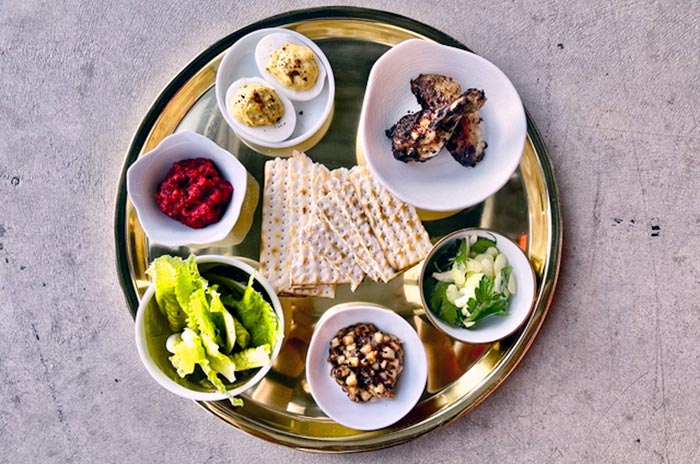
Author and chef Lior Lev Sercarz’s edible seder plate is a collection of six recipes, which you can serve with matzah.

“This version of the symbolic seder plate is updated out of respect and appreciation for gathering,” Lev Sercarz, owner of La Boîte in New York City, co-founder of the Galilee Culinary Institute and author of “A Middle Eastern Pantry,” told the Journal. “[We want] to reflect on where we came from and how much we have to be thankful for.”

He added, “It invites us to make all of the moments we have together as delicious as they can be.”

The Edible Seder Plate
Serves 4, but recipe can be multiplied
Ayala Spiced Chicken Wings
1 Tbsp Ayala N.16 spice blend (a rosemary blend with black pepper and garlic)
1 ½ Tbsp extra-virgin olive oil
1 ½ Tbsp fresh lemon juice
1 Tbsp honey
1 lb. chicken wings, separated into drumsticks and flats

In a mixing bowl, whisk the Ayala, olive oil, lemon juice and honey.
Add the chicken wings and toss to coat with the marinade. Cover with plastic wrap and refrigerate for 1 hour (or overnight).
Preheat the oven to 425°F. Line a rimmed baking sheet with aluminum foil. Spread the chicken wings on the prepared baking sheet and roast for 15 minutes, then turn over and roast for 15 minutes longer or until the wings are golden brown and cooked through.

Deviled Eggs
1 tsp mint
1 tsp sumac
1⁄4 tsp Tellicherry peppercorns
5 hard boiled eggs
1 Tbsp tahini (kitniyot — only for Sephardim)
2 Tbsp water
1 Tbsp chopped black olives
Salt to taste

Finely grind together the mint, sumac and peppercorns to make a spice blend.
Peel and cut the hard-boiled eggs in half.
Remove the yolks and place them in a medium bowl. Set the whites on a cutting board.
Smash the yolks with a fork until crumbly and add the tahini (if using), water, 1 1/4 teaspoons of the spice blend and chopped olives. Mash and stir until smooth. Season to taste with salt.
Evenly divide the yolk mixture among the cavities and sprinkle with any remaining spice blend.

Charoset
1 cup date puree*
2 Tbsp cup ruby port wine
1 medium Granny Smith apple, peeled, cored and ¼” diced
2 Tbsp toasted and salted cashews, coarsely chopped
1 ½ tsp nigella seeds
1 ½ tsp sesame seeds (kitniyot — only for Sephardim)
1 ½ tsp sherry vinegar
½ tsp sumac
½ tsp Aleppo chili
¼ tsp fine sea salt

Combine all ingredients using a spatula, then refrigerate until serving. Can be prepared up to 24 hours ahead of time.

*Date puree, similar to Silan, can be purchased. The Date Lady is dedicated to dates and you can find her puree through Amazon.

Beet Horseradish
1 Tbsp amchoor spice powder
12 oz package steamed peeled beets, cut into quarters
¼ tsp fine sea salt
1 Tbsp sugar
1 cup prepared horseradish

Pulse the amchoor, beets, salt and sugar in a food processor until finely chopped.
Add the prepared horseradish and continue processing until a smooth, bright, puree. Serve chilled.

Celery Parsley Salad
4 ribs celery, sliced thinly
2 Tbsp parsley leaves
½ tsp hazelnut oil or extra virgin olive oil
½ tsp cider vinegar

Toss the ingredients together to season.

Dressed Romaine
8 Leaves romaine lettuce, preferably the inner yellow hearts, cut into 2” pieces
1 Tbsp fresh lemon juice
Pinch of fine sea salt

Toss the ingredients together to season.

If you’re looking for a showstopper main course for your Seder meal, try Judy Elbaum’s matzah meat pie.
“This recipe is not quick nor easy — and does take some patience and technique — but it’s well worth it,” Elbaum, a food columnist, founder of LeaveIToBubbe.com and author of the “Seasonal Delights” cookbook, told the Journal. “Get ready for kudos when you serve matzah meat pie to family and guests.”

Matzah Meat Pie Photo by Judy Elbaum

Matzah Meat Pie
Yields 12 servings
Note: You will need four 4-inch springform pans (available at kitchen stores or online) along with vegetable spray to grease the pans.

Meat mixture
2 tablespoon cottonseed oil
1 red pepper, finely chopped
1 yellow pepper, finely chopped
2 onions, finely chopped
10 garlic cloves, minced
2 lb ground beef
1/3 cup barbecue sauce
2 eggs, lightly beaten
1 tsp garlic powder
1 tsp onion powder
1 tsp salt
Freshly ground pepper, about 10 grinds
1 cup matzah meal
½ cup pine nuts, toasted at 350°F for 5 to 8 minutes
3 tablespoons chopped parsley

Matzah Lining
10 matzahs (the regular matzahs that are 6” squares)
4 cups warm chicken stock or water

Egg Glaze
1 egg beaten with 1 Tbsp of water

Preheat the oven to 375° F.
Heat the oil in a large skillet. Add the red and yellow peppers, onion and garlic, and sauté over medium heat for 5 to 10 minutes until the onions are softened and translucent. Allow to cool for a few minutes.
Place the ground beef in a large bowl and with a fork break up into small pieces.
Add the sautéed peppers, onion and garlic, barbecue sauce, eggs, garlic powder, onion powder, salt and freshly ground pepper, and mix well.
Add the matzah meal and pine nuts and 2 tablespoons parsley and combine until the mixture just holds together. You may need to add more matzah meal as needed to bind the mixture.

To construct meat pies:
Pour the warm chicken stock into a shallow baking dish. Place one matzah into the warm chicken stock for a minute or two, until softened.
Remove, place on a cutting board and with a 4-inch round cookie cutter or the bottom of the spring-form pan, cut out a 4-inch circle of the matzah. Repeat this process 7 more times, so that you will have 4 matzah circles for the bottom of the pans and 4 for the top. You will have a lot of matzah scraps left over. Use the matzah scraps to make strips of approximately 2 inches high and 2 to 3 inches wide to line the sides of the spring form pans.
Grease the bottom and sides of each pan with vegetable spray. To line the pans, place one matzah circle on the bottom of the pan, place the two-inch strips in an overlapping pattern along the side of the pan. Fill the pans evenly with the prepared meat mixture. Place the remaining four circles on top of the meat in the pans. Brush on the egg glaze, then bake in the preheated oven for approximately 45 minutes.
The tops of the meat pies should be golden brown. Allow to cool for a few minutes, then gently release from the spring-form pans. Sprinkle it with pine nuts and parsley before serving.
Can be made several days ahead and refrigerated. ■

Seder Showstoppers Read More »

Blessings and Burmuelos: A Matzah Fritter Recipe

Every year, before Passover, Rachel and I sit and discuss what recipes we will be making for the Jewish Journal. Every year, I drive Rachel crazy and I tell her that we have to make our recipes non-gebrokts, meaning that they can’t have matzo meal or cake meal in them. 

Of course, the paradox of Passover is that the central thing that we are avoiding, “chametz,” or wheat, is also the main ingredient in the symbolic food that we eat, matzah. Sephardim, in general, are a little less stressed about Passover than Ashkenazim. You know, the whole kitniyot (legumes) thing. And we definitely aren’t as concerned about getting our matzah wet. 

As a very little girl, I remember my grandmother running the tap water over the matzah before she would make me a sandwich with her special Passover frittatas (small omelets made with sautéed onion, chopped Italian parsley and tomato). 

As you might imagine, gebrokts is a Yiddish word for foods that include matzah meal as an ingredient, like matzah ball soup. I know about gebrokts because my brother Rafi is a faithful Hasid of the Lubavitcher Rebbe. Chabad is extra strict on Passover. They eat their shmura matzah (matzah that’s been guarded to prevent it from leavening) very carefully, making sure that it never comes into contact with any liquid. Only fruits and vegetables that can be peeled are consumed. No grapes or strawberries! In general, the only prepackaged food items my brother and sister-in-law use are extra virgin olive oil, Schmerling chocolate from Switzerland and pure honey. 

One of my favorite Passover memories is when my brother Rafi joined us with his young children, Devorah and Yosef. He set up his own kitchen with a hot plate and a blender. He bought huge boxes of fresh produce and had the kids on a diet of hard-boiled eggs, avocados, mashed potatoes, roast meat and fruit and banana smoothies. 

After Shabbat lunch, a still hungry three-year-old Yosef surreptitiously stuck his fingers in the leftover T’bit (Iraqi chicken and rice hamin) and gobbled as much rice as he could. My father stood there, watching him and laughing with great amusement. At another meal, we were eating shepherd’s pie. Eight-year-old Devorah, faced with her father’s less delicious food, wailed “I just want to eat what they’re eating!”

I write this article from the airport in Jamaica, where we just celebrated the wedding of Devorah and Daniel. The bride was beautiful and radiant, the groom was handsome. The food was delicious — lots of fresh fruit and peppery jerk chicken. The scenery was spectacular — lush green jungle and turquoise blue surf. The energy was joyful and exuberant. 

May Hashem bless them with many years of health and happiness and many, many delicious meals.

—Sharon 

Sharon was busy traveling to Montego Bay, so this year I get to share my family’s favorite Passover food, burmuelos.

Popular throughout the Eastern Mediterranean, the recipe for burmuelos traveled to the tiny, close knit Ladino community on the island of Rhodes.

You might be familiar with burmuelos from Hanukkah, a fluffy, flour and yeast deep fried doughnut. But on Passover, they are matzah fritters made with crushed matzah or farfel that has been soaked in water and mixed with beaten eggs, feta and grated parmesan cheese. After the expulsion from Spain and Portugal, the Sephardim brought the recipe with them to Istanbul and the other cities of Turkey. Popular throughout the Eastern Mediterranean, the recipe for burmuelos traveled to the tiny, close knit Ladino community on the island of Rhodes.

Our favorite family Passover traditions are the lunches when Neil fries up burmuelos after returning from synagogue. 

First, Neil soaks the matza farfel, then he whisks eggs with feta and grated Parmesan cheese and then he combines the farfel and egg mixture. 

He drops big spoonfuls of the mixture into piping hot oil. The result is a crispy, crunchy exterior with a fluffy, salty, cheesy interior.

The burmuelos are served with lots of sour cream, honey and fruit jam, fresh berries and melon. There might be huevos haminados (cooked brown eggs) overnight and perhaps a spinach cuajado (a crustless vegetable quiche) and crispy leek patties leftover from the Seder. 

We like to triple the recipe because the leftovers are just as delectable. We eat the leftovers for breakfast or as snacks. Burmuelos can be perfectly reheated in the oven. 

—Rachel

Burmuelo Recipe

2 cups matzah farfel (or crushed matzah)
2 large eggs, at room temperature
1/2 tsp salt
1/2 cup grated Parmesan (optional)
1/2 cup crumbled feta
Pepper to taste
Vegetable oil, for frying

Soak matzah farfel in 1 cup warm water. After two minutes, squeeze out the water.
In a large bowl, whisk the eggs and salt.
Add the two cheeses and the farfel and mix well to combine.
Warm oil in a large skillet over medium high heat. When the oil is very hot, use a large spoon to drop several spoonfuls into the pan. Fry until golden, then flip and fry the other side.
Serve with sour cream and honey.
Labneh and fruit preserves are also delicious with burmuelos.


Sharon Gomperts and Rachel Emquies Sheff have been friends since high school. The Sephardic Spice Girls project has grown from their collaboration on events for the Sephardic Educational Center in Jerusalem. Follow them on Instagram @sephardicspicegirls and on Facebook at Sephardic Spice SEC Food. Website sephardicspicegirls.com/full-recipes.

Blessings and Burmuelos: A Matzah Fritter Recipe Read More »

Table for Five: Metzora

One verse, five voices. Edited by Nina Litvak and Salvador Litvak, the Accidental Talmudist

When you enter the land of Canaan that I give you as a possession, and I inflict an eruptive plague upon a house in the land you possess, the owner of the house shall come and tell the priest, saying, “Something like a plague has appeared upon my house.”

– Lev. 14:34-35


Rabbanit Alissa Thomas-Newborn
BCC/Rabbanit and Chaplain/Congregation Netivot Shalom and New York-Presbyterian Columbia University Irving Medical Center

Whether for the house or the body, recovery from tzara’at is never done completely in isolation. The kohen guides the person throughout. This builds a culture of not hiding our struggles and worries but, instead, turning to our leaders and community for support and guidance. With psychological sensitivity, our rabbis expound upon the intentionality of the phrase “something like” in our verse. Even a learned scholar is required to use this phrase to communicate both humility and respect for another’s help. It also serves as a buffer to limit fear and embarrassment. There is wisdom in acknowledging what we don’t know and in leaning on the insights and help of others. Often the human instinct is to hide whatever is metaphorically plaguing or worrying us to survive and avoid pain and discomfort. Sometimes this is needed and can even work. Our ritual, however, reveals that complete isolation is not the path to spiritual healing. This does not mean that we must force someone to speak publicly about their suffering and retraumatize. Rather, our parsha provides a ritual framework for individuals and our community to build social structures for thoughtful repair and healing embrace. As the Midrash emphasizes, the verbal requirements in the laws of tzara’at teach that in the face of life’s obstacles, sharing with our community opens up their prayers and care for us. When a house is plagued, the Torah answers with support rather than shame. May we merit to do the same. 


Nicholas Losorelli
Ziegler Student/Temple Beth Am Rabbinic Intern

In our parsha, we are faced with a strange circumstance and a practical response: If a plague appears upon your house, then you should go to the priest and say “something like a plague has appeared upon my house.” The nature of this “plague” may or may not be clear; as many who have spent significant time in Israel can attest, mold and lichen often appear inside homes due to moisture with the former, and due to lichen’s affinity for stone for the latter. Some of these lichens can actually be quite beautiful, but given that most people don’t know the ins and outs of lichen or mold, it’s best to consult an expert. What happens, though, if you do know a thing or two, or are even an expert on molds and lichen, can’t you just say “this is mold” or “this is lichen,” and deal with it yourself? Well, according to Rashi, not so. Rashi picks up on the “like” part of the statement, that you must say “something like a plague has appeared,” even if you know for sure — even if you are an expert. Why? Plagues and disease are infectious, and can spread easily, and so too can fear and gossip, so better to have a system in place to handle these situations, because even though our certainty may be well-founded, we may still be liable for the unintended consequences of spreading fear, and spreading gossip, often leading to innumerable and irrevocable consequences and damage.


Rabbi Brett Kopin
Base LA and Milken Community School

This verse calls Mercutio’s famous words to mind: “A plague o’ both your houses!” He shouts these words as he approaches an imminent death after losing a duel he fights for his friend, Romeo. But Mercutio, of course, was not referring to a physical house, but rather the Capulet and Montague families. The same way in which the Ten Commandments’ admonition, “Do not covet your neighbor’s house,” refers to the neighbor’s clan or family, and not necessarily to the neighbor’s physical house. 

Houses are not inflicted by plague. The homeowner in the verse must say, “Something like a plague …” It is clear from the next few verses that the text is describing something more akin to mold (a huge problem, especially in rainy climates!). This eruption can get so bad that the house is under threat of being dismantled completely, and it is the responsibility of the priest to enact a quick remedy. 

When left unchecked, plague, or something like a plague, can erupt within our families, our homes, even our larger communities. It takes on many forms, but perhaps most insidiously, it erupts as internal strife, the kind of strife one hopes will quickly pass, but when ignored, continues to grow. The role of Jewish leadership, in every generation, is to stop a plague whenever it begins. This is perhaps why our tradition describes Aaron, the first High Priest, as a lover and pursuer of peace. What matters most, above all else, is keeping the family together.


Rabbi Shmuel Reichman
International Speaker, Bestselling Author, Business Coach

Speech holds the power to create relationships, lift people up, expand people’s minds, and enable genuine communication and connection. As human beings, we are naturally isolated and separate from one another. We are individual beings, all living in our own subjective world and inner universe. How, then, can we overcome the infinite barrier between ourselves and everyone else? 

This is the gift of speech. Speech is the mechanism that enables us to connect with other people and overcome the seemingly infinite barrier between us. And this is the real tragedy of lashon hara (evil speech). Lashon hara takes the very tool of connection — speech — and uses it to disconnect people from each other. When one speaks negatively about someone, they create a wall between the subject of their negativity and the person they are speaking with. The very tool of connection has been corrupted to achieve its opposite goal. 

This is why the consequence for speaking lashon hara is tzara’at (plague/affliction) and temporary isolation. The person who spoke lashon hara disconnected people from each other. As a consequence, they now become disconnected from everyone, isolated in their own inner world, incapable of any communication and connection with anyone else. However, this punishment is not only punitive in nature; it is reformative. This time in isolation gives them the opportunity to contemplate their past failures, helping them truly understand the pain of isolation and disconnect, and this hopefully inspires them to create a greater sense of connection and harmony moving forward.


Elan Javanfard
L.M.F.T., Professor & Author, “Psycho-Spiritual Insights” blog

In this parsha we encounter a fascinating scenario of a house’s walls being afflicted with tzara’at and needing to be dismantled. Rashi tells us this was divinely ordained by Hashem so that when the walls were destroyed, Bnei Yisrael could find treasure hidden underneath, resonating with the concept of Post-Traumatic Growth. 

Post-Traumatic Growth suggests that individuals can experience positive psychological changes following adversity or trauma. It acknowledges that amidst the darkness of challenges, there exists the potential for growth, resilience, and transformation which embodies what Rashi describes, seeing the struggle through the lens of faith. 

The house, like a person struggling, is initially viewed as injured or damaged. The tearing down of the walls symbolizes the psychological deconstruction people face when confronting trauma. Breaking down their barriers, fears, and insecurities. However, within the rubble lies the potential for discovery and the possibility of finding meaning or a treasured new purpose. The treasure represents unseen strengths and wisdom that can emerge through coping with adversity. Lastly, Hashem helps us complete the metaphor by making the homeowner discard the stones outside of the city. This act symbolizes the need to actively rid our lives of negative beliefs, patterns, and attitudes that build perpetual suffering. 

Whether facing adversity or trauma, Hashem metaphorically challenges us to confront the walls within ourselves that hinder our growth and healing. May we all find the courage to confront these inner walls, dismantle them with strength, and uncover the treasures within ourselves gifted to us by our Creator.  

Table for Five: Metzora Read More »

Deconstructing Passover

Freud claimed to have discovered the true meaning of dreams: that they are inverted, repressed, or disordered thoughts which, when correctly reorganized, will reveal a hidden meaning. Freud, a Jew, was simply restating an immemorial Jewish mode of exegesis.

To the Jews, the Torah is the collective dream of humanity. Whether understood as written by the Hand of God, by Moses at His dictation, or by one or many generations of prophetic souls, it has instructed, inspired, and unified (and divided) one thousand generations of Jews. 

Agnostics and the similarly enlightened complain that miracles do not happen, and that the character of the biblical God is both impossible, and offensive. But the Torah is not about God, it is about the mind and soul of Man. 

As it is a dream, rather than a blueprint, it can be dissected and reordered infinitely. The Sages taught that everything in the universe belongs to God, save the Torah, which belongs to Man. It is ours to use or understand as we think fit. It is the heritage, not only of the Jews, but of our spiritual descendants, the Christians, the first of whom, being Jews, took their possession, The Torah, and wrote an addendum of their own.

Currently, an Oscar recipient thought it good to proclaim he was ashamed of being a Jew. Elementary manners to one side, and irrespective of his politics, in what sense is he a Jew? If he were religious he would recognize that his slander was everywhere condemned in Jewish law and lore, as the worst of sins (leshon hara, the evil tongue), and a biblical grounds for punishment.

If he were “culturally” Jewish he would be guilty of abandonment of his brothers and sisters, and of their shared heritage. But his actions prove he is neither a Jew by religion nor by ethnic and cultural connection. 

In what sense, then, is he that Jew he is ashamed to be? His proclamation can only mean he is a Jew by blood. He is, then, ashamed to share genetics with those he understands as criminals.

This is Blood Libel — the ancient indictment of the Jews: of the anti-Dreyfusards, of the Nazis, of the Crusades, the Intifada, of the Pogroms. The Libel — that Jews are the Tool of the Devil (John 8), has been applied, historically, to all Jews (see the Shoah): the rich, the poor, the Observant, the acculturated, to anyone who may have “one drop of Jewish blood.” The greatest horror of the Oscars speech is not its indictment of the actions of a country, but in its assertion of an ineradicable “racial” taint.

The recipient, here, seems to proclaim his shame at that drop of blood. His act is not a confession of shame, however, but of pride, and a derivative plea for exemption from his taint on account of his moral heroism.

But actual heroism is moving from a place of safety to one of peril as an act of free will. Our brave affiant actually is in danger, as a Jew — for the world has, once again, discovered antisemitism as the cure-all tonic for disruption and confusion. But he is moving from one place of danger (as a Jew) to another, differing from the first only in his delusion of exemption. The murderers of Hamas and the university thugs, will not spare him, should he round the wrong corner; and his protestations of shame will, then, avail him as little as did the peace symbols on the t-shirts of the young frolickers on October 7.

The Oscars are a trade-show, and the statuette is a bit of plaster; they’ve always been a celebration of the power of nonsense. As the Universities have become, as the United Nations has been since its inception; and we note that all have proudly espoused antisemitism. It is the ineradicable delusion of the West.

Why?

We find an answer in the Torah. The rabbis said that Purim is the quintessential story of anti-semitism. Here the evil Haman wants to kill the Jews of Susa. Esther, the Queen, is Jewish but she balks at approaching the King to plead for her people. She prizes her position and fears his displeasure. Her uncle, Mordecai, counsels her that if the King turns on the Jews he’ll have to sacrifice her, too, rather than suggest that an indictment of the devil Jews is subject to emendation.

Why, however, was there an outcry against the Jews in Susa? And why is it repeated now?

The Torah’s answer is the Story of the Exodus. But it must be unpacked.

Pharaoh is concerned that his slaves, the Jews, have grown too numerous, and that, unkilled, they will supplant his rule. The infant Moses is exempted from the slaughter and raised as the Prince of Egypt. He stands up for a Jewish slave and kills the slave’s assailant. He is betrayed as the murderer, by the Jews, and flees to live in solitude.

God, in the burning bush, instructs him to return and instruct Pharaoh to let the People Go. He does so. Pharaoh demurs, and ten plagues are visited on Egypt, at the conclusion of which Pharaoh (momentarily) relents, and the Jews depart. 

As good psychoanalysts, hobbyists, or Talmudists, we can dramatically reorder the story for our current enlightenment or amusement. Suppose the story began with Egypt visited by various plagues. These need not have been of Divine origin, but merely, natural occurrences: vide: an infestation of frogs, one of lice, an eclipse of the sun, the pollution of the Nile, eruptions in the populace of boils, cattle disease; finally a plague attacking newborn males. Any of these might have been not only naturally occurring, but familiar to the Egyptians.

But what if their cycles of periodic recurrence coincided, and, overwhelmed, the populace was incapable of conceiving any individual or combined solutions — if they were, quite literally, deprived of reason? Further, what if the state of Egypt’s government was weakened by such prolonged prosperity, that neither its rulers nor their parents had been faced with this magnitude of catastrophe, and call for its powers of leadership? This people, then, rendered powerless and terrified, might search for a proximate cause, and find it, handily, among its inoffensive slaves. They might reasonably conclude that the slaves carried disease, that their habits of hygiene were outlandish, their cattle diseased, and so on.

The West, weakened by hundreds of years of prosperity, has been living off the interest accrued by previous toil. Its leaders are from classes privileged never to have toiled, sought work, served in the military, met a payroll, and so on.

Now, with the Millennium, this populace and its supposed leaders undergo a cascade of plagues: AIDS, Jihad, Covid, gender politics, teenage transsexualism, climate change, open borders and attendant crime, drugs, human trafficking, and so on. Each of the above could (and can) be dealt with by logical and concerted action, but their correction requires a resolve and understanding present neither in our leaders, nor our legislatures, and daunting to those whose willingness is indicted as inhuman, vicious, or insane.

A frenzied populace, today, as in our reconstruction of the Exodus, deprived of the mechanism of self-government (by Pharaoh, or by the Deep State), and legitimately daunted by the individual’s inability to affect widespread change absent concerted governmental effort, may cast about for an overriding cause.

The terrifying catastrophe they perceive is merely an accumulation of small, mainly mechanical concerns, a coincidence of various human errors, natural occurrences, and a civilization’s inevitable progress through maturity into decline.  

Pharaoh and his Egyptians were unfit to face the daunting confluence of troubles; and, so, panicked, and looked for the Magical Cause, which would explain to many their pusillanimity. As did the Germans after the Versailles Treaty; and as the enlightened “liberal” west does today.

The Torah is not the report of “what happened,” but of what always happens. The Torah, reconfigured, predicts human recurrence to the drug of antisemitism, since the Exodus down to October 7, and the 2024 Oscars.

The Torah is not the report of “what happened,” but of what always happens. 

The Torah, reconfigured, predicts human recurrence to the drug of antisemitism, since the Exodus down to October 7, and the 2024 Oscars.


PASSOVER 2024
by David Mamet
copyright (c) 2024 by D. Mamet

Deconstructing Passover Read More »

Sitting With Rebels

In every presentation I give about the rise of left-wing antisemitism, someone from the audience invariably asks me “What should we do about the anti-Zionist young Jews?” The questioner is referring to the outspoken activists who organize protests, accuse Israel of genocide and call for an unconditional ceasefire, often getting arrested in the process. They’re the Jewish Voices for Peace demonstrators — not all of them young — who host “die-ins” on campus or at the train station. They’re the “as a Jew” Jews claiming over the bullhorn in the streets of Manhattan to speak “as a Jew” for authentic Jewish values against the Jewish state. They’re the IfNotNow Jews in their 20s, who recently endorsed all of Israel’s most ardent adversaries in Congress, including Ilhan Omar, Rashid Tlaib and Jamaal Bowman. “Take that! Jewish community.” 

They’re Dina, the 23-year-old graduate student, coming to your Seder on Monday evening, who last year declared with complete certainty that by backing Israel you’ve failed to live up to your own Jewish values. Imagine what she’ll say this year with a war raging in Gaza. And with Uncle Lenny also coming, the beloved relative who volunteers at an IDF base for a week every summer and whose fervor for Israel’s right to self-defense knows no bounds, you’re in for a swell evening. You remember wistfully how much Lenny loved Dina when she was a teenager active in her youth group. You’ll need every drop of those four cups of wine. A rabbi friend offers a piece of advice: Speak to them both before Passover begins and ask them to hold their fire until after he singing of Chad Gadya and the Holy One, Blessed be he, smites the angel of death. Then they can have at it as the rest of the guests scurry home.   

What should we do about these wayward young Jews? I detest the question. For one, I have no idea how to change them. They seem to feel pretty strongly about their views, seeing that they join keffiyeh-clad Hamas supporters in blocking traffic to the airport. For another, I’m trying to make a larger argument that American Jews must find new partners to fight against left-wing antisemitism and the question sidetracks us from this more important discussion. I’m not interested in spending a lot of time thinking about, conversing over, or worrying about how to reach the true believers of the ideology, Jew or non-Jew. 

Yet, as much as I dislike the question about what to do about these rebel Jews, I know that they are part of our community. They are somebody’s children and grandchildren, nephews and nieces. They attended our shuls, camps, youth groups and day schools. They were taught by our liberal educators and rabbis that social justice means identifying with the oppressed. They then graduated from the warm embrace of empathetic liberalism to the binary world of “liberatory” activism, a world that divides humanity into oppressed and oppressors and places “Jewish power” and Israel front and center. We’ve literally raised these young activists. And one or more may be coming to your Seder Monday evening.   

At a recent event at a Chabad House on campus attended by 50 Jewish students, one of the more hawkish attendees named Isaac posed the dreaded question: “How can I possibly build support for Israel on this campus when a group of Jewish lunatics go around condemning Israel at every turn? It was clear from the question that he had in mind several of his own adversaries on campus, who he’d permanently banish if he could. He wanted me to tell him how. Just when I thought I had deftly dodged the question, the rebbetzin chimed in with “I really think these young people have severed their ties to the Jewish people! We should not welcome them.” And then the Chabad rabbi, her beloved husband, blurted out, shaking his head, “I totally disagree! Some of these young people may be exploring, and we can’t cut them off. They’re still Jews.” Now this was interesting. If the Chabad rabbi and the rebbetzin can’t agree on what we should do with the anti-Zionist Jews, we really don’t have anything approaching a communal consensus. 

I nevertheless have an answer: Stop obsessing. Devote some — but not too much— time to the question. The Jewish people have better things to do.

By saying “you” rather than “us,” the wicked son separates himself from the tribe, which the rabbis understood as an affront to the Jewish people. 

Yet here we are on Passover, and I’m forced once again to confront the question in metaphorical terms: What do we do about the Wicked Son? So let’s spend a little time on it. When we arrive at the parable of the Four Sons during the Passover Seder, the Wicked Son asks “What does this ritual mean to you?” By saying “you” rather than “us,” the wicked son separates himself from the tribe, which the rabbis understood as an affront to the Jewish people. The Wicked Son is told that if he had been in Egypt he would not have been redeemed, and participants are instructed to “blunt his teeth,” which sounds like an act of torture committed by an evil dentist.

Rabbi Shlomo Riskin advocates that we treat the Wicked Son with affection and care. “Blunting his teeth” can actually be interpreted as calming the wicked child’s anger by reminding him or her that he or she remains part of the Jewish community. 

Not so fast, says Rabbi Shlomo Riskin, who advocates that we treat the Wicked Son with affection and care. The rabbi suggests “blunting his teeth” can actually be interpreted as calming the wicked child’s anger by reminding him or her that he or she remains part of the Jewish community. If we can engage the Wicked Son thoughtfully, he asserts, there is a chance we can keep him or her in the fold. 

Sean Gallup/Getty Images

When I started writing this article, I asked a friend of mine who studies Torah regularly what Jewish sources say about the Wicked Son. The next day, he called me while studying with his very learned rabbi and put him on the phone. “Check out Exodus 12, verse 25,” the rabbi instructed. 

“And when your children say to you, ‘What do you mean by this rite?’ You shall say, ‘It is the Passover sacrifice to God, who passed over the houses of the Israelites in Egypt when smiting the Egyptians but saved our houses.” The rabbi noted that in the Torah the Seder leader does not respond directly to the questioner, the Wicked Son, but to all the others at the Seder table. According to this reading, we should ignore the Wicked Son and use the provocative question as an opportunity to give the prescribed message to the whole table. I like this answer a lot, perhaps because it reinforces my own sense about how we should handle radical young Jews who scorn Israel: Mostly ignore them and stick to our larger mission and message. 

I hold this position of benign neglect because obsessing about the Wicked Son misdirects our time and resources. The more we talk about him the less we speak to the other three sons — all of whom do see themselves as part of the community — who constitute a much larger percentage of young Jews. According to a recent Pew Survey, a majority—52 to 42% — of young Jews say the way Israel has carried out the war has been acceptable (a significant drop off from the 93% of all adult Jews who see it that way). But 91% of that young demographic segment also stated that Hamas’ actions were unacceptable. In other words, the vast majority of those who didn’t support Israel’s approach to the war weren’t relating to the most extreme narratives holding Israel culpable for the massacre against Israeli citizens. That’s a very small percentage.

In December of 2023, two months after the Oct. 7 massacre, a group of graduates, not all of them anti-Zionists, from the Charles E. Smith Jewish Day School that two of my kids attended, issued a hard-hitting open letter stating, “We are struggling to reconcile the unquestioned support for Israel’s brutal assault on Gaza with the Jewish values that we were taught at JDS. We believe that every person is created in God’s image, that every life is a world in and of itself. We refuse to forfeit this belief when it comes to Palestinians.” The initial response by many in the Jewish community was to see the letter as further evidence that we have lost this generation of young Jews. In May 2010, Peter Beinart published an essay in The New York Review of Books titled “The Failure of the American Jewish Establishment,” in which he opines that “For several decades, the Jewish establishment has asked American Jews to check their liberalism at Zionism’s door and now, to their horror, they are finding that many young Jews have checked their Zionism instead.” While such sentiment may have been common among a certain segment of American Jewish elites, it was never an accurate reflection of most young Jews. Yet it frightened many Jewish institutions into bending over backward to accommodate progressive sensibilities. 

Just a few days after the original letter from the day school graduates came out, two other letters emerged, signed by far more graduates than the first letter, that “blunted the teeth” of the original in no uncertain terms. One called the letter “shameful in its impressive level of lies, propaganda, misinformation, and blatant falsehoods,” calling the signatories “self-hating Jews.”  The writers of the counter letter expressed dismay that “fellow alumni would spread vicious blood libels about Israel like calling it an apartheid or colonial state.” In other words, many more letter signatories were squarely behind Israel than were opposed to it. If we become too preoccupied with the smaller group of signatories, we miss the opportunity to speak to a much larger group, many of whom signed neither letter. 

Members of the activist group Jewish Voice for Peace (Photo by Spencer Platt/Getty Images)

We can even get carried away in catering to young Jews who don’t quite rise to the level of Wicked Son status. Mijal Bitton, a sociologist and leader of the Downtown Minyan in Manhattan who works closely with young Jews, has noted this tendency to overgeneralize about the progressive political views of young Jews. Many aren’t simply looking for a stirring talk about climate change or racial inclusivity. They’re looking to fill a spiritual need or a social void or to just be around other Jews, and we should spend just as much, if not more, time and resources appealing to them.

I also hold this position of benign neglect because I don’t think all anti-Zionist Jews are evil or antisemitic.

I also hold this position of benign neglect because I don’t think all anti-Zionist Jews are evil or antisemitic. Years back, I went to my rabbi’s annual Sukkah party. I spotted a guy in his late twenties named Caleb with disheveled brown hair who attended shul regularly. He had a decidedly leftist bent, often challenging the rabbi’s commentary while my Republican shul-mate muttered curses under his breath. I had never been formally introduced to him. Caleb and I got to speaking and he asked me what I do for a living. “I’m the CEO of the Jewish Council for Public Affairs” (a position I no longer hold). He looked at me in disbelief. “I work for Jewish Voices for Peace,” he said, the hard leftist organization that works in “solidarity with the Palestinian freedom struggle” and opposes Israel’s right to exist as a Jewish state. Caleb and I were both holding little translucent plastic cups filled with the rabbi’s finest scotch, and spontaneously clinked them together, let out a “L’Chaim!” in unison, drank down what was left, and parted ways. Later that evening, we resumed our conversation in the sukkah. “I’m trying to find another job,” he said. “Some of the people at JVP are antisemites.” I asked if he meant they were anti-Zionists. “Oh no,” he waved me off. “I’m anti-Zionist. I have no use for Israel. Some of the people working at JVP hate Jews.” Notwithstanding his distaste for Israel, Caleb undoubtedly saw himself as a proud Jew.  

I asked myself at the time: Would I go back to my rabbi’s sukkah party next year knowing Caleb would be there? Sure. His presence is no threat to me. Would I invite Caleb to my Passover Seder? No. I don’t want to hear someone rail against Israel’s supposed grave injustices while I dip the matzah in the charoset unless I absolutely have to. Would I sit with my own kids or relatives at a Seder if they were of Caleb’s persuasion? Yes, I would. I love my kids and I’d take Rabbi Riskin’s empathetic approach to “blunt their teeth.” But in this case, I’m engaging the anti-Zionist because they’re my own kid, not because I’m acting on some grand community engagement strategy. We should not conflate the two.

My encounter with Caleb got me further thinking: Are Caleb and his fellow travelers really self-hating Jews? Jonathan Glazer in his Oscar-acceptance speech certainly appeared as one. Ardent Zionists like me are supposed to say they are but I think it’s more complicated. I suspect some are but most aren’t. What I do know is that they favor a version of Jewish life completely at odds with my own, the dominant, Zionist stream.

“The public and communal staging of their anti-Israeli and anti-Zionist beliefs appears to be the badge of a superior form of Judaism, stripped of its unsavory and unethical ‘ethnocentric’ and ‘colonialist’ baggage.”
– Natan Sharansky and Gil Troy

In an article in Tablet, Natan Sharansky and Gil Troy call the anti-Zionist Jews “un-Jews” because these Jews “believe the only way to fulfill the Jewish mission of saving the world with Jewish values is to undo the ways most actual Jews do Jewishness.” Many un-Jews, they point out, are deeply involved in Jewish life, despite their harsh dissent. “For many of these un-Jews, the public and communal staging of their anti-Israeli and anti-Zionist beliefs appears to be the badge of a superior form of Judaism, stripped of its unsavory and unethical ‘ethnocentric’ and ‘colonialist’ baggage.”

The way I see it, the un-Jews they speak of occupy a kind of alternative universe on the vanguard of progressive causes and radical social justice activism that challenge the existing political and social order. Some fancy themselves in the image of the socialist, Bundist Jews of the early 20th century, delighting in Yiddish literature and deep conversations about the impending revolution in the coffee houses of Europe and America. The utopianism of that earlier generation of leftist Jews didn’t turn out so well for them. “Ultimately, the fire of revolution consumed these un-Jews too: Josef Stalin killed many of them, after they did his dirty work. Some of the survivors lived long enough to see their ideals collapse into the rubble of dictatorial repression, including Jew-hatred,” Sharansky and Troy remind us. 

But never mind. Their contemporary progenitors, anti-Zionist Jews of today, can have their coffee shop discussions, their own organizations, their own temples (there’s certainly no shortage of rabbis to lead them), and their own protests. They can moralize on Twitter against Israel to their heart’s desire. Who’s to stop them anyway? Our prevailing attitude should be: “anti-Zionist Jew, you do you.” And we should go about our business. 

There you have it: 2,500 words on a subject I’m admonishing you not to obsess over. I’ve said my piece. Next time I’m asked, I’ll refer the questioner to this article in the Jewish Journal and move on. May you have a peaceful Seder.


David Bernstein is Founder of the Jewish Institute for Liberal Values (JILV.org) and the author of “Woke Antisemitism: How a Progressive Ideology Harms Jews.”   

Sitting With Rebels Read More »

Rosner’s Domain | We Intercepted, We Exaggerated …

The exact wording of Prime Minister Benjamin Netanyahu’s tweet was slightly different from the title of this article. “We intercepted, we prevented, together we will win.” All three parts of this tweet are not completely accurate. We intercepted – yes, but not alone. Other countries assisted. We prevented – not exactly, there was an attack, there was some damage, the Iranians were not deterred. “Together we will win” is an issue for another occasion. We can talk about “together” and about “we will win.” But for now, let’s just talk briefly about what happened between Israel and Iran.

We can open with the following statement: Iran has more or less achieved its objective. By attacking Israel with drones and missiles it exacted a price for the assassination of a senior general in Syria, without entangling itself – and I should be cautious as I write on Tuesday – in a dangerous war. Was Iran expecting this high rate of interception and this low number of victims and this small level of damage to Israel? Probably not. So the Iranians might be somewhat disappointed. Still, generally speaking, the Iranians wanted to do the following:

A. To draw a red line that says “whoever assassinates our officials will have to take into account a counterattack.”

B. To send a message of determination: “Even if the whole world warns against it, we will still attack.”

C. To do all this without getting overly involved at war with Israel, and certainly not with the U.S.

How does one achieve such a goal? By doing what the Iranians did. They announced the attack in advance; they launched a massive, but not too massive, attack; they targeted places where one would not expect a vast number of casualties. They gave the enemy’s intelligence enough advance warning, and the enemy’s defense systems a lot of time to prepare.

Were the Iranians hoping to see more damage done? Maybe. Probably. The attack provided them with a good opportunity to test their ability to penetrate Israel’s shield, from which they would learn quite a bit. 

Were the Iranians hoping to see more damage done? Maybe. Probably. The attack provided them with a good opportunity to test their ability to penetrate Israel’s shield, from which they would learn quite a bit. They tested their offensive capabilities against an Israeli defense combined with international aid, and will now study the outcome to better prepare for a next time. They will look at the drones and missiles that were torpedoed, those that were able to go through, the tools Israel used. There is a lot for them – and for Israel – to learn. So, you could think about the attack as a sort of dress rehearsal, a large-scale hot exercise. 

And no – I do not mean to say that the attack should be taken lightly. It was dangerous and troubling. Because of that, it is important for Israel not to overstate its supposed “win.” True, Biden called it a “win.” But we know why: He wanted to convince Netanyahu not to respond to the attack.  

It was not a win but was also not a loss. Israel has also more or less achieved its goal. It killed an Iranian general, and dealt with the counterattack successfully. The regional and international alliances worked, the defense system excelled. As a result, decision makers retained flexibility as they determined whether to counterattack. If Iran were to destroy important infrastructure facilities, Israel would be forced to respond. If there had been a large number of casualties, Israel would have had to respond. The Iranians did not want to force Israel to respond. They wanted Israel to have flexibility. They wanted the Americans to be able to say to Israel something along the lines of “nothing has happened that requires a response that would drag the entire region into a storm of war.”

Must Israel respond? This is a difficult question. A sovereign country cannot calmly accept a widespread attack on its territory without reacting. But the attack is a reaction to something Israel (supposedly) did. And this isn’t a precedent — Israel was attacked and did not respond in the first Gulf War. And in retrospect, that decision seems reasonable and perhaps even wise, although there were those who doubted it at the time. Also, Israel is busy on several fronts; that should be taken into account. There are the Americans, who do not want Israel to respond. And there are economic considerations; one attack cost Israel a lot of money. Additional attacks would cost more. 

And we haven’t finished mentioning all the considerations. So, the decision whether and how to respond to the attack is complex. And anyone who thinks there is an unequivocal and clear answer to it, probably hasn’t thought it through.

One thing is clear: The day-before warnings seem excessive in retrospect, and the day-after celebrations were also excessive in retrospect. On Sunday, Israel behaved as if it has just won some important battle. But that’s not the case, and we better remember that it wasn’t a win, because the illusion of victory can be almost as dangerous as losing. Israel has absorbed an attack, and it is not certain that it will have the ability to respond decisively. Israel celebrated its great defense and great defense is important. But as every sports coach would tell you, to win one must also have an effective offense.

Something I wrote in Hebrew

On Tuesday, I penned a short dictionary of Iran-attack cliches. Here’s one item:

“It was an unprecedented achievement” — this is a somewhat strange argument. Let’s think about it for a second and a half: in what sense is this an unprecedented achievement, in the sense that Israel has never intercepted so many missiles and drones at once? Obviously! This is because the enemy never sent so many missiles and drones at Israel at once. We’ll admit the truth: “An unprecedented achievement” is merely a rhetorical introduction to an operational recommendation: “Therefore Israel is not obliged to respond.” 

A week’s numbers

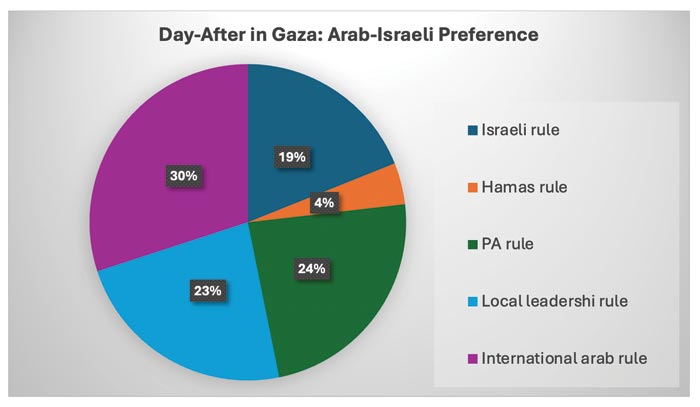
JPPI’s monthly survey asked Arab Israelis about their preference for a Gaza day-after. Very few want Hamas rule to be reimplemented, and a plurality supports an international Arab force as the remedy for this troubled region.

A reader’s response:

Effi Azuri writes: “Bibi is becoming very unpopular in the U.S.” My response: He is unpopular in Israel too … but also still the PM. 


Shmuel Rosner is senior political editor. For more analysis of Israeli and international politics, visit Rosner’s Domain at jewishjournal.com/rosnersdomain.

Rosner’s Domain | We Intercepted, We Exaggerated … Read More »

Why I’m Adding a Flower to the Seder Plate This Year

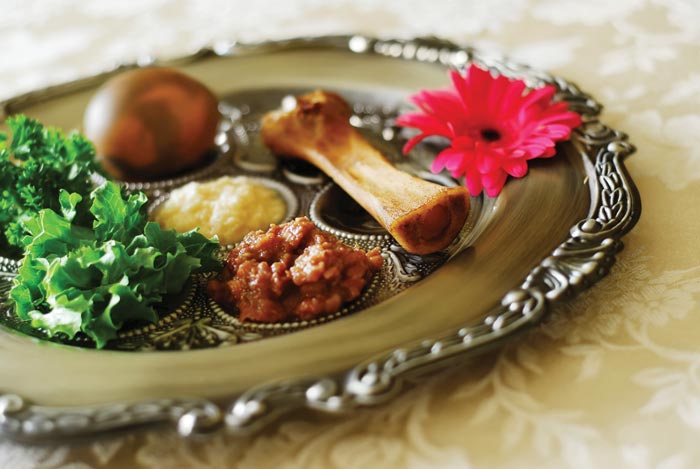
This Passover, as we gather to retell the story of Jewish liberation, let us add a new symbol to the Seder plate: A flower. This simple addition serves as a poignant reminder of the resilience and strength of the women of Israel, many of whom survived unspeakable violence on and after Oct. 7.

Approximately half of the world’s Jewish population lives in Israel, and its women will always be a part of our collective story. Israeli women bravely serve as Israel’s first line of defense in many positions in the Israeli military, and suffered some of the most atrocious violence of Oct. 7.

The Passover seder is full of reminders of the highs and lows of Jewish exile. The matzah, a simple bread of poverty, also reminds us that our redemption from slavery came so quickly that we didn’t have time for bread to rise. The egg symbolizes the circle of life, and the charoset both the hard work of laying mortar and the lifesaving defiance Jewish women exhibited in meeting their husbands under the apple trees — circumventing Egypt’s attempts to prevent Jewish continuity.

This year, too, has been full of highs and lows. This month Israel and its allies fought the first direct attack from Iran, shooting down hundreds of rockets and preventing an all-out war in the Middle East. To many, it felt miraculous, and like a testament to the vital work of making peace with our neighbors.

But this miracle came less than a year after Black Shabbat, the darkest day in modern Jewish history. On the holy day of Simchat Torah, over 1,200 people in Israel were killed by terrorists, and hundreds were kidnapped. We also know, from abundant evidence and even survivor testimony, that everywhere Hamas attacked on Oct. 7, they committed acts of sexual violence.

It is this tension that we will hold when we sit down at our Seder tables this year. The flower on our Seder plate is not merely a decorative ornament; it is a symbol of solidarity, a tribute to the lives lost and the suffering endured by Israeli women and girls. It is also a message we will carry long beyond Passover: We believe Israeli women. And we will not let what happened to them be forgotten or erased.

In many ways, the story of Passover, too, is a story of courageous women — of Shifra and Puah, of Yocheved and Miriam — who risked their lives to save the Jewish people and refused to give up hope of our redemption.

This year, we add to their legacy the Israeli women of Oct. 7 — Amit and Moran, Ofra and Naama, Judy, Mila and Shani. We honor those who are still in captivity, those who survived, those who fought to defend their families, and those who were viciously murdered. We honor the tireless crisis counselors who are caring for survivors, and the grandparents who are now raising their grandchildren.

By adding a flower to our Seder plate, we affirm our commitment to the women of Israel, who are facing a world that refuses to believe them. On Oct. 7, the world witnessed unspeakable atrocities perpetrated against innocent Israeli women, men and children. Yet it has largely remained silent—or worse. 

Let us ensure that the victims’ stories are not forgotten. Let us acknowledge the courage of those who survived, mourn the loss of those who did not, and fight for the release of the hostages still held captive in Gaza.

Let us amplify the voices of those who have been silenced and stand with the courageous women of Israel. In adding this flower to our Seder plate, we declare to the world: “We believe Israeli women, and we are speaking out.” 

Let us amplify the voices of those who have been silenced and stand with the courageous women of Israel.

In adding this flower to our Seder plate, we declare to the world: “We believe Israeli women, and we are speaking out.” Let this simple act of remembrance be a beacon of hope in a world too often marred by darkness.

May we meet together next year in Jerusalem. And may we never forget that our Israeli sisters are an integral part of the Jewish story.

You can find additional words of intention to use at your own seder at jwi.org/ibelieveisraeliwomen


Laura E. Adkins is a senior director at Jewish Women International.

Why I’m Adding a Flower to the Seder Plate This Year Read More »

“Let My People Go” A Passover Prayer of Freedom for the Israeli Hostages

As we sit at our Seder table tonight to celebrate the Exodus of our ancestors from slavery in Egypt,
The words “Let My People Go” resonate in the depths of our souls.
Our hearts are with our Israeli brothers and sisters who have been kidnapped by Hamas.
The bitter taste of Maror is on our tongues, our tears are in the salt water.
On this night of freedom we cannot rejoice until every soul heartlessly held captive is released.
Help us, God, to bring them home.
Fill Israel’s leaders with the strength, the wisdom and the power
to negotiate the release of the hostages who are waiting and praying for deliverance.
Until that day, watch over the hostages, God.
Let them know they are not alone, and not forgotten.
Fill them and their families with courage, perseverance, strength
and hope for the blessed day of freedom that is coming.
We pray the seas will part, the hostages will walk free,
and we will welcome a new time of peace for Israel!
On that day we will sing a new song to You, O God, Who frees the captives,
A song of rejoicing and gratitude.
May that day come soon.


Rabbi Naomi Levy is founder of Nashuva and the author of “Einstein and the Rabbi.”

“Let My People Go” A Passover Prayer of Freedom for the Israeli Hostages Read More »