
fbpx

April 18, 2024

Day 188: How Could This Pesach Be Celebrated with Joy?

One of my favorite questions that Oprah asked her guests is “What do you know for sure?” Here is what I know for sure about the human spirit, encapsulated in the wisdom of our ancestors in the Haggadah and the lived experiences of our chayalim. It’s a story of how challenge and struggle not only shape us but imbue us with wisdom that transcends our years.

Consider the timeless story from our Haggadah, a narrative that unfolds in Bnei Brak. Here, revered sages — Rabbi Eliezer, Rabbi Yehoshua, Rabbi Elazar Ben Azariah , Rabbi Akiva, and Rabbi Tarfon — engage in an all-night discussion on the Exodus from Egypt. This discussion, intense and spirited, continues until dawn, when their students remind them of the morning Shema. This moment, simple in its occurrence, is layered with profound significance.

Central to this narrative is Rabbi Elazar Ben Azariah , a figure of extraordinary intellect and spiritual depth, who remarks, “Behold, I am like a man of 70 years, yet I never grasped the significance of recounting the Exodus at night.” “Keshivim shana”—Notice how Rabbi Elazar says, “I am LIKE a man of 70 years.” This statement invites us into a remarkable backstory. Rav Elazar ben Azaria was actually an 18-year-old Talmudic genius who had been chosen to become the Nasi of the Sanhedrin, the Jewish Supreme Court. He possessed tremendous wisdom for his youth but lacked gravitas. So, he prayed to God, and his hair miraculously turned white overnight. This transformation allowed him to convey his insights with the authority of experience, despite his youth.

So, at the Seder, with the greatest sages of the generation, he humbly says, “I’m only like a 70-year-old man, and I never understood until now, why the Exodus from Egypt should be celebrated at night?” What changed?

Born into affluence and unfamiliar with hardship, Rabbi Elazar ben Azariah initially struggled to comprehend the full depth of the Exodus narrative. It was not until he encountered the dire conditions of his people, living under Roman oppression in the ashes of the second temple’s destruction, that he truly understood the importance of commemorating the Exodus, even during the darkest times. “I called to Hashem from Metzer, Mitzrayim, the narrowness, the constraints of oppression, and Hashem answered me with expansiveness.” Through difficulty, we can expand.

How could Pesach be celebrated with joy at such a time? In the ashes of the temple’s destruction, Rabbi Elazar Ben Azariah  found himself; he aged, growing a “white beard of experience and wisdom,” and through this confined narrow space, he also discovered hope. This transformation and his newfound understanding of the Exodus narrative illustrate how adversity shapes us, teaching lessons of leadership and insight that no number of years could alone provide.

This sentiment is echoed in the lives of our young chayalim. A mother poignantly said to me, “We knew we were sending our children to the army, but we didn’t know we were sending them to war.” Yet, it is in these very crucibles of conflict that our young chayalim have been forced to mature rapidly, confronting realities that most of us can scarcely imagine. One young soldier in his early 20s remarked at a simcha, “Yehoshua, from here I am going to a shiva for a friend, and after that, I am going to the hospital to visit a friend who is seriously injured. I came to this event to feel joy. Every single day is a gift, and we must seize joy when we can.” The “white beard” story and the experiences of our young chayalim serve as powerful lessons for how adversity shapes and changes us, preparing us for leadership and imbuing us with wisdom that defies our years

Rabbi Elazar Ben Azariah finds meaning and hope in the interpretation that the Liberation from Egypt should be celebrated even during the darkest nights of exile and suffering. He was 18.

We are living through some of the darkest nights, and those nights are true obstacles but also opportunities to gain wisdom beyond our years. 

We are living through some of the darkest nights, and those nights are true obstacles but also opportunities to gain wisdom beyond our years. Yes — wisdom we wished we could acquire in other ways.  We stand on the shoulders of giants, and they are our chayalim, the future leaders who, through their trials and tribulations, have grown white beards of wisdom overnight and who are lighting up a path, leading us through the darkness toward liberation –  with the torch of resilience, and hope — for all of us to follow.

Day 188: How Could This Pesach Be Celebrated with Joy? Read More »
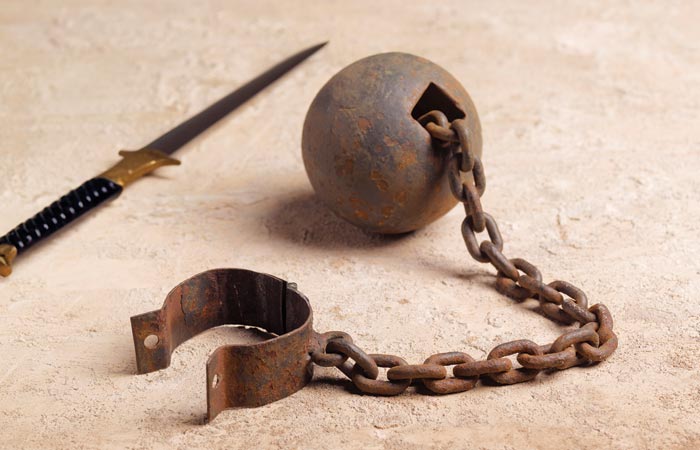
To Be Both Slave and Soldier

I know Moshe Frydberg mostly from the stories that my father told me about his father.

He was a Jew who moved from the shtetl to the ghetto to Auschwitz to Holon, Israel to Houston, Texas. Moshe told my father of sneaking scraps from his assigned labor in the kitchen to give to others in the camp. My father passed down this fragment and then added his own memory: of his father, a short, dense man, waking up at the crack of dawn, lifting massive sacks of flour onto his back, using his full body to turn thick dough into challah at his Kosher bakery in Houston.

It was these stories and all their implications that I inherited. As a child at the annual Passover seder, when I played the hunched-over slave leaving Egypt with matzah rising on my back as we sang “Avadim hayinu,” we were slaves, I saw Moshe. When I left home and put on the weighted IDF army vest that curled my shoulders forward, I saw Moshe.

And on Oct. 7, again it was Moshe’s image that surfaced through the shock and horror of that day and those that followed.

The slave, the survivor, the soldier. These identities are the layered garments encasing my simultaneous vulnerability and power on Oct. 7 and in its aftermath. 

Oct. 7 was supposed to be Moshe’s story. Mine was built in reaction to it. When Hamas broke the fence into Israel, they broke my story. And not only my story. This period has broken the personal and collective stories of Jews around the world regarding who we are and what keeps us safe in the face of skyrocketing antisemitism, questions around identity and status, and our own pain and concern over the suffering of war.

At a time when the Jewish people’s shoulders are being pulled to slouch, we will zoom out of our current reality to retell the quintessential Jewish story of freedom. 

It is these stories that we will bring with us to the Passover seder. At a time when the Jewish people’s shoulders are being pulled to slouch, we will zoom out of our current reality to retell the quintessential Jewish story of freedom. In this exercise lies an opportunity to uplift ourselves, our families, and our nation. We can do this by telling an intergenerational family story at this year’s seder.

An Intergenerational Story 

“In each and every generation, a person is obligated to see oneself as if they left Egypt, as it is stated (Exodus 13:8); ‘For the sake of this, did the Lord do [this] for me in my going out of Egypt.’”

The story of Exodus articulates who we are, where we come from, and what we yearn for. It is in this story that we find the rituals, values, and set of priorities that guide us through the present. It is in this story that we place this present within the intergenerational narrative that moves us from the past and into the future.

According to psychologists Dr. Marshall Duke and Dr. Robyn Fivush of Emory University, an intergenerational narrative generates coherence in a crisis, and it’s this narrative which is articulated no more clearly than in the Passover Haggadah.

“How do you create a narrative that somehow is coherent and allows you to use that information in a way that you can continue to have meaning and purpose in your life?” Fivush recently asked and then answered. “The process of making sense of a senseless trauma begins to shape by placing the event as part of a longer history in which you start to understand the longer arc of the narrative.”

Duke continued, “An event, such as the war, the Holocaust, even as far as Egypt. These are all placed in a grand narrative, which is an oscillating narrative.”

Our family stories ground this oscillating narrative, giving particularity to the values, sense of moral clarity, and resilience that accompany every generation’s highs and lows. 

Duke and Fivush’s research shows that individuals who receive this narrative and build subsequent identity around it have a greater ability to pull themselves toward the light when all around them seems dark. By understanding ourselves as a culmination of layered generations, we can hold multiple truths within a resilient Jewish identity, a resilient Jewish people. 

This year, we will weave our experiences and questions from the last six months into the classic Haggadah text. We will then naturally connect them to the stories we were told, and to the traumas and the gifts that we inherited through these stories. We will then be given a choice that is fully our own regarding how we will pass this story on to the next generation on seder night.

Let’s choose to tell a family story articulating the oscillating nature of what it means to be a Jew. A Jew who is a part of a people with a past, a present, and a future. And a people that carries both weight on our shoulders and the strength to push them back.  A people that cares for our own while never wavering on our commitment to alleviate the suffering of others. A people with deep ties and loyalties to diaspora and homeland.

Let’s pass on a story that leaves us desperately yearning for “Next Year in Jerusalem,” along with the belief that we uniquely have the ability to bring it about.


Tracy Frydberg is the director of the Tisch Center for Jewish Dialogue at ANU: Museum of the Jewish People. The Tisch Center in collaboration with Dr. Robyn Fivush and Dr. Marshall Duke developed an intergenerational family seder guide for Jewish parents, grandparents, community leaders, and beyond to build family resilience and practice hope at the upcoming Passover seder.

To Be Both Slave and Soldier Read More »

What Is So Great About the Shabbat Before Passover ?

As anyone who has spent weeks cleaning for Passover can attest, the Shabbat before the holiday is often, as the kids would say, mid. Paranoid about any hametz landing under couches, stressed about the lack of Seder prep, already missing the challah that will soon be verboten, and hearing the rabbi’s hour-long sermon, families often find it hard to generate festive feelings. Yet, the Jewish tradition has long proclaimed that this Shabbat is, to paraphrase those classic Kellogg’s Frosted Flakes commercials … GREAT! For centuries, it’s been referred to as Shabbat HaGadol – the Great Sabbath.

Commentators have found the most Jewish of ways to understand the origin of this perceived greatness – by arguing about what exactly it means.

The most commonly cited explanation is that the day gets its name from the haftarah portion read from the Prophets on Saturday morning. The section, taken from the short book of Malachi, concludes with God’s proclamation “Behold I am sending you the prophet Elijah before the coming of the great and fearful day of the Lord,” a reference to the reckoning signaling the Messiah’s arrival. Problem is, the 13th century sage Rabbi Isaac of Vienna, known as the Or Zarua, documents a debate in his time over what portion is to be recited that Shabbat — indicating that Malachi was not always read, and when it was, not by all synagogues. Some preferred a passage from Jeremiah.

The second most quoted explanation, made popular by the 14th century Spanish sage Yaakov ben Asher, known widely as the Tur, is that if you crunch the numbers between the Bible and the second century chronological work “Seder Olam,” it would seem that God’s commandment to the Israelites in the book of Exodus to tie a sheep to their bedposts and then, four days later, ritually slaughter them as the paschal sacrifice, was given on Shabbat. The lack of a violent reaction on the part of the Egyptians to this sacrament of freedom was so miraculous that Shabbat was deemed special. 

The French medieval scholar Hizkuni swiveled from the supernatural to the national. He theorized that it was by dint of the Israelites obeying God that day – their first collective fulfillment of a divine commandment as a new nation – that the weekend earned its designation. Like a bat mitzvah girl or bar mitzvah boy now counting as a gadol, an adult, Jacob’s descendants had finally reached the age of maturity.

To Joseph di-Trani, in his book “Tzafnat Paneach” – citing his father, the 16th century Tzfat-based Rabbi Moshe di-Trani – the Shabbat was unique because it was the first that wasn’t followed by a return to the back-breaking labors at the hands of the Egyptian taskmasters. It was a Saturday that signaled the long-awaited liberation and salvation, a Shabbat that never ended. 

Many other scholars, however, note that somewhat obscure calendrical correspondence can hardly be the source of the nickname. After all, the Bible never identifies the day of the week of God’s commandment. No wonder then that the 12th century prayer book known as the Machzor Vitri, produced by students of the renowned sage Rashi, is at a loss as to the customary appellation, writing: “And the Sabbath before Passover is known among the people as ‘the Great Shabbat’ and they do not know why, since it is no greater than any other Sabbath.” No Jewish text even mentions the special designation during the entirety of the first millennium C.E. 

Perhaps that’s why the collection of legal material attributed to Rashi and known as the Sefer HaPardes, tongue likely firmly planted in rabbinic cheek, posits that the significantly longer than usual sermon delivered on the occasion makes the congregants feel like Shabbat afternoon is great in length — not in a good way. 

Defenders of the rabbinic habit of delving deeply into the nuances of the upcoming holiday’s laws suggest, in turn, that it is out of respect for the wise words of the brilliant, great sermonizer by all who want to come and hear that the day gets its nickname. The 17th century Rabbi Joel ben Samuel Sirkis, known as the Bach, credited the great number of people coming to their spiritual leaders to learn great rules and regulations. (Only a rabbi would offer such an explanation.) 

The modern scholar Israel Yuval, in his 2006 book “Two Nations in Your Womb,” a controversial history of Judaism’s interactions with early Christianity, argued that the Great Sabbath likely emerged as a concept in response to the New Testament’s Book of John. Unlike the other synoptic gospels, John believed the crucifixion to have occurred on Passover eve, a Friday. Thus, in his telling, the Jews refer in 19:31 to the overlap of the first day of the holiday with the Sabbath as a “high [or great] day.” In early Christianity, the “Great Sabbath” was the name for the Saturday prior to Easter. John Chrysostom, the fifth century Church Father, even writes of a “great week” being celebrated in Jerusalem prior to the Christian holiday. The Jews, following Yuval’s theory, responded to the breakaway faith by popular custom, developing their own emphasis on the day, with no official explanation recorded in an authoritative text for hundreds of years.

Whether Shabbat HaGadol’s emergence in the Jewish tradition was in recognition of the spiritual heights achieved by our ancestors 3,000 years ago, is a paean to the popularity of endless sermons, or actually originates as an inter-religious polemic, will no doubt continue to be debated. In the meantime, enjoy those last few great big bites of challah while you can.


Rabbi Dr. Stuart Halpern is Senior Adviser to the Provost of Yeshiva University and Deputy Director of Y.U.’s Straus Center for Torah and Western Thought. His books include “The Promise of Liberty: A Passover Haggada,” which examines the Exodus story’s impact on the United States, “Esther in America,” “Gleanings: Reflections on Ruth” and “Proclaim Liberty Throughout the Land: The Hebrew Bible in the United States.”

What Is So Great About the Shabbat Before Passover ? Read More »