Heading to your first Jewish wedding? Whether it’s Reform or strictly Orthodox, there are Jewish wedding traditions that you definitely will see.
Some may sound familiar, but knowing what to expect (and being versed in the meaning behind what you are watching) will make you even more prepared to celebrate.
10 Jewish wedding traditions:
1. Fasting
The wedding day is considered a day of forgiveness. Some couples choose to fast the day of their wedding, just as they would on Yom Kippur. The couple’s fast will last until their first meal together after the wedding ceremony.
2. Bedeken
Before the ceremony, the groom approaches the bride for the bedeken, or veiling. He looks at her and then veils her face. This signifies that his love for her is for her inner beauty, and also that the two are distinct individuals even after marriage. It also is a tradition stemming from the Torah, wherein Jacob was tricked into marrying the sister of the woman he loved because the sister was veiled. If the groom does the veiling himself, such trickery can never happen.
3. Ketubah signing
The ketubah is a Jewish prenuptial agreement that outlines the groom’s responsibilities to his bride. It dictates the conditions he will provide in the marriage, the bride’s protections and rights, and the framework should the couple choose to divorce. Ketubahs aren’t actually religious documents, but are part of Jewish civil law — so there’s no mention of God blessing the union. The ketubah is signed by the couple and two witnesses before the ceremony takes place, then is read to the guests during the ceremony.
4. The walk to the chuppah
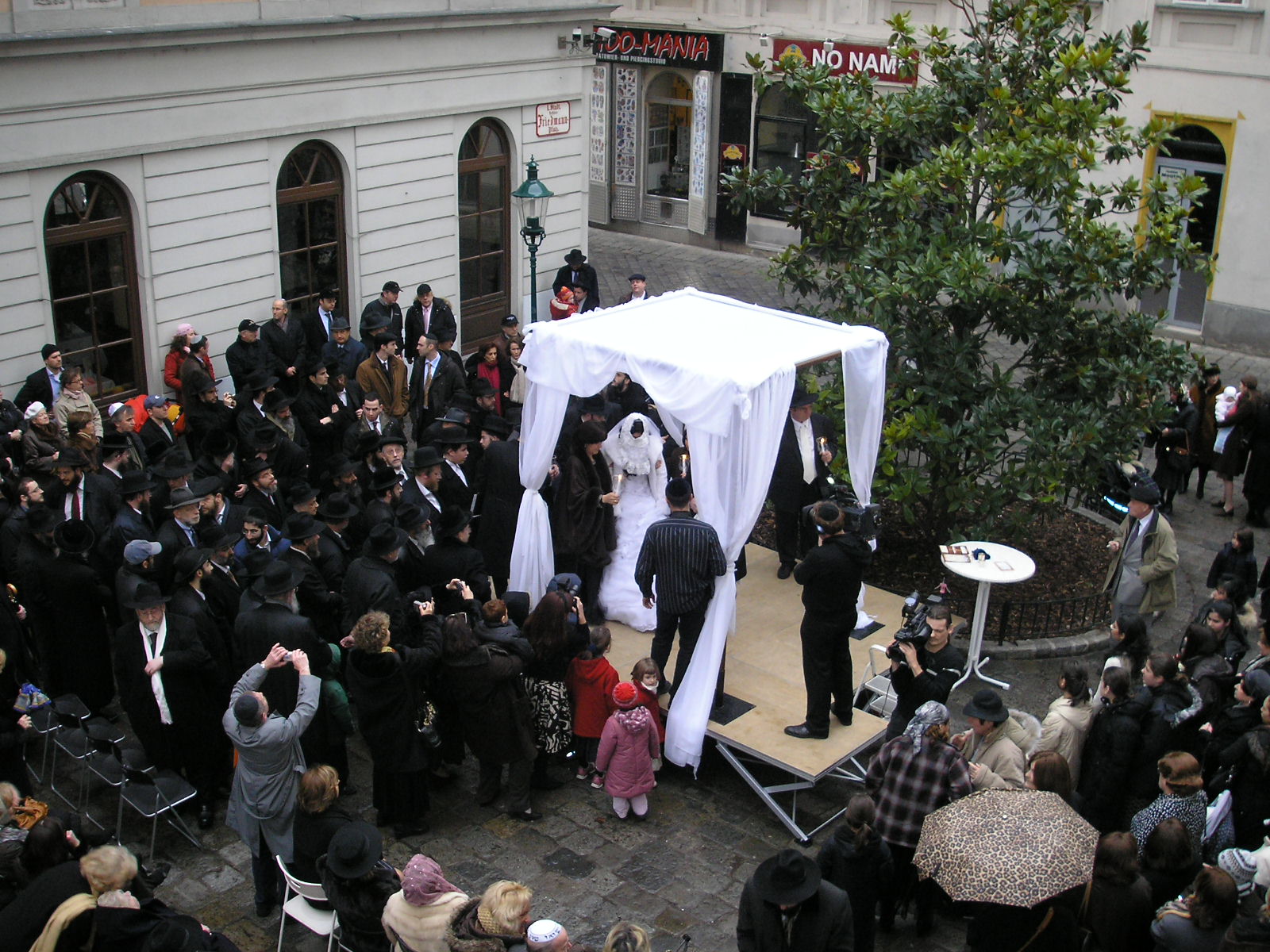
Traditionally, both of the groom’s parents walk him down the aisle to the chuppah, the altar beneath which the couple exchanges vows. Then the bride and her parents follow.
5. Vows under the chuppah
A chuppah has four corners and a covered roof to symbolize the new home they are building together. In some ceremonies, the four posts of the chuppah are held up by friends or family members, supporting the life the couple is building together. In other instances, it may be a freestanding structure decorated with flowers. The canopy is often made of a tallit, or prayer shawl, belonging to a member of the couple or their families.
6. Circling
The bride traditionally circles her groom either three or seven times under the chuppah. Some people believe this is to create a magical wall of protection from evil spirits, temptation and the glances of other women. Others believe the bride is symbolically creating a new family circle.
7. Sheva Brachot: Seven Blessings
The Sheva Brachot come from ancient teachings. They often are read in Hebrew and English, and shared by a variety of family members or friends. The blessings focus on joy, celebration and the power of love.
8. Breaking of the glass
As the ceremony comes to an end, the groom is invited to step on a glass inside a cloth bag to shatter it. The breaking of the glass holds multiple meanings. Some say it represents the destruction of the Holy Temple. Others say it demonstrates that marriage holds sorrow as well as joy and is a representation of the commitment to stand by each other even in hard times.
9. Mazel tov!
Shouting “Mazel tov!” is one of the best-known wedding rituals. After the ceremony is over and the glass is broken, you will hear guests cheer, “Mazel tov!” Mazel tov means “good luck” or “congratulations.”
10. Yichud
After the ceremony, tradition dictates that couples spend 18 minutes in yichud (seclusion). This wedding custom allows the newly married couple to reflect privately on their new relationship and allows them precious time alone to bond and rejoice.
Jaimie Mackey’s story appeared at brides.com.