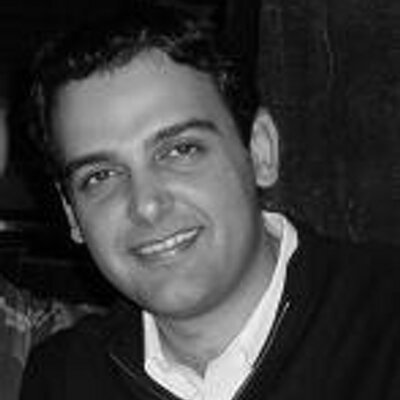

On Sunday February 17, 2008 roughly 500 Los Angeles area Iranian Jews bid a final farewell to the late Iranian Jewish historian Dr. Amnon Netzer during his memorial at Nessah Synagogue in Beverly Hills. He had died a few days earlier at the age of 73 at UCLA Medical Center while visiting Los Angeles. To the academic world and for non-Jewish Iranian intellectuals, Netzer was known as one of the world’s foremost experts in the areas of Iranian history, culture, and linguistics. For the tight-knit Iranian Jewish community worldwide he was considered a legend who had researched and help preserve the near 2,500 year history of Iranâs Jewry.
Netzer was born in the northwestern Iranian city of Rasht in 1934 and immigrated with his family to Israel in 1950. He is credited for working as an editor for various Persian language newspapers in Tel Aviv during the 1950âs and as the first producer/anchor of the Persian language news broadcasts on the Voice of Israel radio between 1955 and 1958. After receiving a degree in Middle East and International Affairs from Hebrew University in Jerusalem, in 1965 Netzer obtained a degree from New Yorkâs Columbia University in Iranian Studies, Indo-European languages, as well as Semitic Languages and literature. Later in 1969, Netzer obtained his doctoral degree in the same subjects from Columbia and went on to teach at various universities through out his career.
In 1970, Netzer returned to Israel where he co-founded the Iranian Studies department at Hebrew University and began his research on Iranian Jewish history as well as the ancient Judeo-Persian language. He not only authored scores of articles about Iranian Jewish history but helped compile, âPadyavandâ, a rare and comprehensive three volume book detailing various significant events in Iranian Jewish history. His research on Iranian Jewry was not only as a result of his travels to the most remote villages in Iran to find Jews, but also as a result of visiting archives worldwide to locate documentation about Iranian Jewry. Netzerâs friends said he was also among a small and distinguished panel of academics that were frequently called on by Israeli government officials to share their expertise regarding Iran and the Middle East.
I had the rare pleasure of knowing Netzer during the last five years and interviewed him on a number of occasions for my articles about Iranian Jews and their ties to Purim. His historical knowledge about the topic was literally mind blowing and beyond genius! I also found him to be a humble man who did not seek the limelight nor community acclaim for his work. This was quite refreshing to witness because I typically see some individuals in our community often doing their best to show off their ‘accomplishments’ at every opportunity. From my observations, what has been most heartbreaking to his close friends and former students in the Iranian Jewish community was the lack of sufficient financial support Netzer received for his research. Many of his Iranian Jewish friends have told me confidentially that they felt as if the wealthy in our community who could have given grants to Netzer so that he could conduct his research more efficiently and rapidly, did not do so. Netzer had also revealed his disappointment and heartbreak with some in the Iranian Jewish community who had taken advantage of his kindness or taken credit for his work without giving him correct attribution. Unfortunately while financial support for the arts and academia might be important in certain communities, the Iranian American Jewish community demonstrated that support for Nezter’s work—which was groundbreaking—was not a priority for them.
While the Iranian Jews are still struggling to come to grips with Netzerâs passing, his close friends said future generations will undoubtedly benefit from his legacy and knowledge he left behind.

(Friends wheel Nezter’s flag drapped coffin into the Nessah Synagogue)


(Netzer’s close friend of more than 40 years, Nessah’s Rabbi David Shofet)

(Beverly Hills’ Iranian Jewish Mayor Jimmy Delshad pays his last respects to Netzer)

(An unknown older woman tries to comfort Netzer’s son Uriyah at the memorial)


(Iranian Crown Prince Reza Pahlavi, Amnon Netzer, and Empress of Iran Farah Pahlavi)













 More news and opinions than at a Shabbat dinner, right in your inbox.