When it came to modern Israel, Ziva London found herself living in the past. Having immigrated to the United States 23 years ago, the Jewish-day-school teacher recently realized that her concept of the Holy Land reflected the Israel she knew there as a citizen more than two decades ago. Talking to fellow Israeli teachers at B’nai Shalom Day School in Greensboro, N.C., London discovered that she wasn’t alone.
“We didn’t have the resources and knowledge of how Israel has been changing according to the international arena,” said London on a break between sessions at an Israel teacher education workshop at the University of Judaism (UJ).
Ziva and her colleagues were not the only educators wanting an educational update or a refresher course so that they could effectively teach students about the Jewish homeland. Seventy teachers from 13 states, Great Britain and Canada gathered Aug. 1-6 for the Pre-Collegiate Teacher Education Workshop on the History, Culture and Politics of Modern Israel, a seminar conducted by Emory University’s Institute for the Study of Modern Israel and hosted by the UJ.
With a decline in tourism since the re-emergence of suicide bombings in key Israeli cities in 2001, fewer American Jews are visiting Israel. With less exposure to the realities of Israeli society, many Jewish educators feel that their knowledge of modern Israel is either limited or passé.
“A lot of people have antiquated ideas about Israel,” said Dr. Nadav Morag, the UJ’s director of the Center for Israel Studies and chair of the political science department. “This is not the Israel of the kibbutz and people dancing in the fields, which is what a lot of Americans have images of today. Every 10 years it’s a different country.”
Between changes in the role of the Israeli army, exports focusing on high-tech products rather than agriculture and the influx of Russian immigrants, keeping one’s finger on the pulse of the ever-changing country can seem like a full-time job.
In addition, many American Jews are baffled by the idea of some Israelis’ secular, national Jewish identities. Others don’t comprehend Israel’s parliamentary government compared to the presidential government in the United States.
Pat Glascom, a workshop participant and an Israel studies teacher at Congregation Keneseth Israel in Allentown, Penn., was relieved to get some clarity on the differences between American and Israeli democracies.
“With the American presidential election approaching, I plan to have my students make a comparative study of the two democracies,” said the religious-school teacher.
For educators who are up to date on Israel, many still struggle with the task of trying to instill within students a connection to the Jewish state.
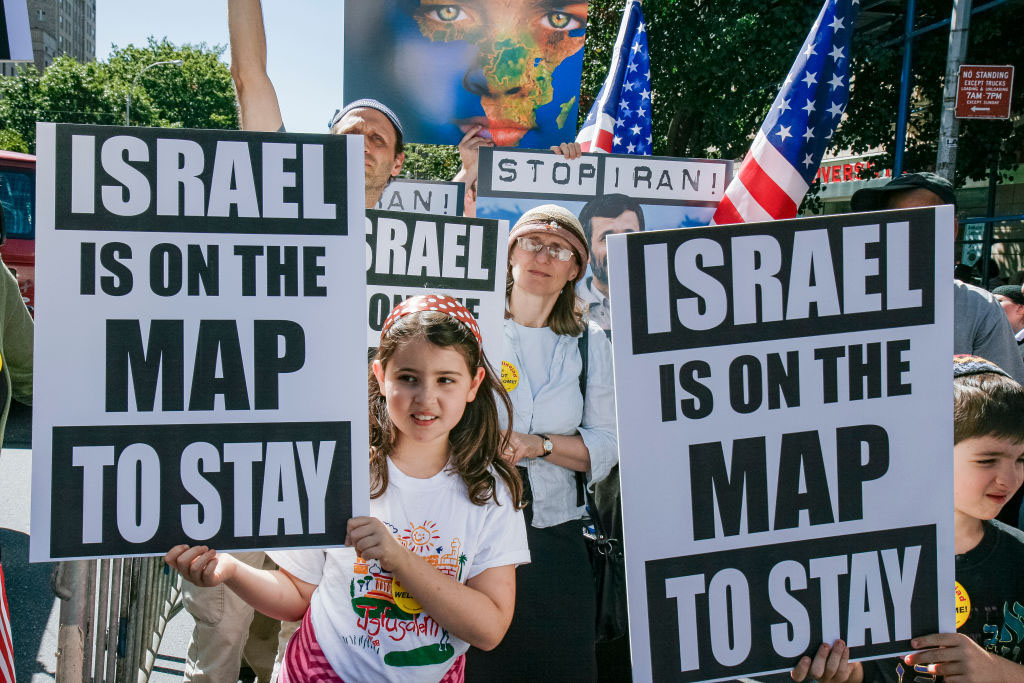
Rebecca Zimmerman, the educational director of Contra Midrasha in Walnut Creek, was baffled when two of her teenage students failed to understand her desire to visit Israel.
“I tried every angle I could think of,” said Zimmerman, of her struggle to explain possible motivations. “An emotional connection to the state of Israel, a political fascination, historical importance, religious, a spiritual homeland or even a simple cultural connection to other Jews. No matter what I said, they would not sway from their thought that Israel was not important.”
The UJ workshop focused on how to overcome such obstacles.
While some Jewish teachers struggle with student apathy, others must tactfully facilitate in-class political debates involving Israel.
Matan Agam, a senior at Milken Community High School, said that political discussions occasionally arise in his history, Hebrew and Jewish law classes.
“If there’s a bombing or something drastic, teachers open it up to discussion among students and they’ll moderate,” Agam said. “The opinions vary greatly among students and we usually get good points from both sides.”
In light of last summer’s front-page Los Angeles Times story about a former Shalhevet faulty member exposing his seventh-grade class to Palestinian points of view, some students feel their Jewish school are too rigid when it comes to Israeli politics.
“The school claims to be really open-minded, but when it comes to Israel, they’re not,” Shalhevet senior Becky Dab said. “They try to make it seem like everyone else is wrong and what the Israelis are doing is right.”
Her father, Jon Dab, is satisfied with the school’s position.
“We’re extremely supportive of Israel, so we don’t perceive anything [at Shalhevet] as being untoward as far as viewpoints being expressed.”
As the topic of Israel in the Jewish community seems to trigger black-and-white thinking, another obstacle is American Jews’ tendency to view Israel in an idealistic light.
“A lot of American Jews put Israel on a pedestal,” said Nadav, emphasizing the need for American to think of the country as “a normal society. If they build Israel up as an example of perfection, they’ll be disappointed when they find out it’s not perfect.”
For more information on the institute, visit www.emory.edu/COLLEGE/JewishStudies/ismi.html .