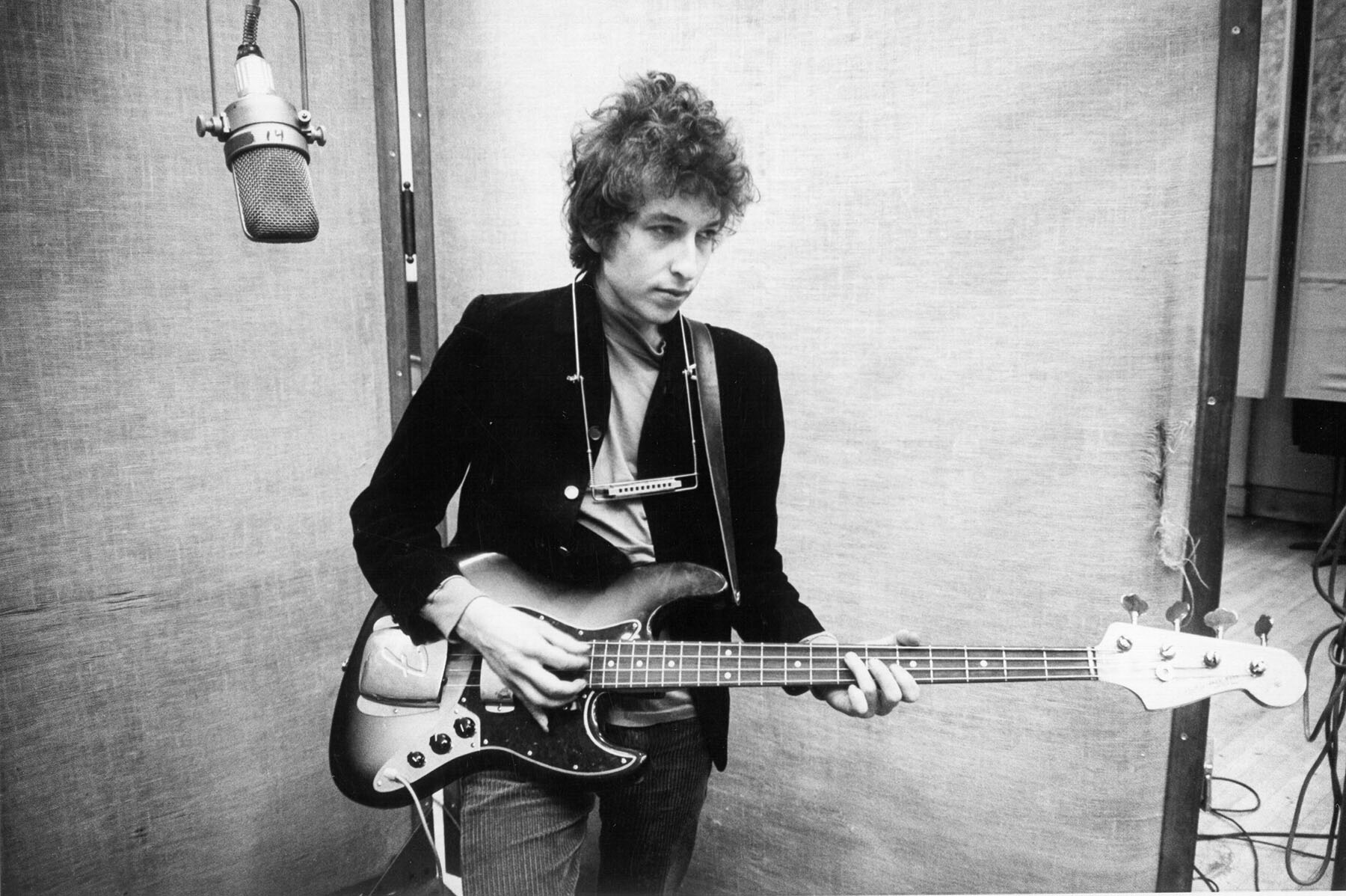
Bob Dylan, whose real name is Robert Allen Zimmerman, has a deep connection to Israel and the Jewish people. He lived in a kibbutz, performed in Israel and his son had his bar mitzvah in Israel. He was honored with the Nobel Prize for Literature in 2016, and his exceptional song of 1983, “Neighborhood Bully,” reveals an astute knowledge of Jews throughout history.
The current movie based on his life, “A Complete Unknown,” is a tribute to his relevance even today. But while the movie portrays his early years, it does not mention his Judaism.
In ten short stanzas, “Neighborhood Bully” describes the Jewish past and present, primarily in Israel, with references to the diaspora. The song was composed during the 1982 Lebanon war and portrays Israel as the powerful bully in the eyes of the enemy and the world. The song is a profound meditation and lament. Its soulful tone registers well whether read as a poem or heard as a song.
The structure of the song allows for the expression of the Jewish predicament in a striking way. First and foremost, each stanza begins and ends with the words “neighborhood bully,” which portrays not the enemies trying to destroy the Jews as the bully, but the Jewish victims. This rhetorical device reflects the perverse moral inversion that existed in 1983 and persists today: The victim is presented as the aggressor and the aggressor as the victim. By the end of the song, the repetition of the moral inversion strikes the reader or listener as a bitter irony, an outrageous perversion of the obvious truth. The constant repetition becomes a hammer blow to the lie it embodies.
The rhyming scheme is a traditional rhyme (“one”/”run”; “survive”/”alive”) and gives the impression of tradition, decorum, normalcy and structure, whereas the truth is the opposite. The irony again is striking. The traditional form, instead of reassuring, reveals the lie at the heart of the song. Behind the façade of normalcy is an ugly reality—nothing is normal about the perception and treatment of the Jew: It is unfair, unjust and murderous.
A grotesque and shocking revelation emerges from the words and images: Jews live in an ordered, structured world with no place for them. Their world is anything but normal and structured. The traditional poetic form is employed to awaken the reader or listener to a deeply disturbing reality of Jewish alienation and isolation. Nothing is reliable, solid or lasting in society for the Jew.
The song is structured to portray the Jewish situation throughout history and in 1983, which clearly has relevance and immediacy today. It opens with the Jews in Israel besieged, outnumbered and with no place to run. They live only to survive. The third stanza evokes the past, when Jews were driven out and wandering, but the juxtaposition of 1983 and the past suggests that Jews are always either homeless and wandering or in their own land and vulnerable, “on trial for being born.”
Dylan goes on to demonstrate that Jewish resistance is condemned and that it is virtually impossible to live by the rules that “the world makes for him.” The hypocrisy creates a world of double standards in which Jews cannot prevail or even survive.
The song stresses that there are no real allies. The nations of the world are “pacifists,” calling for ceasefire: They “wait for this bully to fall asleep,” a chilling portrayal of today’s situation.
The song stresses that there are no real allies.
Dylan reminds us that Judaism itself is the target as much as the people, as “his holiest books have been trampled upon” and yet, the truth is that the Jew has contributed so much to the world: He “took the crumbs of the world and turned it into wealth/ took sickness and disease and turned it into health.”
The song covers much history and geography and concludes with a cri de coeur, a Job-like bewilderment: “What has he done to wear so many scars?” Like Job, he asks the one agonizing question that has no answer: “Why?” Does the Jew have the power to cause the problems of which he is accused? (“Does he change the course of rivers?”)
Like all artistic expression, the song/poem does more than lay out the facts. It expresses how Dylan feels and summons the emotions of the listener. By the end of the work, the listener, Jewish or not, has a profound understanding of the situation, past and present, and a profoundly personal relationship with the songwriter’s experience.
The Jew is “running out the clock, time standing still.” Dylan suggests that the Jew is marking time, but waiting for what? For the world to wake up and see the error of its ways? For the Messiah? Yet time stands still. No change. No progress. The Jew, as portrayed, is trapped, in time and space, whether in his land or not.
The song can be read as a cry of despair, an expression of Dylan’s bewilderment, perhaps a wakeup call to the world to change its ways.
What do you think?
Dr. Paul Socken is Distinguished Professor Emeritus and founder of the Jewish Studies program at the University of Waterloo.