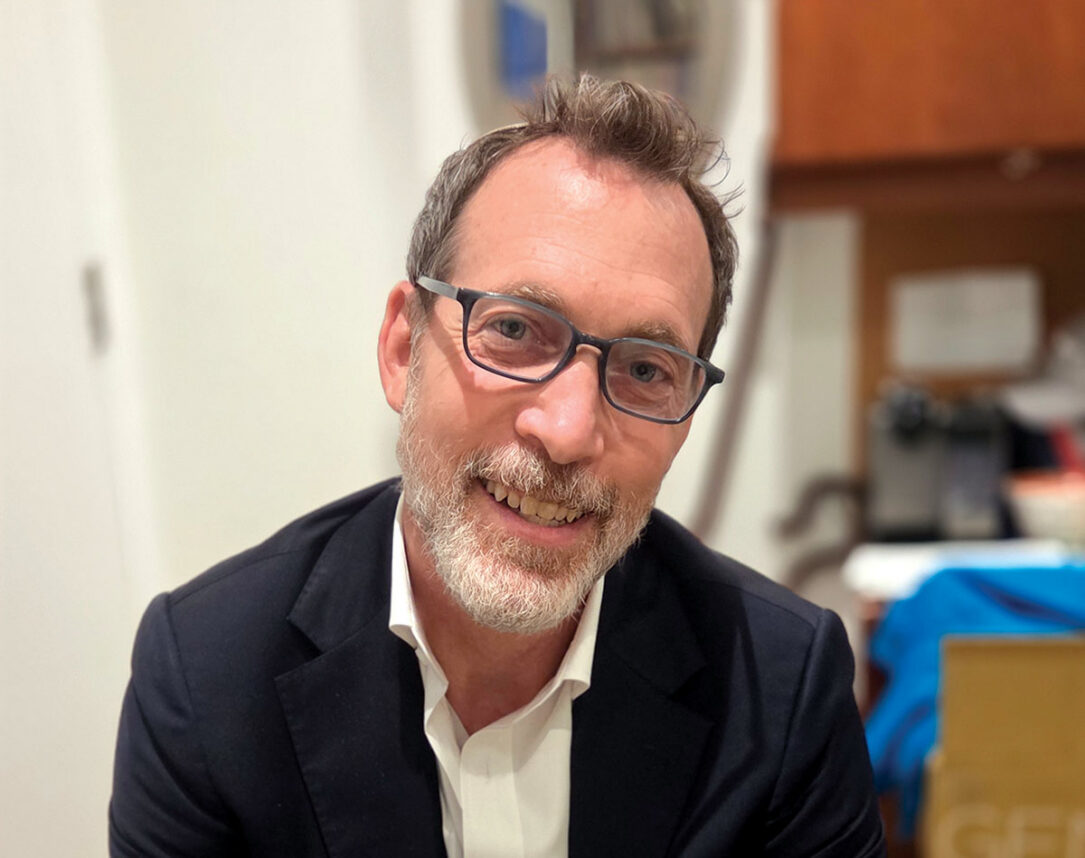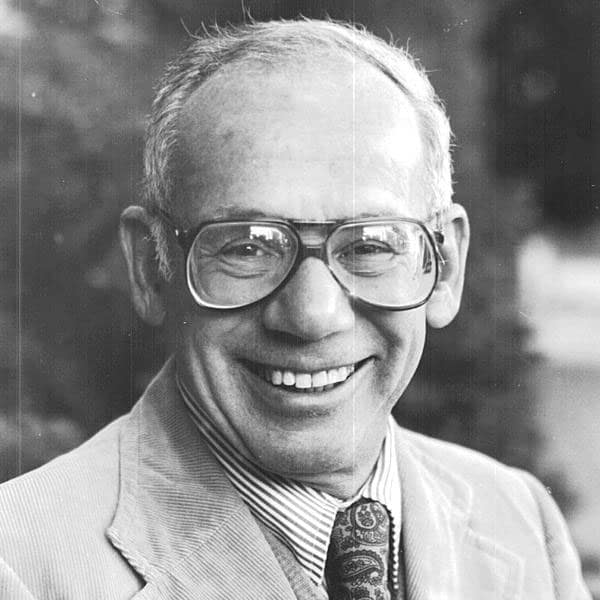
Cornelius Schnauber’s father joined the Nazi Party early on, when it was still a fringe movement, and the son has been wrestling with this legacy ever since, as an academician and playwright.
In Hitler’s heyday, it meant something to be an “Alter Kampfer” (Old Fighter), and Nazi ceremonies regularly paid tribute to those who had rallied to the swastika before the dictator came to power.
Schnauber was born near Dresden in 1939, shortly before the start of World War II, and his first play, written at age 15, did not find favor in the eyes of his teachers in Communist East Germany.
Three years later, his family managed to flee to West Germany, where “for the first time, I learned about the Holocaust atrocities, felt guilt and started working with the Hamburg Jewish Theater,” Schnauber said.
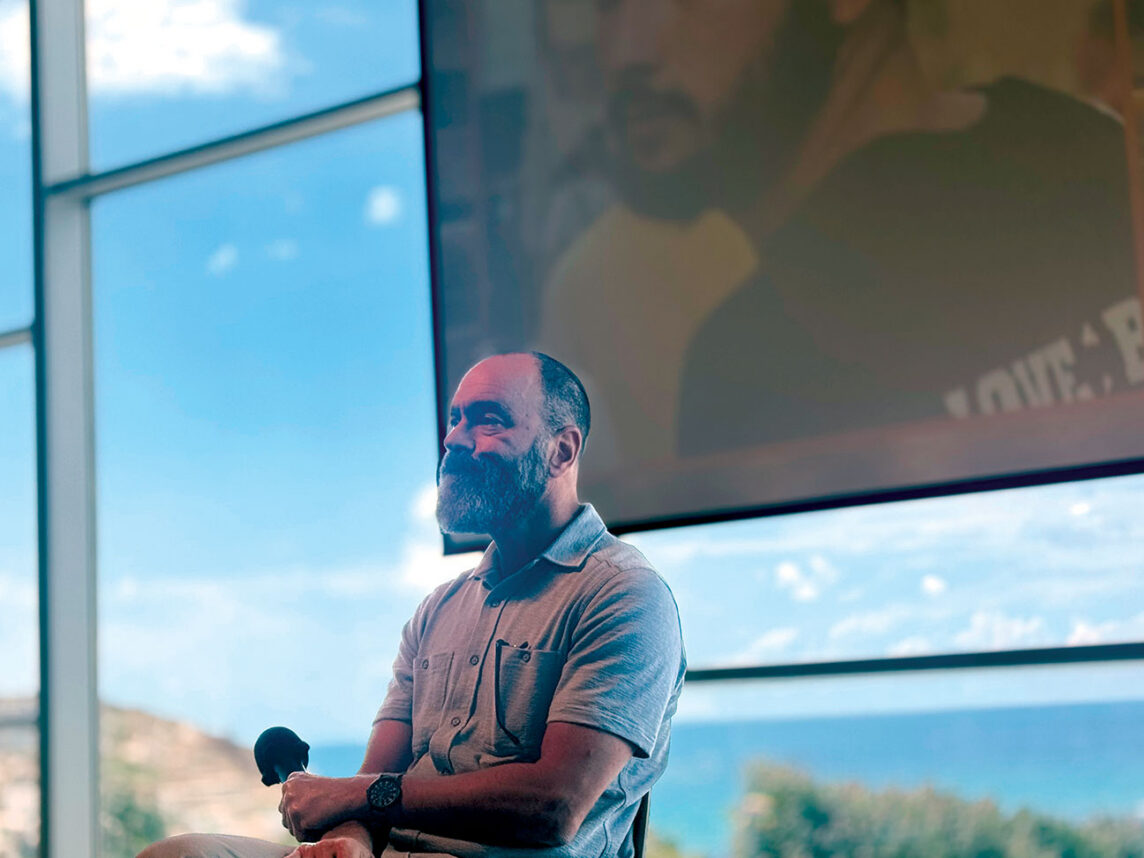
He came to the United States and joined the USC faculty in 1968 and is now an emeritus professor while continuing as director of the university’s Max Kade Institute for Austrian-German-Swiss Studies. He is also co-founder of the Second Generation German-Jewish Dialogue.
In his academic work, and in a parallel career as a journalist, novelist and playwright, Schnauber has continued to explore both the fruitful and tragic relationships between Germans and Jews.
He examined the topic from post- and pre-Hitler perspectives in two plays, “Irma and Emma” and “Richard (Wagner) and Felix (Mendelssohn).” He plunges directly into the heart of darkness in the world premiere of his new production, “Heydrich/Hitler/Holocaust.”
Adolf Eichmann is often described as the “architect” of the Holocaust, but he was more akin to an engineer, coordinating the mechanics of the enterprise.
The architect label belongs to Reinhard Heydrich, who headed the Reich’s main security office, convened the 1942 Wannsee Conference that finalized plans for the Final Solution, and was Eichmann’s superior.
In the constant jockeying among Nazi leaders for power and Hitler’s favor, Heydrich was pitted against SS chief Heinrich Himmler, with the Fuhrer skillfully playing one against the other.
In this struggle, Heydrich was handicapped by apparently well-founded rumors that his grandfather was “non-Aryan” and carried the Jewish surname of Suess. Heydrich tried to counter this “taint” by claiming that his biological father had been a racially pure foundling.
On the basis of his research, Schnauber believes that Heydrich was indeed part Jewish, and the play is strongest when it examines the psychoses and power struggles among the Nazi elite.
But the storyline swerves into the fantastical in a crucial scene, in which Anna Muller, a Jewish servant girl in Heydrich’s household, confronts Hitler himself, who is probing Heydrich’s assassination by Czech partisans.
The two unlikely disputants debate Torah and Talmud, Jewish money-lending in the Middle Ages and the might of the Hebrew God, each frequently screaming at the top of his/her voice.
At one point, Anna realizes every Jew’s daydream by yelling at the Fuhrer, “I won’t permit you to insult me or to insult the Jews,” while Himmler stands by, ready to put a bullet through her head.
As an academician, Schnauber conducted a number of interviews with Albert Speer, Hitler’s favorite architect and longtime confidant, whose insider views may have influenced the playwright’s approach to the Fuhrer’s psychology and personality.
Speer, according to Schnauber, maintained that Hitler believed that there were only two true master races, the Germans and the Jews, and that one had to eliminate the other in order to rule the world.
If Hitler had actually considered the Jews inferior, he would have used them merely for slave labor, but not exterminated them, Speer argued.
“Heydrich/Hitler/Holocaust” is directed by L. Flint Esquerra. Don Paul as Hitler and Joseph Beck as Himmler stand out in a strong cast, which also includes Oliver Finn as Heydrich, Jessica Sherman as Anna, and Ed Baccari as Eichmann.
“Heydrich/Hitler/Holocaust” at the Met Theatre, 1089 N. Oxford Ave., Los Angeles, CA 90029. For tickets, call (323) 957-1152. http://themettheatre.com.