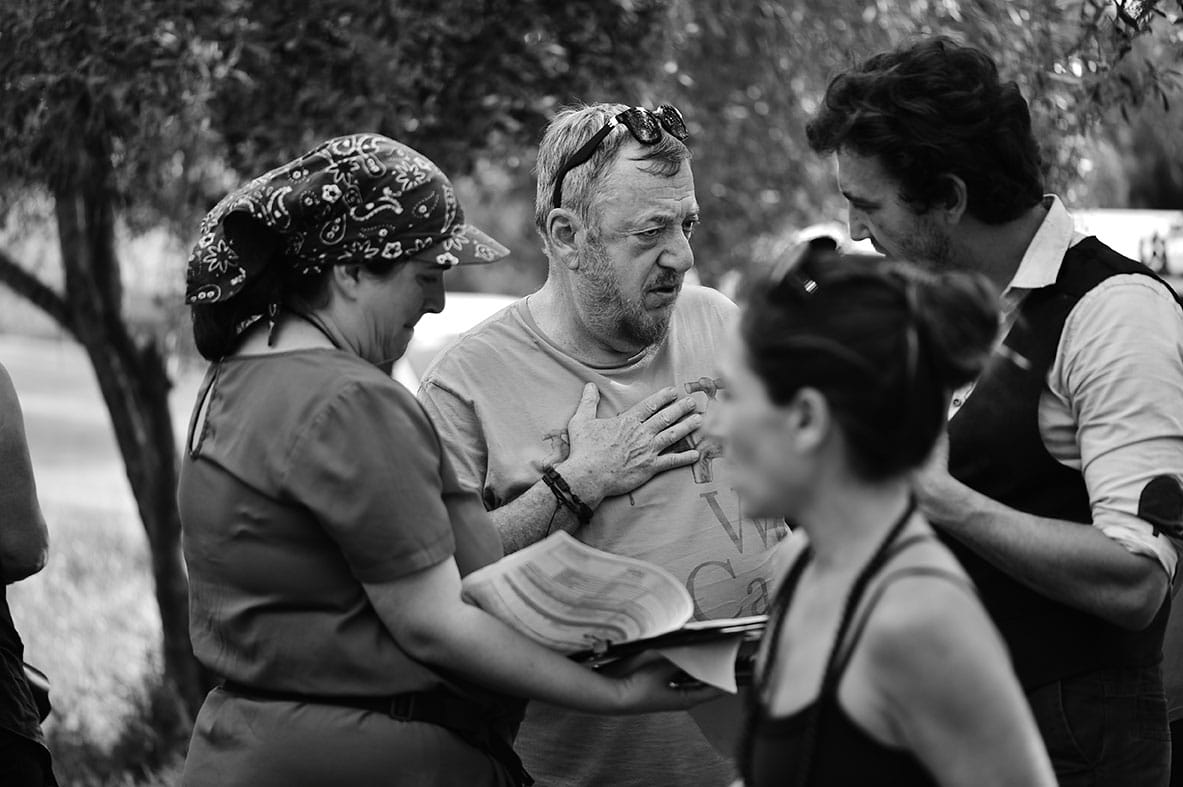
When famed Russian director Pavel Lungin first read Esau, the 1994 novel by celebrated Israeli author Meir Shalev, its unexpected familiarity struck him.
As Pavel explains, it is a “novel speaking about people that I know… who are just like me.”
By the book’s end, Pavel noted a “special feeling,” that even while living in Russia, far away from the book’s Israeli setting, he himself could be “very Jewish.” Pavel ultimately approached Shalev with his vision of adapting Esau into a film. The dramatic result, 10 years later, is Pavel’s first English language pic, which he directed and co-wrote with Evgeny Ruman.
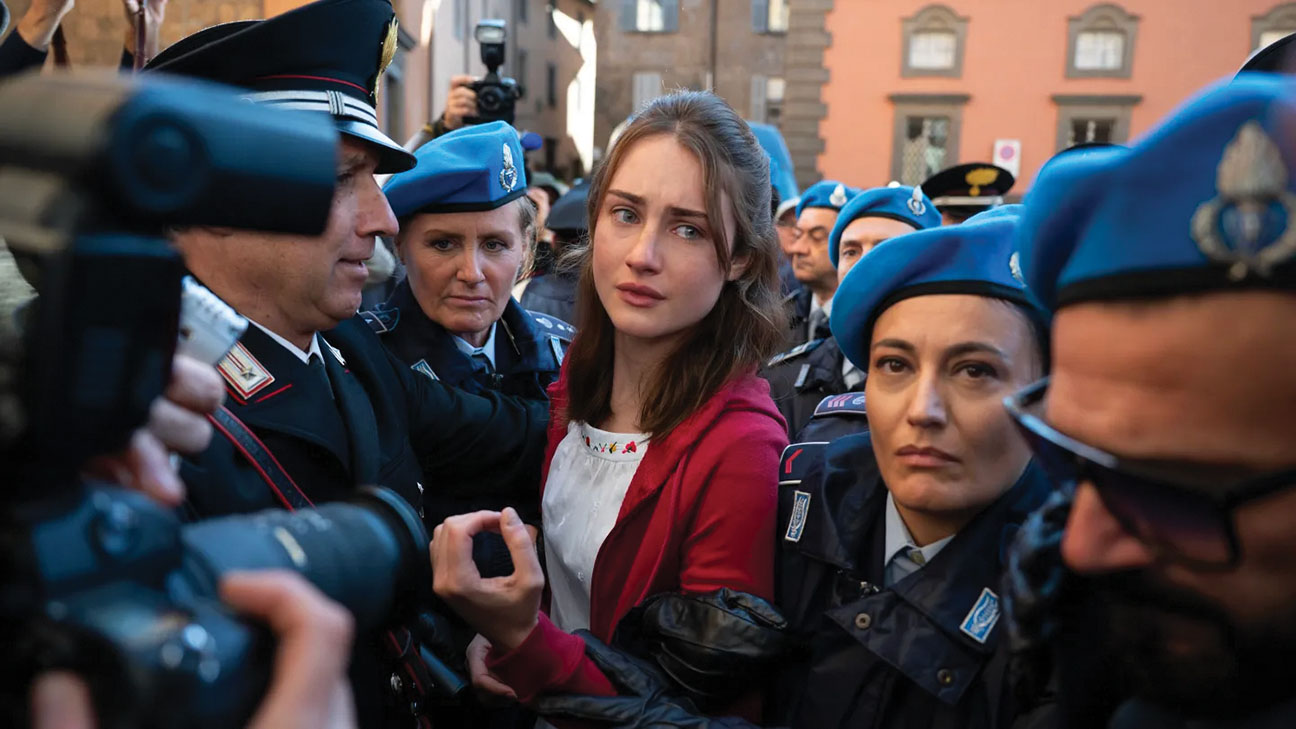
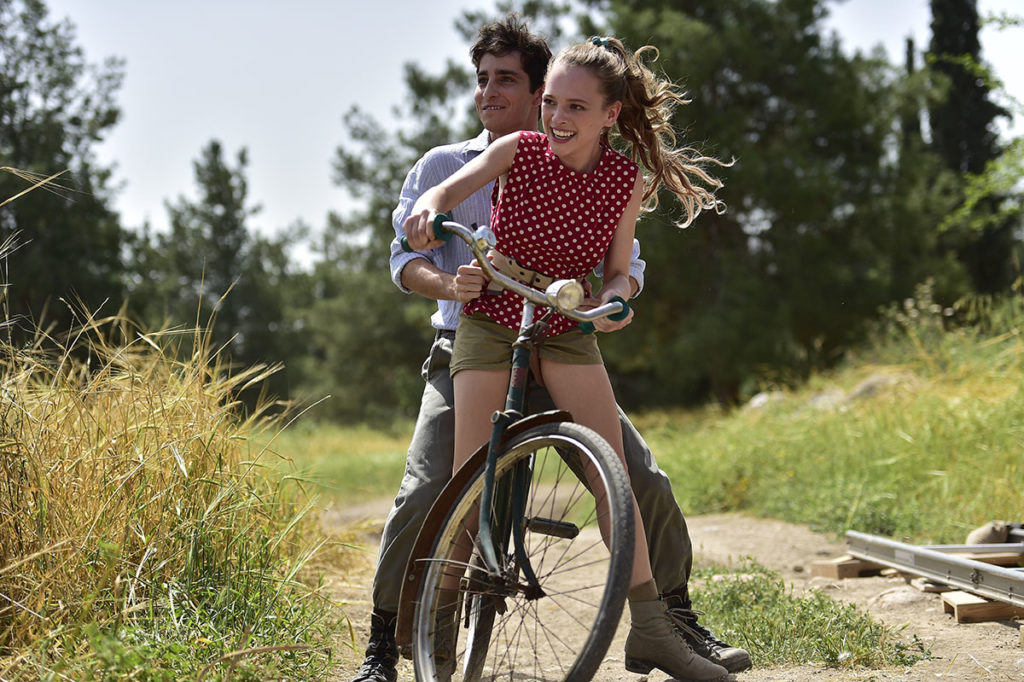
The eponymous film opens in California where Israeli actor Lior Ashkenazi (“Foxtrot” and “Norman: The Moderate Rise and Tragic Fall of a New York Fixer”) is living as a successful sabra author writing about bread. Yes, bread…The picture soon transitions to Israel, filmed on location, and where Oscar- and Golden Globe-nominee Harvey Keitel portrays his father, a complicated former baker. In flashbacks, Shira Haas (“Shtisel” and “Unorthodox”) plays the youthful love interest Esau shares with his brother, Jacob, who inherited their father’s bakery and won over Leah. How that tension resolves itself following Esau’s return is part of the film’s compelling conclusion.
To learn more about the project, which recently enjoyed its streaming release on digital platforms, the Jewish Journal reached out to Pavel in Russia.
JEWISH JOURNAL: What kind of challenges were involved in adapting Esau to the screen?
PAVEL LUNGIN: It’s easier to make a good film of a bad novel than to make a very, very good film equal to a big novel… The project seems to me very, very interesting because it’s ambitious.
There [are] well known [film depictions] of a Jew persecuted, if you would. There’s another image of an Israeli soldier who has to defend his people. In Meir Shalev’s story, there was no war. There was no concentration camp. There was no war for independence. It was just very dense living of what Jewish families are like, with all the problems, with all the hate and tension, just like all the other families of the world, of course.
But at the same time, there is something very special, something that you cannot repeat. Something very well-seen, well-felt. For me it was like a vitamin. I just wanted to show it. I just wanted to live, in theory, of this world.
JJ: What does the film make of the biblical tale?
PL: Meir Shalev is always playing with actors and making them change places… Esau, who is strong and tough in the bible, is now much more intellectual. He’s a writer, he’s the guy who’s reading. On the contrary, Jacob is quite a different character than in the Bible.
JJ: What is universal about this story?
PL: The relationship of the family, the love and hate in the family, is one of the most universal things in the world… we still cannot solve the same problems. How to share this life with your brother? And love that cannot be shared? And one of the most universal, special Jewish questions: “Can you be a Jew if you are not living with your family and you are not living in Israel? Can you come back?”
JJ: What are the film’s most powerful scenes?
PL: For me, perhaps the scene at the end of the film when the two brothers, Jacob and Esau, are having a fight. Suddenly you understand that this old woman in the room is the wonderful, beautiful Leah, whom we have seen as a young girl. This mixture of hate and love between both brothers has really perturbed me a lot. Of course, [another] important episode was when Jacob cut his finger… Suddenly he understands, and Leah also understands, that it was some kind of sacrifice. And now Jacob will take Leah, even if she is in love with Esau.
JJ: How do you react to the film?
PL: [It] gives me a lot of emotion, with characters that are very close to me that I like, and then hate and then like… At the same time I’m feeling them like my never existing brothers and sisters.
JJ: Could you explain more about the scene in which one brother impulsively sells his birthright?
PL: In reality, this episode didn’t exist in the novel. I just made it during the shooting like some kind of improvisation because in the novel, Esau sells his birthright [for] food… The most important thing for this young boy was not to eat but to be in love with this girl. So in my version, he sells his birthright for the love of the girl.
JJ: In what ways is the lead Israeli actor Lior Ashkenazi similar to his character, Esau?
PL: He was similar to the main character of the film because he is present and he is not present at the same time. You can feel that he paid a lot in his exile. He’s not living like an artist. He lives in a different space because it’s a story of “Can you be happy when you leave your homeland? Can you be happy living in some different country? Can you be yourself?”
JJ: Why is the name Esau never spoken on screen?
PL: It was never mentioned in the novel because as I understood speaking with Meir Shalev, Esau translates to something like alien — somebody who is not good, not one, not like us, who is dangerous… No Jewish family could now, I mean, give the name of Esau to a son. So this Esau is perhaps the symbol of his spiritual existence. Because he was living in the United States, everything was good for him. He wasn’t baking the bread but he was writing books about bread. And he always made this effort to show that his life is okay, he is okay.
But at the same time, inside he always felt, himself, like Esau. Can Esau not be an alien when he is back? That is the big question of the book. I don’t have a real answer but I am optimistic. And something very deep in me believes that you can come back. You always have the possibility.
Lisa Klug (www.lisaklug.com) is a widely published freelance journalist and the author of the bestselling humor book, Cool Jew: The Ultimate Guide for Every Member of the Tribe, and its companion, Hot Mamalah.