fbpx

December 23, 2020

Challenge to Nation-State Law Reaches Israeli Supreme Court

The Media Line — Israel’s Supreme Court convened on Tuesday for a special session to discuss a petition by rights groups and Arab Israeli citizens who are demanding to strike down the controversial law which officially defines Israel as the nation-state of the Jewish people.

The petitioners requested the high court declare as unconstitutional several specific articles in the bill, including those pertaining to Israel’s official language and land allocation, which they claim discriminate against non-Jewish citizens.

“I want the court to change the articles that injure the Druze community and all minorities in Israel,” Akram Hasson, a former member of the Knesset, Israel’s parliament, who is the main petitioner in the lawsuit, told The Media Line.

Over 1.5% of Israel’s population are Arab Druze, an ethnic and religious group that evolved from Islam, and that has become an integral part of the country.

“We have no other country or alternative land, we’ve lived here since before the state was established, we have a blood and life bond with the Jewish people,” Hasson said. “We serve in the army and dedicate our lives to protect Israel. This law categorizes me as a second-rate citizen, despite me being loyal and loving of Israel, and respectful of its values and symbols.”

In July 2018, the Basic Law: Israel – The Nation-State of the Jewish People was passed in parliament, after years of political back and forth. The bill states that Israel is the Jewish people’s nation-state, and legally anchors the country’s symbols, flag, national anthem and language as official and binding.

While most of the law’s content was already legislated elsewhere in past years, the law awards a special status to the state’s Jewish identity.

Among its more controversial articles, the nation-state law decrees that Hebrew is the only official language in Israel, with Arabic receiving an inferior, yet “special,” designation. The bill also declares that the government shall “work to encourage and promote” the establishment of Jewish towns and cities, the development of which it sees as a “national goal.”

“I know this is the state of the Jewish people, and I want it to remain that way,” Hasson said. “But this is unnecessary. This law discriminates against hundreds of thousands of Christians, Muslims, anyone who isn’t Jewish.”

He added: “We educate our youth to serve this country. It’s a privilege, we are all brothers. We just ask the justices to right this wrong and to allow us to live here with democracy and equality and love.”

“We have no other country or alternative land, we’ve lived here since before the state was established, we have a blood and life bond with the Jewish people. We serve in the army and dedicate our lives to protect Israel. This law categorizes me as a second-rate citizen, despite me being loyal and loving of Israel, and respectful of its values and symbols.”

Just last month, a judge in the Magistrates Court of Israel’s northern district threw out a lawsuit filed on behalf of two Arab children, demanding that they be reimbursed by their hometown municipality for the bus rides they were forced to take to their school in the neighboring Arab town. The judge explained he had based his decision on the nation-state law, among other things, noting that the Jewish-majority city was within its rights to not build Arabic-language schools in its jurisdiction, as that would run opposed to its Jewish character.

Throughout Tuesday’s court session, the expanded panel of 11 justices expressed mild displeasure with the law, but seemed to challenge the petitioners’ claims that it constituted a violation of Israel’s other basic laws, such as human dignity and liberty, and required the court’s intervention.

“The bill may not have been worded exactly as some of us would have liked,” Justice Uzi Fogelman said.

Supreme Court Chief Justice Esther Hayut said that while the law “may not contain language some of us had hoped for,” and that “it would have been preferable if the term ‘equality’ would have found its way into it,” striking down a basic law passed by parliament was an “unprecedented and extreme measure.”

In lieu of a formal constitution, Israel’s parliament has over the years passed a series of ‘basic laws’ which serve as the nation’s bill of rights, enjoy constitutional status and supremacy over regular legislation, and have never been overturned or invalidated by the courts.

Legal experts are nearly unanimous in their assumptions that the justices will not intervene in the Knesset’s bill, as such a cancellation would be a drastic step.

“When the Supreme Court conducts judicial review of statutes, it asks whether they are constitutional in relation to basic laws. But here we’re talking about a basic law itself clashing with other basic laws,” Prof. Aeyal Gross, a constitutional law expert from Tel Aviv University, told The Media Line.

“A constitutional amendment can itself go against basic chapters or principles of the constitution, and the court can theoretically strike it down, but that would require a very high level of violation that really undermines the basic notion of democracy,” he said.

Challenge to Nation-State Law Reaches Israeli Supreme Court Read More »
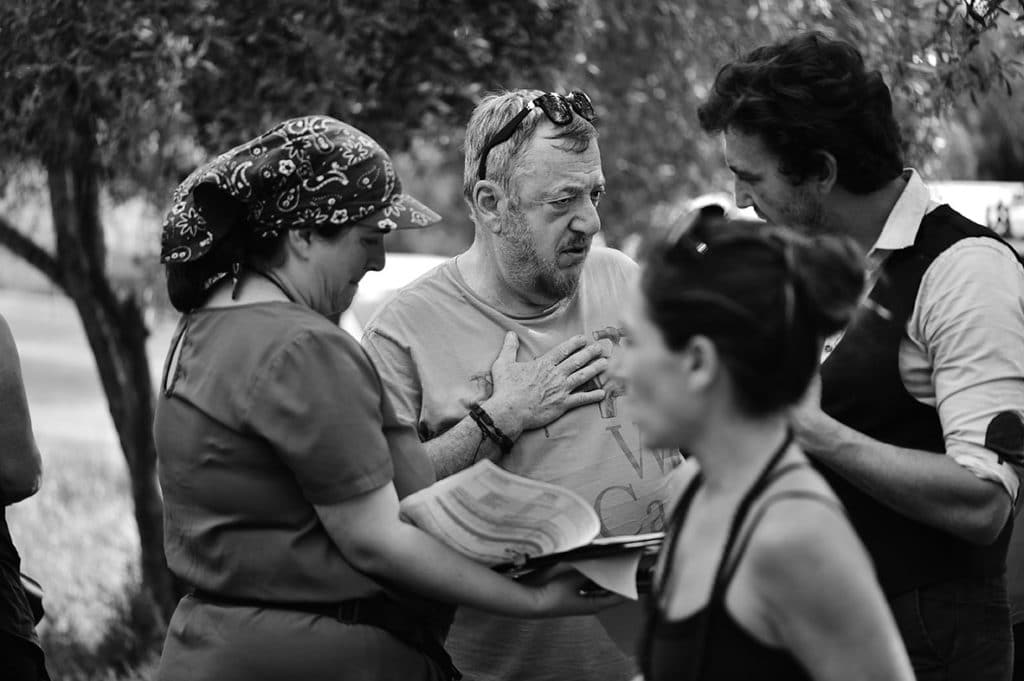
Film Director Pavel Lungin on ‘Esau’

When famed Russian director Pavel Lungin first read Esau, the 1994 novel by celebrated Israeli author Meir Shalev, its unexpected familiarity struck him.

As Pavel explains, it is a “novel speaking about people that I know… who are just like me.”

By the book’s end, Pavel noted a “special feeling,” that even while living in Russia, far away from the book’s Israeli setting, he himself could be “very Jewish.” Pavel ultimately approached Shalev with his vision of adapting Esau into a film. The dramatic result, 10 years later, is Pavel’s first English language pic, which he directed and co-wrote with Evgeny Ruman. 

The eponymous film opens in California where Israeli actor Lior Ashkenazi (“Foxtrot” and “Norman: The Moderate Rise and Tragic Fall of a New York Fixer”) is living as a successful sabra author writing about bread. Yes, bread…The picture soon transitions to Israel, filmed on location, and where Oscar- and Golden Globe-nominee Harvey Keitel portrays his father, a complicated former baker. In flashbacks, Shira Haas (“Shtisel” and “Unorthodox”) plays the youthful love interest Esau shares with his brother, Jacob, who inherited their father’s bakery and won over Leah. How that tension resolves itself following Esau’s return is part of the film’s compelling conclusion.

To learn more about the project, which recently enjoyed its streaming release on digital platforms, the Jewish Journal reached out to Pavel in Russia.

JEWISH JOURNAL: What kind of challenges were involved in adapting Esau to the screen?

PAVEL LUNGIN: It’s easier to make a good film of a bad novel than to make a very, very good film equal to a big novel… The project seems to me very, very interesting because it’s ambitious.

There [are] well known [film depictions] of a Jew persecuted, if you would. There’s another image of an Israeli soldier who has to defend his people. In Meir Shalev’s story, there was no war. There was no concentration camp. There was no war for independence. It was just very dense living of what Jewish families are like, with all the problems, with all the hate and tension, just like all the other families of the world, of course.

But at the same time, there is something very special, something that you cannot repeat. Something very well-seen, well-felt. For me it was like a vitamin. I just wanted to show it. I just wanted to live, in theory, of this world.

JJ: What does the film make of the biblical tale?

PL: Meir Shalev is always playing with actors and making them change places… Esau, who is strong and tough in the bible, is now much more intellectual. He’s a writer, he’s the guy who’s reading. On the contrary, Jacob is quite a different character than in the Bible.

JJ: What is universal about this story?

PL: The relationship of the family, the love and hate in the family, is one of the most universal things in the world… we still cannot solve the same problems. How to share this life with your brother? And love that cannot be shared? And one of the most universal, special Jewish questions: “Can you be a Jew if you are not living with your family and you are not living in Israel? Can you come back?”

JJ: What are the film’s most powerful scenes?

PL: For me, perhaps the scene at the end of the film when the two brothers, Jacob and Esau, are having a fight. Suddenly you understand that this old woman in the room is the wonderful, beautiful Leah, whom we have seen as a young girl. This mixture of hate and love between both brothers has really perturbed me a lot. Of course, [another] important episode was when Jacob cut his finger… Suddenly he understands, and Leah also understands, that it was some kind of sacrifice. And now Jacob will take Leah, even if she is in love with Esau.

Yoav Rotman and Shira Haas in “Esau”

JJ: How do you react to the film?

PL: [It] gives me a lot of emotion, with characters that are very close to me that I like, and then hate and then like… At the same time I’m feeling them like my never existing brothers and sisters.

JJ: Could you explain more about the scene in which one brother impulsively sells his birthright?

PL: In reality, this episode didn’t exist in the novel. I just made it during the shooting like some kind of improvisation because in the novel, Esau sells his birthright [for] food… The most important thing for this young boy was not to eat but to be in love with this girl. So in my version, he sells his birthright for the love of the girl.

JJ: In what ways is the lead Israeli actor Lior Ashkenazi similar to his character, Esau?

PL: He was similar to the main character of the film because he is present and he is not present at the same time. You can feel that he paid a lot in his exile. He’s not living like an artist. He lives in a different space because it’s a story of “Can you be happy when you leave your homeland? Can you be happy living in some different country? Can you be yourself?”

JJ: Why is the name Esau never spoken on screen?

PL: It was never mentioned in the novel because as I understood speaking with Meir Shalev, Esau translates to something like alien — somebody who is not good, not one, not like us, who is dangerous… No Jewish family could now, I mean, give the name of Esau to a son. So this Esau is perhaps the symbol of his spiritual existence. Because he was living in the United States, everything was good for him. He wasn’t baking the bread but he was writing books about bread. And he always made this effort to show that his life is okay, he is okay.

But at the same time, inside he always felt, himself, like Esau. Can Esau not be an alien when he is back? That is the big question of the book. I don’t have a real answer but I am optimistic. And something very deep in me believes that you can come back. You always have the possibility.


Lisa Klug (www.lisaklug.com) is a widely published freelance journalist and the author of the bestselling humor book, Cool Jew: The Ultimate Guide for Every Member of the Tribe, and its companion, Hot Mamalah. 

Film Director Pavel Lungin on ‘Esau’ Read More »

Israeli Teen Deni Avdija To Make NBA Debut

(JTA) — Expect plenty of bleary eyes around Israel on Thursday as favorite son Deni Avdija makes his NBA debut for the Washington Wizards on Wednesday night.

The game against the Philadelphia 76ers featuring the 19-year-old Israeli, the Wizards’ top pick in last month’s NBA Draft, will be televised and/or streamed in his native land at 2 a.m. Thursday.

“I think a lot of people are going to watch my first NBA game,” Avdija told reporters Monday on a Zoom call. “The whole nation is behind me.”

While the 6-9 forward isn’t the first Israeli to play in the NBA, and he’s not the first to be drafted in the first round, he’s certainly the most heralded player from his country to go to the world’s best basketball league.

Avdija was the ninth overall pick in the draft, the highest an Israeli has ever been chosen. Coach Scott Brooks said the rookie has a good chance to be the starting small forward for the opener following a preseason shortened by the COVID-19 pandemic.

In three games, Avdija averaged about 10 points, including a 6-for-6 performance from the field in his debut against the Brooklyn Nets.

Brooks said Avdija, who has played a couple of seasons for the powerful Tel Aviv Maccabi club in Israel’s Premier League, is more mature than a typical 19-year-old.

“He’s been playing with men back home with Maccabi, that’s a high-level team, well coached, a lot of good players,” Brooks told the Jewish Telegraphic Agency on Monday.

Deni Avdija

Deni Avdija of Maccabi Tel Aviv handles the ball against the Serbian team Crvena Zvezda in a EuroLeague game in Belgrade, March 6, 2020. (Marko Metlas/Euroleague Basketball via Getty Images)

One of his teammates there was Omri Casspi, who made history as the first Israeli to be selected in the first round of the NBA Draft — the 23rd overall pick by the Sacramento Kings in 2009. Casspi, also a forward, played for eight teams in 10 seasons before returning to Israel last season.

Avdija, who turns 20 early next month, said Casspi was more than willing to talk with him about the NBA.

“Before I left Israel I talked to Omri a lot. He really showed me everything I need to know,” Avdija said. “He knows me. He knows I’m going to do my best. He knows I’m gonna work hard. He’s not worried about me. He’s always there to answer my questions and I appreciate him.”

The D.C. newcomer is getting help from established stars like Russell Westbrook, who was traded to the Wizards recently, and Bradley Beal.

“After practice today, Russell was doing a Christmas event for the community, handing out gifts and he grabs Deni and [fellow rookie] Cassius Winston and says you guys are coming with me,” Brooks related. Apparently Avdija wanted to stick around for extra work on his game.

“Deni was like pleading with him, I got things to do, I want to do more shooting,” Brooks recalled, and then Westbrook saying, “Nope, nope, no more talking, you’re coming with me.”

In his short time with the Wizards, Avdija has been able to bond with his new teammates.

“Everybody’s good with me,” he said. “I can say two guys came from the same situation as me, Cassius Winston and Anthony Gill. We’re all trying to figure it out together and be there for each other.”

Earlier this month, the Wizards posted a video on Instagram of the Israeli lighting the menorah on the first night of Hanukkah and singing the prayers. Avidja said he is proud of his heritage and looks forward to sharing Israeli culture with his new teammates.

“The food, the songs. I love my teammates,” he said. “Anytime I can make my teammates smile I’ll do it.”


View this post on Instagram


A post shared by Washington Wizards (@washwizards)

International players are now routinely among the best in the NBA — two of the five who made the 2019-20 All-NBA first team were not born in the United States (Luka Doncic from Slovenia and NBA MVP Giannis Antetokounmpo from Greece). Avdija’s debut will come against a Sixers team who’s two best players are from Cameroon (Joel Embiid) and Australia (Ben Simmons).

Avdija is actually the son of a father who was a member of Yugoslavia’s national basketball team before playing pro in Israel. (His mother was an Israeli basketball player and track athlete who grew up on a kibbutz.)

How good can Avidja be?

Tom Primosch of BPA Hoops, an NBA scouting service that is employed by a number of teams, said Avdija has skills that translate well for him to be a solid role player for many years.

“For someone who is 6-8, 6-9, he’s a solid playmaker, he’s able to handle the ball, make plays in transition,” Primosch said. “His passing is really good for his size, that’s been something that’s been part of his game since he was a young player.”

But Primosch cautioned that while Avdija could have a long pro career, he may not be an NBA superstar, and expecting him to be the next Doncic is probably not fair.

“I think people are going to compare him to Luka, but I think that’s kind of a false equivalence because I don’t think they play the same,” he said.

Avdija is optimistic about what lies ahead and hopes his fans back home can sit back and enjoy the ride with him.

What he won’t be feeling, though, is the weight of a nation and the pressure to perform. Instead he’ll be thinking about the encouragement that Israel has always given him to succeed.

“I love our country and I love our fans and I love the people supporting me and really caring how I’m doing,” he said. “I’m just going to represent the best I can.

“It’s not going to come in one day and I’m not going to score 40 [every night]. Hopefully, everybody’s going to enjoy the experience like I do.”

Israeli Teen Deni Avdija To Make NBA Debut Read More »

Mayim Bialik Finds Her Purr-fect Role in the Comedy Series ‘Call Me Kat’

From childhood roles in “Beaches” and “Blossom” to her eight-year, Emmy-nominated portrayal of biologist Amy Farrah Fowler on “The Big Bang Theory,” Mayim Bialik has endeared audiences with her quirky, relatable charm.

Her latest endeavor is the Fox sitcom “Call Me Kat,” in which she portrays Kat Silver, a 39-year-old endearingly klutzy single woman who runs a cat café in Louisville, Ky. while dealing with the high expectations of her mother (Swoosie Kurtz) and the return to town of her high school crush, Max (Cheyenne Jackson). Based on the British series “Miranda,” the series reunites Bialik with “BBT” co-star Jim Parsons, who brought the idea to her. Both serve as executive producers.

Leaning into the lovable eccentricities of the character that sometimes play out in dream fantasy sequences, Kat both breaks the fourth wall to directly speak to viewers and breaks into song, sometimes duetting with Broadway vet Jackson, Kurtz, or her employees (Kyla Pratt and Leslie Jordan).

“What we’ve created is a woman who includes everyone in her world because that’s what makes her world interesting and colorful. And sometimes those are people that exist, and sometimes they are people that don’t exist [or] exist in different ways than they actually exist so that it fits better with her world view,” Bialik said during a Zoom press event. “We are including the audience. They are in on her jokes.  They are in on her experiences because that’s how she views the world.”

“Call Me Kat” cast. Credit: Lisa Rose/Fox

As for Kat’s love life or lack thereof, “She’s uncomfortable with the expectations that have been laid are out for her, and I think that a lot of people will resonate with that,” Bialik continued. “What I love is that this is not a show about a woman trying to find someone. It’s a show about a woman trying to be happy finding herself and seeing what happens along the way. We are showing a very nonconventional female, and I miss seeing women like this on television. I grew up really admiring quirky, multifaceted women and comediennes who weren’t afraid to be silly and sloppy and do pratfalls and things like that. We are showing a woman who is owning all of herself.”

Serving as star and producer, “It is a lot more pressure on me, personally; I’ll say that,” Bialik commented. “But, also, it’s been just such a joy. I mean, I’ve never had a job like this. I can absolutely say that my time on ‘Big Bang Theory’ was fantastic and life‑changing, and my time on ‘Blossom’ was fantastic and life‑changing.  But the way that we get to work and these actors, writers and just this whole team has made this, for me personally, the greatest job I’ve ever had, and even that includes being a mother because, like, that’s really rough most days.”

In an interview with the Journal, Bialik expounded further about the show, her family and her Jewish life as she prepared for Hanukkah. “We are having outdoor six-feet-apart lightings with my mom. We don’t even go inside with her, so we are lucky it’s warm in L.A. in the winter,” she said. “We make latkes as much as we can, and my ex-husband and I also make vegan sufganiyot a few times. Also, it’s my birthday on the third night so that’s fun!”

While at UCLA obtaining B.S. and PhD degrees in neuroscience, Bialik minored in Hebrew and Jewish studies, was a student leader of Shir Bruin at Hillel, and wrote four-part harmonies and conducted music for the Jewish acapella group.

“I taught a rag-tag, delightful group of young singers how to harmonize. I always love conducting music–I was a piano, trumpet, and bass guitar player–and I love singing liturgical melodies and anything Jewish. It was a true delight,” she said. “I am intimately connected to my Jewish history, identity, and all of the things about me that are me because I’m Jewish. Judaism is the lens with which I see the entire world and my place in it,” she said. “I believe in G-d. I am a Shabbat-loving halachic-studying baalabusta of a Jewess!”

“I am intimately connected to my Jewish history, identity, and all of the things about me that are me because I’m Jewish. Judaism is the lens with which I see the entire world and my place in it”—Mayim Bialik

Her new character is also Jewish. “I chose her last name, and we even have a scene with Kat and her mom sitting shiva in one of our first episodes,” Bialik said. There’s also a scene where she and Kurtz sing “Sunrise, Sunset” from “Fiddler on the Roof.”

She finds Kat’s other qualities-and the show’s premise—eminently relatable. “She turns lemons into lemonade on the daily. She is quirky and she is socially anxious and she sometimes lies, but in kind of an adorable way, when she’s nervous. She is a lot more colorful than Amy, for sure,” she compared. “I love how joyful she is and how she really does find the positive in every situation. I think we could all use a little entertainment right now.

“I also love that we are presenting a lead character who is not a size 0 and not even a size 2 or a four! No one asked me to lose weight for this role and my character dresses funky and lives by the philosophy you should wear what you want and be who you want. That’s refreshing for me for sure,” added Bialik, who also stopped straightening her hair, as she did to play Amy.

Like Kat, Bialik loves cats and has three at home, four-year-old Adamantium (Addie) and Nermal and “grumpy old lady” Frances, 13. “The cats that populate the set have several loving trainers who care for them like they are their own babies,” she said. “Our cats are not tethered or drugged, so they can be a little hard to wrangle at the end of a day, but they’re generally the kind of cats who love to just hang out and watch people act.”

Filming during the pandemic is a challenge, she confirmed, “But it’s as safe as we can make it. We are tested on average twice daily and everyone wears masks and shields and it is very important we stay six feet apart with all of our crew. We have a nurse on set full time supervising our procedures. It’s very strict. And obviously I don’t go anywhere at all so that I am the lowest risk possible for my co-workers.”

Her two sons, Miles, 15, and 12-year-old Frederick, who is now preparing for his bar mitzvah, have always been homeschooled. “My ex-husband is an amazing father and he has the boys during my work week. He handles their schooling. “They’re definitely getting a bit bored–my older son more than my younger one–but we started watching more documentaries and my older son discovered Sacha Baron Cohen’s comedy, and that’s been awesome for us to bond over,” Bialik said.

Having ventured into publishing with the bestsellers “Girling Up: How to Be Strong, Smart and Spectacular,” “Boying Up: How to Be Brave, Bold and Brilliant,” the parenting book “Beyond the Sling,” and cookbook, “Mayim’s Vegan Table,” Bialik recently launched a podcast on mental health, “Mayim Bialik’s Breakdown.” In the same vein, her Sad Clown Productions will co-produce “Hope Café,” a sitcom for NBC based on a real Chicago coffee shop where the baristas are trained mental health counselors and the profits go to mental health education. She’s set to make her screenwriting and directorial debut with “As Sick as They Made Us,” starring Dustin Hoffman and Candace Bergen.

“I wrote it after my father passed away as a way to understand my grief. I grew up in a loving, hilarious, artistic and very complicated home and I used that as the basis for writing a story about a family living with mental illness in the home,” said the San Diego native. “I especially wanted to focus on the impact on siblings who have different experiences of growing up in turmoil. It’s a very personal story but also a completely universal one. I can’t wait to direct Dustin and Candace. And Simon Helberg from ‘The Big Bang Theory’ is also in the movie. We are hoping to film this coming spring.”

Bialik also hopes to visit Israel, when it’s safe to travel again. “I usually go every other year with my kids,” she said. “The last time we went, my ex-husband and I went with our mothers for our first son’s bar mitzvah trip. I pray we can go next year for our younger son’s bar mitzvah. I miss Israel with all of her complexity and controversy. I miss my cousins and my aunts and uncles and I miss falafel and Ben Yehuda [Street, in Jerusalem] and the Tayelet in Tel Aviv. I miss everything about Israel!”

Reflecting on her long–and in a lot of ways unexpected–career, Bialik noted that she had quit acting to concentrate on her education, teaching neuroscience, and parenting her boys. “I was running out of health insurance, and I went back to acting so that I could literally just get enough insurance to cover my toddler and my infant. I went to this audition, and it was a guest spot, possible recurring [for ‘The Big Bang Theory’]. “I had no idea my life was about to change,” she said. “I love being a scientist and I do a lot of other things in science. But entertaining you seems to be where the universe wants me. It’s like a bloom where you are planted, and I keep getting uprooted and replanted and replanted, and it’s a really blessed place to be.”

“Call Me Kat” premieres Jan. 3 on Fox.

Mayim Bialik Finds Her Purr-fect Role in the Comedy Series ‘Call Me Kat’ Read More »

Simon Cowell to Judge Israel’s ‘The X Factor’

Israel, here comes the judge. Music mogul Simon Cowell will be a judge on the fourth season of “The X Factor Israel,” part of the talent competition franchise he created in the U.K. and launched in the U.S in 2011. Now in production, it marks Cowell’s first time judging the show outside either country. Supermodel Bar Refaeli hosted the previous season, which aired between October 2017 and January 2018.

“Over the years ‘The X Factor’ format discovered amazing talents from all over the world. I can’t wait to see what Israel have to offer,” Cowell told Deadline. Now recovered from back surgery following an electric bike accident, he had to miss most of “America’s Got Talent” this year. Besides developing new seasons of “Britain’s Got Talent” and “The X Factor” for the U.K., he’s working on a new competition series called “50 States to Stardom” for CBS, in partnership with Brian Grazer and Ron Howard.

During his recovery and COVID quarantine, “I have had more time than I’ve ever had before so we have, for instance, three new formats which we didn’t have 12 months ago because I’ve had the time to work on them, develop them properly and the last time I did that or had the time to do it, honestly was around 2005 – which was about the time I came up with ‘Got Talent,’” he said. “I’m very excited.”

Simon Cowell to Judge Israel’s ‘The X Factor’ Read More »

A Prayer for Receiving the COVID Vaccine

I have been praying for this day and now it is here!

With great excitement, a touch of trepidation

And with deep gratitude

I give thanks

To all the scientists who toiled day and night

So that I might receive this tiny vaccination

That will protect me and all souls around this world.

With the pandemic still raging

I am blessed to do my part to defeat it.

Let this be the beginning of a new day,

A new time of hope, of joy, of freedom

And most of all, of health.

I thank You, God, for blessing me with life

For sustaining my life

And for enabling me to reach this awe-filled moment.

Amen


A Prayer for Receiving the COVID Vaccine Read More »

Urban Voices Project’s Skid Row Choir Releases First Single ‘A Holiday Called Home’

When Mostly Kosher frontman Leeav Sofer co-founded the Urban Voices Project (UVP) Choir along with Christopher Mack, an outreach worker in skid row dubbed “the Urban Sage,” he had no idea six years later the choir would have its first single out for the community to enjoy for the holidays.

Released on Dec. 20, “A Holiday Called Home” is the choir’s first single. The professionally recorded song and music video feature the voices of 26 UVP Choir members living on Skid Row. The song was written by the Skid Row musicians with music developed by Sofer and his Jewish klezmer-rock band.

UVP is a non-profit community organization based on Skid Row that brings music directly to individuals marginalized by homelessness, mental health issues and unemployment in the Greater Los Angeles area. Sofer told the Journal he directs the 20-45 person choir two to three times a week. Their sound, he added, is rooted in multiple genres of music together including R&B, klezmer music, gospel, pop and world folk. The group also provides weekly music space for community and wellness to help ease isolation due to the recent lockdowns, every Wednesday at 4 p.m. PT.

“[The choir] represent[s] community in more ways we can imagine. We already know that music is one of the greatest equalizers. When you take people from complete opposite socio-economical backgrounds and you ask them to sing together, you’ll get one beautiful blended sound,” Sofer told the Journal. “Their stories and their journeys no longer play a part in the artistic product they share together. And yet, their vastly different journeys hold every reason to why it’s important to sing together.”

In 2018, the organization officially gained its non-profit status. The choir initially began through the help of performing arts school Colburn School department head Dr. Nathaniel Zeisler, Mack and a partnership through Wesley Healthcare Clinic.

The choir’s mission is to shift the narrative and perception of homelessness towards one of agency and community. Through the organization’s non-profit workshops, they have connected and supported hundreds of vulnerable individuals to housing, healthcare and a societal safety net.

The choir’s mission is to shift the narrative and perception of homelessness towards one of agency and community.

Sofer said this was a special experience for the choir because many have never performed in a studio before. The group was able to record at a studio safely abiding by COVID-19 requirements thanks to UVP’s partners at A Place Called Home.

“To watch their varied journeys culminate in so many different ways when they stood in front of that microphone, it was an incredible honor,” Sofer said. “The UVP singers have grown in a particular way because they have never seen this level of professionalism from themselves as an ensemble. For those that didn’t see themselves as recording artists, this brought a unique sense of pride. Many of them are in transitional housing or SRO [Single Room Occupancy] housing this holiday season, by themselves, isolated because of the lockdowns. This gave them the feeling that they not only accomplished something despite COVID but accomplished something grand.”

The music video also features acclaimed Skid Row visual artist Showzart and his team from The Sidewalk Project. They created a mural envisioning the themes of the song at the studio. It was then completed by Skid Row artists in Gladys Park.

Sofer—who has been inspired by the genuine camaraderie from everyone to make this song come to life— hopes it not only uplifts the choir members but the greater Los Angeles community.

“These individuals have been through homelessness, fight for homeless rights, or still currently, are in transition. For their voices to be the ones singing to the world, ‘Let’s think about a holiday / a place we all call home / a holiday for all the year / no neighbors left to roam,’ I hope that those that are going through tough times feel the hope rising up from this song,” Sofer said. “I hope that those that feel resentful and broken from the pain of COVID-19… are reminded of radical love for humanity by none other than the ones who have [needed] it most.”

“A Holiday Called Home” is now available on Youtube. The song will be available for streaming on iTunes, Spotify and Apple Music before the new year. All proceeds and royalties from the song will benefit the Urban Voices Project.

Urban Voices Project’s Skid Row Choir Releases First Single ‘A Holiday Called Home’ Read More »

RespectAbility Launches Jewish Disability Speakers Bureau

According to the Centers for Disease Control and Prevention (CDC), 1 in 4 adults has a physical, sensory, cognitive or mental health disability. Yet, in a 2018 survey, disability awareness and education non-profit RespectAbility determined that fewer than 15 percent of people could name a single Jewish leader with a disability.

This is why on Dec. 21, RespectAbility announced the launch of the Jewish Disability Speakers Bureau. Speakers include Jewish lawyers, entrepreneurs, teachers, rabbis, filmmakers and comedians. The bureau is available to speak virtually at Jewish conferences, synagogues and organizations to allow people with disabilities the opportunity to share their perspectives with the community.

Matan Koch, director of Jewish Leadership RespectAbility, said that the Jewish world is acknowledging the value of inclusive programming that helps represent the diversity of the Jewish people. He added the Jewish community is steadily becoming more aware of, and eager for, contributions and perspectives of people with disabilities.

“Even as we advocate that disability should be included in that reflection,” Koch said, “We recognize the need to supply organizations with talented Jewish speakers with disabilities for their programs and panels.” 

Koch adds that RespectAbility’s National Disability Speakers Bureau: Jewish Division contains a mix of some of the most experienced and sought-after speakers with disabilities in the Jewish world, including new speakers. Those new to this work are being trained in a combination of workshops, mentorships and speaking opportunities. The training is made possible by the funders of RespectAbility’s Jewish work, including the Charles and Lynn Schusterman Family Foundation, The David Berg Foundation, Jewish Community Foundation of Los Angeles, The Diane P. & Guilford Glazer Fund and others.

Since its establishment in 2013, RespectAbility aims to advance opportunities so people with disabilities can fully participate in all aspects of life. Through toolkits, collaborations with major corporate companies and training programs, RespectAbility has not only helped change the way people view those with disabilities but equip people with disabilities with the resources to thrive in various industries.

Since its establishment in 2013, RespectAbility aims to advance opportunities so people with disabilities can fully participate in all aspects of life.

They also work in the entertainment industry to increase the number of hires behind and in front of the camera. They continue to consult various projects with major studios. Recently, RespectAbility called out the Warner Bros. film, “The Witches,” for making limb difference a “scary” trait on screen.

RespectAbilitys Vice President of Communications Lauren Appelbaum told the Journal, The disability market is valued at $1 trillion, creating opportunity and incentive for the entertainment industry to stop treating disability as a negative but to showcase people with disabilities for what they are fully capable of. 

The Bureau is made up of nearly 24 speakers in including RespectAbilty leaders like Appelbaum, Koch, Joshua Steinberg and Yonatan Koch.

Fellow Los Angeles speakers include Project Moses members Aaron Wolf, Lee Chernotsky, Lisa Sage and Erika Abbott.

Wolf is an award-winning actor, director, speaker and activist, who is currently working on a project harnessing his own experience as a person living with learning disabilities to de-stigmatize having a disability. Chernotsky is the founder & CEO (Chief Encouragement Officer) of ROSIES Foundation. Sage has worked for more than 25 years as a Health Educator for the Los Angeles County Department of Health Services. Now retired, Sage is  an active volunteer, including as a Board Member, of Temple Kol Tikvah in Woodland Hills. Abbott is an award-winning author and poet receiving the 2016 Bookvana.com Poetry award for her debut book, “Porgy’s Revenge,” endorsed by Tom Hanks, and Olympia Dukakis.

National leaders include Rabbi Lauren Tuchman, from Washington D.C and Pamela Schuller from New York. In addition to being the first blind female Rabbi, Tuchman was named one of Jewish Week’s 36 under 36 for her innovative leadership concerning the inclusion of Jews with disabilities in all aspects of Jewish life. Schuller is an internationally-known disability and mental health advocate and stand-up comedian whose stories of growing up in a body she had no control over (due to Tourette syndrome) are engaging, powerful, heart-wrenching and funny.

Debbie Fink, RespectAbility’s director of community outreach & impact, leads the Speakers Bureau initiative. She said, “we are tremendously excited to add so many talented speakers to our National Disability Speakers Bureau: Jewish Division, alongside our successful Women and Non-Binary Persons Division. Our many experienced speakers are available…[especially for] Jewish Disability Awareness and Inclusion Month in February.” 

To see the full lineup of speakers and invite them to speak at an event, visit RespectAbilty’s website.

UPDATE: This story was updated Dec. 23 to include the Los Angeles leaders and broader national leaders 

RespectAbility Launches Jewish Disability Speakers Bureau Read More »

If I Learned The World Would End Tomorrow

Some people once to Martin Luther turned
and asked: “What would you do, sir, if you learned
the world would end tomorrow?” to which he
replied: “Good question. Plant an apple tree.”

If they would ask me the same question, I
would say: “Here’s what I’d do before I die.
I’d write a poem, which I would address
to God. Perhaps He hardly could care less
about my verses than He does about
the tree of Luther – He can do without
them both – and I’d challenge Him to find
a poem He can plant inside His mind!”

But whether I would plant a tree or write
a poem, I would carry on performing
commandments as I am obliged, despite
my ignorance of their rationale; conforming
with them being as natural as to those
the tree – that Luther never planted – would
have followed, quite unable to oppose
rules which no tree has ever understood.

כִּי הָאָדָם עֵץ הַשָּׂדֶה, because man is a tree of the field.  Deut. 21:19


Gershon Hepner is a poet who has written over 25,000 poems on subjects ranging from music to literature, politics to Torah. He grew up in England and moved to Los Angeles in 1976.  Using his varied interests and experiences, he has authored dozens of papers in medical and academic journals, and authored “Legal Friction: Law, Narrative, and Identity Politics in Biblical Israel.” He can be reached at gershonhepner@gmail.com.

If I Learned The World Would End Tomorrow Read More »

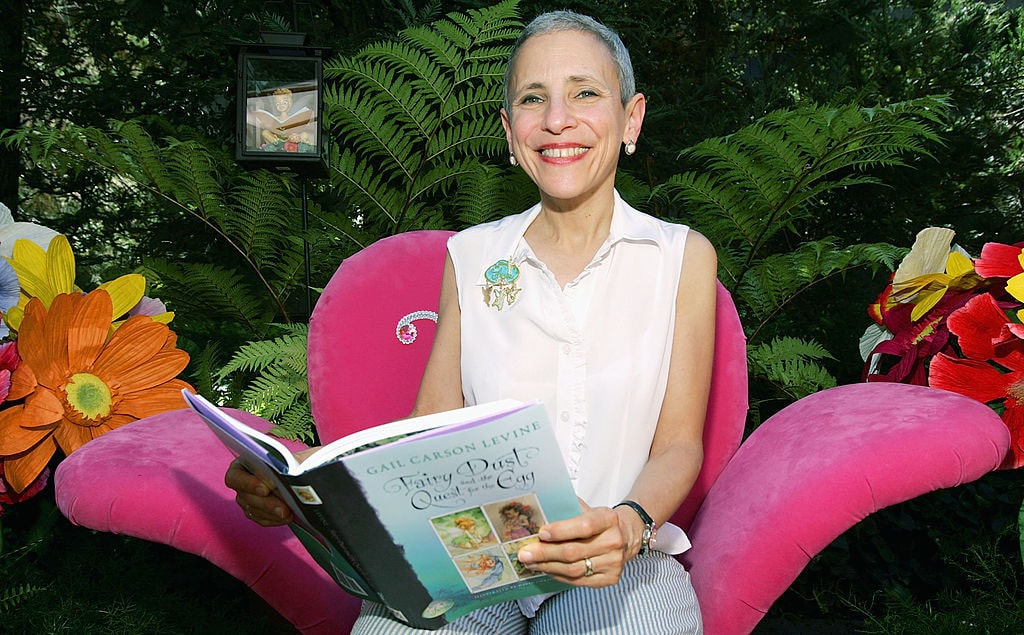
A Middle-Grade Book on the 1492 Expulsion: An Interview with Gail Carson Levine

Bestselling author Gail Carson Levine didn’t always know that she wanted to be a writer. The daughter of a Turkish immigrant, Levine grew up in Washington Heights, befriending children of German Holocaust refugees. Levine spent over two decades working in social welfare before getting published.

Her father, David Carson (formerly David Carasso), never lived to see Levine’s success, though she remembers how he once called her “determined.” He was right. Levine’s writing received rejection after rejection, but she never gave up. Her perseverance paid off with the publication of “Ella Enchanted,” a unique retelling of Cinderella featuring a heroine cursed to obey any order. Levine’s captivating debut novel won the Newbery Medal in 1998.

Since then, Levine has written over two dozen novels. Her latest work, “A Ceiling Made of Eggshells” (HarperCollins, 2020), is a riveting and heartwarming tale about a young Jewish girl, Loma, accompanying her grandfather on an expedition to save their people during the Spanish expulsion.

JJ: You don’t see many middle-grade books about the expulsion of 1492. What motivated you to create a story in this time period? 

GCL: It’s because it’s family history on my father’s side. He was Sephardic. I knew what had happened to Sephardic Jews, but it was nothing he ever talked about. I don’t know if it was anything he ever thought about. But his first language was Spanish — so, probably Ladino. He lost it because he came [to the United States] so early.

So, I wanted to explore [the expulsion], and I knew nothing when I started. I knew only that there had been an expulsion, and I knew the year. But I didn’t know anything about the times or what the reason was [for the expulsion], aside from getting rid of the Jews. It’s more complicated than that, and I learned a lot about what happened.

JJ: The attention to historical detail in “A Ceiling Made of Eggshells” is amazing. What was the most challenging part of the process?

GCL: The history itself was not as challenging because I discovered what happened, I created a timeline, and I hung my plot around that timeline once I decided where to start, because the beginnings of the end were a hundred years earlier — and even more as the tide turned against the Jews of Spain.

One of the challenges was understanding what I was reading. Loma’s grandfather is very loosely based on Isaac Abravanel, and he was a philosopher, but he was also a financier to the monarchs, to important people in the Church.

The kind of detail that you don’t find in the history books — what places smelled like, what a street looked like, what would the interior be like, what the furniture was — that required a lot of sleuthing.

One of the books that I read was “Expulsion” by Haim Beinart, and I read it twice. The first time I didn’t understand it all because what it is primarily is an accounting of court cases and fiscal, financial transactions (who bought what and when and what happened)… Creditors would immediately go after Jews to collect what was owed, and debtors to Jews would delay payment because they knew that the Jews would be gone. The tragedy [of the expulsion] is woven into those very dry financial transactions.

But it was such a discovery. I loved all the reading that I did. I had a mentor, Jane Gerber, who is a Professor Emerita at CUNY, City College of New York. She guided my reading, and some of it I found on my own. I read a biography of Isabella, which was not from a Jewish perspective, and that kind of widened it. I read a book about slavery. I read a book a little bit after the period about ships and sailing at the time because all of it I needed. It might be just a sentence [that I needed], and I would have to read fifty pages.

JJ: “A Ceiling Made of Eggshells” was loosely based on your family’s Spanish ancestry. Was it a very emotional journey for you?

GCL: Sure, it was. I didn’t know how much tragedy there was. I didn’t know that half the Jews converted. I didn’t know about anti-Semitic sea captains dumping their passengers overboard or depositing them on uninhabited islands or selling them to pirates. Earlier, when Jews found themselves enslaved, the Jewish community, wherever they wound up, would buy their freedom. But at the time of the expulsion, there was no Jewish community to [pay the] ransom.

So, yes, it was emotional because it was so terrible. And then there was emotion in [wondering] how did we make it? How am I alive? Who was brave enough, intelligent enough, clearheaded enough, fearless enough to get us out of there to safety? And that’s where Loma and the family that I made up — especially Loma — comes into it.

JJ: You’re a native New Yorker. Did you have a traditional Jewish childhood?

GCL: My parents were High Holy Day Jews, so we went to the synagogue. I don’t remember learning I was a Jew. I was always a Jew. So, I’m not observant, but I identify very deeply as a Jew.

JJ: How has your faith influenced your writing? 

GCL: It’s brought me two-and-a-half books. “Lost Kingdom of Bamarre” deals pretty directly with prejudice. I was thinking about prejudice against Jews, and I was thinking about racial prejudice when I wrote it. I don’t think [anti-Semitism] ever held me back, but I have experienced it a few times. The assumptions that people who are prejudiced make about Jews are hurtful.

JJ: Many of your novels have been celebrated for their feminist themes. What inspires you to create such strong female protagonists? 

GCL: I was very lucky. My father didn’t complete high school. My father was very smart, and the orphanage sent him to a special high school. Once he escaped the confines of the orphanage… he didn’t finish high school, which I think was a blight on his life.

My mother finished college at 16 and was the first [person], by marriage, in his family to finish college. And my father was exceedingly proud of her. He loved how brilliant she was. So, I never got any messaging from either of my parents that being smart was a problem for a woman. That was great, and passing that along, I think, is something worth doing. That may be a part of it.

If my main character is female, she has to have agency. She has to have the strength to control her own story. Otherwise, the fairy is swooping in saving her or the prince is. That’s another reason.

JJ: It has been over twenty years since the original publication of “Ella Enchanted.” It remains one of the most beloved fantasy books in classrooms across the country. Why do you think the story continues to be embraced by new generations?

GCL: Because everybody’s cursed with obedience. Nobody escapes that one — kids most of all. [“Ella”] strikes that chord, I think, for everybody. I didn’t know that I was doing that [when I wrote “Ella”]. I did it to explain to myself why Ella was so kind to [her] step-family and why she did whatever she was told. But people pointed it out to me, and it seems to be true.

I’m obedient. I do things that I don’t want to do for reasons that I think are reasonable because [I] weigh the consequences. So, that’s why I think it stays relevant. If we’re going to live in a civilization, I don’t think a day will ever come when people are not cursed with obedience. I don’t even know if it should.

JJ: What did you think of the [2004] film adaptation of “Ella” starring Anne Hathaway and Hugh Dancy? 

GCL: Well, I think that Anne Hathaway was a great Ella and couldn’t be better. I was so thrilled when she was cast. I thought Hugh Dancy was good, too. He was Black in my book. If you look at his skin color, he’s dark. But they [the filmmakers] didn’t do that.

I think it’s a fun book, and I think you need to keep [the movie and book] separate. I’m glad [the movie] was made because it continues to bring kids to the book, and that’s what I care about. I always say this when I talk to kids — I say, “Do any of you want to be directors or producers?” A few raise their hands, and I say, “When you get there, remember I have many books.” Because I’d love to have it happen again. It was an adventure.

JJ: You’ve written two books about writing, “Writing Magic” and “Writer to Writer.” You continue to offer creative writing workshops over the summer. What makes you passionate about inspiring and guiding young writers?

GCL: I feel very lucky. I started doing this with the local middle school every week, which eventually got to be too much. But I’ve continued doing it every summer. I think almost all writers struggle with self-criticism. That can be very damaging. My high school English teacher told me that I was “pedestrian” — not just my writing, me. That kind of [criticism] is like an injection of negativity. I hope to inoculate people against that. I have to struggle to inoculate myself.

I’ve discovered that when I’m writing something, the least useful thing I can decide … is whether or not it’s good. [Authors] do have to be self-critical, to be alert to whether the pace is fast enough or too fast, if we’re rushing things, if our characters are behaving the way we’ve set them up, if readers will get lost — lots of things that we have to think of that are very specific, but not whether what we’re writing is boring or good or clichéd. All of that makes it harder to write. That’s one of the reasons I wrote “Writing Magic” and “Writer to Writer.”

I continue to write my blog, and I continue to teach. I love teaching the kids. It’s really a treat.

JJ: What can you tell us about your upcoming book about the Trojan War? 

GCL: As a kid, I loved reading about Greek mythology. Edith Hamilton’s [“Timeless Tales of Gods and Heroes”] pages are falling out. I read it and read it and read it. Then, when I started thinking about it… I turn[ed] it into an adventure rather than a tragedy. I’m sure Homer is spinning in his grave. It is my homage to Greek mythology, which I love so much.

The interview has been edited for brevity.


Eve Rotman is a writer on the West Coast.

A Middle-Grade Book on the 1492 Expulsion: An Interview with Gail Carson Levine Read More »