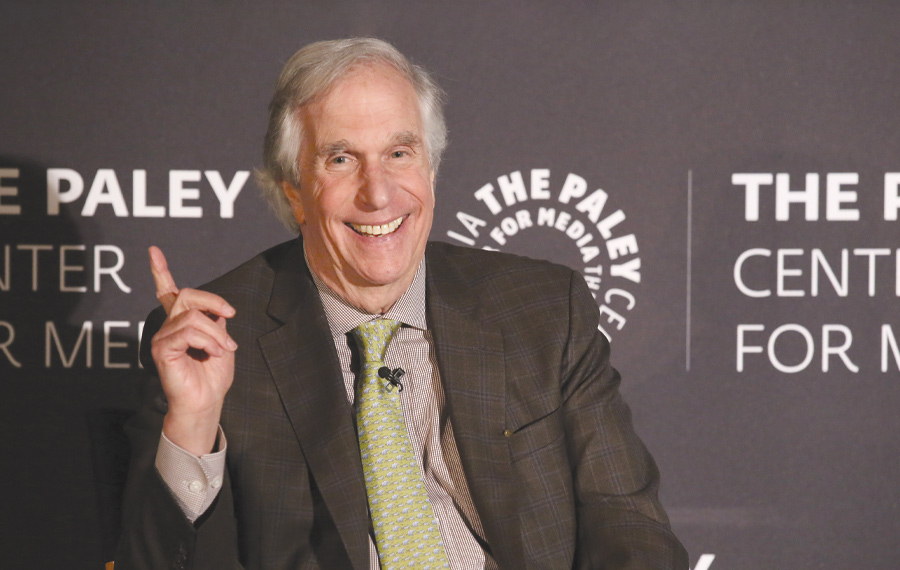
Whether you know him as The Fonz from “Happy Days,” Gene Cousineau on HBO’s “Barry” or from his New York Times bestselling “Hank Zipzer” children’s book series, Henry Winkler’s fame spans generations.
Having spent more than 40 years as an acclaimed actor, director, producer and author, Winkler has re-imagined drama and comedy while remaining a class act.
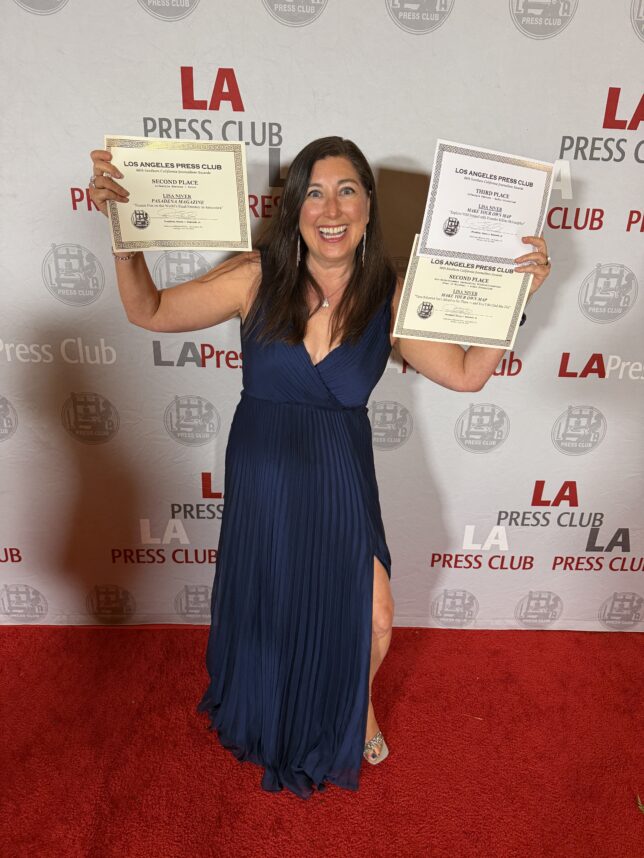
In addition to his artistic pursuits, Winkler was recognized last year by the Los Angeles Press Club, receiving their Humanitarian Award for his work supporting children — as the honorary chairman of United Nations Friends of the Children; a founding member of the Children’s Action Network; National Chairman of the annual Toys for Tots campaign; and the Los Angeles Music Center’s Very Special Arts Festival for children who are physically challenged, to name a few.
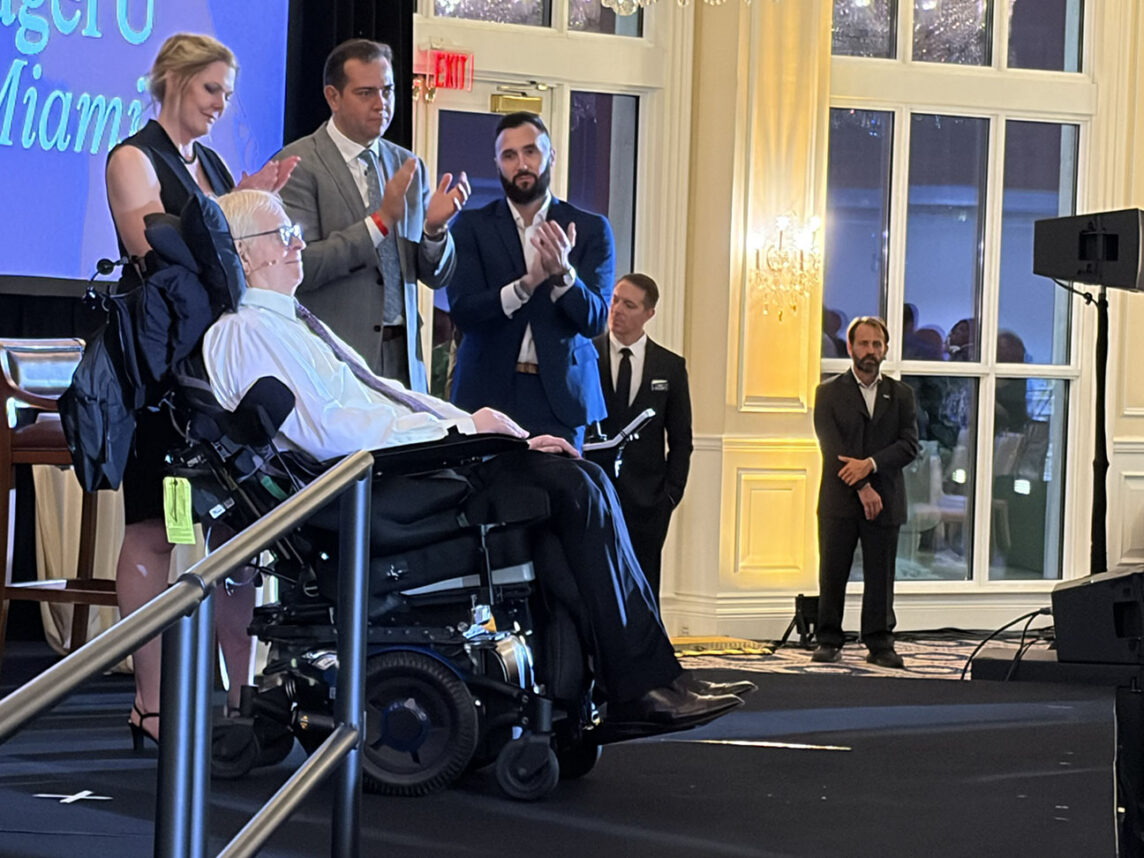
And on Feb. 12 at the Beverly Wilshire hotel, the Paley Center for Media dedicated an entire evening to honoring Winkler and his work.
At the event, Winkler said his empathy for others and gratitude for his career stems from his ability to overcome adversity. As a child, his parents, who were Jewish German immigrants, called him a “dummer hund” or “stupid dog” because he was not a studious child. After 31 years of believing he was incapable of learning, he discovered he had severe dyslexia.
Yet it did not stop Winkler from pursuing his passion for acting, earning a master’s in fine arts from the Yale School of Drama. He published the first in a series of children’s books in 2003 about a boy with dyslexia, aimed at showing parents and children that they can succeed despite a disability. The series was “Hank Zipzer” and it became a bestseller.
“How [you] learn has nothing to do with how brilliant you are. How you learn has nothing to do with how good you are at what you can do. And it does not put a limit on you,” Winkler said.
He also revealed he cherishes every moment in his life, noting that at 27 he landed the role of Arthur Fonzarelli in “Happy Days” and at 72 he landed the role of Cousineau in “Barry,” for which he received his first Primetime Emmy in 2018. He said the numeric significance might be a coincidence but what got him on those shows was purely work ethic. His ability “to try” for what he wanted despite not being able to read scripts made him a legend in the industry.
“You think you can walk on water. The reality is, it is never true in real life. You think you are going on to bigger and better things and what I learned is I was on ‘Happy Days’ for 10 years and then for eight years, nine years I had a really hard time getting work as an actor.”
— Henry Winkler
“If you stay at the table long enough, the chips come to you,” Winkler said in a nod to his Emmy acceptance speech.
Winkler shared insider Hollywood tidbits with attendees at the event including turning down the role of Danny Zuko in the 1978 film “Grease” because he didn’t want to be typecast. “I went home and had a coke,” Winkler quipped. “John [Travolta] (who went on to play the role) went home and bought a plane.”
Discussing the concept of fame, Winkler said, “You think you can walk on water. The reality is, it is never true in real life. You think you are going on to bigger and better things and what I learned is I was on ‘Happy Days’ for 10 years and then for eight years, nine years I had a really hard time getting work as an actor. Because people said, ‘You know what? He is so funny, we love him, but he is The Fonz.’ I never got hired. That’s when I started producing.”
To this day Winkler remains indebted to the late director and producer Garry Marshall, who gave him his first big break on “Happy Days.”
“[Marshall] was looking for someone over 6 feet,” Winkler said. “He was looking for an Italian and he got a short Jew. Garry was my mentor, rest his soul. Garry is one of the greatest men I have ever met in my life.”
Throughout the evening, moderator and ABC7 entertainment reporter George Pennacchio kept pausing so Winkler could give a quick hello to a friend, family member or co-worker he saw in the audience. When the audience Q&A portion wrapped up, Winkler continued to call on people and even left the stage to shake someone’s hand.
When asked about child actors in Hollywood and how they should be cared for, Winkler said, “Let them be kids for as long as possible. Fame is unnatural to the DNA of being alive. Somehow whatever, however we got here as a creation, that was the one thing that the human being wasn’t able to handle because the pressure is earth-shattering.”
Winkler stays grounded, noting that his biggest accomplishment is his family, including his wife Stacey, his grandchildren and his children Zoe, Max and Jed.
Max is now a TV and film director, inspired, Winkler said, by Wes Anderson. And he has Max to thank for his role in Anderson’s latest film, “The French Dispatch.”
Winkler said he received an email from Max saying, ‘Wes Anderson would like to know if you want to be in his movie.’ “He said ‘Dad you’ve got to do this.’ And I said, ‘Yes, I know.’ ”
Winkler ended the night offering advice to the actors in attendance.
“If you want to be an actor, if it is burning a hole in you, you do what you think is right and you do it your way in order to get in the door,” he said. “Then, when you get in the door you better be able to deliver the goods ’cause you don’t get that many shots. I sure did what I thought I [needed to do] to get where I wanted to go. I am becoming the actor now that I dreamt of being then.”